kneechange of directiondeceleration
Knee-Sparing Changes of Direction Are Not About Stopping Faster
Rather than planting once and stopping abruptly, decelerate early and spread the force across several steps.
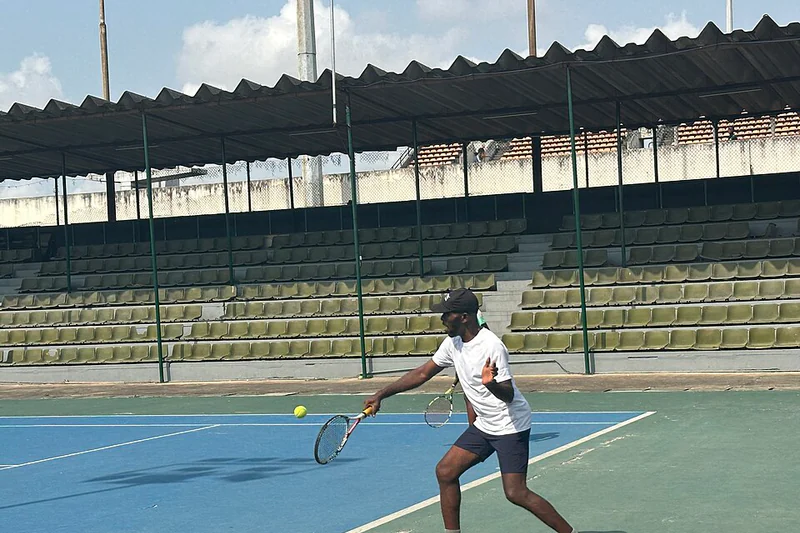
Start with this check
Repeated hard stops in tennis can increase knee loading in combination with fatigue, traction, and lower-body alignment.
Try these steps in order
- Check the court condition and your shoe traction during the warm-up.
- Before reaching the target, shorten your stride and lower your center of mass to decelerate.
- Train hip and lower-body strength and balance so the knee does not collapse inward.
Bottom line
A safe change of direction comes from whole-body deceleration that starts early, not from a knee bracing against force at the last instant.
Reviewed sources
Technical evidence is shown separately from community topic signals.
Technical evidence
- Current Reviews in Musculoskeletal MedicineEpidemiology of injuries in tennis players
- SportsRisk Factors and Prevention of Musculoskeletal Injuries in Adolescent and Adult High-Performance Tennis Players: A Systematic Review
- BMJ Open Sport & Exercise MedicineSystematic development of a tennis injury prevention programme
- NHSKnee pain — urgent symptoms and care
TENNIS TENSION LAB
Check your racquet’s tension today.
Get a high-precision tension reading in under 10 seconds. Tension Lab tracks changes from your first reading and helps you see when to restring.
- High-precision tension measurement. Ready in under 10 seconds.
- Track every change in feel. See the full story over time.
- Time to restring? Never leave it to guesswork.