200 · Tension guide
Tension guide
Put 200 tennis guides to use: choose strings, understand tension and find practical steps for your next practice.
Tension
38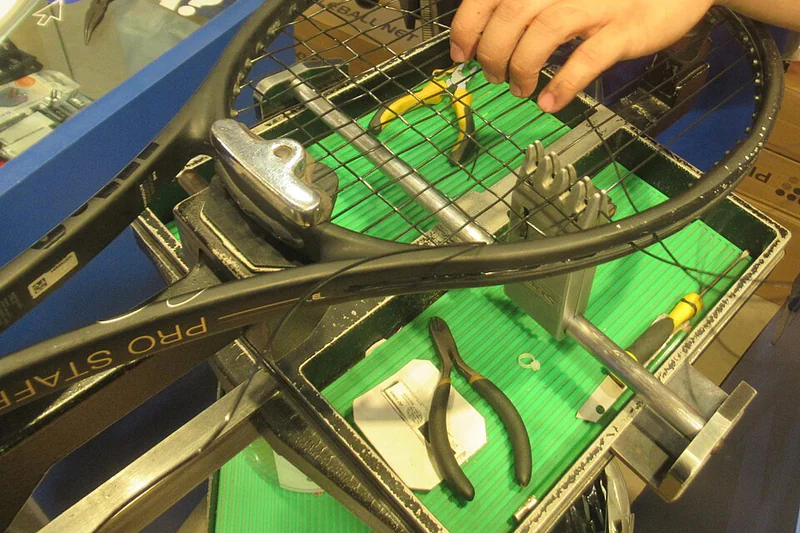
Right After Stringing or the Next Day: When Should You Measure?
An immediate post-stringing reading and a next-day reading are not competing “true” tensions. Strings relax over time after installation, so the key is to choose a repeatable measurement time and record whether the racquet has been played.
↗
Should You Adjust Tension at High Altitude?
When shots begin flying long at altitude, changing string tension on every racquet first makes it impossible to separate equipment effects from adaptation to the ball, air, and contact point. There is no universal altitude formula; preserve a control racquet instead.
↗What to Check When Your Arm Feels Uncomfortable
Do not dismiss arm discomfort as merely a process of adapting to new equipment; you must examine symptoms, training load, technique, racquet, and string together.
↗
What to Check When Your Shots Land Near the Service Line
Short balls near the service line cannot be resolved solely by low string tension; you must examine the setup, centered contact, and string condition in that order.
↗The Ball Keeps Going Long: Should You Raise Tension First?
Even if the number of balls going out of the baseline increases, you must first separate the direction of the error and the conditions of its occurrence before increasing string tension.
↗Should You Keep the Same Tension When Changing String Material?
Polyester, multifilament, nylon, and natural gut can produce different stringbeds and change at different rates over time, even when each is strung at 50 lb.
↗
Does Higher Tension Really Mean More Control?
Higher reference tension is often associated with a firmer response and a control-oriented setup, but the highest number does not guarantee the most accurate match results. If it shortens your swing or increases net errors, a firm feel is not the same as control.
↗Does a Dampener Change Tension or Arm Impact?
A dampener can noticeably change ball-impact sound and residual vibration in the hand, but it does not change the reference tension entered on the stringing machine. A lower-pitched sound is not evidence that the strings are looser or that an impact-related problem has been treated.
↗Does “Dead” Polyester Simply Mean It Has Gone Loose?
Calling a polyester string “dead” does not describe one condition or simply mean it has lost a few lb of tension. Tension change, intersection notching, string movement and recovery, and ball response can change at different rates.
↗Finding Your First Reference Tension
Rather than copying a professional’s number, first create a starting point you can retest with your own racquet and strings.
↗How to Read the Recommended Tension Range on a Racquet
The tension range printed on the racquet frame is a manufacturer-defined starting constraint, not a personal prescription or performance guarantee. Even its midpoint is not automatically optimal for an individual player.
↗Should You Change Tension When You Switch to a Thinner Gauge?
There is no fixed rule to raise or lower tension by a few lb when moving from 1.25 mm to 1.20 mm. To isolate the gauge effect, compare within the same product construction and coating whenever possible.
↗What Actually Changes When Tension Goes Up or Down?
“High for control, low for power” is merely a starting point; it is not a rule that automatically determines launch angle, accuracy, and comfort.
↗Your Strings Got Wet in the Rain: Can You Keep Using Them?
If the feel changes after playing in rain, you cannot immediately calculate how many lb of tension were lost. A wet ball, slippery grip, string material, coating, and added moisture all change together, so safe drying and inspection come first.
↗Why Use Different Tensions for Hybrid Mains and Crosses?
A mains/crosses tension difference in a hybrid is not governed by a formula such as “always string the crosses 2 lb lower.” It is a setup choice for coordinating two materials and their intended roles.
↗Does a Loose-Feeling Outer String Mean Low Tension Across the Whole Stringbed?
One outer string that moves easily by hand or produces a lower pitch does not prove that the whole stringbed was strung loose. Its free length, support, and knot location differ from those of a center string.
↗lb and “kg” (kgf): How to Convert and Record Tension Clearly
A missing unit can turn a correct number into a very different request: 25 kgf is not 25 lbf. Keep every original value attached to its unit before converting or rounding it.
↗A 1-Minute Log That Makes Your Next Restring Easier
“It felt fine last time” is not enough to reproduce the next stringing job. A 1-minute log keeps the process setting, current condition, and on-court result separate while preserving the minimum useful context for the next choice.
↗Does 15% Tension Loss Mean a String Is Bad?
A 15% loss figure is not a report card for a string. It summarizes how that stringbed changed relative to a chosen baseline under one consistent measurement procedure.
↗Will Low-Tension Polyester Cost You Control?
Avoid both extremes: low-tension polyester does not invariably make the ball fly uncontrollably, and it does not automatically add spin. “Low” is relative to the frame, string, and your established reference, so judge it across your swing and the whole stringbed.
↗Why the Same Tension Can Feel Different Between Stringing Shops
If two shops both strung a racquet at 52 lb but the result feels different, the machine name alone is not the explanation. Pulling system, calibration, clamps, pull duration, stringing sequence, and knots all affect reproducibility.
↗Should Mains and Crosses Use Different Tensions in a Full Bed?
There is no universal rule that the cross must always be lowered or raised by 2 lb when making a full bed with the same string. Identical mains and crosses settings can be an easy starting point, but if there are stringing instructions from the racquet manufacturer, those should come first.
↗Can You Play a Match with Fresh Strings from the Day Before?
The crisp response of fresh strings may help in a match, but an unfamiliar initial launch angle and early change add variables. Prepare around stringing-to-play intervals you have already playtested, not a fixed rule that the day before is always best.
↗How to Match Two Identical Racquets for Competition
Two racquets of the same model are not guaranteed to feel identical in a match simply because both were strung at 52 lb. Manufacturing variation, weight and balance, grips and dampeners, and stringing timing all affect the comparison.
↗Why Does the Number Change Every Time You Measure?
When a reading moves around, check racquet support, excitation point, ambient noise, and input values before blaming the sensor.
↗What to Adjust When Multifilament Feels Too Powerful
If balls begin flying longer after a switch from polyester to multifilament, do not jump straight to maximum tension or back to a full bed of polyester. Check freshness, contact point, and launch angle, then test reference tension and gauge one at a time.
↗Should You String Natural Gut at a High Tension?
Natural gut does not need a high tension simply because it is expensive. Match its elasticity and tension maintenance to the racquet, swing, and care conditions; price is not a formula for the machine setting.
↗The One-Variable Rule for Useful Tension Tests
If you change the racquet, string model, gauge, and tension at once, you may feel an improvement without knowing what to choose next. The one-variable rule is not a perfect laboratory; it is a habit that keeps the next decision explainable.
↗Does Pre-Stretch Eliminate Tension Loss?
Pre-stretch is a stringing variable used to address initial elongation, not a feature that permanently eliminates tension loss. Manual pre-stretching and a machine percentage setting are different procedures, so a simple yes/no record is not enough for reproduction.
↗Why Does the App Reading Differ from the Requested 52 lb?
A 52 lb request at the shop and a 47 lb app reading do not automatically prove a 5 lb stringing error. The values can represent different things at different times and under different measurement methods, so label them correctly first.
↗When to Restring Before the String Breaks
A string can change in launch angle, snapback, and feel before it breaks, so the calendar and appearance alone do not determine restringing time.
↗Why Can Two Racquets Feel Different at the Same 50 lb?
Two racquets strung at 50 lb can still produce different finished stringbed stiffness and launch response. A 50 lb machine setting is a stringing reference, not an absolute stiffness value that makes different racquet systems identical.
↗Why Does the Ball Feel Stiffer in Winter and Fly Longer in Summer?
A stiffer feel in winter or longer shots in summer does not prove that tension is the only cause. The ball, court, strings, storage conditions, and your physical readiness change together, so record actual conditions rather than the season alone.
↗Does Lower Tension Always Increase Spin?
The claim that lower reference tension always increases spin ignores racquet-head speed, contact point, angle of incidence, and string friction. A lower number can alter some conditions, but it is not a switch that automatically adds spin.
↗What to Check When a String Breaks Near the Frame
When a string breaks early near the frame instead of at a center intersection, inspect the break location, grommet, and shot immediately before it before changing machine-set reference tension. Location is a clue for the next inspection step, not proof of one cause.
↗Do You Need a New Reference Tension for a Different Polyester String?
Two products labeled “polyester” need not produce the same feel or maintain tension the same way at 50 lb. Differences in composition, construction, shape, surface, and actual diameter mean each model needs its own reference setting.
↗Why Synthetic Gut Is a Useful Baseline String
For your first setup, a standard string that is easy to obtain and used repeatedly can provide more information than the most expensive or professional-sounding products. Synthetic gut can be a starting point in terms of cost and handling, but this does not mean that all nylon products react the same way.
↗Can You Use Your Old Tension on a New Racquet?
The same 52 lb that worked in an old racquet will not necessarily reproduce the same stringbed in a new one. Changes in head size and shape, string length, pattern, and frame behavior can change the result.
↗Strings and setup
16I'm a beginner—can I use polyester strings?
What matters more than professionals using poly is whether your swing can move the strings and whether you will replace them on time.
↗What to check when new strings break within a few hours
The break location helps distinguish normal spin-related wear from grommet or clamp damage.
↗Choosing strings that save money without sacrificing arm comfort
Replacing synthetic gut on schedule may be better than keeping the cheapest polyester installed too long.
↗Can different colors of the same string perform differently?
Color alone cannot prove a material or stiffness difference, so verify specifications and compare matched conditions first.
↗Why an unbroken string is not necessarily a good string for longer
Physical lifespan and the time a string preserves your desired response are different.
↗Full bed or hybrid: which should you choose first?
Mixing two strings does not simply add their strengths; the mains strongly shape the stringbed's character.
↗If thinner strings feel livelier and add spin, why doesn't everyone use them?
A thinner gauge's lively response comes with the cost of faster wear and breakage.
↗Why do Kevlar strings require extra caution?
Extreme durability comes with a clear cost: very high stiffness and low elasticity.
↗Why does changing the mains alter a hybrid's feel so much?
The long mains move laterally on most impacts and strongly shape the stringbed's response.
↗Polyester, multifilament, synthetic gut, and natural gut at a glance
The material that suits your swing and replacement habits matters more than a generic “good string.”
↗Should you restring as soon as a multifilament starts fraying?
Exposed fibers may be normal wear, but depth and location matter too.
↗Storage habits that help natural gut last
Even excellent tension maintenance loses value when natural gut is exposed to water and heat.
↗How to store a string reel consistently through its final job
A reel may save money, but poor control of heat, sunlight, moisture, or kinks erodes the benefit.
↗Do shaped polys always produce more spin than round polys?
Cross-sectional shape is only one variable; snapback and swing path help create the actual result.
↗How to narrow hundreds of strings to three candidates
Three columns—material, gauge, and priorities—shrink the field faster than memorizing product names.
↗Check snapback in 30 seconds
If the mains stay displaced sideways, their response may have changed since the strings were new.
↗Racquets and gear
14
The trap in choosing an “arm-friendly” racquet
String setup, weight, grip, technique, and training load must work together; one model recommendation is not enough.
↗6 points head-light: what does that mean in your hand?
Balance shows where mass is concentrated, but it does not describe the full effort of swinging.
↗Lead tape or tungsten: where should customization start?
Even a few g of added mass can feel very different depending on how its location changes swingweight and balance.
↗
How to turn a racquet demo into a test, not a shopping exercise
Demo racquets strung with different, worn strings can easily distort a frame comparison.
↗Signs that your grip size may not fit
Whether the racquet twists or makes you squeeze during a real swing matters as much as any finger-gap formula.
↗How much difference do 2 square inches—from 98 to 100—really make?
Pattern density and frame design, not area alone, shape the difference you feel.
↗Not every 16×19 is an open pattern
The spacing of the strings inside the head is a more direct clue than the string count alone.
↗
Why can a player's paintjob racquet differ from the retail model?
The same paint does not mean the same mold, weight, customization, or strings.
↗Racquet spec sheets: read these five lines first
A racquet's character comes from head size, balance, swingweight, stiffness, and string pattern together—not from one weight figure.
↗Is a lighter racquet really easier on the arm?
A lighter racquet is easier to move, but it can trade away impact stability or encourage excessive acceleration.
↗Does a lower RA automatically make a racquet arm-friendly?
Frame stiffness matters, but stringbed stiffness, mass, and contact location all shape the impact you feel.
↗When swingweight matters more than static weight
Even at the same 300 g, different head-side mass distribution changes preparation speed and how much the ball pushes the racquet around.
↗What to inspect before buying a used racquet
Frame cracks, grommets, bumper wear, and handle deformation matter more than paint chips.
↗After how many years should you replace a racquet?
Cracks, deformation, grommet availability, and changes in your play—not the calendar—determine replacement time.
↗Serve and return
18
Against a Big Server, Change What You Track Beyond the Ace Count
Your strategy changes according to how often you get a racquet on the serve and turn the return into a neutral ball, not how many serves you never reach.
↗Should You Chip the Return or Take a Full Swing?
Available time, contact height, and the position that follows should determine the choice—not your preferred technique alone.
↗If a Full Swing Makes You Late Against a Fast First Serve
The opponent has already supplied the pace, so compact preparation and a stable center can redirect it.
↗Three Things to Prepare for a Left-Handed Serve
Knowing intellectually that the spin is reversed is not enough. Train the spacing, target, and body response with a partner's ball.
↗There Is No Single Correct Baseline Position for the Return
One or two steps can make a major difference depending on the opponent's pace, spin, and direction and on your reaction time.
↗When Attacking a Weak Second Serve Produces More Errors
Moving forward and aiming for a line are not the same form of attack.
↗The Timing Reference for a Late Return Split-Step
Jump after the server strikes the ball and you are already late; land too early and your feet become planted.
↗A 60-Second Reset When Double Faults Start to Snowball
Instead of searching for a new technique, restore just three things: toss, breathing, and a generous target.
↗Is a Higher First-Serve Percentage Always Better?
If a first serve merely lands in and hands the initiative to the returner, the number means something different.
↗Flat, Slice, or Kick Serve: When Should You Use Each?
These are not three ranks of speed; they are three trajectories for shaping the returner's position and your next ball.
↗
Find an Unnoticed Foot Fault With One Phone
Watching only the ball can hide the instant a foot touches the baseline or crosses the imaginary extension of the center mark or sideline.
↗An 18-Serve Drill for Building Placement Before Speed
In a match, reliably reaching three locations creates more pressure than one fast, predictable direction.
↗Why the First Ball After a Good Serve Keeps Breaking Down
If you stand and admire the serve, even a weak return becomes a difficult ball for which you are unprepared.
↗Why "Snap Your Wrist" Is a Risky Way to Explain the Serve
Rapid rotation of the racquet face is the result of a whole-body sequence, not a whip from one wrist joint.
↗Why Your Arm Tightens Up on the Second Serve
Trying to guide the ball in softly can remove the racquet-head speed and spin margin that make the serve safe.
↗Protecting the Shoulder as You Increase Serve Volume
Because the serve is a repeated overhead motion, a sudden increase matters before the raw count does.
↗When the Toss Wanders, Fix This Before the Swing
Chasing the toss to manufacture a good serve breaks down balance and contact together.
↗Protecting Your Toss and Serve in the Wind
Rather than fighting the wind, reduce the toss's unnecessary hang time and enlarge the target.
↗Groundstrokes
18
If You Charge Every Short Ball and Keep Getting Passed
The ball's height, your balance, and the opponent's position—not shortness alone—determine whether you have permission to come to the net.
↗The First Target for a Better Backhand Is Not Down the Line
Using the longer diagonal and the lower middle of the net increases your margin without requiring a technical change.
↗A Defensive Lob Needs More Than Height
Height, depth, and recovery time must work together if you are going to reset the point.
↗Why Your Drop Shot Keeps Becoming a Gift
A ball is not effective merely because it lands short; the drop shot works when the opponent has first been pinned deep.
↗Before You Try to Roll Over a Forehand That Keeps Going Long
Forcing the ball downward can simply add more errors into the net.
↗Three Common Causes of a Forehand in the Net
Before opening the racquet face, check whether contact dropped too low or your weight stayed behind you.
↗A Checklist for a Sudden Increase in Shanks
Before blaming your eyes, consider spacing from the ball, wind, fatigue, and a new racquet together.
↗Why Trying to Crush a Shoulder-High Ball Leads to Errors
First decide whether to let the high ball drop or take it early.
↗An Inside-Out Forehand Takes More Than Running Around the Backhand
Because you expose the backhand corner, shot quality and the next recovery position are critical.
↗If You Are Always Late, Look Beyond Shortening the Swing
Late contact begins with the first read and foot preparation, not simply with arm speed.
↗When Scooping a Low Slice Sends the Ball Floating
Create space under the ball with your knees and racquet path instead of lifting with the wrist.
↗One-Handed or Two-Handed Backhand: Criteria Before Style
Both are valid choices; physical capacity, reach, and training environment determine which one fits.
↗A Missed Overhead May Start With the First Step, Not the Arm
Backpedaling under the ball costs both balance and contact position.
↗Must You Always Go Down the Line Against a Net Rusher?
The first passing shot can be effective without being a winner: a low ball at the feet can create an easier next shot.
↗When Your Backhand Slice Floats Up to Be Attacked
Contact in front and a long path through the ball produce a lower shot more reliably than chopping steeply downward.
↗Why Committing to Only Topspin or Only Flat Shots Costs You
Spin is not a style identity; it is a tool you vary with height, time, and target.
↗The Real Reason an Easy Volley Goes Into the Net
In trying to hit down on the ball, players often drop both the racquet head and their center of mass.
↗If Your Volleys Keep Going Long, Start by Shortening the Swing
At a distance where you should use the incoming ball's pace, a big backswing destabilizes both contact and the racquet face.
↗Footwork
12Why Contact Breaks Down Even After You Reach the Ball
If you skip the final two or three steps after the initial move, you cannot fine-tune the distance between your body and the ball.
↗Stopping to Hit a Short Ball Delays Your Move to the Net
An approach shot does not end in front of the ball; it is movement that continues through contact toward the next position.
↗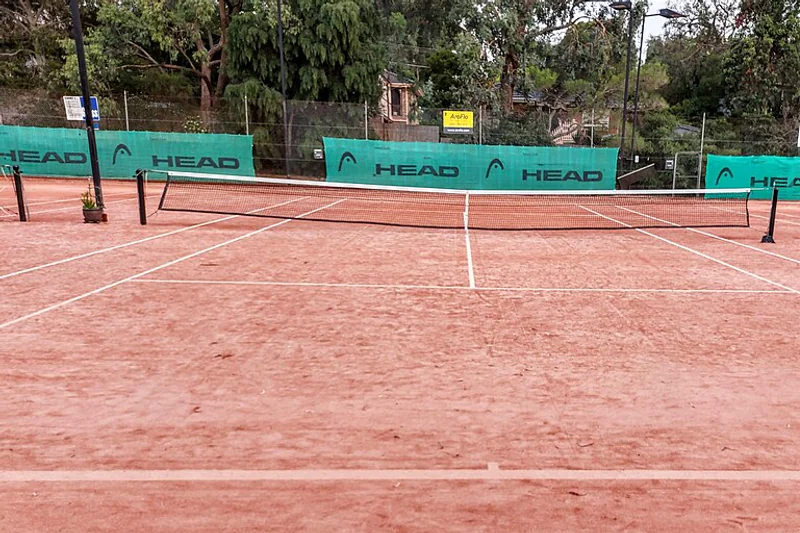
Learn to Decelerate on Clay Before You Learn to Slide
Sliding is not a flashy trick; it is the practiced result of reading the surface and stopping in balance.
↗When You Cannot Run Like You Used To, Reduce the Distance Instead
Better anticipation, recovery position, and generous targets can eliminate unnecessary trips across the court.
↗The First Step That Makes Fast Players Late to the Ball
The foot that opens the movement, and the direction it opens, matter more to your available time than top speed.
↗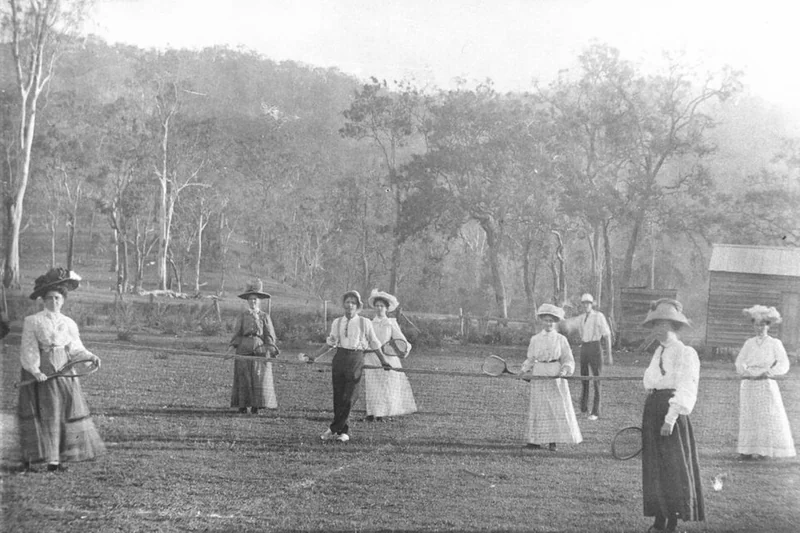
Why Long Strides Can Be Risky on a Grass Court
Low, irregular bounces and a slippery surface make small preparation steps even more important.
↗Open or Neutral Stance: When Should You Use Each?
Neither stance is always correct; choose according to the time and direction of the ball and the recovery that follows.
↗Why Recovering to the Exact Center of the Court Can Make You Late
The recovery position is not the center of the court diagram; it is the center of the angles the opponent can hit.
↗Move Safely for a High Ball Without Backpedaling
Running straight backward is both slower and more likely to cause a fall.
↗The Habit of Freezing Inside the Court After the Serve
Where you land matters less than whether you are balanced and ready to move when the returner makes contact.
↗Shuffle or Crossover: Which Is Faster?
They serve different purposes over short and long distances, so you do not need to choose only one.
↗Why Split-Step Before Every Incoming Ball?
It is not a showy jump; it prepares you to start in any direction as the opponent makes contact.
↗Singles strategy
18Losing to a Pusher May Not Mean You Need to Attack More
The trap begins when a soft-looking ball makes you rush a shot that is harder than your actual success rate supports.
↗Change Direction Down the Line Only When These Three Conditions Are Present
A short ball, good balance, and contact in front are the three conditions that reduce the risk.
↗When You Are Losing, Change Exactly One Thing at the Changeover
If you change everything from the racquet to the swing, you will have no standard for judging the next two games.
↗Why the Match Suddenly Becomes Hard to Finish at 5-3
Awareness of the finish line can replace your normal patterns with choices that are either too safe or too hurried.
↗When Deep Through the Middle Becomes Your Most Attacking Defense
Closing off the angles and keeping the opponent back buys time to make choices again on the next ball.
↗Why You Should Calculate an Error Budget Before Counting Winners
In recreational matches, the number of free points you give away often affects the result more than the number of spectacular shots you make.
↗A Checklist for Reading an Opponent in the First Four Games
Look beyond the shots that appear impressive to the choices the opponent repeats under pressure.
↗When Trading Pace With a Big Hitter Pushes You Back
Do not try to overpower the opponent's pace; reduce attacking angles with depth, height, and the middle.
↗Why a Beginner's Ball Can Feel Harder Than a Skilled Opponent's
Redirecting clean pace and generating your own pace against slow, irregular balls are different abilities.
↗What to Look for in the Warm-Up Against a Left-Hander
Look beyond the reversed direction itself to how crosscourt rallies and serve patterns connect to your weaknesses.
↗Against a Moonballer, Move Them Forward and Back Before Side to Side
A high ball gives the opponent recovery time, so simply hitting wider is not enough.
↗Crosscourt Is the Default for Geometry, Not Timidity
The diagonal court is longer and the net is lower, giving the same swing more margin for success.
↗Should You Hide a Weak Backhand or Hit More of Them?
Protect it in matches and expose it in practice so that the weakness undermines neither strategy nor long-term growth.
↗Rally-Tolerance Training for Players Who Rush From the Third Ball
You do not have to enjoy long rallies, but you do need the ability to wait for a sound attacking opportunity.
↗Should You Play the Same Shot at 30-0 and 30-40?
The score should adjust the risk you can absorb and the response you expect from the opponent, rather than changing your technique.
↗Why Going Only for Passing Shots Is Difficult Against a Serve-and-Volleyer
A low first return at the feet can make the second ball an easier pass.
↗On a Short-Ball Attack, Choose the Next Position Before the Winner
If you hit hard and return to the baseline, you surrender the court advantage you just created.
↗When an Opponent's Low Slice Keeps Taking Away Your Rhythm
Instead of forcing a winner upward, get lower than the ball and use a pattern that creates a higher next ball.
↗Doubles
16
When Does the Australian Formation Make the Returner Uncomfortable?
When the net player starts on the server's side, they take away the familiar crosscourt return and ask the returner to change direction down the line.
↗What to Say to Your Partner in the 10 Seconds Between Points
A next-serve location, an opening move, and one encouraging word are enough; you do not need to give a long lesson.
↗The I Formation: The Agreement Matters More Than the Crouch
If the server and net player do not know which way each will go, they can block one another in the middle.
↗How to Use the Lob Return Against a Net Player Who Crowds the Net
The lob does not have to be a perfect winner; it only needs to turn the net player around and change both teams' positions.
↗A Lob Over Your Partner: When Should You Switch?
If both players chase the ball, an entire side of the court is left open.
↗Where to Start When the Net Feels Scary in Doubles
You can learn one step at a time from near the service line instead of reacting from right on top of the net.
↗What to Say When Your Partner Makes Several Mistakes in a Row
Instead of repeating "It's okay," agree on one simple role your partner can carry out on the next ball.
↗Three Sentences for Assigning Overheads in Doubles
Who can track the ball and move safely matters more than who hits the better overhead.
↗Poaching Is About When You Go, Not How Fast You Are
Move before the returner reads the ball and you simply open the alley; move too late and the ball has already passed through the middle.
↗Can Doubles Partners Switch Return Sides During a Set?
The receiving team sets its order at the start of the set and keeps that same order throughout the set.
↗When the Net Player Keeps Picking Off Your Doubles Return
Before aiming for a tighter crosscourt angle, adjust the return's height, depth, and preparation time.
↗In Doubles, Your Serve Should Create Your Partner's Volley
Body and T serves narrow the return angles and give the net player time to move.
↗When Opponents Send Every Ball to One Player on Your Team
Instead of trying to hide the less experienced partner, use both players' positions and opening patterns to remove the easy target.
↗Doubles Tiebreak Serving Order: Remember 1-2-2
The first server serves one point, then each server serves two points, continuing the order already established in the set.
↗Doubles Is Not Two Singles Players: Move as One Wall
When the gap between partners opens, opponents do not have to beat either player; they can simply hit through the hole.
↗When You Never Know Who Should Take the Ball in the Middle
Even a rule such as "forehand takes it" cannot prevent collisions without context and a team agreement.
↗Practice
12Why a Shot Works on the Ball Machine but Not in a Match
Hitting a predictable ball is a different ability from reading an opponent, moving, and making a decision.
↗Questions to Ask When Choosing a Coach Beyond Credentials
What matters is not how impressive the explanation sounds, but whether the coach measures your goal and connects practice to matches.
↗A Cooperative Rally Is Not Practice at Half Effort
Repeatedly sending a good ball to your partner's contact zone demonstrates your own control of direction, height, and depth.
↗Four Stages for Bringing a New Skill Into Match Play
Going directly from basket feeds to a full match changes the conditions for success too drastically.
↗Why Mini Tennis Is Not Just a Beginner's Warm-Up
At short range, contact point, racquet face, and feel are exposed because a big swing cannot hide them.
↗Why Knowing More Lesson Tips Can Make You Freeze in a Match
Checking five things during the swing leaves too little attention for reading the ball and choosing a target.
↗When You Play Every Week but Feel That Improvement Has Stopped
Your playing time may have increased without feedback on weaknesses or adjustment of the difficulty.
↗The First Month Back: Why You Should Not Play at Your Old Level After a Long Break
The swing stored in memory may return quickly, but the amount of training your tissues can tolerate recovers more slowly.
↗How Not to Waste a 60-Minute Court Reservation
Do more than rally until time expires: include preparation, technique, patterns, scoring, and a wrap-up in one session.
↗30 Thoughtful Serves Beat 100 Aimless Repetitions
Instead of reproducing a tired motion many times, build small sets that preserve placement and routine.
↗The Illusion Created by Filming From Only One Angle
A rear view shows direction and spacing, while a side view shows contact and balance; they answer different questions.
↗Why Hitting a Lot Against a Wall May Not Improve Your Game
The wall returns the ball reliably, but without targets for depth, height, and spacing, it only lets you repeat mistakes faster.
↗Fitness and safety
14Do Not Dismiss a Tight Calf Just Because It Loosens Up
In tennis, with its repeated accelerations and split-steps, even a small warning is reason to reassess your load plan.
↗Is Salt Alone the Answer to a Muscle Cramp?
Cramping can involve fatigue, heat, hydration, and individual factors, so it is difficult to assign it to a single cause.
↗A 10-Minute Tennis Warm-Up That Does Not Start by Hitting Balls
Raise body temperature, joint movement, change-of-direction speed, and racquet speed in stages so the first game is not your warm-up.
↗Tennis in Extreme Heat: Stop Signs That Matter More Than Toughness
Confusion, fainting, or abnormal behavior may call for an emergency response, not merely a short rest before resuming play.
↗Is Drinking Only When Thirsty Too Late? Build Your Own Hydration Plan
Instead of forcing the same number of liters on everyone, account for the conditions and your individual sweat loss.
↗Knee-Sparing Changes of Direction Are Not About Stopping Faster
Rather than planting once and stopping abruptly, decelerate early and spread the force across several steps.
↗Why Weekend-Only Tennis Can Catch Your Body Off Guard
Jumping from 0 hours on weekdays to 6 hours on the weekend can outpace tissue adaptation, regardless of your technique.
↗When Your Lower Back Feels Overarched on the Serve
Instead of trying to create a bigger arch, examine the roles of the toss, thoracic spine, hips, and legs together.
↗Four Priorities Before Expensive Recovery Tools
Without sleep, food, hydration, and easier days, it is difficult even to judge whether a massage device is helping.
↗Can You Play a Match as Soon as the Pain Is Gone?
Being pain-free in daily life is not the same stage as being ready for full-speed serves and hard stops.
↗Should You Keep Playing When Your Shoulder Feels Heavy After Serving?
If normal fatigue and pain are hard to distinguish, watch how symptoms change and whether the motion breaks down before focusing on serve count.
↗Elbow Pain: Why "Just Lower the String Tension" Can Be Risky Advice
Equipment setup is one way to change load, but it cannot replace diagnosis, rest, technique work, or load management.
↗When to Replace Tennis Shoes Even If Tread Remains
Look beyond the tread pattern to uneven wear, midsole compression, upper support, and how your feet respond.
↗Why Grip and Contact Point Both Matter When Your Wrist Hurts
Before simply switching to a lighter racquet, examine late contact, excessive grip pressure, and new strings together.
↗Mental game
10What to Do in the 30 Seconds After an Error Makes You Angry
Instead of fighting to eliminate the anger, acknowledge it, settle your body, and move to the next choice.
↗How Not to Lose the Match After a Line Call You Cannot Accept
Do not let the unfairness of one point take your attention for the next three games.
↗If Tennis Suddenly Is Not Fun, Is Willpower the Problem?
When persistent fatigue, irritability, and declining performance appear together, first examine the balance between training and recovery.
↗Confidence Comes From Evidence, Not a Mantra
Instead of repeating "I can do this," collect small patterns that have succeeded under pressure.
↗When an Opponent's Reputation Beats You Before the Match Begins
Rankings and rumors do not hit the ball. Reassess the opponent's actual patterns during the warm-up.
↗Four Steps for Using the 20 Seconds Between Points
React, recover, refocus, and prepare in sequence to separate the previous ball from the next one.
↗When a Losing Streak Feels Like Your Entire Game Has Collapsed
Do not count losses as one undifferentiated block; separate them by opponent level, error type, and score pattern.
↗Why a Shot Works in Practice but Disappears in Matches
The technique may not be gone; you may not yet have retrieved it often enough under the conditions of score, decisions, and tension.
↗When Your Serve Freezes on Match Point
The more you try to control the arm, the more the rhythm disappears. Narrow your attention to one next action.
↗When Watching the Score Makes Your Game Shrink
The score tells you the situation, but an action goal tells you how to play the next ball.
↗Rules and news
14WC in Tennis: Wild Cards, Q & LL Explained
WC means wild card in tennis. Learn how it differs from Q (qualifier) and LL (lucky loser), and why each player gets a place in the main draw.
↗Live Rankings and the Season Race Are Not the Same Number
One shows a player's position over roughly the latest 52 weeks; the other tracks that season's results and qualification race for the tour finals.
↗Why a Returning Player With a Low Current Ranking Can Enter a Major Event
A protected ranking helps a player who meets conditions such as a long-term injury apply for entry using an earlier reference position.
↗How Can a Player Win a Tournament and Still Fall in the Rankings?
New points are added as points from roughly 1 year earlier come off, and the number of events counted also depends on the rules.
↗The Trap in Comparing Career-High Rankings Across Eras
The official ATP rankings began in 1973 and the WTA computer rankings in 1975, so earlier players do not appear in an equivalent table.
↗Racquet, Injury, and Retirement Rumors Spread Fast—What Should You Verify First?
A single player photo and a sentence from an anonymous account do not carry the same weight as an official announcement or verified reporting.
↗Is the Surface Name Enough to Call a Court Fast?
Even hard courts can feel different because of surface friction, the ball, temperature, altitude, and tournament maintenance.
↗250, 500, 1000, and Grand Slam: Understanding Tournament Levels
Men's tour labels are tied to the champion's points, but the women's tour and detailed point allocations require their own official tables.
↗When an Opponent Shouts as You Hit: The Core of the Hindrance Rule
Intentional and unintentional hindrance can lead to different outcomes, so feeling distracted alone does not decide the ruling.
↗Why an Uncertain Ball Is In During Self-Officiated Play
Do not call balls on the opponent's side, and call out only the balls you clearly see out on your side.
↗When May Your Racquet Cross Over the Net?
Ordinarily you must strike the ball on your side, but after it bounces in your court and spins or blows back, you may reach over the net to hit it.
↗Love, Deuce, and Tiebreaks: Tennis Scoring at a Glance
Points make a game and games make a set, with distinct rules after 40-40 and in a tiebreak.
↗When Do You Replay a Serve That Touches the Net?
A service let is replayed, but a rally ball that touches the net and lands in remains in play.
↗Is a Stray Ball on Court Always a Let?
Call a let immediately when it creates a safety hazard, but do not use it to reverse a result after the point has ended.
↗