second-serve returnattackcontact point
When Attacking a Weak Second Serve Produces More Errors
Moving forward and aiming for a line are not the same form of attack.
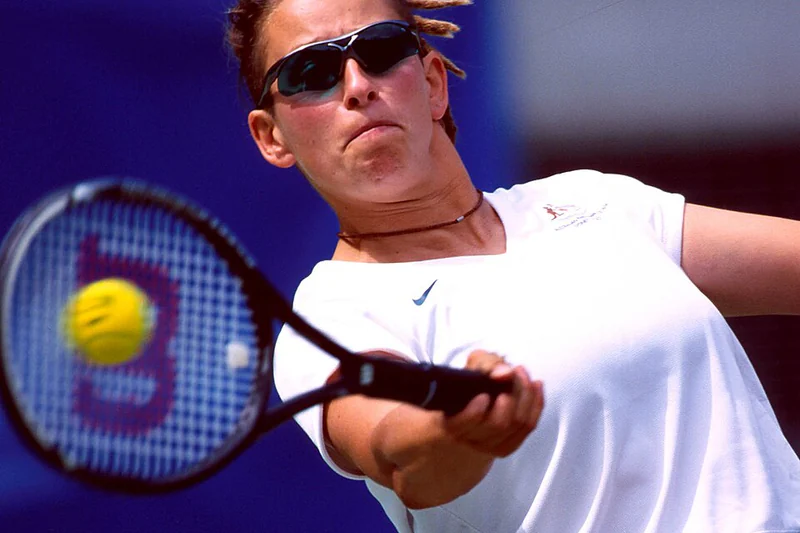
Start with this check
Increasing both swing speed and target difficulty on a short serve can disrupt contact spacing and balance.
Try these steps in order
- As the opponent tosses, take one step forward and create room to contact the ball at a comfortable height.
- Apply pressure with depth and spin to a generous crosscourt target, staying away from the line.
- After the return, hold your position inside the baseline and connect the next ball to the attacking pattern.
Bottom line
Attacking a second serve is not an attempt at an immediate winner; it uses an earlier contact point to take control of the next ball.
Reviewed sources
Technical evidence is shown separately from community topic signals.
Technical evidence
TENNIS TENSION LAB
Check your racquet’s tension today.
Get a high-precision tension reading in under 10 seconds. Tension Lab tracks changes from your first reading and helps you see when to restring.
- High-precision tension measurement. Ready in under 10 seconds.
- Track every change in feel. See the full story over time.
- Time to restring? Never leave it to guesswork.