Still losing to pushers? Stop trying to prove you hit the better ball
You own the bigger forehand. They own the score. The uncomfortable part is that hitting harder may be giving the retriever exactly the match they wanted.
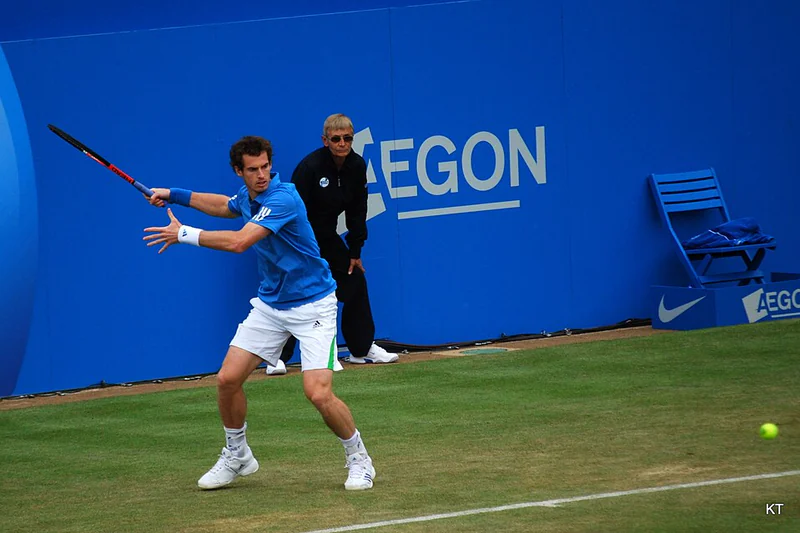
The score is 3–5, and you can already write the post-match explanation. Your opponent gave you no pace. Every ball came back high. You supplied the tennis; they supplied the running. It is an emotionally satisfying account, but it overlooks the one question that might actually change the rematch: who kept getting the kind of contact they wanted?
A good retriever does not need to win a beauty contest. If your acceleration sends a comfortable ball into their running corridor, and your frustration eventually sends one beyond the baseline, the arrangement works perfectly well for them. The solution is not to become passive. It is to stop confusing an aggressive swing with an uncomfortable situation for the opponent.
First, retire the label long enough to see the player
‘Pusher’ hides several different opponents. One runs brilliantly sideways but dislikes coming forward. Another loves your pace and struggles when asked to create their own. A third looks defensive because they choose large targets, yet can punish a short ball. Those are different problems. A plan built around ‘I must attack more’ is too vague to solve any of them reliably.
Watch the reply, not just whether your ball lands in. After your deep crosscourt forehand, does the opponent make contact comfortably in front, or lift the ball while moving backwards? When you reduce pace, do they step in, or wait for the ball to come to them? When they recover towards the middle, do they change direction easily? The useful weakness is a repeatable awkward contact, not a stroke that happens to look ugly.
The USTA’s guidance on playing a runner-pusher points to hitting behind the opponent and drawing them to the net. Notice what those ideas change: movement and court position. They do not require a stronger forehand. They ask a defender to solve a different problem from the one you have been rehearsing for them all afternoon.
An open court can be the wrong target
Suppose a wide ball has pulled your opponent beyond the singles sideline. The obvious next shot goes into the vacant half. Sometimes that is the right finish. But a quick retriever may already be sprinting there while you are still preparing. If your next contact is late or low, chasing the empty space with an ambitious angle can turn an advantageous position into an unforced error.
The alternative is not to aim blindly behind the runner. It is to read the recovery. A controlled ball back towards the space they are leaving can make them brake, reset and produce a reply without the rhythm of a continuous run. You are spending your advantage on disrupting balance rather than on painting a line. Against an opponent who has not committed to recovery, however, that same shot simply returns the ball to their racquet. Timing matters more than the slogan.
This is also why the second attacking ball deserves more attention than the first. A strong crosscourt shot may create a shorter reply without opening a clean winner. If you treat every short reply as permission to finish immediately, you erase the value of your own construction. Move in, keep a workable margin and ask for one more compromised contact. A point can be aggressive without containing a spectacular shot.
Coming in is a positional decision, not a declaration of courage
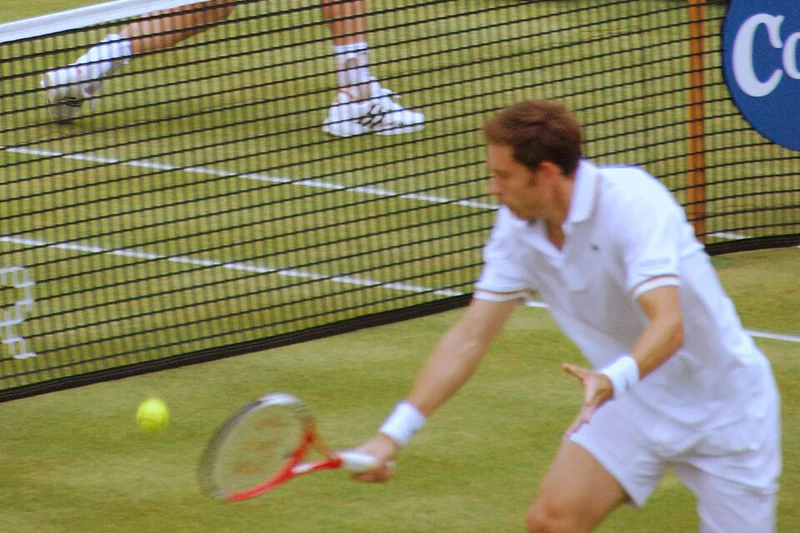
The most expensive advice in this matchup is ‘just come to the net’. If you approach from a stretched position, leave a large passing lane and keep moving through the opponent’s strike, the retriever may need only a modest pass. Your loss then appears to prove that net play does not work, when the real problem was the ball and position you chose to follow.
USTA coach Ben Zaiser frames the singles approach around geometry, court position and the right situation. Apply that as a sequence. Can you contact the approach balanced and inside the court? Which passing direction does your shot leave easiest? Can you reach a useful volley position and settle before the reply? If the answers are poor, staying back for another ball is not cowardice. It preserves the point you have built.
A down-the-line approach often simplifies the court you need to cover, but it is not a universal command. The opponent’s contact point, your own momentum and the quality of the approach still matter. A crosscourt approach that genuinely stretches the defender is a different proposition from a floating crosscourt ball that gives them time and a clean angle. Judge the actual ball, not just its direction.
Bringing the defender forward is a separate option. A shorter, lower ball can ask someone comfortable behind the baseline to supply touch, depth and a next-shot decision. But a drop shot attempted from your own defensive position is frequently a gift. Use the short ball when your contact lets you control it, and have a plan for the reply. If the opponent reaches it easily and volleys well, you have learned something useful: this is not the weakness to keep buying.
Separate the decision from the outcome
One clean passing winner should not automatically cancel a good approach pattern. Equally, one lucky winner does not validate a reckless change of direction. During a practice set, make a small note after the point: the ball you chose to attack, whether your contact was balanced, the quality of the opponent’s reply and the eventual outcome. Four pieces of information tell you far more than ‘won’ or ‘lost’.
| What you notice | What to examine next |
|---|---|
| The defender keeps passing you | Was the approach deep or genuinely stretching them? Were you settled when they struck? |
| You miss the first shorter ball | Was it actually above a comfortable contact height, or merely short? Did you demand a winner? |
| Hitting behind them stops working | Have they stopped recovering early? If so, the open court may now be available. |
| The shorter ball brings them in successfully | Can you make them volley from below net height, or are you giving them an easy finish? |
Keep the exercise modest. A handful of points is a tactical clue, not a scientific sample proving a universal strategy. The aim is to replace an emotional diagnosis with something observable. You can then train the missing shot—an approach from below waist height, a controlled first volley, or a change behind a recovering player—in a situation that resembles the match.
There is a second benefit to this approach: it keeps equipment out of an argument it cannot settle. If your stringbed has changed materially since the last session, record that and deal with it. But a fresh set of strings will not decide when a defender has committed to recovery. Change your setup for a reproducible equipment problem, not to rescue a tactical explanation that has run out of evidence.
The rematch should feel less personal
You do not need to win a rally-length contest with the most patient player at the club, nor prove that your attacking game is legitimate. Give yourself a narrower job: identify the contact they dislike, create it with margin, and recognise when the next ball is still part of the construction. On some days that means going behind them. On others it means taking the net selectively or inviting them forward.
If the opponent adjusts, the plan is doing its job. You are finally playing an exchange of decisions instead of repeating a preferred stroke until it fails. The satisfying part of beating a retriever is not showing that they ‘cannot play real tennis’. It is discovering that your own tennis includes more than the shot you wanted to hit.
Sources and further reading
TENNIS TENSION LAB
Check your racquet’s tension today.
Get a high-precision tension reading in under 10 seconds. Tension Lab tracks changes from your first reading and helps you see when to restring.
- High-precision tension measurement. Ready in under 10 seconds.
- Track every change in feel. See the full story over time.
- Time to restring? Never leave it to guesswork.