Rybakina and Sabalenka won 92 points each. The useful serving clue is hidden inside that tie
The wide ace that closed the final was easy to remember. Understanding the choice requires counting the first serves that missed as well as the ones nobody could return.
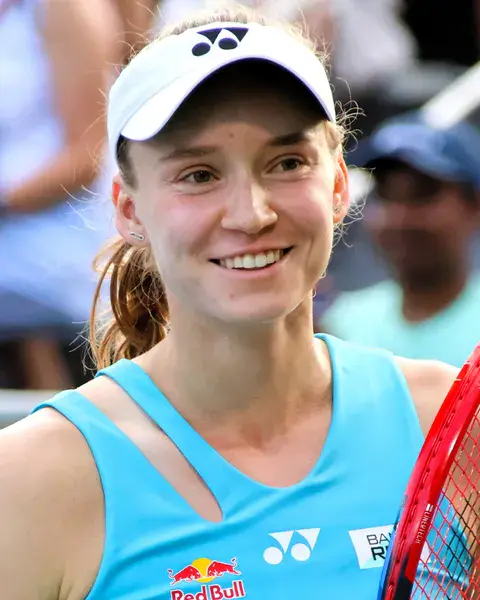
The total-points column refused to separate them: Elena Rybakina 92, Aryna Sabalenka 92. Rybakina took the 2026 Australian Open title anyway. Jeff Sackmann’s analysis, published on 2 February, underlines how close the final remained even when the familiar serving numbers were added. Rybakina won 76% of first-serve points to Sabalenka’s 75%; both won 48% behind the second serve. Their average first-serve speeds were 178 and 177 km/h respectively.
That is a poor foundation for a grand explanation in which one player simply overpowered the other. Rybakina converted three of six break points; Sabalenka converted two of eight. Tennis does not distribute the trophy by adding every point together. The timing and grouping of points mattered, and the totals leave little room for a claim that the winner possessed an overwhelming advantage everywhere.
There was nevertheless a serving pattern worth studying. Sackmann’s charting found Rybakina aiming 63% of her first-serve attempts at Sabalenka’s backhand corner. She made exactly half of those attempts. The pattern is interesting not because the target was novel, but because it combined a demanding target with a large reward when the serve landed. Remove either half of that bargain and it becomes a different tactic.
The last ace was not the whole pattern
The final ended with Rybakina serving an ace wide from the ad court. The analysis also describes her saving the two break points she faced in the opening set with consecutive unreturned serves to that wide corner. It would be easy to stop there and call the ad-wide serve the answer. But the other service court supplied an even stronger result for the same return wing.
Rybakina landed 18 first serves to the backhand corner from the ad court and won 14 of those points. From the deuce court, she landed 14 to the backhand corner and won 13. Combined, that is 27 points won from 32 landed first serves to those corners, or about 84.4%, calculated from the reported counts. This is not the success rate of all attempts at the target: the faults have already been removed from its denominator.
| Figure | What is being counted | What it does not mean |
|---|---|---|
| 63% | Share of Rybakina’s first-serve attempts aimed at the backhand corner. | That 63% of all service points were won there. |
| 50% | Share of those targeted first-serve attempts that landed. | Her first-serve percentage across every target. |
| About 32% | Share of all her service points on which a first serve landed at that target: 63% × 50%. | The whole tactic’s point-winning rate, including second serves. |
| 27 of 32 | Points won after a first serve landed in those corners. | Points won from 32 attempts, regardless of faults. |
The distinction is practical. An ace reel shows you the returner’s problem after a serve has landed. It does not show the server’s problem before that happens. Rybakina accepted enough misses that half the attempts at those corners required a second serve. Her ability to compete after that miss belongs in the assessment of the first-serve plan, even though it is less memorable than the ace.
A lower make rate is not automatically a worse plan
Imagine two hypothetical blocks of ten service points. With a narrow target, five first serves land and four of those points are won; two more points are won after the five first-serve faults. With a safer target, seven first serves land and five of those points are won; one more is won after the three faults. Both blocks produce six service points won. The first-serve percentages are different, but the final reward is the same. These are invented teaching numbers, not Rybakina’s split statistics.
The example does not endorse the narrow target. Change the second-serve results, the quality of the returns or the reliability of the first delivery and the balance changes. It shows why you need all the branches of the point. Rybakina’s overall 48% second-serve point-winning rate cannot simply be assigned to the subset that followed backhand-corner misses: the published analysis does not give that conditional split.
Nor does a target exist independently of the serve that reaches it. A slower delivery to the same spot may leave the returner balanced and ready to drive the ball. Pace, angle and the opponent’s preparation change what “serve to the backhand” actually demands. Copying Rybakina’s willingness to miss without possessing comparable rewards on the serves that land is not copying her tradeoff.
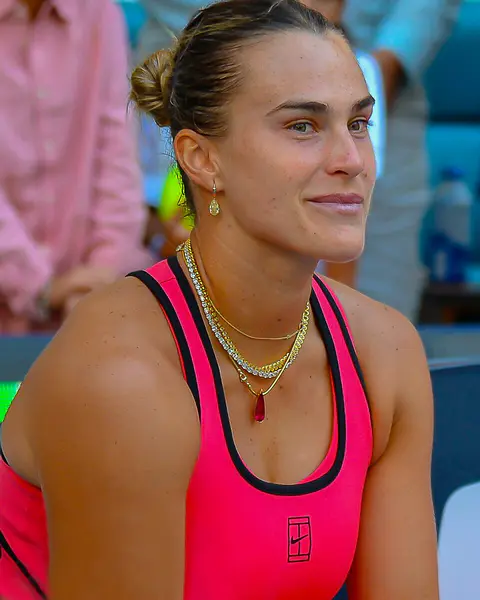
The opponent is allowed to adjust
The broader comparison in Sackmann’s article covers more than 120 charted Sabalenka matches since the beginning of 2024. Her opponents aimed about 40% of first serves at the backhand corner in that sample. This does not mean the other 60% all went to the forehand corner: body serves and placements away from either corner also exist. Rybakina’s 63% was a notable concentration, not proof that everyone else had overlooked an obvious solution.
The same report considers more than 80 charted Rybakina matches from that period and says she had rarely concentrated so heavily on the target. She had also beaten Sabalenka for the previous November’s year-end title with only 44% of first-serve attempts aimed there. That earlier result is a useful restraint on the story. The backhand corner can be part of a successful plan without being a compulsory recipe for every meeting.
There was another suggestive observation from Melbourne: in the quarter-final against Iga Świątek, Rybakina landed only 40% of the first serves she aimed at the backhand corner, yet won 11 of the 12 points when they landed. That is a small, striking sample. It raises a question about repeatability; it does not settle it. The article itself leaves open whether the approach will keep paying at those rates.
For a club opponent, adjustment can be as simple as expecting the corner earlier, changing the starting position or choosing a more compact return. Those are tactical possibilities, not claims about an unobserved change by Sabalenka in this final. If the receiver starts protecting your favoured target better, repeating the same intention may no longer create the same pressure. A serve plan includes noticing that change.
Keep the misses in your next serving comparison
In practice, compare a demanding target with a larger one from the same service court against the same returner. Announce the target to a coach or note it before the point so a fault does not become an unclassified attempt afterward. Play a second serve after every first-serve miss and continue the point. The exercise is an editorial suggestion; it is not presented as Rybakina’s training method.
Record three things separately: whether the intended first serve landed, what kind of return it produced, and who eventually won the point. Include double faults in the second-serve branch. You need not collect hundreds of variables, but do not erase the cost of missing by restarting immediately with another first serve. That would turn a tactical comparison into a target-hitting contest.
Alternate short blocks so one option is not tested only when you are fresh and the other only when tired. Record the court, balls and any racquet or string change that makes the sessions difficult to compare. A tension measurement can help document the setup; it cannot tell you whether the receiver was late or whether your chosen corner was tactically sound. Keep the equipment observation beside the point record, not in place of it.
A few blocks should inform the next session, not dictate a permanent percentage. More made serves might be valuable if the second serve is repeatedly punished; a demanding first target may be worth keeping if the return quality drops enough when it lands. Watch for changes in the opponent as well as in your delivery. Neither “make more first serves” nor “go for the corner” is a complete instruction without that context.
The Melbourne final offers a strong serving clue inside an exceptionally close result. It does not offer certainty about why every decisive point fell one way. The useful habit is to retain the entire sequence: intended target, first-serve outcome, second serve when needed, and the point that followed. Rybakina’s winners make the case for ambition. Her misses explain what that ambition had to pay for.
Sources and further reading
TENNIS TENSION LAB
Check your racquet’s tension today.
Get a high-precision tension reading in under 10 seconds. Tension Lab tracks changes from your first reading and helps you see when to restring.
- High-precision tension measurement. Ready in under 10 seconds.
- Track every change in feel. See the full story over time.
- Time to restring? Never leave it to guesswork.