You can reject the toss. Why do you keep serving from it?
A serve starts with a choice before it becomes a swing. The useful skill is recognising a ball you should leave, without turning every imperfect toss into a restart.
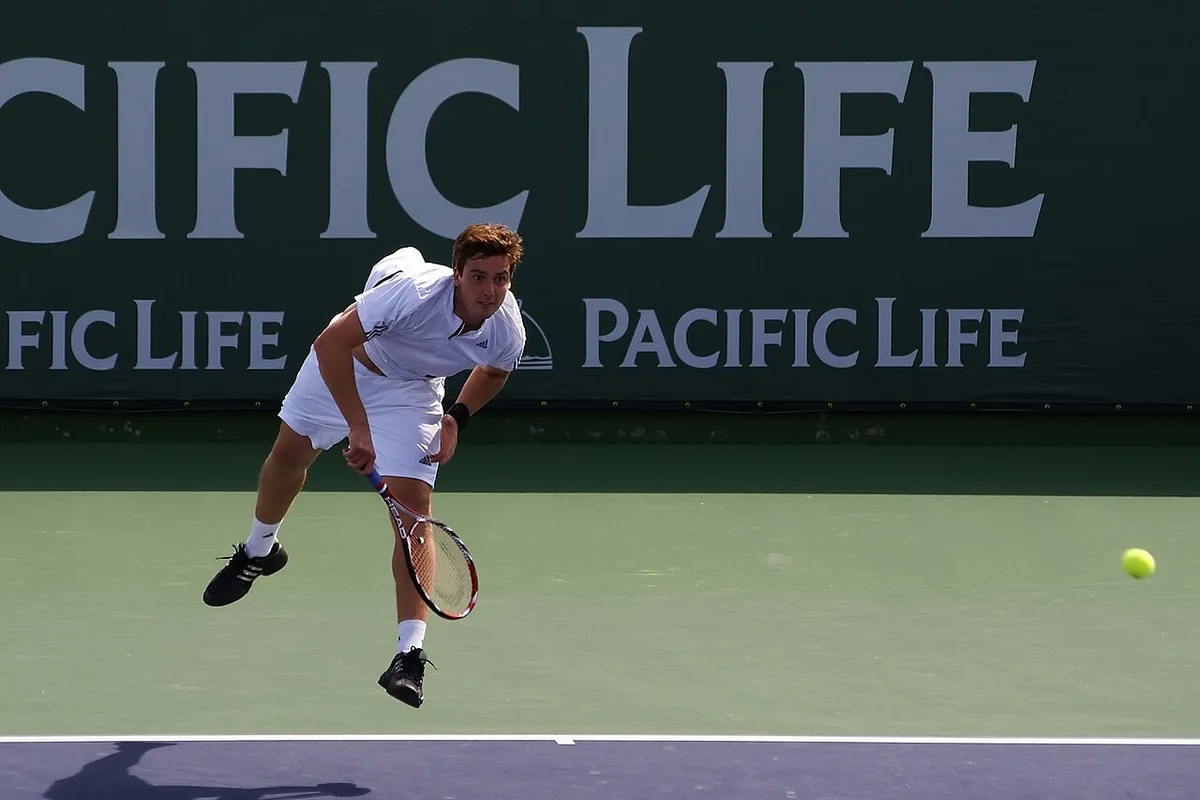
Imagine serving at 30–40 after missing a first serve. The next toss drifts, you recognise it early, and you hit it anyway. Perhaps you do not want to look nervous. Perhaps the receiver is already waiting and you feel that stopping would be rude. The resulting double fault gets filed under ‘my second serve broke down’. That description misses an earlier decision: you accepted a starting position you already distrusted.
This is a hypothetical point, not a diagnosis of every double fault. Many missed serves begin with an entirely usable toss. But if you regularly know the toss is wrong before you swing, there is a separate skill to train. You are allowed to decide against hitting a toss. Understanding exactly where that permission ends is more useful than another vague instruction to stay confident.
The line is between deciding not to hit and trying but missing
Rule 19 in the ITF Rules of Tennis, reproduced in the 2026 USTA Friend at Court, addresses the situation directly. Its first case asks about a server who tosses the ball, decides not to hit it and catches it instead. That is not a fault. The decision allows the player to catch the ball with a hand or the racquet, or to let it bounce. A rejected toss does not need to be a clean one-handed catch to qualify.
The same rule separately says that trying to strike the ball and missing it is a service fault. Those are different actions, even if neither produces a ball travelling over the net. You cannot turn an attempted serve into a harmless abandoned toss merely because the strings never touched the ball. The relevant distinction is the attempt to hit, not the absence of contact.
That matters especially on a second serve. If you decide not to hit the toss and take it back, the previous first-service fault still exists: your next attempt is still a second serve. You have not earned a new first serve. If you try to hit and miss, that is another service fault. An abandoned toss, a missed swing and a service let should not be treated as three names for the same replay.
Nor does Rule 19's answer excuse an independent service violation. Rules 16–18 still govern how and where you serve, including foot faults. Its permission concerns choosing not to strike the tossed ball. It is not a general exemption for anything that happened during the motion, and it does not settle every disputed incident from a short description.
A legal reset is not a fresh supply of time
The next misunderstanding goes the other way: once players discover that catching a toss is permitted, they assume there is unlimited time to find the perfect one. Rule 29 requires continuous play and gives a general maximum of 25 seconds between points, measured from the end of one point until the first serve is struck for the next. Rule 20 says to serve the second service without delay. Catching a toss does not create another point or award a new between-point allowance.
The timing and enforcement arrangements of an event still matter. Do not import a professional shot-clock procedure into an unofficiated club match by guesswork, or use the general number as permission to delay before a second serve. The practical obligation is straightforward: abandon an unusable toss promptly, collect it efficiently and resume at a reasonable pace. If conditions repeatedly stop play, deal with that problem rather than pretending a series of catches has resolved it.
The receiver is part of this exchange. Rule 21 says the server must wait until the receiver is ready, while the receiver must follow the server's reasonable pace. After taking a toss back, rushing the next delivery at someone who has relaxed out of the receiving stance is not a clever way to recover lost time. A brief visual check is more useful than a long apology followed by a hurried serve.
Choose an acceptable toss, not an imaginary perfect one
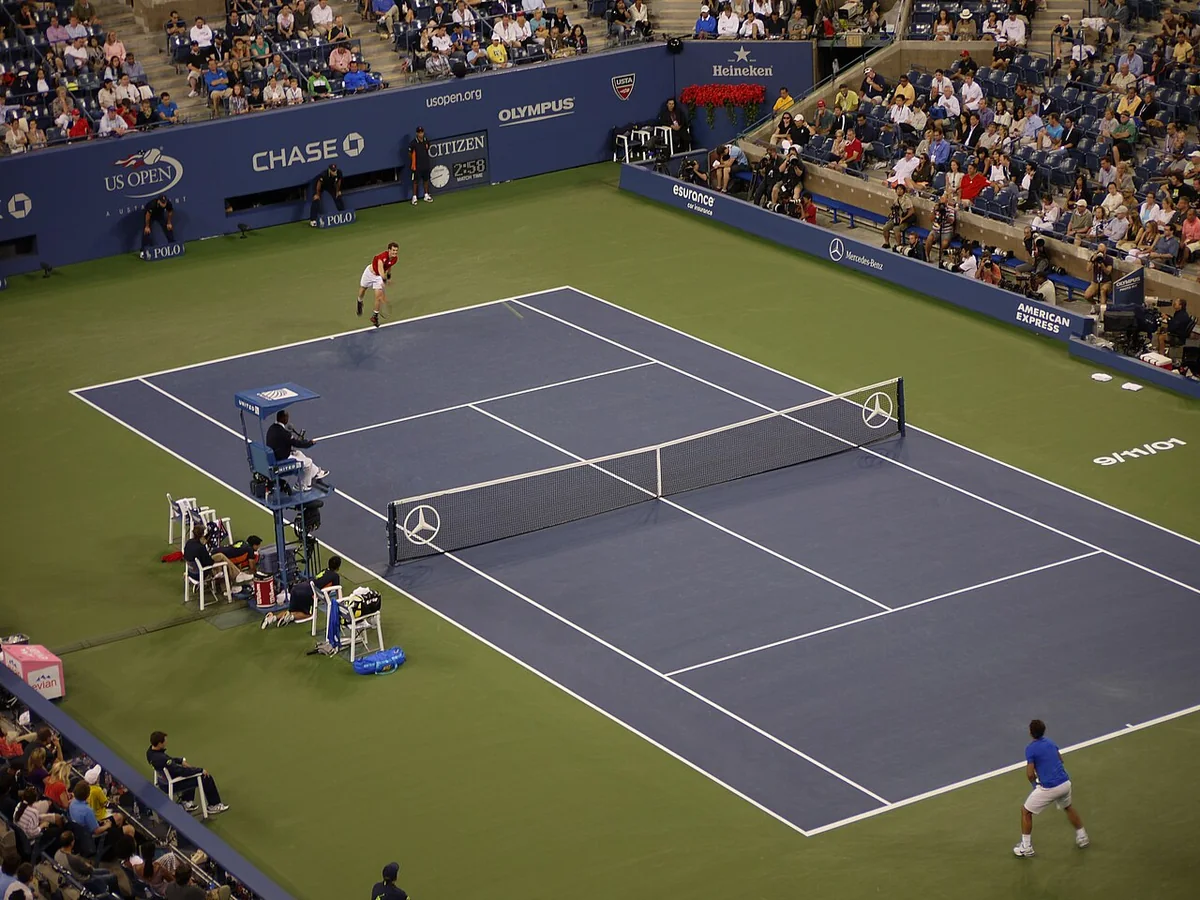
Rules tell you what you may do. They do not supply a universal toss coordinate. A flat first serve, a slice and a kick do not have to begin from an identical contact arrangement, and a photograph of someone else's service motion is not a personalised target. For this discussion, a usable toss means one from which you can make the serve you intended without a late, unplanned rescue. That is a working practice definition, not a laboratory threshold.
There are two opposite habits worth noticing. One player chases almost every release, improvising after the ball has already dictated the motion. Another catches anything that is not exactly right, so the routine becomes a search for certainty that no match can provide. The first needs permission to stop; the second needs a realistic acceptance range. Telling both simply to catch more tosses would miss the difference.
Separate the decision from the outcome. A serve can land in despite a release that forced a poor compromise; that success does not make the starting position a useful habit. A well-chosen toss can also produce a missed serve. If every miss retroactively becomes a ‘bad toss’, you will never learn whether the difficulty was the release, the decision, the swing or the intended target.
Practise the decision while the score is small
Here is a suggested practice task, not a reported trial. Start with an ordinary serving block and identify the intended serve before each ball. When you reject a toss, record the reason briefly: moved beyond the position you could use, lost sight of it, or abandoned mainly because you felt rushed. When you accept one, record whether you could make the planned motion as well as whether the ball landed in. A partner can keep the notes so recording does not interrupt every repetition.
Next, play a short sequence of second-serve points, preferably against a receiver. Keep the same right to reject a toss, the same obligation to continue promptly, and the same consequence for an actual service fault. This brings the decision into a setting where there is a score and another person waiting. The aim is not to reward catches or to make their count as low as possible. It is to notice when the score changes your acceptance standard.
The USTA's 2017 introduction to Kathy Woods's pressure-serve drill supports the broader idea of practising serving with pressure, describing consecutive court targets. The exercise above is a separate suggestion focused on toss decisions; it is not a transcript of that video or a claim about its demonstrated results. Pressure can be introduced in different ways, and a target streak does not isolate the same question as a second-serve point.
Look for a specific pattern in your notes. Do you chase a toss only on break point? Do most rejected releases occur before one serve type? Does your second attempt become hurried because you are embarrassed about stopping? Those observations offer something concrete to work on with a coach. They do not by themselves prove a technical cause, and there is no sensible universal quota for how many tosses a player should catch.
A good service routine leaves room for a decision. It is not a promise to complete the swing regardless of where the ball goes. Know the rule, recognise your usable range and keep the match moving when you reset. The small pause should protect the serve you planned, not become the next thing you have to perform perfectly.
Sources and further reading
TENNIS TENSION LAB
Check your racquet’s tension today.
Get a high-precision tension reading in under 10 seconds. Tension Lab tracks changes from your first reading and helps you see when to restring.
- High-precision tension measurement. Ready in under 10 seconds.
- Track every change in feel. See the full story over time.
- Time to restring? Never leave it to guesswork.