Zverev won 39 of 42 first-serve points. That is not an ace statistic
Shelton lost almost every point that began with a Zverev first serve in the opening two sets. The useful question is how a serve earns its reward after the return comes back.
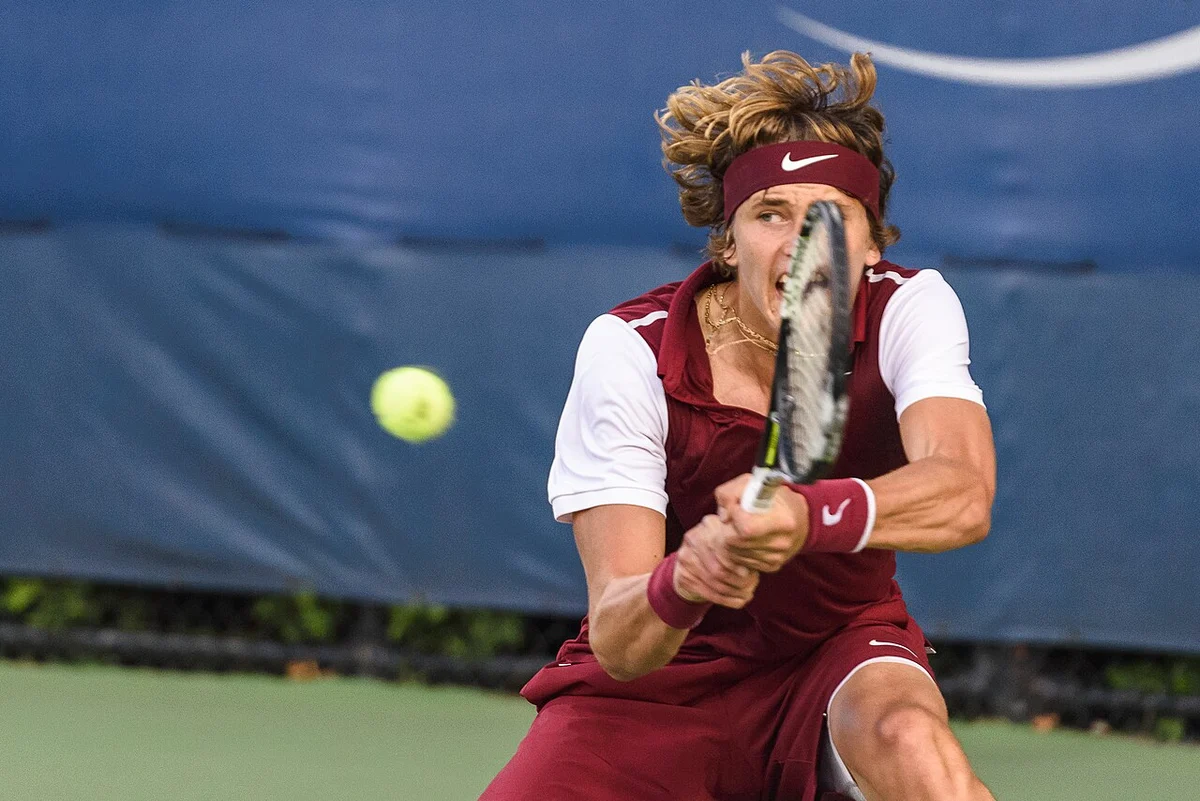
For the first two sets of the 2026 US Open final, Alexander Zverev’s first serve gave Ben Shelton almost nothing. BBC Sport reported that Zverev won 39 of 42 points behind it. Only three of those points escaped him. He did not face a break point until the middle of the third set, and eventually won 6–3, 7–6(2), 5–7, 6–2.
The most replayable detail came at the end: Zverev initially prepared to play another point before his team told him the match was over. But the quieter number from the opening two sets deserves attention. A first serve had become a remarkably reliable entrance to a winning point, whether or not it ended the exchange immediately.
Dividing 39 by 42 gives approximately 92.9%. That is the proportion of points Zverev won after landing a first serve in that part of the match. It is not the proportion of first serves that landed in, not the percentage of his deliveries that were aces, and not his success rate across all four sets. The distinction determines what a player can usefully learn from the figure.
The return can come back and the serve can still have done its job
A service winner is obvious. A return that lands short and gives the server an uncomplicated next ball is less dramatic, but may be just as valuable to the scoreboard. A deeper return that leaves the server slightly ahead can also preserve useful pressure. The point-won percentage gathers all those routes into one outcome. It tells us the sequence was successful, without identifying which route produced each point.
BBC’s final report connects Zverev’s first serve with his ability to work on Shelton’s less secure backhand in the baseline exchanges. That supports an account of service strength alongside effective rally play. It does not establish that all 39 winning points followed one serve direction or one second shot. The reporting used here does not provide a point-by-point map of those contacts, and we should not invent one.
That is why the phrase ‘serve plus one’ is useful only when the plus one remains a real decision. A server can plan a likely next ball without insisting on the same forehand regardless of the return. If the return arrives deeper, wider or lower than expected, adapting is part of converting the service advantage. A rehearsed pattern becomes brittle when the first unexpected reply is treated as a mistake by the opponent rather than information.

The third set is important to that interpretation. Shelton broke late to extend the match. An exceptional two-set percentage had not made future holds automatic. After taking the set, however, he lost serve at the start of the fourth; BBC reported that he won only four of 20 receiving points in that final set. The latter figure concerns all receiving points in set four. It should not be merged with the earlier 39-of-42 first-serve sample.
Even in a dominant performance, there are different periods and different denominators. Treating one number as the whole match erases the adjustment that briefly made the contest harder. For a player reviewing a league match, separating those periods can reveal more than an impressive final total: when did the receiver start making you work, and did the next service game respond to that change?
A stronger first-serve statistic can conceal an unchanged service game
The missing companion to any first-serve points-won figure is how often the first serve actually lands. A player may raise the reward on successful first serves by swinging harder, yet visit the second serve much more often. To understand the whole service game, both branches matter. The following example is invented to demonstrate the arithmetic; it is not Zverev’s data, a training trial or a prediction.
| Measure | Profile A | Profile B |
|---|---|---|
| First serves in | 60% | 45% |
| Points won when the first serve lands | 75% | 85% |
| Points won after a first-serve fault | 45% | 45% |
| All service points won | 63% | 63% |
For profile A, the weighted calculation is 0.60 × 0.75 + 0.40 × 0.45 = 0.63. For profile B, it is 0.45 × 0.85 + 0.55 × 0.45 = 0.63. Profile B wins a much greater share behind a landed first serve, yet gains nothing overall in this example because it reaches that branch less often. Equal overall point rates also do not guarantee identical game outcomes: the order of points and performance at particular scores can differ.
This is not an argument to slow every first serve. A different direction, spin or pace may genuinely improve the complete service sequence. It is an argument to measure the consequence you care about rather than the flattering number you happen to notice. An ace count says something; a first-serve points-won rate says something else; the frequency of getting that first serve in decides how often its value is available.
The published 39-of-42 passage does not provide all the inputs needed to reconstruct Zverev’s entire first-two-set service profile. There is no reason to fill the gaps with estimates. Its proper use is narrower and still striking: when the first serve landed during that period, Shelton rarely won the point. The match report then supplies context for what happened around that dominance.
Keep the first return in your service practice
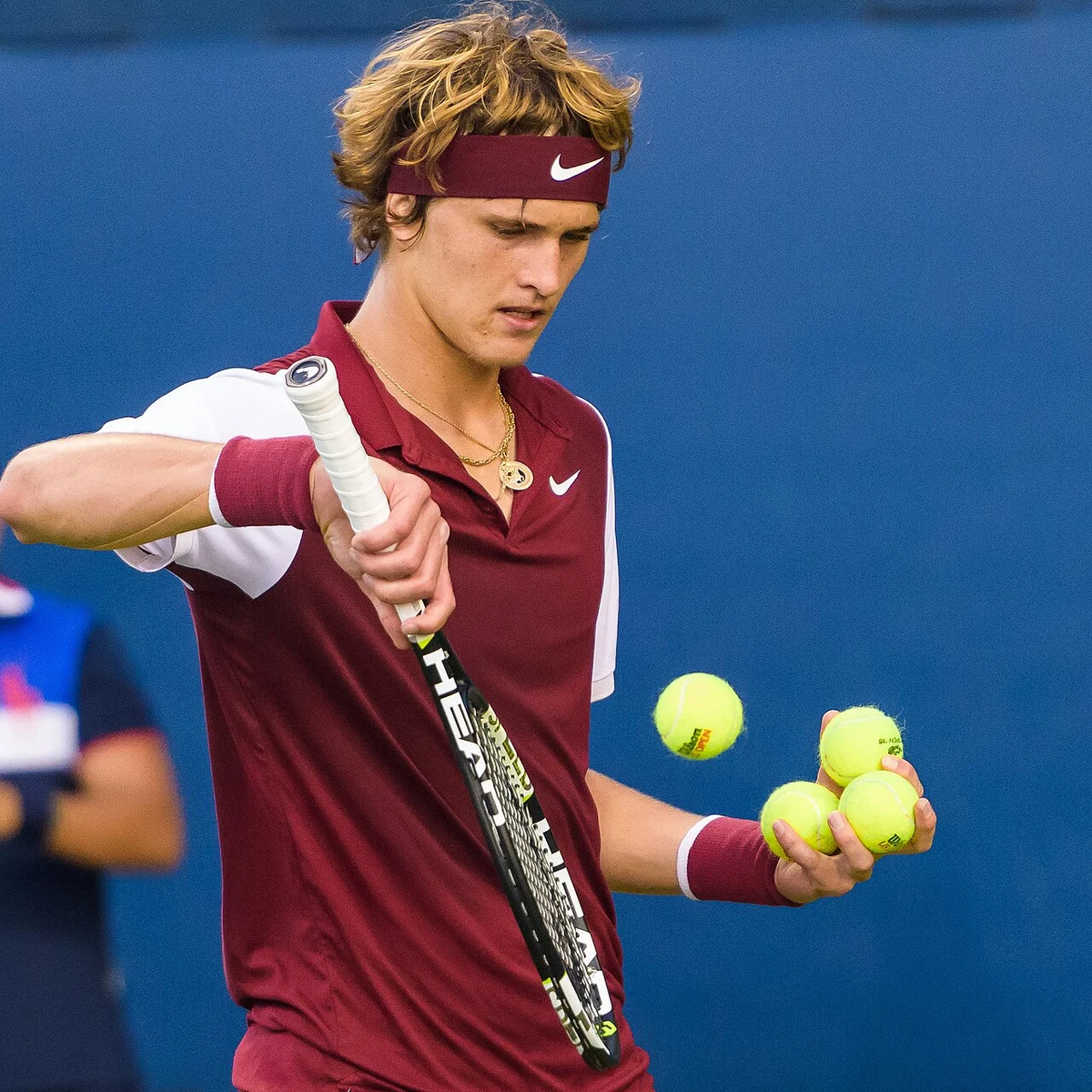
Serving at targets can sharpen placement, but the empty opposite court cannot tell you what your serve has created. For a separate practice block, have a partner return and play the point out. Record first serves in and final point results. Within the returned serves, make a simple note of the next ball: an obvious attack, a roughly neutral exchange or immediate trouble. Those categories are working observations, not an official charting system.
The point is to find the gap between a good start and a finished job. Perhaps you generate short returns but rush the next forehand. Perhaps the return is routinely deep and your imagined advantage never existed. Or perhaps a body serve produces few aces but repeatedly leaves you a comfortable central ball. Each finding suggests different work; adding speed is not a universal answer to all three.
Compare one intention at a time against reasonably similar return conditions. If you change the target, partner, balls and pace together, the result may be interesting but hard to explain. Include misses and double faults, and do not stop the exercise whenever the first serve lands. A small practice sample cannot reproduce a major final, but it can reveal which part of your own sequence deserves attention.
If the comparison includes a new racquet or string setup, write that down as well. A different response may affect the serve, the compact reaction to the return and your willingness to accelerate the next groundstroke. Keep equipment observations specific to those contacts. Nothing in the cited match reports identifies Zverev’s exact string tension or proves an equipment change caused his first-serve success.
Zverev’s 39 winning points are a compelling result, not a quota for a club player and not a recipe that can be copied from a highlights reel. The valuable habit is following a serve all the way through its consequences. Count whether it lands, observe what comes back and notice whether you turn that position into the point. Sometimes the most effective serve is the one whose good work becomes visible on the next shot.
Sources and further reading
TENNIS TENSION LAB
Check your racquet’s tension today.
Get a high-precision tension reading in under 10 seconds. Tension Lab tracks changes from your first reading and helps you see when to restring.
- High-precision tension measurement. Ready in under 10 seconds.
- Track every change in feel. See the full story over time.
- Time to restring? Never leave it to guesswork.