Alcaraz finished at 3:34am. Who should pay for tennis running late?
A memorable night can still be a badly designed working day. The argument over late finishes is about where a tournament puts the cost of an unpredictable sport.
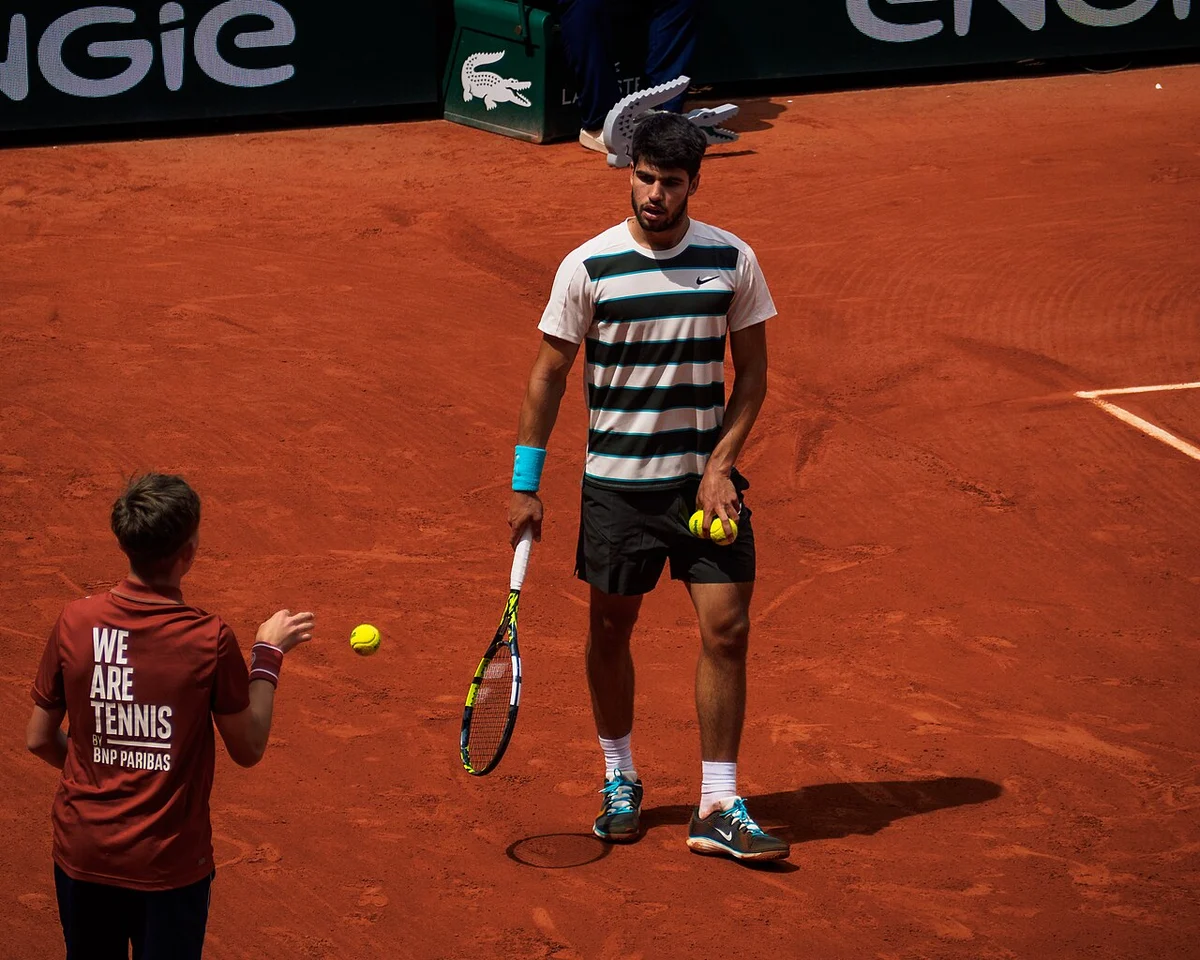
The final point had been played, but the argument was just beginning. Carlos Alcaraz lost a five-set US Open quarter-final to Ben Shelton at 3:34am after four hours and 28 minutes of tennis. BBC Sport’s 24 September 2026 report described it as the latest finish in the tournament’s history. Alcaraz could value the contest and still object to the hour: asked about playing so late, he said, “I think it’s too much.”
The distinction matters because the easiest response is also the least useful: if the match was exciting, why complain? Alcaraz had returned from more than five months away with a wrist injury and called reaching that quarter-final a gift. Enjoying the chance to compete did not amount to endorsing every condition under which he had to do it. A player can want the match and want a better timetable.
Nor was the report describing one isolated night. It noted that eventual champion Alexander Zverev finished after 1am in three of his first five matches, while Venus Williams finished her first-round match at 2am. Those observations do not measure anyone’s subsequent recovery or prove a cause of injury. They do make it harder to dismiss the issue as the unavoidable accident of one exceptionally long match.
The clock does not stop when the score becomes final
A four-hour match and a 3:34am finish describe different demands. Match duration tells us how long the contest lasted. Finishing time tells us where it landed in the rest of the day. Treating those as interchangeable misses the scheduling decision. Two equally long matches can leave very different windows for travel, meals, post-match obligations and getting to bed.
We do not know from these reports when Alcaraz or Shelton actually fell asleep, what their recovery programmes contained, or how the timing changed either player’s next performance. There is no need to invent those details to see the practical problem. A tournament cannot assume that everyone involved is released into uninterrupted rest the moment the scoreboard freezes. The winner still has another round to prepare for; staff and spectators still have to finish their own night.
Alcaraz also made an audience argument. People had stayed, he said, but an earlier match could have filled the court. That was his assessment, not an attendance experiment proving how many more spectators would have come. It nevertheless challenges an easy assumption: the latest possible finish is not automatically the best entertainment product. A ticket holder may want to see the conclusion and also need to get home. Staying or leaving is not a clean measure of enthusiasm.

An 11pm limit solves one problem and creates another
Alcaraz suggested changing the schedule to aim for a latest finish of 11pm, or another more suitable time. Wimbledon offers a useful comparison, though not a universal rule that New York has failed to obey. In a separate BBC explanation published on 2 July 2026, the All England Club described an 11pm curfew and local agreements that constrain evening play. Other Grand Slams operate under their own local rules.
A hard boundary makes one cost visible: a match that cannot finish must be resumed. That can disappoint spectators, interrupt a contest and add work to the next day. Allowing play to continue moves the cost elsewhere, into the hours available afterward. Neither policy makes time free. The useful comparison is between those consequences, rather than between a tournament that supposedly cares about players and one that supposedly cares only about business.
A latest start and a latest finish are also different promises. Refusing to begin a new match after a certain hour limits one source of delay, but it does not prevent a match already in progress from running deep into the night. A finishing boundary answers that second question and requires a suspension policy. Any proposal should say which of these it means; otherwise a reassuring headline can conceal a very different experience on court.
Wimbledon’s explanation shows why “just start earlier” is a proposal to examine, rather than a complete operating plan. Its reported show-court starts—1:30pm on Centre Court and 1pm on No.1 Court—also account for spectators travelling to the grounds and time to watch outside-court tennis. The order of play considers broadcasting, player rotation, other events a player has entered, possible next-round opponents and welfare. None of those considerations proves the chosen hour is optimal. They identify the tradeoffs that an earlier start must address.
Court allocation introduces another constraint. According to the same account, Wimbledon tries to keep players on the same side of the draw playing on the same days, while balancing singles, doubles and mixed doubles. Moving one attractive match in isolation may affect players entered in multiple events or the readiness of a later round. An evening schedule is therefore not just a row of names followed by estimated durations. It is a set of matches connected to other matches.
A fair timetable needs room for the match that runs long
The uncertainty of tennis is real: a scheduled match does not have a fixed ending. But unpredictability is not the same as an absence of choices. Organisers choose the number of matches placed on a court, how much space to leave between sessions, which alternative courts are available and when to act on a growing delay. They cannot guarantee a short contest. They can decide in advance what happens when the contest is long.
For an amateur tournament, that distinction is particularly useful. Imagine an evening event with a fixed lights-off time and several matches still to play. Adding another full match because the previous one ended unusually quickly may fill the court now while making the final pair responsible for all the remaining uncertainty. The organiser has gained a fuller programme; those players may inherit the interruption. This is a hypothetical planning problem, not a description of the US Open’s operations.
A better published plan would name the last time a new match may start, the point at which play must stop, and how an unfinished match is recorded and resumed under the event’s rules. Those rules should be known before players enter the court, not improvised when someone is one game from winning. If a permitted shorter scoring format is necessary, choose and announce it in advance rather than changing the bargain during a match.
Continuation also needs a place in the next day’s schedule. The Wimbledon explanation says suspended matches are not put first the following day so that players who were on court late receive more recovery time. That principle is useful without pretending every amateur event has Wimbledon’s resources. An organiser can at least avoid promising both an indefinite late finish and the earliest possible restart. If court bookings make that unavoidable, participants should know before committing to the event.
Ask for the rules of the delay, not a precise prediction
Players have limited control over a published order of play. What they can request is clarity about its contingencies. A not-before time is not a guaranteed start. Before entering an evening competition, it is reasonable to establish whether a delay changes only the start, whether the match may move courts, whether it can carry over and when the next round could begin. Those answers affect transport, work commitments and the willingness to enter more than one event.
That is also why two players competing at the same late hour does not settle every fairness question. They share the conditions of that match, but the draw may next connect its winner to someone who finished much earlier. The reports here do not quantify such an advantage in the Alcaraz–Shelton match. The point is a design consideration: comparisons should include the path through the tournament, not only symmetry across the net during one contest.
An earlier boundary will not please everybody. It may reduce what a night-session ticket contains or require more court time on another day. Those are genuine costs to explain, not reasons to leave the finishing question unanswered. A responsible proposal should specify what changes upstream: the start, the size of the programme, the available courts or the continuation arrangements. Simply asking players to finish earlier does none of that.
Alcaraz’s night should remain memorable for the tennis. The schedule need not become admirable just because the players produced a match worth remembering. His complaint asks a reasonable question: when an unpredictable sport overruns, who absorbs the delay? A good tournament answers before the clock reaches 3:34am, while it still has meaningful choices to make.
Sources and further reading
TENNIS TENSION LAB
Check your racquet’s tension today.
Get a high-precision tension reading in under 10 seconds. Tension Lab tracks changes from your first reading and helps you see when to restring.
- High-precision tension measurement. Ready in under 10 seconds.
- Track every change in feel. See the full story over time.
- Time to restring? Never leave it to guesswork.
Keep reading

Alcaraz brought back 76.5% of Djokovic’s first serves. The next number matters just as much
A closer look at Carlos Alcaraz’s first-serve return against Novak Djokovic: how getting the ball back and competing after the return combine to take away a server’s advantage.
8 min readMatch point down, Alcaraz played a drop shot. Was that really the risky choice?
Carlos Alcaraz used drop shots to escape Taylor Fritz and finish their 2026 Laver Cup match. What that decision reveals about playing safe under pressure.
8 min read