Match point down, Alcaraz played a drop shot. Was that really the risky choice?
The score said survival. Alcaraz reached for a shot he trusted. The useful lesson for competitive players is in the choice, not the highlight.
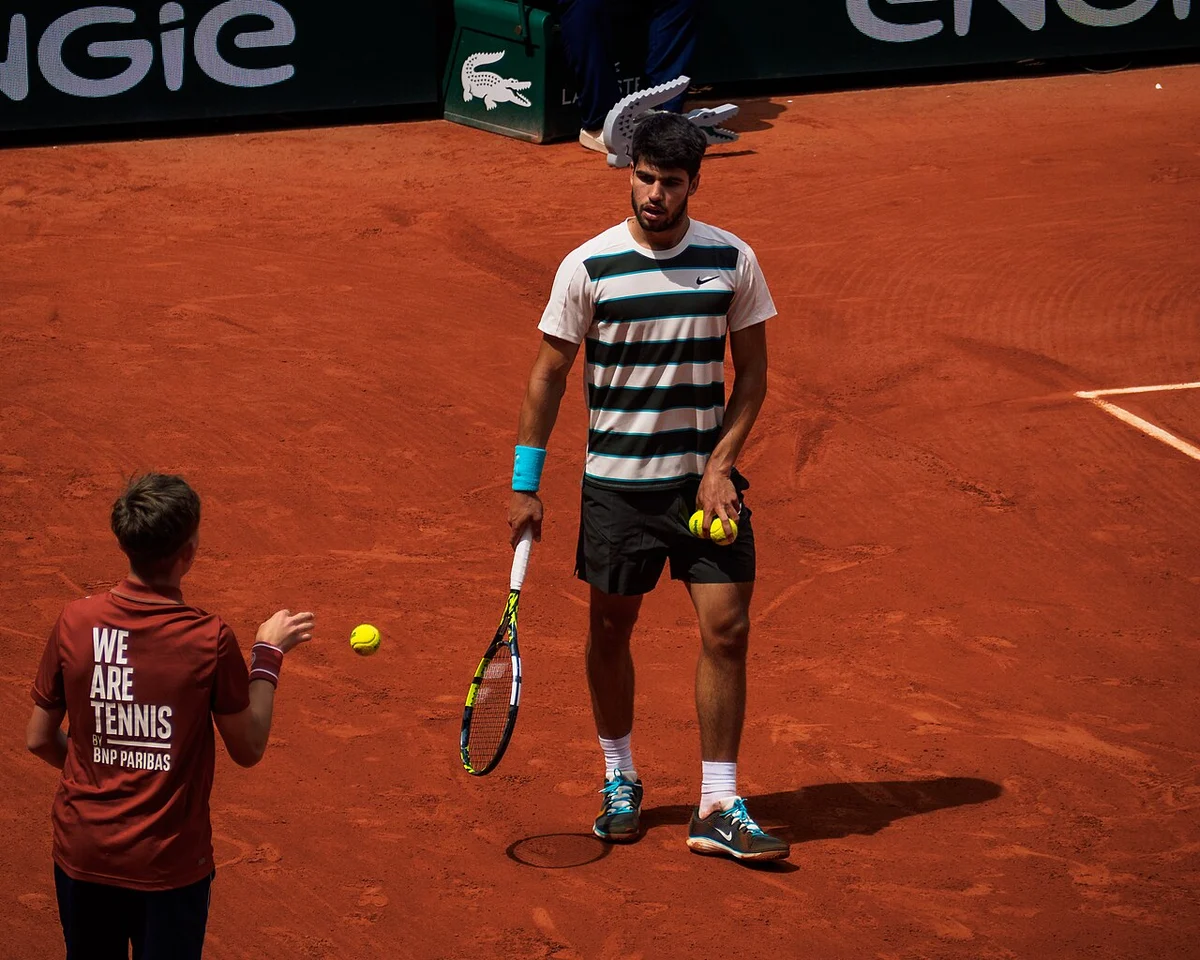
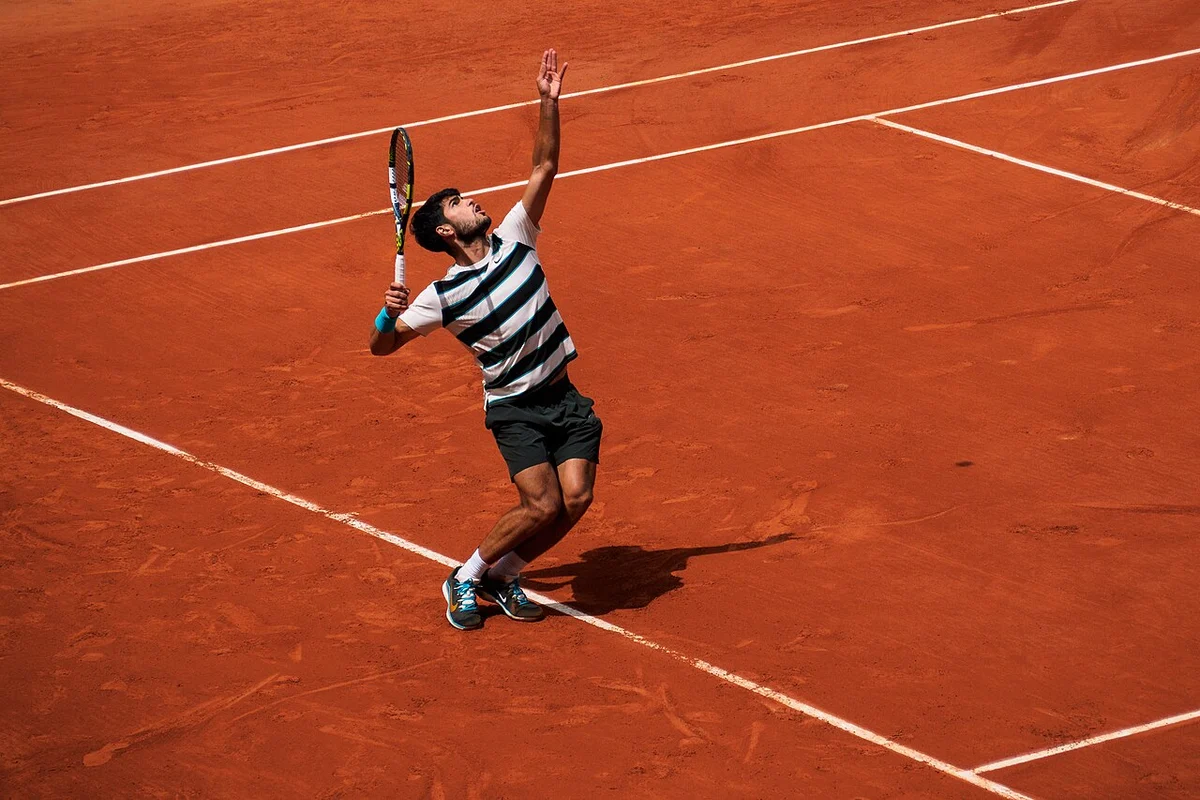
At 8–9 in the deciding match tiebreak against Taylor Fritz, Carlos Alcaraz needed a point to stay in the match. He served an ace. When another match point arrived, he saved it with a drop shot. Later, on his third chance to finish, he used another drop shot; Fritz reached it but could not get the reply over the net. Alcaraz won 6–3, 4–6, [13–11] at the 2026 Laver Cup.
An ace at match point down fits the familiar idea of trusting a weapon. A drop shot in the same situation often attracts a different verdict: genius if it works, unnecessary if it fails. That difference deserves scrutiny. The appearance of a shot tells us little about whether it was the best available way to win the point.
Alcaraz gave a straightforward explanation in BBC Sport’s report: “The drop shot is part of my game.” He also said it had been an effective weapon in that match. He was describing a reason to select the shot, not announcing a general policy of taking maximum risk when losing. For a player trying to compete better at club level, that distinction matters more than the audacity of the finish.
A highlight cannot calculate the risk for you
The report records the crucial points, the final score and 42 winners for Alcaraz against Fritz’s 20. It does not supply a complete set of drop-shot attempts, the alternatives available at each contact, or the chance that a conventional groundstroke would have won the same point. The winner totals therefore cannot establish that attacking was twice as effective. Nor can a successful drop shot prove it was the highest-percentage option.
We have not reconstructed these points from match footage. Claims about the exact contact height, Fritz’s starting position or the disguise in Alcaraz’s preparation would go beyond the evidence used here. What we can analyse is the decision problem: a player had a shot that was working, the score became severe, and he continued to use it. That is a more useful starting point than pretending to know his internal calculation.
Imagine two quite different opportunities in your own match. In one, you are balanced inside the baseline, the incoming ball is manageable, and the opponent is recovering deep. In the other, you are stretched behind the baseline with your weight moving away from the court. Calling both choices “a drop shot at match point” hides most of the information that matters. These are illustrative situations, not descriptions of Alcaraz’s points.
The scoreboard changes the cost of losing. It does not automatically improve the incoming ball or create a weakness in the opponent. Equally, it does not make a familiar attacking option disappear. If your only rule is to play the most visually ordinary shot, you may be choosing comfort over the best response to the actual situation.
There are two ways to misunderstand “trust your game”
The first is to treat confidence as permission to ignore the ball. A drop shot you enjoy hitting in cooperative practice may not be available against a heavy, deep reply. Naming it your favourite shot does not remove the demands of balance, contact and recovery. Trust becomes useful only when it includes recognising the situations in which a skill is dependable.
The second mistake is to remove every demanding option as soon as the score tightens. Some players spend an entire set making the opponent defend a combination of depth and short balls, then offer only cautious central replies at 5–5. They have changed the terms of the match. The opponent can settle into a position that was uncomfortable or unavailable before. Caution has a tactical cost even when it produces fewer obvious errors.
A better pre-point instruction is conditional: if the opportunity looks like one I have practised, I can use the shot; if it does not, I keep building the point. This is different from deciding in advance to be brave. It gives your attention a job—recognise the ball and opponent—rather than asking you to perform a personality trait under stress.
The drop shot also has consequences after it lands. An opponent may reach a mediocre attempt and still have to play up from a difficult position. Another may arrive comfortably and pass you. If you stay behind admiring the bounce, you give away a chance to cover the next ball. Judging only whether the opponent touched the shot misses the quality of the reply and your readiness to deal with it.
None of that guarantees a drop shot is wise on an important point. It means the review should include what you saw before contact, how well you executed and what you did next. A winning point can contain a poor choice rescued by an opponent’s miss. A lost point can begin with a sensible choice and an ordinary execution error. Keep those possibilities available when you review your match.
Make the decision part of practice
A basket of perfect short feeds can improve touch, but it removes the selection problem. Every ball arrives with permission to play a drop shot. A live rally does not. To bridge that gap, agree with a practice partner that points will begin with a neutral exchange and remain live. You may use the drop shot when you recognise an opportunity, and you must continue if your partner retrieves it. This is a suggested exercise, not an Alcaraz training routine.
After a short block, recall a few decisions rather than merely counting winners. Were you balanced? Had the opponent left useful space in front? Could you make your usual stroke preparation without rushing? Did you move to cover the reply? The answers need not become a complicated scorecard. They should help distinguish a shot that failed technically from one you attempted on the wrong ball.
Then start some points at an uncomfortable score, such as 8–9 in a match tiebreak. Do not make the drill a contest to hit a drop shot on every important point. That would reward the very behaviour you are trying to avoid. Keep both options available: play short when the conditions fit, or continue the rally when they do not. The practice target is retaining your decision process as the score changes.
A partner who knows the exercise will start looking for the short ball. That is useful too. You now have to notice the adjustment and remain willing to play deep. Variation has value partly because it changes what the opponent must protect. If you insist on the same surprise after it is no longer a surprise, you are demonstrating a shot rather than playing a point.
For players sensitive to their strings, there is a practical equipment detail to record: whether the response on a compact touch shot feels familiar. A fresh restring or a different racquet can change your perception of how much input the ball needs. Establish that feel in the warm-up and note the setup when comparing sessions. A tension reading can document a change; it cannot identify the correct moment to play short or explain the result of a single match point.
The finish was memorable; the explanation was ordinary
Alcaraz’s escape helped Europe stay in the contest, but it was not the trophy-clinching match. Europe later reached the required 13 team points when Alexander Zverev beat Learner Tien, after Flavio Cobolli and Jakub Mensik had won the doubles. Alcaraz did not have to play again. Keeping that sequence straight matters: one extraordinary finish belonged to a larger team result.
His explanation remains useful after the highlight loses its novelty. He used a shot that belonged to his game and had been useful against that opponent. That does not tell everyone else to copy it. It invites a harder question before your next pressure point: which of your practised options fits the ball in front of you, and are you about to discard it simply because the score looks frightening?
Sources and further reading
TENNIS TENSION LAB
Check your racquet’s tension today.
Get a high-precision tension reading in under 10 seconds. Tension Lab tracks changes from your first reading and helps you see when to restring.
- High-precision tension measurement. Ready in under 10 seconds.
- Track every change in feel. See the full story over time.
- Time to restring? Never leave it to guesswork.
Keep reading

Alcaraz brought back 76.5% of Djokovic’s first serves. The next number matters just as much
A closer look at Carlos Alcaraz’s first-serve return against Novak Djokovic: how getting the ball back and competing after the return combine to take away a server’s advantage.
8 min read
Still losing to pushers? Stop trying to prove you hit the better ball
Why experienced players lose to defensive retrievers—and how to change the geometry of the point without gambling on winners or rushing the net.
7 min read