Why Iga Świątek welcomed the long rallies in Beijing
A quick win saves energy. A few exchanges can tell you something a quick point never will. The useful question is what you learn before the rally ends.
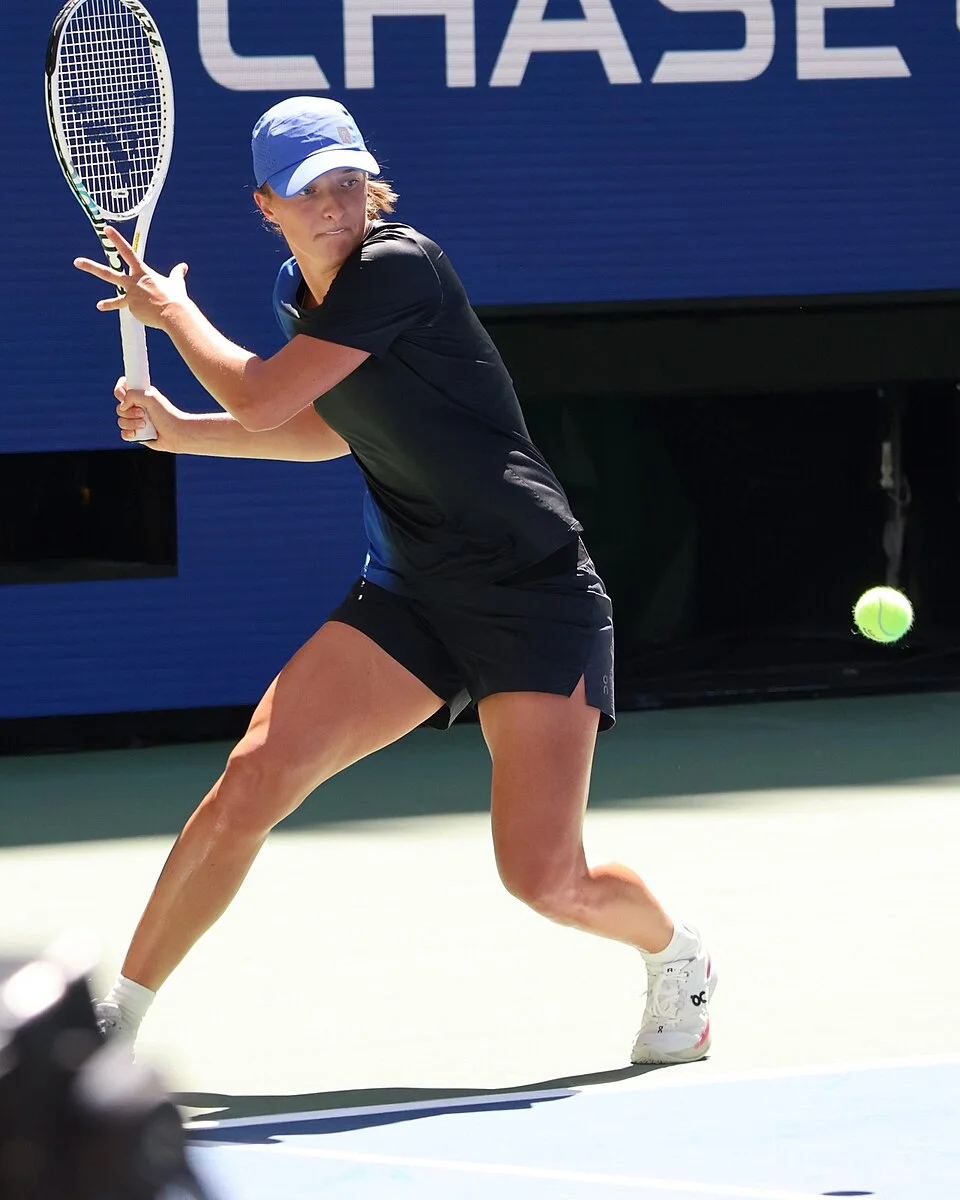
The most revealing part of Iga Świątek’s Beijing opening win was not the score. After beating Gao Xinyu 6–2, 6–3 on 3 October 2026, she singled out the long rallies as something she had enjoyed. They had given her a chance to find the court’s rhythm and feel the ball. An elite player had just won comfortably, and her account of a good afternoon included the points that had taken longer to finish.
That sounds counterintuitive if your usual measure of a clean performance is how quickly you dispatch a lower-ranked opponent. Świątek was the No. 8 seed and ranked ninth in the WTA’s report; Gao was a wildcard ranked 244th. Their match lasted 1 hour, 27 minutes. Yet an opening match has two jobs: advance through the draw and begin solving the playing conditions. Świątek’s comment brings the second job into view without pretending the first one becomes less important.
The WTA account does not give a rally-length distribution, a court-speed measurement or a technical explanation of the adjustment she made. It also does not say she deliberately prolonged points. Her observation is narrower and more useful: the exchanges gave her opportunities to establish a feel. That distinction matters for club players. You do not need to manufacture a twenty-ball rally or refuse a short ball to learn something from the shots you already have to play.
The ball you expect and the ball that arrives
Think about the first few games at a club you rarely visit. Your usual preparation produces contact a little too close to your body. The next forehand travels long. Immediately, there are several tempting explanations: faster balls, a lively court, a tailwind, tired legs or strings that no longer feel like yesterday. These are possible explanations, not observations. The observation you can use is simpler: where the ball met the racquet, and what you had done before it arrived.
A single spectacular miss encourages a large correction. A sequence of ordinary exchanges offers a better question. Are you repeatedly arriving late on balls of similar depth, or did one unusually deep shot rush you? Are the long balls coming from balanced contact, or only while you are falling backwards? Does the same problem appear at both ends? The answers direct you towards different adjustments. Moving your starting position, preparing earlier and changing your intended height over the net are not interchangeable solutions.
The useful unit is not the number of shots by itself. An eight-shot rally in which you spend every ball escaping may tell you plenty about your opponent’s pressure and little about your normal forehand. A shorter exchange of comparable balls can be easier to interpret. Świątek’s remark is a good invitation to pay attention; it is not evidence that longer rallies always create better adaptation, or that every player needs the same amount of hitting to settle.
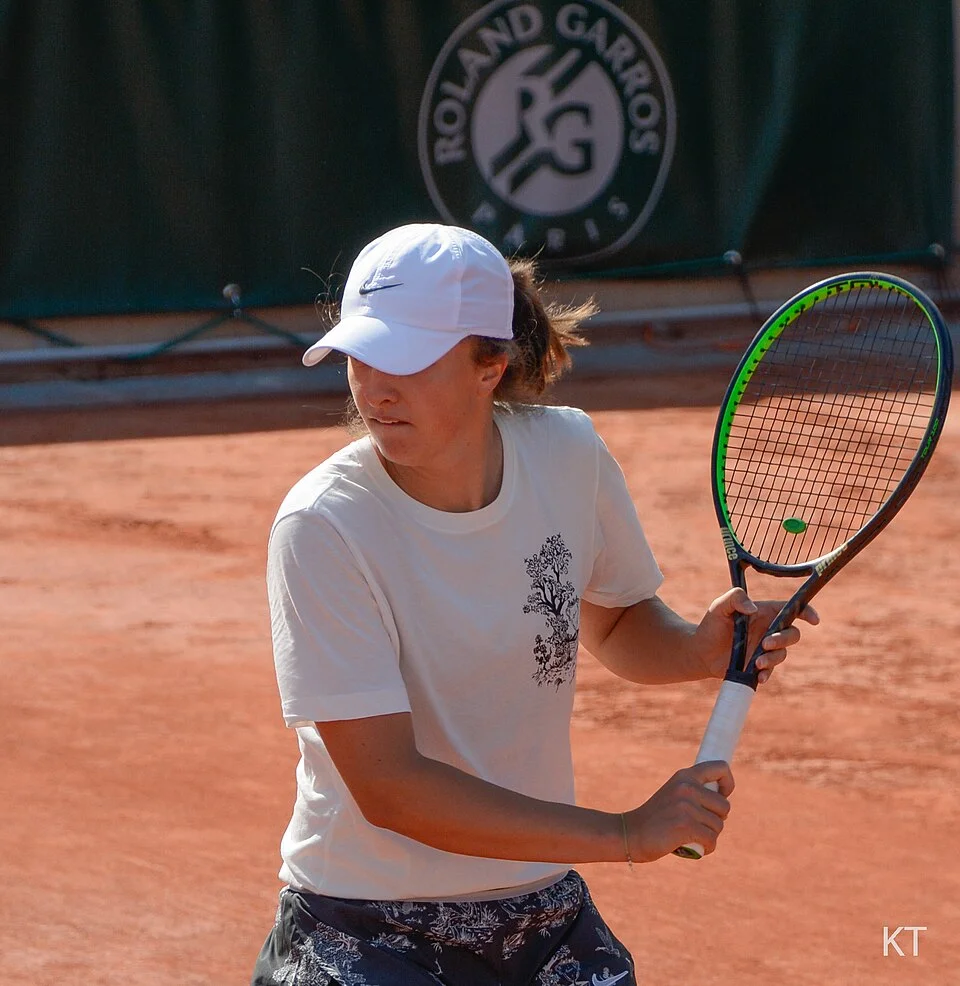
There is also a difference between rally comfort and match comfort. Cooperative warm-up balls arrive with relatively predictable intentions. An opponent changes depth, spin and direction because they want you to miss. You can feel beautifully calibrated in the warm-up and still need several competitive exchanges to discover which preparation survives that pressure. This is why a first-round score alone is a poor description of how much a player learned about the event.
A useful rally still has an exit
The practical danger is turning patience into a rule that forbids attacking. Suppose a neutral crosscourt exchange gives you three contacts from a stable position, then the next ball lands short. Stepping in is not abandoning the process. The preceding balls have helped establish your timing; the short ball is the opportunity that timing was meant to support. Keeping it crosscourt solely to reach an arbitrary rally count can hand the initiative back.
Now change the situation. You have been pushed well behind the baseline and are reaching outside the doubles alley. A low-percentage change of direction might finish the rally quickly, but speed of completion is not the same as control. A higher recovery ball with a larger target may give you time to regain position. The distinction is between extending a point because your situation calls for it and extending it because you have decided that long rallies are virtuous.
For an experienced player, a useful pre-match agreement with yourself is specific: start with a target you trust on neutral balls, allow the opening games to inform your spacing, and keep the permission to attack a ball you can genuinely reach in balance. That is an editorial practice suggestion, not a description of Świątek’s match plan. Her reported result supports neither a universal crosscourt prescription nor a claim that she won by waiting for Gao to miss.
There is an opponent in this calculation too. If they repeatedly end the exchange with a strong first strike, trying to collect more neutral-rally information may be unrealistic. Return position, the quality of your first ball and the pattern that gives them that strike become the immediate questions. Adaptation has to happen inside the contest available to you, not an imaginary practice session you wish the opponent would provide.
Before you take another racquet out of the bag
Players who notice small changes in string response often recognise unfamiliar conditions early. That sensitivity is useful, but it can also produce a very quick verdict. Two forehands fly, so the strings must be too loose. You swap racquets, alter your swing at the same time, and hit the next ball shorter. Which change helped? You have lost the comparison before establishing it.
During practice, separate those decisions. With the same racquet and a partner feeding a reasonably repeatable crosscourt ball, choose a generous target and observe several contacts. Make one spacing or preparation adjustment that fits what you saw. If you then compare another racquet, preserve the intended target and swing effort as far as practical. This is a way to make your own observation less muddled; it is not a laboratory test, and different incoming balls will still complicate it.
A recorded string-tension estimate can add context if it was taken consistently and compared with that string job’s own baseline. It cannot identify court speed, measure your timing or decide which racquet is correct for the day. An unchanged reading does not prove the entire stringbed behaves identically, either. Keep the note about the equipment alongside the note about contact and ball flight. Neither needs to impersonate the other.
In a match, you will rarely have the conditions for a neat comparison, and points should not be sacrificed to create one. If a change is necessary, make it with a clear reason and record the circumstances later. The useful habit is to resist changing tension assumptions, swing shape, target and court position after every error. A decision can be imperfect and still teach you something if you remember what it was meant to solve.
Świątek left Beijing’s second round with a place in the next round and, by her own account, a better feel for the court. Those gains can coexist. For the player arriving at an unfamiliar venue this weekend, the interesting question is not whether the first long rally was tiring. It is whether, when the next similar ball arrives, you know a little more about where to stand, when to prepare and which shot the situation actually allows.
Sources and further reading
TENNIS TENSION LAB
Check your racquet’s tension today.
Get a high-precision tension reading in under 10 seconds. Tension Lab tracks changes from your first reading and helps you see when to restring.
- High-precision tension measurement. Ready in under 10 seconds.
- Track every change in feel. See the full story over time.
- Time to restring? Never leave it to guesswork.
Keep reading
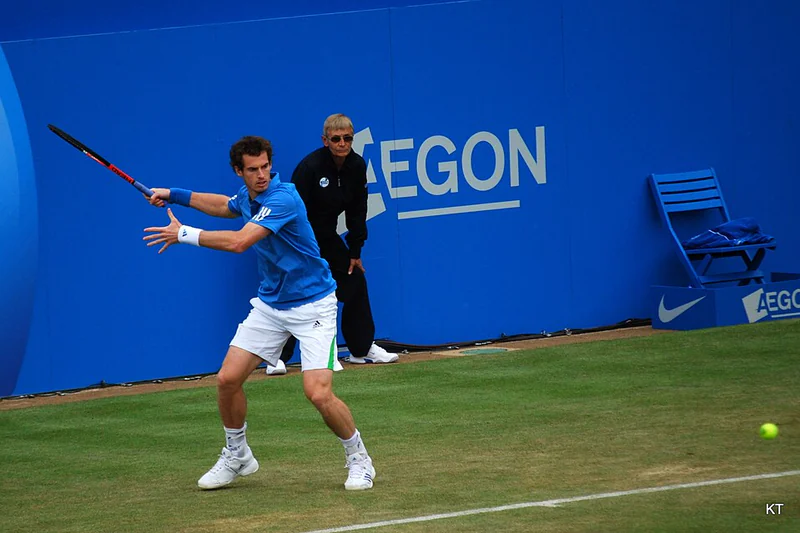
Still losing to pushers? Stop trying to prove you hit the better ball
Why experienced players lose to defensive retrievers—and how to change the geometry of the point without gambling on winners or rushing the net.
7 min read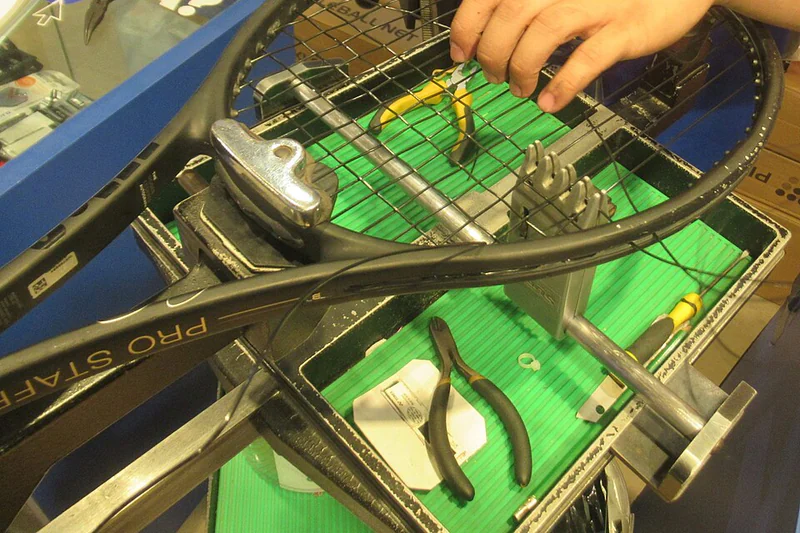
The first tension drop can mislead your next restring
A fair tension history separates the stringing-machine setting, the fresh stringbed reading and the first-session baseline. Here is how to compare strings without moving the starting line.
7 min read