No. 114 to a Roland Garros final: what Chwalinska’s variety made opponents solve
The final score was 6–3, 6–2. The route there, and the adjustment that settled it, deserve more than a quick label about slow tennis.
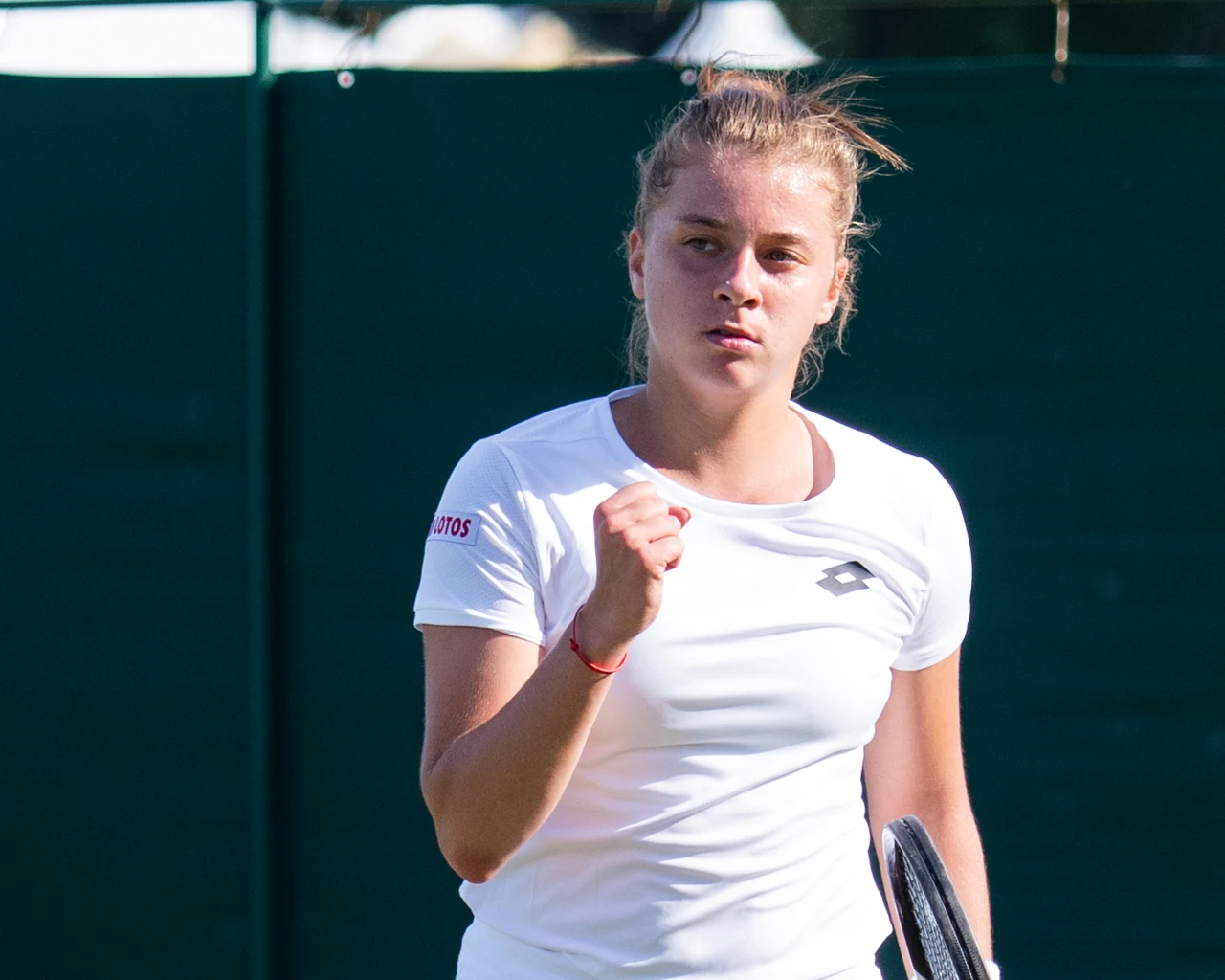
A 6–3, 6–2 defeat is an efficient way for a final score to hide a tournament. Maja Chwalinska lost the 2026 Roland Garros title match to Mirra Andreeva, but she had arrived there from qualifying, ranked No. 114. The player holding the runner-up trophy had done something the event had never seen in the Open Era, according to John Berkok’s report for Tennis.com on 6 June: a qualifier, woman or man, had reached its singles final.
Berkok also identified her as the lowest-ranked women’s finalist at Roland Garros in WTA rankings history. Those are different distinctions. One concerns the route into the main draw; the other concerns a ranking recorded before the run. Neither can be erased by the last afternoon, and neither requires pretending the final itself was close from start to finish.
For players who watch tennis partly to find solutions for their own matches, Chwalinska’s story has another attraction. Her game asked opponents to deal with height, spin and angles rather than offering the same pace repeatedly. Andreeva ultimately found a strong answer. Watching where that answer began is more useful than deciding that the winner played “real” tennis and the finalist merely made it awkward.
At 3–2, the final had not yet become its final score
The opening sequence in Berkok’s account is striking. The players traded breaks for four games, reaching 2–2, before Chwalinska held to love for 3–2. Her changes of spin, high balls and angles were disrupting Andreeva’s comfort. The score gives that observation a place in the match: this was the early phase, not a claim that Chwalinska controlled the entire final.
Then Andreeva began taking the initiative farther inside the court, according to the report. From 2–3 she won nine games in a row to lead 6–3, 5–0. That is a decisive change, but it is not explained merely by saying she hit harder. Moving forward can alter when an opponent has to respond and how much court is available for the next ball. The report describes a positional response to the problem, not a radar measurement proving that speed alone solved it.
Chwalinska stopped the run by holding, then broke when Andreeva first served for the championship. At 5–2, Andreeva broke again and finished with a crosscourt backhand winner. This is worth keeping in the story because the score did not travel in a straight line from difficulty to perfect command. The champion had established a large advantage and still had to close the match after her first attempt failed.
Steve Tignor’s separate analysis supplies a more detailed moment within that winning run. With Andreeva leading 2–0 in the second set, she fell to 0–40 on serve. She saved all three break points, held and then broke to love. Nine games in succession did not mean nine games without danger. A streak records who won the games; this episode shows how close one of them came to changing direction.
Extra time is not always comfortable time
A slower ball can give a hitter more time to move. It can also ask the hitter to do more with that time. There may be less incoming pace to redirect, a different contact height to organise and a decision about whether to wait, retreat or step forward. That is a tactical interpretation of the problems created by varied balls, not a claim that the reports measured the speed or bounce of every Chwalinska shot.
Calling this style passive skips the work being imposed on the opponent. A high ball may delay the exchange while changing the next contact. An angle can draw a player away from a preferred position without being the hardest shot of the point. Variation is not automatically a good choice on every ball, but its value is not exhausted by the number of clean winners it produces.
The final also shows why the opposite romantic story is too easy. Variety does not make a player impossible to attack. When Andreeva could step in and combine purposeful pace with sufficient safety, she made Chwalinska defend more of the exchange. Tignor described the champion’s late-tournament tennis as an effective balance of depth, speed and spin. That is a richer account than a contest between cleverness on one side and brute force on the other.
The published match totals were 25 winners and 26 unforced errors for Andreeva, with 10 winners for Chwalinska. Those numbers do not provide a point-by-point map of what forced an error or how each rally developed. They do, however, discourage a spotless-performance myth. Andreeva could make errors, respond to an awkward opponent and still win decisively. A successful adjustment does not require the error column to become zero.
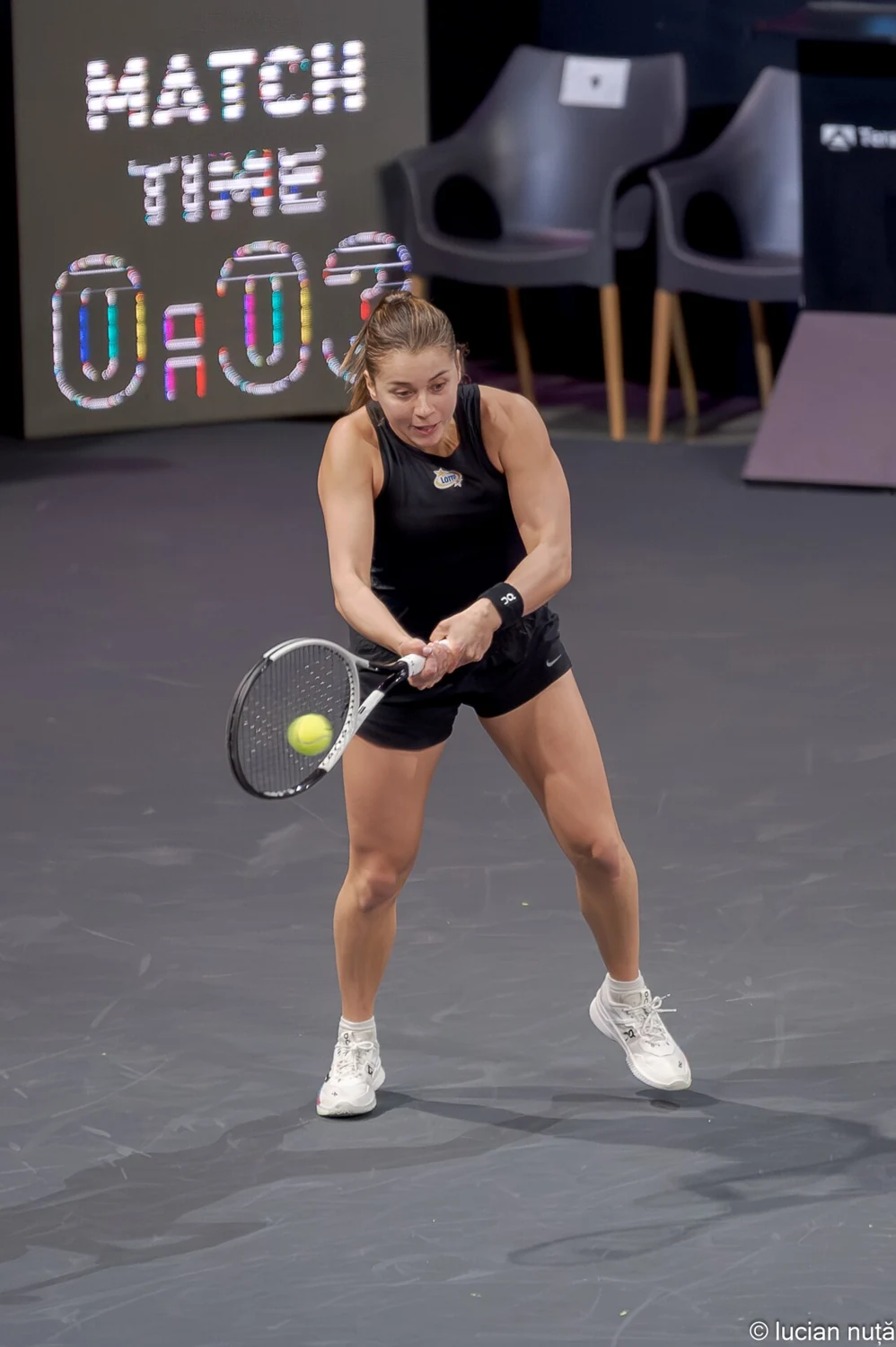
The ranking jump was a projection, the final was already real
On 6 June, Berkok projected the 24-year-old Chwalinska to move from No. 114 to No. 21 when the next ranking was published on Monday. Her previous career high in that report was No. 113. That is a projection attached to the end of the tournament, not a statement of her ranking today. Retelling a breakthrough months later should preserve that date rather than quietly turn a forecast into a current profile.
The difference matters beyond bookkeeping. A ranking before a tournament summarises an earlier body of results; the draw being played is new evidence. Chwalinska did not become a different kind of opponent each time the projected number beside her name changed. Opponents still had to solve the ball in front of them. For a reader, the ranking explains the surprise of the run without explaining away the tennis that produced it.
Nor should qualifying be treated as a personality trait. It describes how she entered this main draw. The tournament record establishes what she achieved afterward. A finalist can be an unlikely entrant and a demanding opponent at the same time, without being turned into either a lucky visitor or an inevitable future champion.
What a useful replay would look for
If you revisit this final, follow positions as well as shots. Where does Andreeva receive a high ball during the opening games, and where is she when she starts dictating more often? Does stepping in produce an immediately attackable reply, or does she still need another controlled ball? The written reports support the broad change; answering those finer questions requires watching the actual points, not filling the gaps with imagined footage.
For an experienced player comparing the matchup with an opponent at the club, the transferable question is not whether the other person hits slowly. It is what their ball makes you change. Contact height, distance from the baseline and recovery position are more specific observations than irritation at a style. They can also reveal why the same decision works against one high ball and fails against the next.
Chwalinska’s final was ultimately won by an opponent who adjusted better and sustained the stronger stretch. Her tournament was still a historic arrival from qualifying. Holding both ideas together gives this story its value: the final explains one matchup, while the three weeks explain why a player ranked outside the top 100 earned the right to be in it.
Sources and further reading
TENNIS TENSION LAB
Check your racquet’s tension today.
Get a high-precision tension reading in under 10 seconds. Tension Lab tracks changes from your first reading and helps you see when to restring.
- High-precision tension measurement. Ready in under 10 seconds.
- Track every change in feel. See the full story over time.
- Time to restring? Never leave it to guesswork.
Keep reading
Still losing to pushers? Stop trying to prove you hit the better ball
Why experienced players lose to defensive retrievers—and how to change the geometry of the point without gambling on winners or rushing the net.
7 min read
Diane Parry’s one-handed backhand is only part of the attraction
Thomas Hogstedt pointed to Parry’s touch as well as her one-hander. His coaching perspective offers a sharper way to evaluate variety than deciding whether an unusual stroke looks modern enough.
8 min read