You changed “out” to “in.” Is the point replayed—or already lost?
“Let’s play it again” can sound fair and still be the wrong ruling. The key is who made the original call and which procedure applies to the match.

“Out. Sorry, that was in—shall we play it again?” It sounds like the fairest way to fix an honest mistake. In a match governed by USTA’s guidance for play without officials, that familiar offer normally gets the consequence wrong. When you reverse your own out call to good, the opponent gets the point. You do not keep the rally alive by offering a replay.
The confusion is understandable because a correction by a chair or line umpire can have a different outcome. Players remember a televised point being replayed after an official’s call was corrected and apply that memory to their own match. The missing question is who made the call, and which procedure governs the court. Start there, rather than with what looks like the friendliest compromise.
The correction is required even when certainty disappears
Section 12 of The Code in the 2026 USTA Friend at Court says a player must reverse an out call on realizing the ball was good—or on becoming uncertain. That second situation matters. You do not need a new, perfectly clear mental image proving the ball touched the line before correcting yourself. Once you no longer have the certainty needed to call it out, the guidance tells you to reverse the call.
The consequence in that provision is the opponent’s point, not a replay. This applies to the correction of your own call in the USTA unofficiated setting discussed here. It is not a claim that every correction in every competition worldwide has the same consequence. An event’s governing rules and officiating arrangements still need to be identified, especially when electronic calling or officials are involved.
There is one express service exception in §12: if a receiver reverses a fault call on a serve that touched the net, the server is entitled to two serves. Keep all of those details together. It is not a general second chance whenever a serve call is corrected, and it is not permission to replay any rally in which the ball brushed the net.
Four situations that get mixed together
| What happened | Relevant consequence | Why “let’s replay” can mislead |
|---|---|---|
| You never called the ball out and cannot be sure it missed. | Under The Code, a ball that cannot be called out is good. | Not seeing it clearly does not entitle you to a let. |
| You called out, then realized it was good or became unsure. | Reverse the call; the opponent gets the point under §12, subject to its net-serve exception. | Correcting an honest mistake does not ordinarily restart the point. |
| One doubles partner called out; the other saw the ball good. | Give the opponents the favourable call; if out is changed to good, §12 applies. | The team does not settle the disagreement by splitting the difference with a replay. |
| A chair or line umpire called out, then corrected it to good. | The chair decides whether the original call hindered either player: replay if it did; otherwise the player who hit the ball wins the point. | This official-correction procedure is different from reversing your own call under The Code. |
Consider a hypothetical baseline rally. You call the opponent’s deep ball out, then your doubles partner says it caught the line. Under The Code, the ball is good and the correction follows §12. It is not necessary to stage an argument about whether the opponent would have reached your next shot. That counterfactual belongs to the wrong way of processing this particular self-correction.
Now change the scenario: the original call came from an official. Appendix VII, Case 7, directs the chair umpire to assess whether the call hindered either player. If it did, the point is replayed; if it did not, the player who hit the ball wins the point. That is why remembering a replay from an officiated match does not settle your club-court dispute. The two examples have different decision-makers and different instructions.
A partner’s better view is information, not disloyalty
Section 14 is direct about doubles disagreement. If one partner calls out and the other sees the ball good, the call most favourable to the opponents takes priority. The text suggests telling the partner quietly and allowing that partner to concede the point. It values giving the opponents the benefit of doubt above avoiding embarrassment inside the team.
The practical habit is to make correction easy. Before a match, agree that either partner can supply a clearer view without starting a loyalty test. “I saw it touch the line” is useful information. Whispering that observation and then maintaining the out call to protect the partnership is not what the guidance describes. Nor does being the player who hit the return make your line view automatically superior.
Section 9 allows either doubles partner to make calls and notes that looking along a line is more likely to give an accurate view than looking across it. That does not create a permanent captain for every call. It explains why the two positions can produce different information. Resolve the particular call by the prescribed benefit of doubt, rather than treating the louder partner as the final authority.
Uncertainty is not a third result between in and out
Sections 6–8 establish the foundation: give the opponent the benefit of doubt, treat any part of a ball touching the line as good, and treat a ball you cannot call out as good. The Code specifically rejects a let simply because you did not see the ball clearly. A close bounce does not create an extra category in which neither player has to accept the result.
This also discourages a habit that causes avoidable disputes: making an ambitious out call first, then offering a replay if challenged. The call should be based on the view you actually had. The fact that you are willing to replay does not repair the standard used to make the original decision. Conversely, a genuine correction should be acknowledged calmly; admitting a mistake is exactly what the procedure requires.
The score does not change that standard. Section 10 says points are treated the same regardless of importance. A match point is not a reason to demand greater generosity from an opponent or to become more certain than the view permits. Apply the same process at 0–0 and at the point that decides the match.
The people beside the fence do not become the review system
Section 16 says spectators do not make calls and that a player must not enlist them to decide one. Someone watching from an excellent angle may be convinced they know what happened. That does not give them a role in the match under this guidance. Asking the crowd to vote usually adds confidence and noise without adding an authorized decision-maker.
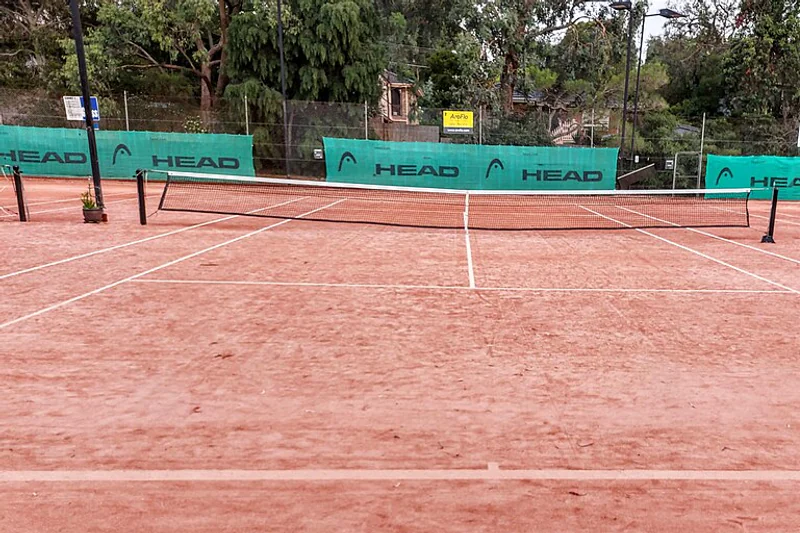
Clay marks require their own care too. Section 21 tells players that a mark touching any part of the line means the ball is good, and warns that a ball can strike the tape, jump and leave a full mark behind the line. It also says an opponent must not cross the net to inspect a mark. Do not turn a useful second look into a claim that any visible patch behind the line proves the ball missed it.
If an official is available and the disagreement is about how the rule works, ask for the applicable procedure rather than demanding a fresh spectator verdict on the bounce. Describe whether there was an out call, who made it, whether it was corrected, and whether the serve touched the net if that exception is relevant. Those details resolve more than repeating “we always replay that at our club.”
Correcting the call and accepting the consequence are parts of the same act. Under The Code, the usual response is brief: acknowledge that the ball was good or that you are no longer certain, concede the point, and establish the score before continuing. That leaves less room for the next rally to start with two different versions of what just happened.
Sources and further reading
TENNIS TENSION LAB
Check your racquet’s tension today.
Get a high-precision tension reading in under 10 seconds. Tension Lab tracks changes from your first reading and helps you see when to restring.
- High-precision tension measurement. Ready in under 10 seconds.
- Track every change in feel. See the full story over time.
- Time to restring? Never leave it to guesswork.
Keep reading
You shouted “get back” to your doubles partner. Why can that cost you the point?
USTA’s short-lob example explains when doubles communication becomes deliberate hindrance, why a late claim fails, and why grunts and involuntary cries need different treatment.
8 min read
You can reject the toss. Why do you keep serving from it?
Catching an abandoned service toss is different from swinging and missing. Know the rule, keep the match moving, and practise the decision before a double fault makes it expensive.
8 min read