You shouted “get back” to your doubles partner. Why can that cost you the point?
Talking to your partner is not a blanket exemption. The direction of the ball, interference with the opponent and the timing of the claim decide the familiar short-lob dispute.
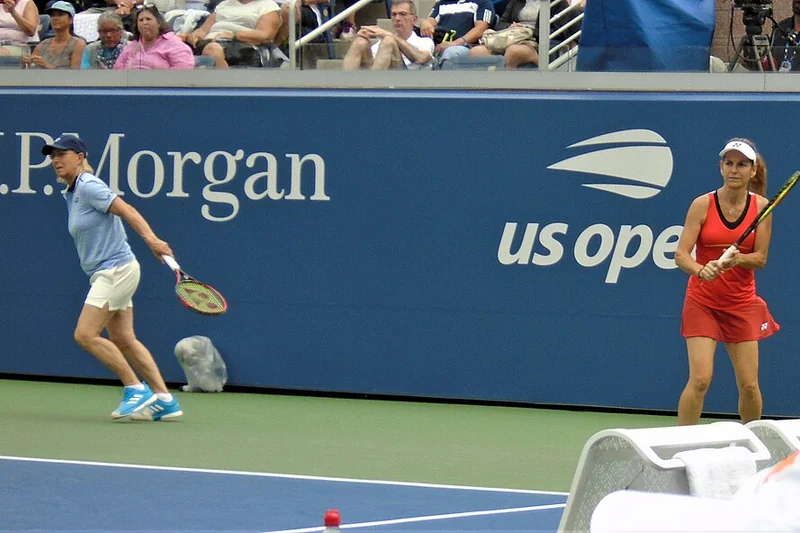
Your lob is short. Your partner is still close to the net. You shout for them to get back, the opponent hesitates under the overhead, and suddenly the argument is about whether you owe them the point. “I was talking to my partner” sounds like a complete defence. Under the USTA guidance for unofficiated play, it is not. The direction of the ball and the effect on the opponent matter more than the person you meant to address.
There is an equally important limit on the other side. An opponent cannot normally try the overhead, miss it, and then use your shout as insurance against the error. The published example says the claim must be timely. Understanding both halves of that exchange is more useful than learning a slogan that doubles players are either always allowed to communicate or must always remain silent.
The short-lob example is already in the book
The 2026 edition of USTA’s Friend at Court includes The Code, which sets out procedures for play without officials. Section 34 describes a player hitting a weak lob and shouting “get back.” If that distracts an opponent who is about to strike the ball, the opponent may claim the point for deliberate hindrance. If the opponent elects to play the lob and misses, the point is lost because the hindrance claim was not made in time.
This is not a hypothetical interpretation invented to punish noisy doubles teams. It is the situation the USTA text itself chooses to explain the rule. Nor does it mean every audible word automatically costs a point. The example includes interference with the opponent’s play, and its outcome depends on what the opponent does next. Leave out either condition and you change the example.
Keep the scope clear when sharing this advice. The Code is USTA guidance for unofficiated play; it should not be presented as a complete substitute for every federation’s competition procedures or the decisions of a chair umpire. The underlying ITF Rule 26 distinguishes deliberate hindrance, which awards the hindered player the point, from unintentional hindrance or an outside event, which can require a replay. The USTA text adds the practical communication and claiming guidance used here.
Follow the ball, not just the conversation
| Situation | What the guidance says | What to avoid concluding |
|---|---|---|
| The ball is moving toward your team | Communication between doubles partners is allowed. | This does not license speech that interferes with an opponent’s ability to play. |
| The ball is moving toward the opponents’ court | Doubles players should not talk. | A message intended for your partner is not automatically exempt. |
| Your short-lob warning distracts an opponent about to hit | A timely claim can award the opponent the point for deliberate hindrance. | Not every sound means an automatic point, and a missed shot is not a second chance to claim. |
A call about who will take an incoming ball belongs to a different moment from a warning after your weak reply is already travelling toward an opponent. The first helps your team organize the shot it must play. In the short-lob example, the second intrudes on the opponent’s preparation. Merely lowering the volume is not a universal solution: the text turns on interference, not a decibel threshold it never supplies.
The word deliberate also causes arguments. A player may insist that the warning was well meant rather than an attempt to cheat. That is not enough to remove the published example from the deliberate-hindrance category. You do not need to accuse the player of dishonesty to explain why the point can be lost. The rulebook already treats the chosen shout in that situation differently from an involuntary cry after an injury or a bee sting.
Why playing on can give away the claim
Section 33 says a player claiming a hindrance must stop play as soon as possible. That is the part worth remembering when a shout genuinely disrupts your overhead. Do not wait to see whether your shot goes in. The Code’s short-lob example expressly rejects claiming the point after choosing to play the ball and missing it. A prompt claim identifies the interruption; a late claim can look like an attempt to get a second outcome from the same shot.
The same principle does not require theatrical confrontation. State promptly that play has stopped because the shout interfered with the shot, then identify the timing and what occurred. “You called while I was about to hit the overhead” is more useful than “you are always too loud.” Where a competition official is available, involve that official in a disagreement rather than expanding a factual dispute into accusations about a player’s character.
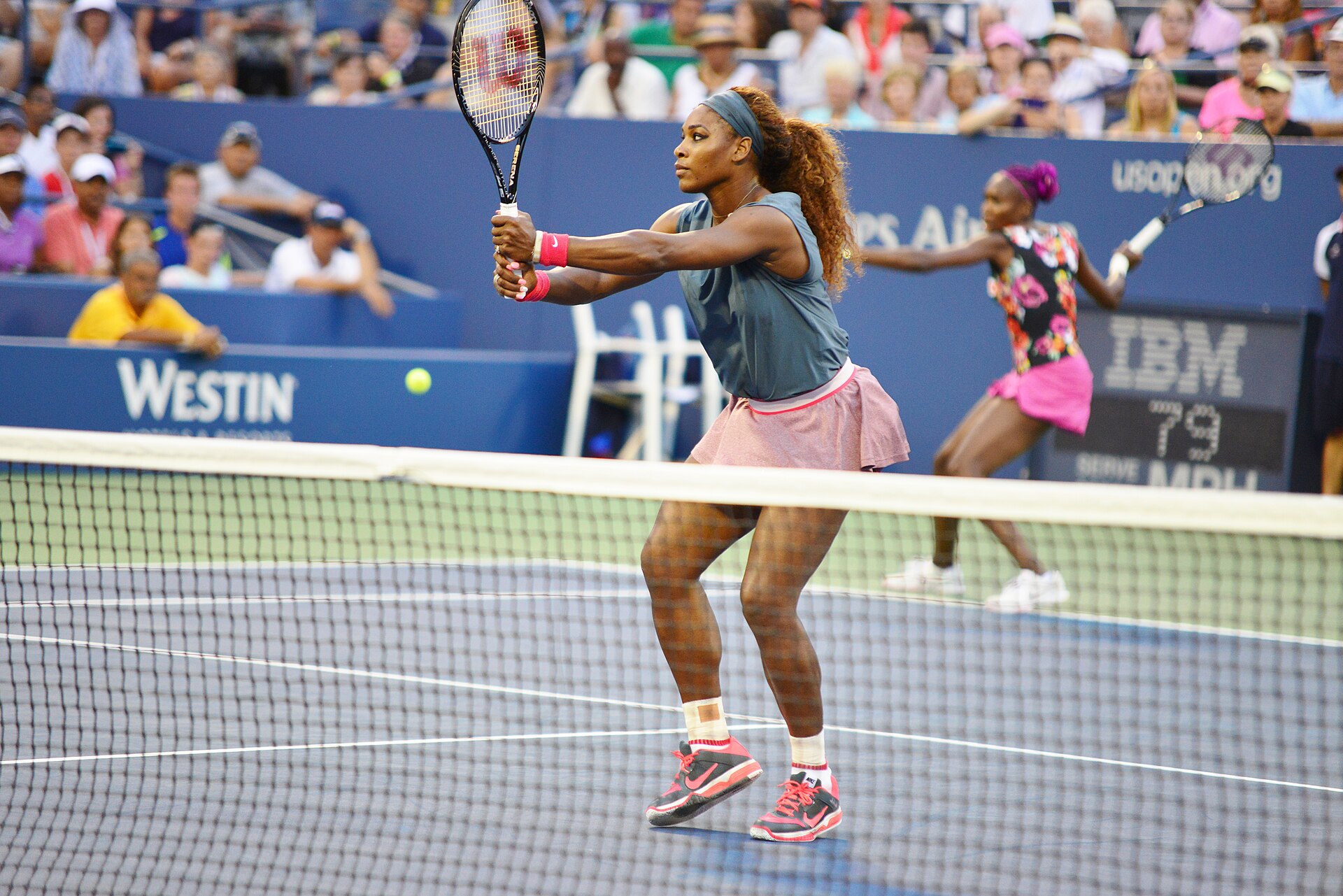
A warning, a cry of pain and a grunt are not one category
The Code contrasts the short-lob shout with a cry after an injury or a bee sting, which it describes as unintentional hindrance and a possible let for the opponent. Section 36 adds a condition that often disappears in retellings: the player claiming a let must have been able to make the shot without the hindrance. A disturbance does not rescue a ball the player could not have reached anyway.
Grunting has its own guidance in §37. For grunting and other loud noises covered by that section, only an official may rule a hindrance and decide a replay or loss of point, including consideration of a prior warning. Do not take the short-lob communication example and apply it mechanically to every grunt you dislike. Similar sounds can fall under different procedures, which is why quoting only the word hindrance rarely settles the argument.
Movement is different again. Section 35 allows a player to feint with the body and change position while the ball is in play, including during the server’s toss. It does not permit movement or noise made solely to distract, such as waving a racquet or stamping feet for that purpose. Ordinary positional pressure at the net is not the same thing as manufacturing a distraction. Assess the actual action instead of assuming that anything visible or audible must be illegal.
Build the communication before the emergency
For a regular partnership, the practical answer is to do more of the organizing before the point. Agree who handles a lob over each player, how you switch, and what position you want after a defensive reply. These are editorial suggestions for reducing last-second confusion, not rules requiring a particular formation or a report of how the photographed players communicate. A shared plan removes some of the need to shout instructions at the opponent’s hitting moment.
During practice, notice when your warnings arrive. If they routinely come only after you have sent a weak ball toward an opponent, the problem may be late recognition rather than insufficient volume. Work on recognizing the defensive situation while the ball is still coming toward your team. The objective is useful information at a suitable time, not a secret vocabulary that supposedly makes any later shout legal.
If the argument has already happened, describe the sequence in order: where the ball was travelling, who was preparing to strike, what was said, whether it interfered, and whether play stopped promptly. That account gives the relevant procedure something to work with. A general claim that partners are allowed to talk leaves out the decisive details; a general demand for silence leaves out legitimate doubles communication.
The experienced partnership does not need a running commentary to stay connected. It needs clear agreements, timely calls while organizing an incoming ball, and the discipline to let opponents play their reply. In the short-lob situation, “I only meant to help my partner” can be true and still fail to save the point.
Sources and further reading
TENNIS TENSION LAB
Check your racquet’s tension today.
Get a high-precision tension reading in under 10 seconds. Tension Lab tracks changes from your first reading and helps you see when to restring.
- High-precision tension measurement. Ready in under 10 seconds.
- Track every change in feel. See the full story over time.
- Time to restring? Never leave it to guesswork.
Keep reading
You can reject the toss. Why do you keep serving from it?
Catching an abandoned service toss is different from swinging and missing. Know the rule, keep the match moving, and practise the decision before a double fault makes it expensive.
8 min read
Siniakova and Patten beat Sabalenka and Djokovic. The next match complicates the story.
A 10–2 finish beat the US Open’s top mixed doubles seeds. A later 8–10 defeat explains why Siniakova and Patten’s day was more interesting than specialists versus singles stars.
8 min read
5–0 was not the finish: the Williams sisters and the lead a tiebreak can take away
Serena and Venus Williams led the deciding US Open tiebreak 5–0 before losing 10–7. Their 2026 doubles return shows why a big lead still leaves two teams with work to do.
8 min read