Djokovic plays less. Why is the last part of a tournament still so hard?
Being good enough to reach the closing rounds is one achievement. Having enough left when you arrive is another.
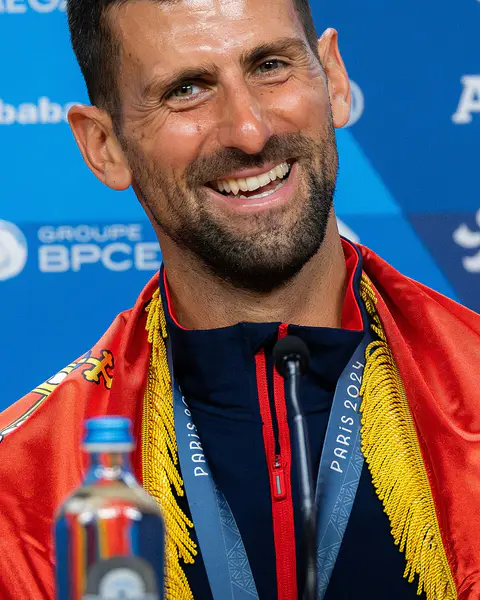
The usual advice sounds almost too obvious: if a tennis player is struggling with a demanding season, enter fewer tournaments. Novak Djokovic has already been doing that. The more interesting question is what a lighter calendar can solve—and what it cannot promise once a long tournament begins.
BBC Sport’s 20 August 2026 report on a documentary about Djokovic set two observations beside each other. He had restricted his schedule in recent years, playing few events outside the Grand Slams. Yet he had reached at least the semi-finals at six of the previous seven majors. The same report recalled his description, after losing to Jannik Sinner at Wimbledon in 2025, of reaching the later stages with the “tank half-empty”.
Read together, those details resist both easy retirement talk and easy reassurance. The record described a player still repeatedly reaching the strongest end of the draw. His comment described the experience of competing there. A deep result does not invalidate a player’s account of the cost, and the account of a cost does not erase the level required to produce the result.
A calendar has blank weeks. A draw has rounds.
Choosing fewer events changes how often a player has to travel to and begin a competition. It does not change the number of rounds needed to win the event he has chosen. Nor does it guarantee that an early opponent will cooperate by losing quickly. The first match can be a straightforward win or a long problem, and the next round still waits on the schedule.
That is the central distinction in this article: preparation for the start and resources available near the finish are related, but they are not interchangeable. This is an interpretation of the scheduling problem, not a diagnosis of Djokovic’s fitness. The two reports do not provide his training load, recovery measurements or a comparison with the calendar he might otherwise have played. They cannot tell us whether an extra event would have helped, hurt or made no difference.
There is also an obvious tension in assessing selective schedules. Competitive matches can provide information that practice does not reproduce exactly: serving for a set, returning with the score against you, and making decisions when an opponent refuses your preferred pattern. More events also mean more matches to complete. A player and team have to decide how to balance those demands; outsiders do not acquire the answer merely by noticing empty weeks.
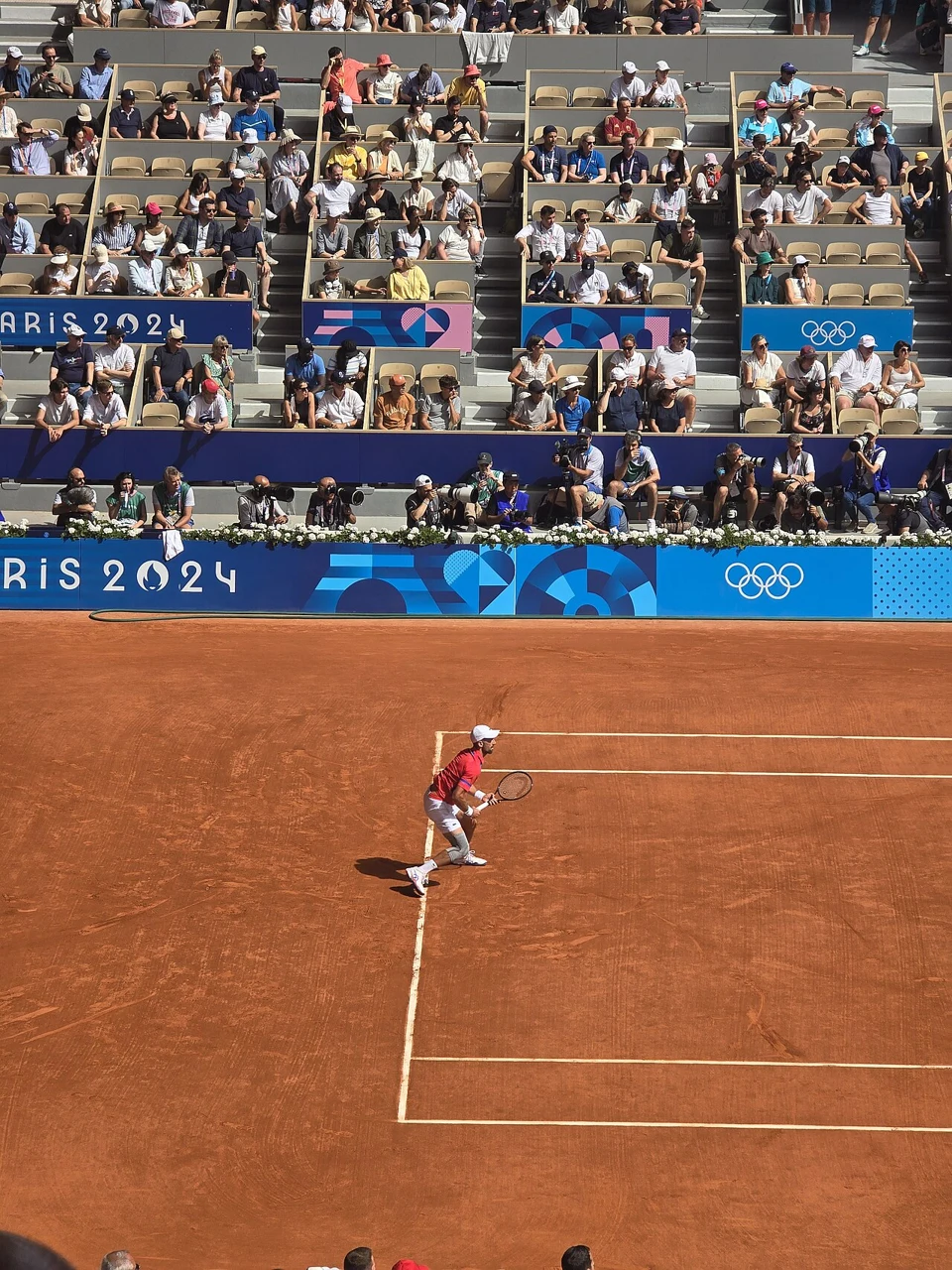
Thirty wins in Beijing did not mean thirty wins that season
A later report offered another useful warning about compressed tennis stories. On 30 September 2026, BBC Sport reported Djokovic’s 6–3, 7–6(2) win over Nuno Borges at the China Open. It was his 30th consecutive match victory at that tournament, but his first appearance there since 2015. The streak connected visits separated by years. It was not evidence that he had played 30 consecutive winning matches during the 2026 season.
The match lasted one hour and 50 minutes. The report described difficulties in the second set and treatment to his right shoulder during a medical timeout. It also referred to an underlying health condition he had publicly discussed in August. None of that lets a reader assign a specific diagnosis, infer an equipment cause or prescribe a different schedule. It does show why “he came back and won” is an incomplete description of the day.
Equally, the visible difficulties do not entitle an observer to turn the win into proof that continuing was the wrong career decision. We know the reported result and the reported treatment. We do not have the medical assessment behind his choices. Sport is full of arguments that become confident precisely where the available information ends.
Ambition does not come with an expiry date
In the August documentary report, Djokovic spoke about still wanting to prove to himself that he could win and about continuing while he felt capable of being among the world’s best. He did not name a fixed retirement date. His wish to reach the 2028 Los Angeles Olympics was an aspiration, not a confirmed itinerary or a promise about how he would feel two years later.
The same report included his own account of persistent self-doubt and of continually wanting to be better. It would be reductive to turn that into a universal motivational lesson: doubt more and you will win more. Nor should it be treated as a psychological diagnosis. What matters here is that the reasons for playing and the resources needed to play can be discussed separately. The desire to compete is real; it does not automatically answer the workload question.
That separation is useful for experienced recreational players, too. Enjoying competition, being able to produce an excellent set and being ready for a crowded tournament weekend are three different observations. A player can honestly say yes to the first two and still be uncertain about the third. Acknowledging the uncertainty is more useful than arguing over whether the player is still “good enough”.
Plan for the match after the good match
Imagine a club player entering both singles and doubles over a weekend. The first singles round goes well; the hitting feels clean and the serve holds up. It is tempting to treat that performance as confirmation that the schedule was right. But the practical decision concerns the whole entry: how many matches could be required, how they might be grouped, and what the player has previously managed comfortably. This is a hypothetical example, not a claim about Djokovic’s preparation.
Before entering, the useful document is often the event format and timetable rather than a motivational video. Check whether matches can fall on the same day, whether singles and doubles may overlap in the schedule, and what the organiser actually promises about rest. Do not assume that a format used at one tournament applies at another. If the timetable is provisional, keep that uncertainty in the decision.
After playing, a short record can separate the performance from its repeatability. Note the actual duration, when another match began, which parts of the game became harder to execute, and how you felt afterward. “Won the opening match” and “struggled to prepare normally for the next one” can both be true. The record is an aid to a future scheduling discussion, not a fatigue score or a medical assessment.
If there is a recurring problem, the next decision need not be a verdict on your entire tennis life. It might concern entering one draw instead of two, choosing a different event format, or discussing preparation with a qualified coach. Pain or health symptoms require appropriate professional advice rather than a tougher tournament plan. The aim is to choose a demand you can evaluate, not to imitate a champion’s calendar without the team and information behind it.
Djokovic’s story is compelling because the two halves remain visible: the exceptional level that brings him into late rounds, and his own description of what arriving there can cost. Counting the tournaments he skips tells only part of that story. For anyone planning a competitive season, the better question is not just how fresh you can be at the first coin toss. It is what sort of tennis you can reasonably expect to bring to the match after the match you most enjoyed.
Sources and further reading
TENNIS TENSION LAB
Check your racquet’s tension today.
Get a high-precision tension reading in under 10 seconds. Tension Lab tracks changes from your first reading and helps you see when to restring.
- High-precision tension measurement. Ready in under 10 seconds.
- Track every change in feel. See the full story over time.
- Time to restring? Never leave it to guesswork.
Keep reading
Alcaraz finished at 3:34am. Who should pay for tennis running late?
After a four-hour, 28-minute US Open quarter-final against Ben Shelton, Carlos Alcaraz questioned the schedule. Wimbledon shows both the value and the cost of setting a finishing boundary.
8 min read
Sabalenka won 6–1, 6–3. The more revealing contest was with her own expectations
After her Beijing opener, Aryna Sabalenka described the cost of demanding more from herself. What experienced players can learn about keeping a high standard without carrying every mistake into the next point.
8 min read