Hyper-G Soft or lower-tension Hyper-G? Make the comparison before buying the reel.
One option changes the formulation. The other changes the starting tension. Three fresh string jobs can make the choice clearer than comparing a new Soft bed with worn Hyper-G.
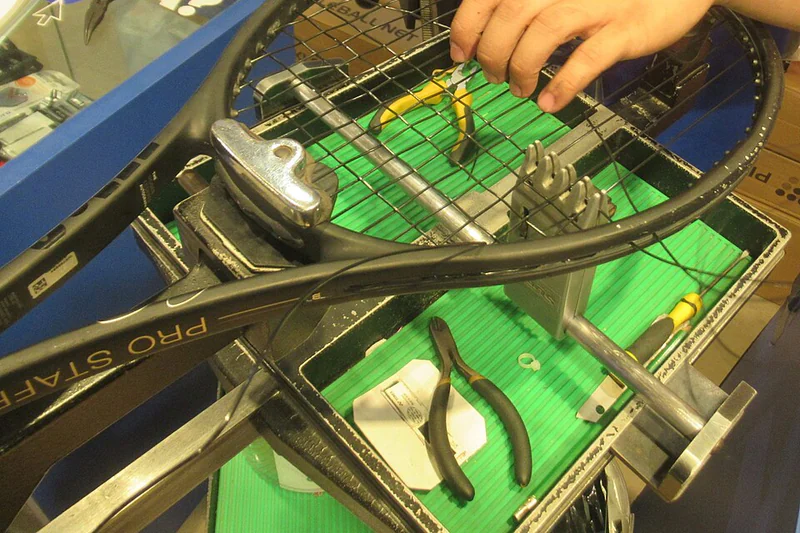
You like Hyper-G when you can take a full swing. What you want to change is the firm response on the shots where the ball arrives too quickly or the contact is less clean. The obvious shopping answer is Hyper-G Soft. The obvious stringer’s answer is to try your usual Hyper-G at a lower reference tension. Both deserve consideration, but they answer different questions. Before buying another reel, decide which question you actually need answered.
If the original string already gives you the trajectory and response you want, a tension adjustment is the more direct way to find out whether the installation is too firm for your preference. If you want to compare the Soft formulation with the original, keep the other major choices steady first. Changing product, gauge and tension at once can produce a favourite setup. It cannot tell you which change deserves the credit, which is a problem when the next restring does not feel the same.
What the two product pages tell you
Solinco describes Hyper-G as a shaped co-polyester designed for control, power and spin. It describes Hyper-G Soft as a softer co-polyester using a softening formulation, and also advertises improved tension maintenance. Those are useful statements about product positioning. They are not an independent measurement of how much softer one will feel in your frame, or proof that the Soft version keeps a particular player’s preferred response longer.
The official listings checked for this article offer both products in 1.30, 1.25, 1.20 and 1.15 mm. Hyper-G also lists other gauges, but these four give you a straightforward common starting point. Keep the millimetre diameter visible on the job record. Replacing 1.25 mm Hyper-G with 1.20 mm Hyper-G Soft and lowering the tension introduces three changes, even if both packages look closely related and the shop calls them “the same family.”
Soft is still a co-polyester here. The name does not turn it into natural gut or a multifilament, and it is not a medical promise. More usefully, the manufacturer gives you a reason to try a different formulation while leaving the size of the difference to be established in your own setup. There is no supported conversion in these sources of “Soft at X equals original Hyper-G at Y.” A neat conversion chart would need evidence we do not have.
A lower number on the machine changes the starting condition
Reference tension is the setting requested during stringing. Dynamic stiffness describes resistance during a rapid impact. Tennis Warehouse University distinguishes that from the slow stretch seen when pulling a string: a string that stretches easily under a slow load need not behave the same way during a hit. Its general stiffness explanation describes a test on one piece of string at 52 lb. A value from that kind of test is not a direct reading of the complete stringbed in your racquet.
The frame’s head shape, the lengths and arrangement of the strings, the installed material and the time since stringing all contribute to the bed you actually hit. Lowering the reference tension of your usual string changes one starting condition while retaining the product. Switching to Soft changes the product, even if the requested tension stays the same. Either route may bring you closer to the response you prefer. Sharing a similar first impression would not establish that their behaviour remains interchangeable through later sessions.
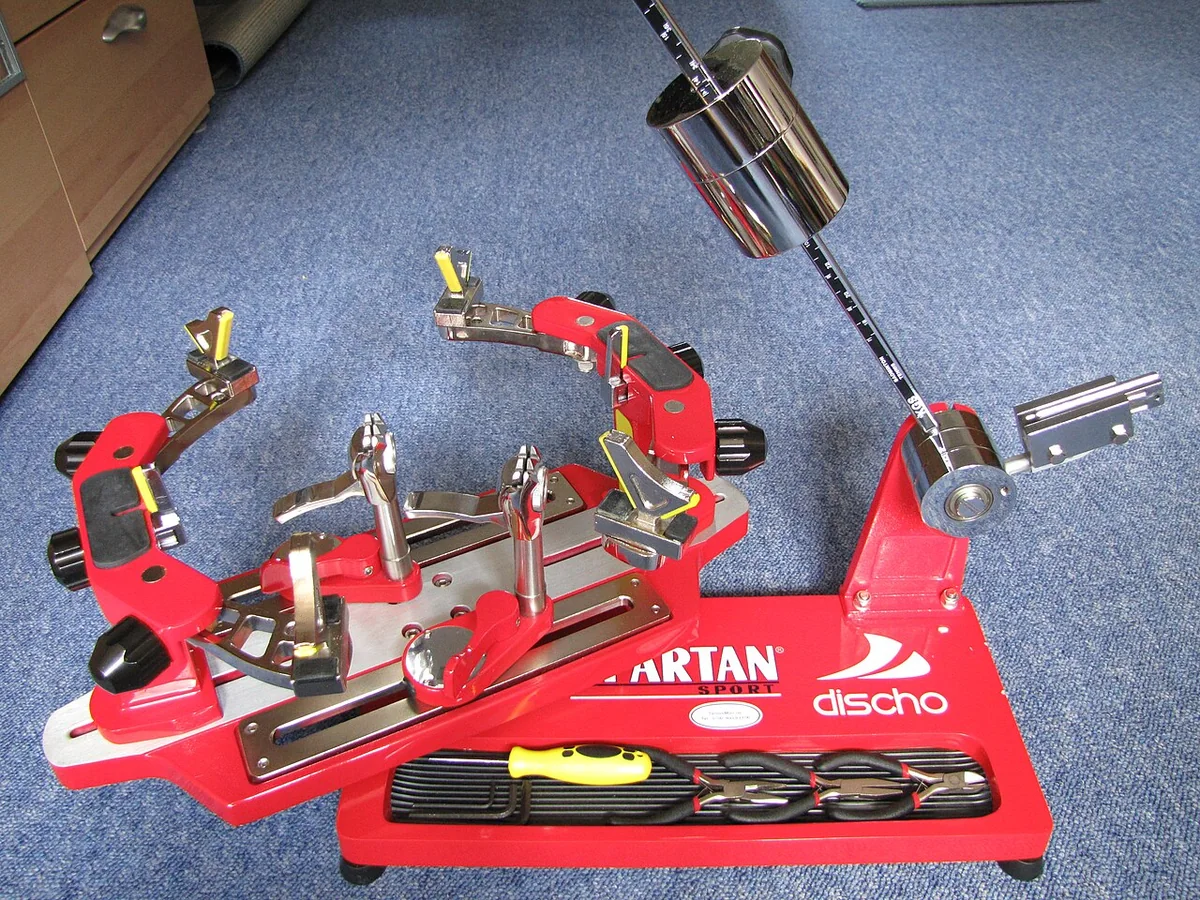
Separate the two questions with three fresh string jobs
The following is an illustrative comparison plan, not a test we conducted. It uses 52 and 50 lb only to make the choices legible; they are not prescribed tensions for your racquet. Choose an appropriate range for your frame and stringing arrangement with your stringer. If your usual setup uses different main and cross tensions, record both rather than replacing that detail with one misleading number.
| Job | String and reference tension | Question it isolates |
|---|---|---|
| A — baseline | Hyper-G 1.25 mm, 52 lb | How does a fresh version of the familiar setup play now? |
| B — tension change | Hyper-G 1.25 mm, 50 lb | What changes when the reference tension is reduced? |
| C — product change | Hyper-G Soft 1.25 mm, 52 lb | What changes when the product changes at the same requested tension? |
A versus B is the tension question. A versus C is the product question. B versus C can help you choose the setup you like, but it changes two factors and cannot identify a single cause. That last comparison is often the one players make first, then describe as a verdict on the strings. A little discipline at the start makes the eventual preference much easier to reproduce.
Use the same stringer and process where possible, including any pre-stretch choice. If you have two frames of the same model, do not assume their completed specifications are identical; a known weight or balance difference belongs in the notes. If you have one frame, sequential restrings can still guide a decision, but memory, weather, balls and how you played that week become part of the comparison. Treat the result as a practical preference, not a laboratory ranking.
Give the comparison the shots that exposed the problem
A few comfortable crosscourt forehands may confirm that both setups can rally. They do less to answer the original complaint. Include the situations that made you want a change, then observe the ball as well as the sensation in your hand. These are suggested practice checks, not outcomes measured for either Hyper-G product:
- Block a firm first serve and watch whether you can keep useful depth without adding a bigger swing.
- Play a defensive ball while moving, then note its height and landing area rather than judging only the sound at contact.
- Attack a shorter ball with your normal swing and see whether the intended window over the net remains easy to repeat.
- Return to the same neutral rally target later in the session, when the fresh-string excitement has worn off.
Write observations in a form your next stringer visit can use. “More comfortable” is a useful reaction, but “blocked returns reached the intended depth with less effort, while the short-ball forehand stayed inside the baseline” describes the trade you liked. If the extra depth came with a trajectory you struggled to repeat, that also belongs in the record. Do not quietly shorten your swing throughout the comparison and then attribute every difference to the string alone.
Do not use worn Hyper-G as the low-tension sample
This is the trap that can spoil the whole comparison. A used bed has not merely become a fresh bed installed at a lower tension. In his 2013 study of strings going dead, TWU’s Crawford Lindsey examined repeated impacts and changes in both stiffness and friction between mains and crosses. The experiments supported a combination of tension-related changes and altered lateral movement. They did not test Hyper-G against Hyper-G Soft, and their accelerated wear procedures are not a calendar for how many hours your string should last.
That work explains why the tension figure alone cannot certify two beds as equivalent. Time and impacts can alter how strings slide as well as how they deflect. A fresh Soft installation against your old Hyper-G therefore mixes product choice with string age and use history. It may tell you that the fresh setup is preferable today. It does not tell you how fresh original Hyper-G at a lower reference tension would have compared.
Revisit the chosen setup after later sessions and keep the comparison at reasonably similar stages of use. You are looking for the response you can rely on, not only the nicest opening ten minutes. Solinco’s tension-maintenance claim for Soft is worth investigating in that record, but it does not replace the record. Avoid declaring a winner from one immediately fresh bed and another that has already completed several matches.
If the original Hyper-G gives you the ball you want and a lower-tension installation preserves that while improving the response you disliked, you have a reason to stay with it. If Soft offers a better balance under a controlled comparison, you have a reason to switch. If neither does, the next question may be a wider change of string type rather than another tiny adjustment within the same family. The valuable purchase is the setup you can explain and repeat, not the word “Soft” on its own.
Sources and further reading
TENNIS TENSION LAB
Check your racquet’s tension today.
Get a high-precision tension reading in under 10 seconds. Tension Lab tracks changes from your first reading and helps you see when to restring.
- High-precision tension measurement. Ready in under 10 seconds.
- Track every change in feel. See the full story over time.
- Time to restring? Never leave it to guesswork.
Keep reading

Why old poly can feel harsher even as its tension falls
Lower tension does not tell the whole story of worn polyester. Separate stringbed deflection, inter-string friction and changing launch behaviour before deciding when to restring.
7 min readThe first tension drop can mislead your next restring
A fair tension history separates the stringing-machine setting, the fresh stringbed reading and the first-session baseline. Here is how to compare strings without moving the starting line.
7 min readShould a spin string be rough or slippery? You are asking about two different surfaces
Ball-to-string grip and friction between mains and crosses do different jobs. How to read spin claims, hybrid tests and visible string movement without confusing them.
8 min read