Seven Challenger titles. Why was Emilio Nava still waiting for a breakthrough?
A trophy, 100 ranking points and an uncertain return for the event: one week in Bad Rappenau showed several different versions of success.
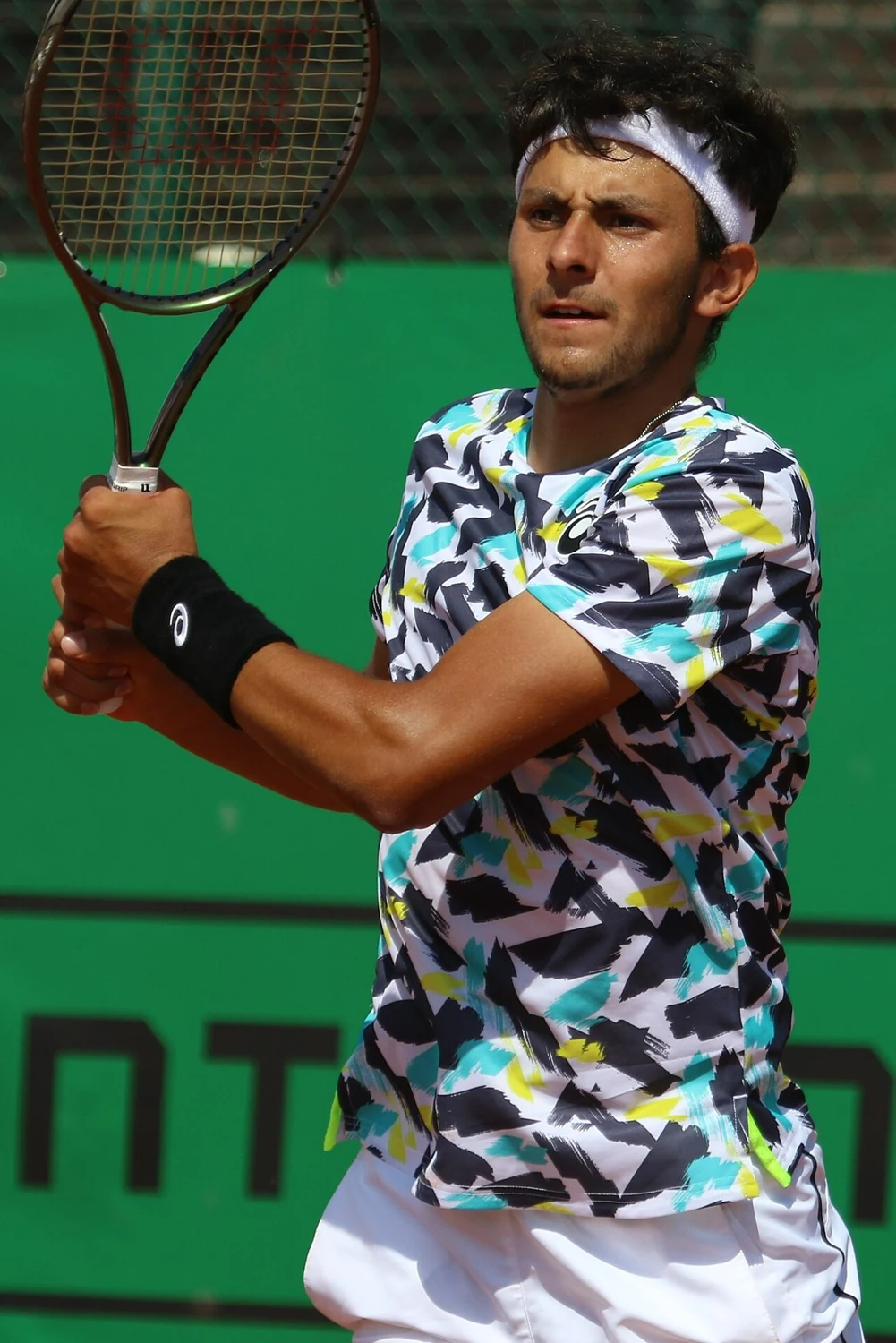
Seven titles sounds like the end of an argument about whether a player can win. For Emilio Nava, it still left an argument about where. When he won the Neckarcup in Bad Rappenau in June 2026, he collected his seventh ATP Challenger title. In the same week, he described his real breakthrough at ATP Tour level as something still ahead of him. Those two statements fit together. They belong to different levels of the professional game.
Florian Heer’s 8 June report for Tennis.com identified the 24-year-old American as world No. 87 at the time. Nava was already inside the top 100, not merely a prospect approaching it. He had won four Challenger titles in 2025; Bad Rappenau was his first of 2026. The story is interesting precisely because there was substantial achievement already on the page, and another competitive threshold still in his own sights.
There was a complication on the final Sunday. Luka Mikrut withdrew with a reported shoulder injury, so the final was not played. Nava won the title without a championship match. That needs to be stated plainly, but it does not turn the preceding week into imaginary tennis. His semi-final against Henri Squire had ended 6–1, 6–4 in 58 minutes. A walkover at the last stage and actual wins on the way there are parts of the same tournament.
The word “title” needs its level attached
A short headline can make seven Challenger trophies sound like seven ATP Tour titles. It can also make “still waiting for a breakthrough” sound as though nothing has been achieved. Both readings lose the useful middle of Nava’s story: a professional can be very good at winning in one competitive environment while still trying to establish himself in another.
For a serious club player, that distinction is familiar on a smaller scale. Success in one league does not automatically answer what happens after promotion, against a different pool of opponents or under another tournament format. That is an analogy, not a claim that club and professional results are equivalent. The transferable question is whether the strengths that produced one set of results remain available when the next level changes the problems.
Nava’s comments do not give us a technical blueprint for that transition. The report does not identify a particular serve modification, return position or racquet adjustment as the missing piece. It would be easy to write a convincing story about the one change he needs. Without evidence, that would be a story we had supplied, not something his week revealed. His distinction between Challenger success and an ATP Tour breakthrough is already informative without an invented diagnosis.
€23,700 is a prize, not a profit statement
The report put Nava’s reward at 100 ATP ranking points and €23,700 in prize money. Each figure describes something real, but neither tells the whole financial story. The points were a sporting return from the event. The prize was the reported payment associated with the title. It was not a published calculation of what remained after taxes, travel, coaching or other expenses.
There are no itemised costs in the report from which to calculate Nava’s net income for the week. Dividing the prize by seven days would produce an arithmetic figure, but labelling it his daily profit would add assumptions the source does not support. The same restraint applies in reverse: a modest-looking headline amount is not enough to declare that this particular player lost money at this particular tournament.
What the numbers do help explain is why a trophy carries several kinds of value at once. There is the result itself, the points and the money. There may also be the player’s assessment of how well he competed, but that is not interchangeable with any of those totals. A final that was not played complicates the sporting ending; it does not remove every other form of progress earned during the week.
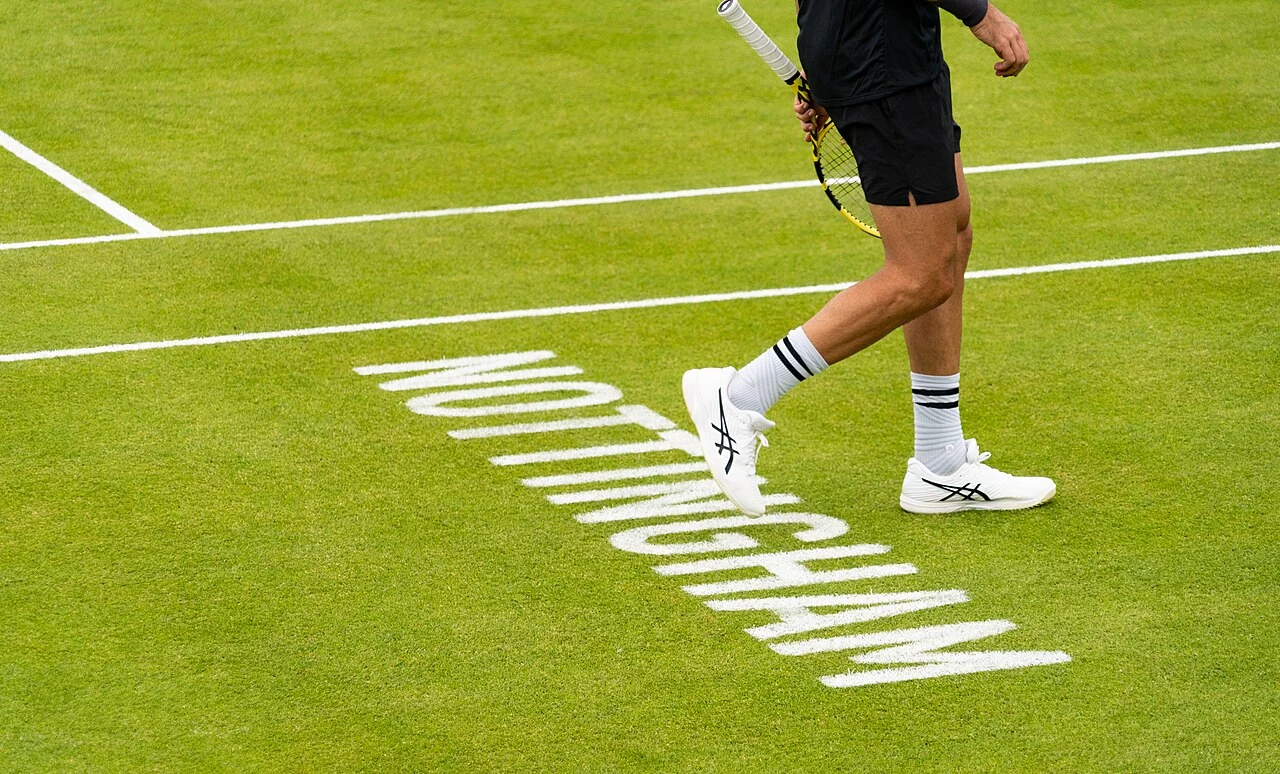
The player left with a trophy. The event left with a question.
The most unsettling part of Heer’s report concerned the Neckarcup itself. Organisers reported around 4,000 spectators across eight tournament days, and the tournament director could not give a definite answer about returning for a 13th edition in 2027. Praise from players and the quality of the tennis had not made the next year automatic.
It is tempting to compress those facts into “a good tournament failed because nobody came”. The report does not establish that conclusion. About 4,000 across eight days is not 4,000 each day. It also does not tell us whether the reported attendance counted unique people or repeat visits, how many tickets were paid for, what prices applied or what sponsorship contributed. No complete event budget was published.
Without those details, we cannot work backward to ticket revenue, the organiser’s deficit or the cause of the uncertainty. Nor did the director’s statement confirm cancellation. It established that a return was being reassessed. That is less dramatic than announcing the death of a tournament, but it is the actual reason to pay attention: excellent tennis alone did not settle the question of staging it again.
A player’s progress and an event’s prospects therefore run on related but different tracks. Nava could leave with a meaningful result while the people providing the stage still faced unresolved decisions. The match score cannot tell us whether the event is sustainable, just as the attendance total cannot tell us whether a particular backhand was good enough for the next level.
What an experienced player can look for courtside
This is where a Challenger visit can be interesting even when the draw lacks the names that fill a Grand Slam poster. If the seating and access at a particular venue allow a useful view, pick one player and follow a sequence beyond the highlight. Watch the return and the ball after it, or the approach and the first volley. The purpose is to see how one choice constrains the next, rather than collect impressive isolated shots.
Treat that as an observation exercise, not instant scouting authority. A single match offers a sample under particular conditions. If a player keeps choosing the same return position, record the server and the situation before concluding that the position is a universal solution. If the player changes it, note what changed in the rally that followed. These are editorial suggestions for watching; they are not claims about Nava’s actual patterns at the Neckarcup.
You can then take one question back to practice: which part of the sequence is repeatable in your own game? Trying to imitate an unfamiliar player’s complete technique from one afternoon is a large leap. Working with a coach on the first ball after a return you already use is a much clearer task. Check the event’s current schedule and ticket arrangements first; this article does not confirm any future Neckarcup edition.
Nava’s week is worth remembering because it refuses one neat definition of success. He was a top-100 player adding a seventh Challenger trophy while aiming for more at Tour level. The title arrived without a final, but after real competitive work. The organisers had delivered the event and still could not promise another. Following tennis beyond its most famous names means making room for all of those facts at once—and noticing the quality of the game before a bigger stage gives everyone permission to care.
Sources and further reading
TENNIS TENSION LAB
Check your racquet’s tension today.
Get a high-precision tension reading in under 10 seconds. Tension Lab tracks changes from your first reading and helps you see when to restring.
- High-precision tension measurement. Ready in under 10 seconds.
- Track every change in feel. See the full story over time.
- Time to restring? Never leave it to guesswork.
Keep reading
Djokovic plays less. Why is the last part of a tournament still so hard?
A lighter calendar and a deep Grand Slam run answer different questions. Djokovic’s comments on an emptying tank offer a better way to think about tournament readiness than counting entries.
8 min read
No major title. A 72.5% deciding-set record. How should we remember Nishikori?
Kei Nishikori’s farewell brought an extraordinary deciding-set statistic back into view. It deserves attention—and a more careful reading than “he always won the big points”.
8 min read