Why Pegula welcomed the 2027 WTA changes: four required 500s, more choices
Equal prize money made the headline. The quieter changes affect who gets to decide where a season goes.

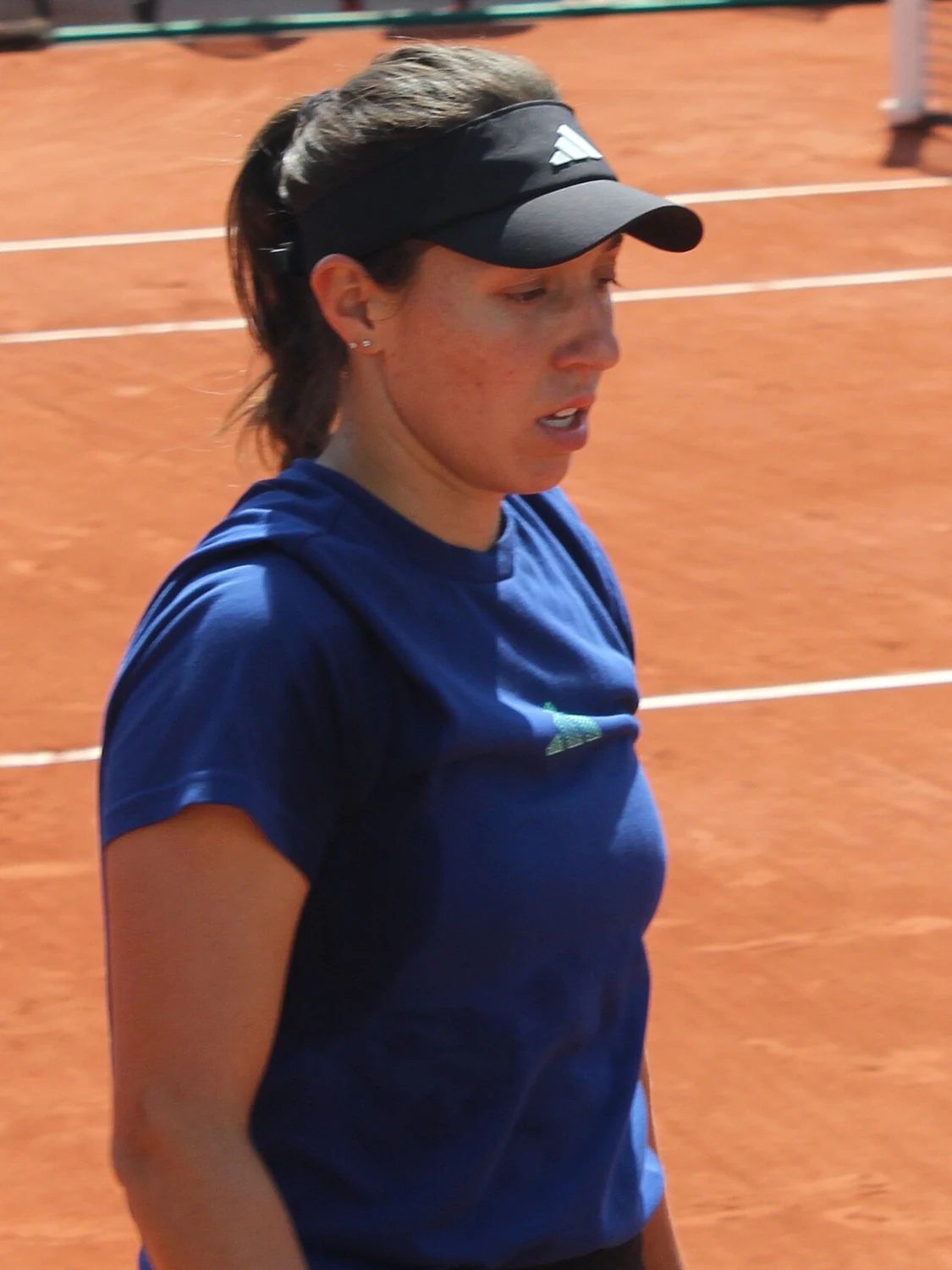
Equal prize money supplied the most obvious headline in the WTA’s announcement about 2027. Jessica Pegula’s response pointed to another part of the package: having more room to organise a season around a player’s competitive and personal priorities. Money and control over time appeared in the same announcement, but they change different parts of the job.
Steve Sutcliffe’s BBC Sport report of 1 October 2026 describes three changes. Combined 1000 events are to offer equal prize money for men and women from 2027. Players ranked in the top 50 will have four required WTA 500 appearances instead of six. And one eligible WTA 1000 result may be replaced in a player’s ranking by a stronger WTA 500 or 250 result. Pegula, described as world number three in that dated report, welcomed the greater freedom to shape a season.
The calendar change is easy to underestimate. Two fewer required tournaments sounds like a small adjustment beside the prize-money announcement. Yet the value of a choice is not measured only by how often someone uses it. A player may still enter an event that is no longer required, while appreciating that the decision is now hers to make within the remaining rules.
Six becoming four is a change in obligation
The announced reduction concerns a specific group and a specific category: top-50 players and WTA 500 tournaments. It is not a statement that every player’s entire schedule falls from six events to four. Nor does it say that players may enter no more than four 500s. Confusing a requirement with a cap makes a useful policy change sound like a much larger restriction.
Tournament entries and matches are different units as well. Entering two fewer events would not necessarily mean playing two fewer matches. At one tournament a player can lose immediately; at another she can stay through several rounds. The change in obligations therefore cannot be converted directly into a fixed number of match hours, travel days or weeks of rest for every player.
That uncertainty is not a reason to dismiss the change. It identifies what the announcement actually offers: more discretion before the draw and its results unfold. A player can consider where an event sits in relation to another commitment instead of treating all six required 500 entries as equally unavoidable. How she uses that room will depend on her circumstances; Pegula’s response did not publish her individual 2027 entry list.
One simple hypothetical shows why placement matters. Imagine a player considering a tournament between two blocks of travel. Removing an obligation to enter gives her a choice between competing, staying in one place to practise or leaving the week less tightly scheduled. It does not prove which choice is best, or that she will skip the event. The benefit is having a decision to make before the week is already spoken for.
A ranking result is not the same thing as an appearance
The second calendar-related change works elsewhere. The BBC reports that one eligible WTA 1000 result can be replaced by a stronger result from a 500 or 250 in the ranking calculation. This is about which result can count. It should not be casually translated into permission to miss any 1000 event, because participation obligations and ranking accounting are separate questions.
The limiting words matter: one, eligible and stronger. One is not every result a player would like to discard. Eligible means conditions apply. Stronger does not mean a player likes the memory of the smaller tournament more; the replacement concerns the result used for her ranking. The news report does not reproduce the complete eligibility rules, so it cannot settle every individual case or tell us which specific 1000 result Pegula might replace.
It is still a meaningful signal about incentives. If a qualifying good result at a smaller event can improve the ranking record in this way, that event may have a different place in a player’s planning. But it does not become an easy points purchase. The player must enter and produce the result. A 250 label does not promise a favourable draw, and there is no guarantee that another week of competition will earn anything worth substituting.
This is where two freedoms can pull in different directions. A lower number of required 500 appearances creates room to avoid an event. A useful ranking opportunity might create a reason to enter one voluntarily. There is no contradiction: flexibility means the player can weigh those alternatives. It does mean that a forecast of universally shorter seasons would be premature.
Prize-money equality has a defined scope too
The equal-prize-money commitment applies to combined 1000 events, where men and women feature, from 2027. The BBC lists Indian Wells, Miami, Madrid and Beijing as already meeting that commitment, alongside all four Grand Slams. It identifies the Italian Open, Canadian Open and Cincinnati Open as the events joining them. That is a significant extension, not a claim that every women’s tournament at every level will have an identical men’s counterpart or prize fund.
Rome makes the implementation question concrete. According to the report, Italian Open organisers had promised in 2023 to reach equality in 2025 but had not fulfilled that pledge. The reported 2026 total prize funds were £7.3 million for the men and £6.3 million for the women. These are the report’s sterling figures for total funds, not the cheques paid to the two singles champions.
A new commitment can therefore be welcomed while its delivery remains something to observe. The announcement is dated October 2026 and concerns next year. It would be inaccurate to write as though the affected 2027 tournaments had already paid their prize money. For readers following the issue, the concrete next evidence is the published distribution for those events when it becomes available, not an assumption that a future promise is a completed payment.
It is also possible for prize money and freedom of scheduling to move in welcome directions without either solving every concern about the tour. More equal payment changes the financial terms of the relevant events. Lower obligations change part of the decision about where to play. Neither number alone tells us whether a specific athlete’s eventual season will feel manageable or deliver the results she wants.
What to watch when the 2027 entries appear
The most interesting follow-up will not be a single count of how many tournaments a star plays. Look at which 500 events top players choose, where those events sit in their seasons and whether the ranking replacement is used under its actual eligibility conditions. Those observations would begin to show how the new rules affect decisions. Without them, a claim that the reform has made everyone play less is only a prediction.
For experienced players reading a professional calendar, there is a useful habit here: ask what makes an entry necessary. Is it a rule, an opportunity to obtain a result, an event the player values, or a commitment already made? Those reasons can produce the same name on an entry list, but they are not interchangeable. Nor can a spectator reliably identify the reason just from that list.
Pegula’s support matters because it frames the change in terms of planning rather than a promise of fewer matches. The important shift is room to make different choices. In 2027, a player who still enters a fifth 500 will not by that fact have disproved the value of reducing the requirement to four. The choice to compete can matter just as much as the choice to leave a week open.
Sources and further reading
TENNIS TENSION LAB
Check your racquet’s tension today.
Get a high-precision tension reading in under 10 seconds. Tension Lab tracks changes from your first reading and helps you see when to restring.
- High-precision tension measurement. Ready in under 10 seconds.
- Track every change in feel. See the full story over time.
- Time to restring? Never leave it to guesswork.
Keep reading

Seven Challenger titles. Why was Emilio Nava still waiting for a breakthrough?
Nava’s 2026 Neckarcup title paired a top-100 player’s progress with a tournament’s uncertain future. It is a revealing look at the distance between excellent tennis and a sustainable stage.
8 min read
A US Open semi-final, then retirement: why Joe Salisbury chose to stop
Joe Salisbury retired at 34 after a final US Open semi-final with Rajeev Ram. His account separates the ability to compete from wanting another season of tour life.
8 min read