A US Open semi-final, then retirement: why Joe Salisbury chose to stop
Six Grand Slam doubles titles did not make the next season an obligation. The partner and the place helped him choose his ending.
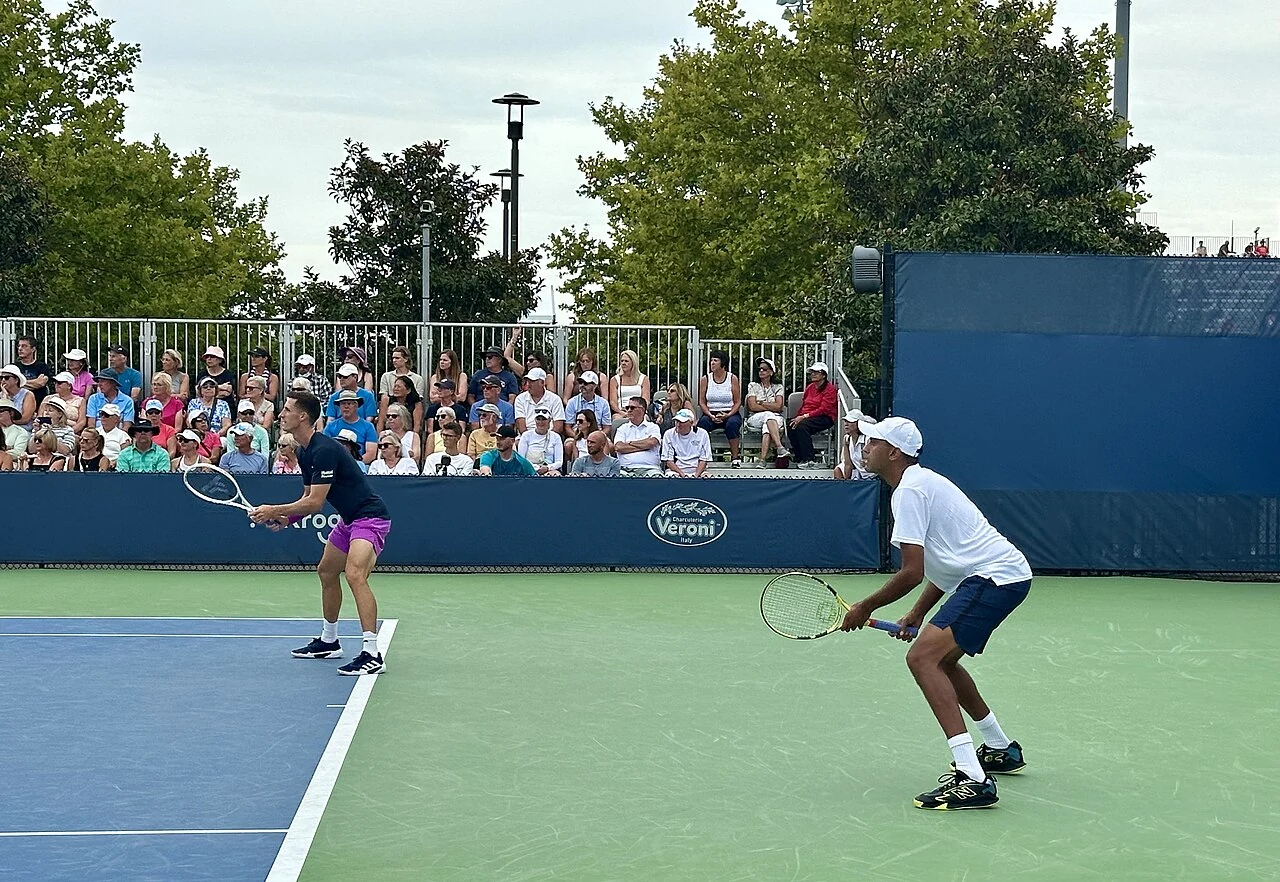
Joe Salisbury’s last tournament did not end with a first-round defeat suggesting the game had left him behind. It ended in the semi-finals of the 2026 US Open, alongside Rajeev Ram. Days later, the 34-year-old former doubles world number one announced his retirement. That combination makes his departure more revealing than a simple story of a player who could no longer compete.
Russell Fuller’s BBC Sport report of 17 September records two facts that deserve to remain side by side. Salisbury had been finding life on tour much less enjoyable. He also believed the anxiety he had publicly discussed had not affected his tennis very much. A results page could show he was still capable of winning major matches; it could not decide whether he wanted to keep living the life needed to play them.
For tennis players accustomed to treating the score as the most honest verdict available, that distinction can be uncomfortable. If a partnership can still reach a Grand Slam semi-final, why stop? Salisbury’s explanation answers a different question: whether another season was the ending he wanted, rather than whether another season was possible.
Six majors, but not six with the same partner
The scale of the career matters because the decision was not made in the absence of success. Salisbury finished with six Grand Slam doubles titles. Four were men’s doubles titles with Ram: the 2020 Australian Open and three successive US Opens. The other two were mixed doubles titles with Desirae Krawczyk. His total of 17 tour-level titles also included the ATP Finals in 2022 and 2023.
It is easy for a retirement headline to compress all of that into one round number. Keeping the partnerships separate tells a better story. The six majors belong to Salisbury’s career; the four men’s doubles majors describe his collaboration with Ram. The distinction gives Krawczyk her proper place and explains why returning to New York with Ram carried a particular meaning.
By 2023, Salisbury and Ram had become the first pair to win three consecutive US Open men’s doubles titles. Returning there for a final tournament was therefore more than choosing a famous venue. It was returning to the place where a shared achievement had become part of the tournament’s history. Their 2026 semi-final added a competitive ending without needing to reproduce those titles.
None of those numbers tells us what the partnership felt like on an ordinary travel day, after practice or between events. They establish the record. The reason for choosing this finish comes from Salisbury’s account, and that is where the reporting becomes more interesting than a list of trophies.
A break did not oblige him to return for good
Salisbury took three months away at the start of 2026. In his public account, he described anxiety and a feeling of dread that made travelling and tour life less enjoyable. He later returned, and told BBC Radio 5 Live that he had not had a particularly successful year before teaming up again with Ram.
Those facts should not be squeezed into a tidy recovery plot. Time away is not proof that a problem has been solved, and returning to competition is not a promise to continue indefinitely. The report gives us his explanation of his own experience. It does not supply a diagnosis beyond that account, a treatment history or grounds for assigning each result to a psychological cause.
His own distinction between playing and touring is especially useful. Spectators mostly see the part that produces a score. A professional also commits to journeys, preparation, changing locations and the repetition of the calendar. It is entirely possible to value the work done on court while reconsidering that larger commitment. Salisbury’s explanation invites that reading without requiring anyone to guess what he felt on a particular point.
The semi-final cannot disprove his account, any more than an early loss would have proved it. A strong result answers a sporting question about what happened at one event. It does not overrule a player’s description of the rest of his working life.
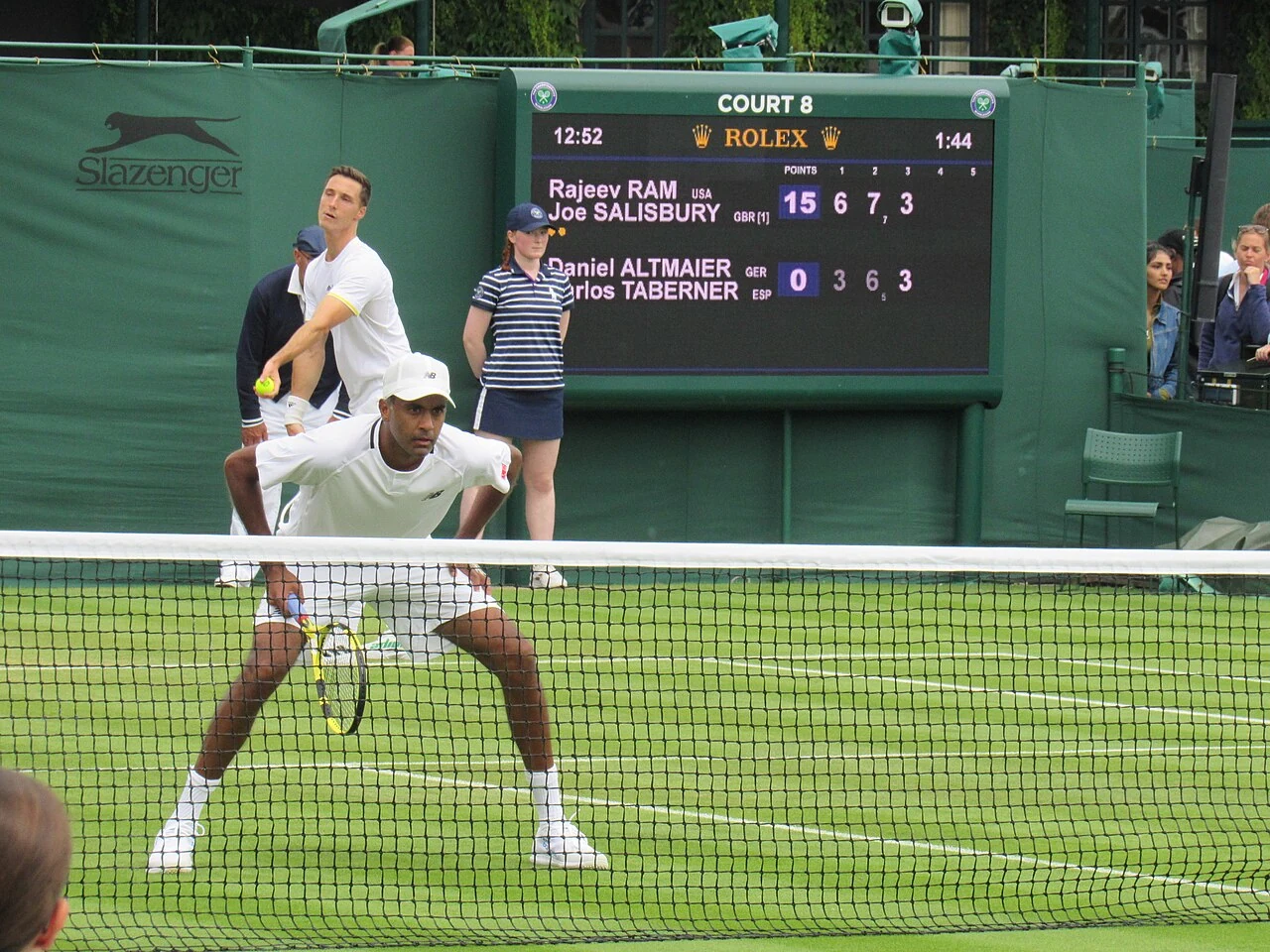
Ram gave the final tournament a shared history
Ram had also decided to retire at the US Open. Salisbury told the BBC he could have continued to the end of the year or perhaps into the next one, but liked the idea of finishing alongside the partner with whom he had enjoyed his men’s doubles major success. He was happy with his decision. The venue, the partner and the timing made sense together.
There is a temptation to turn that into a demand for the perfect farewell: win the title, close the story, leave on an unbeatable image. A semi-final is less cinematic and, in this case, more instructive. The value of the ending did not depend on making the last result the greatest result. It could be a good run with someone central to the career, in a place central to that partnership.
Doubles makes this choice unusually concrete. A singles player’s calendar has consequences for a team, but a doubles partnership also needs two competitors to commit to the same events. Continuing is not merely deciding to hit more balls. It involves deciding who shares the next block of tournaments and what each player is prepared to put into it.
We do not have a transcript of Salisbury and Ram’s private conversations, so there is no basis for inventing a pact, a final locker-room speech or an emotional turning point. What is reported is sufficient: both were ending their careers, they reunited, they reached the last four, and Salisbury valued that way of finishing.
The conversation club partners often postpone
A recreational doubles team is not a miniature professional tour. It usually has different financial stakes and far more freedom to change the calendar. Still, experienced club players will recognise the awkward conversation hidden behind a successful result: can we play well together, and do we both want the same commitment next season?
Those are separate questions. Imagine two partners who reach a league final. One wants more away fixtures and extra practice; the other enjoys the matches but wants fewer weekends committed in advance. The final does not settle their disagreement. Neither player has to pretend the tennis was bad to explain the difference. This is an illustrative club situation, not a claim about Salisbury and Ram’s private arrangements.
Before entering another competition, a pair can talk through the actual obligations: the dates, travel, practice expectations, who organises entries and what happens when one player is unavailable. A vague agreement to remain partners can conceal very different ideas about those details. Writing down the next competition block makes the choice smaller and clearer than a sweeping argument about dedication.
It also helps to leave the most recent result out of the opening question. Asking whether both want the proposed schedule gives each partner room to answer honestly. Asking why someone would stop after such a good win already suggests the answer is unacceptable. This is ordinary partnership planning, not a treatment for anxiety or a recommendation to copy a professional’s retirement decision.
Salisbury’s farewell matters because it resists the usual test imposed on athletes: keep going until the results justify leaving. His record already established what he could do. His own account explained what he wanted next. The US Open semi-final and the decision to retire can both make sense, without one having to cancel the other.
Sources and further reading
TENNIS TENSION LAB
Check your racquet’s tension today.
Get a high-precision tension reading in under 10 seconds. Tension Lab tracks changes from your first reading and helps you see when to restring.
- High-precision tension measurement. Ready in under 10 seconds.
- Track every change in feel. See the full story over time.
- Time to restring? Never leave it to guesswork.
Keep reading
No major title. A 72.5% deciding-set record. How should we remember Nishikori?
Kei Nishikori’s farewell brought an extraordinary deciding-set statistic back into view. It deserves attention—and a more careful reading than “he always won the big points”.
8 min read
Siniaková and Townsend: does your doubles partner need to play like you?
After their 2026 Roland-Garros title, Kateřina Siniaková praised how different her game was from Taylor Townsend’s. The useful lesson is about shared options, not simply pairing opposites.
7 min read