Your tennis shoes feel plush. What happens when you brake?
The first few steps judge one part of a tennis shoe. The stop before your next shot asks a different question.
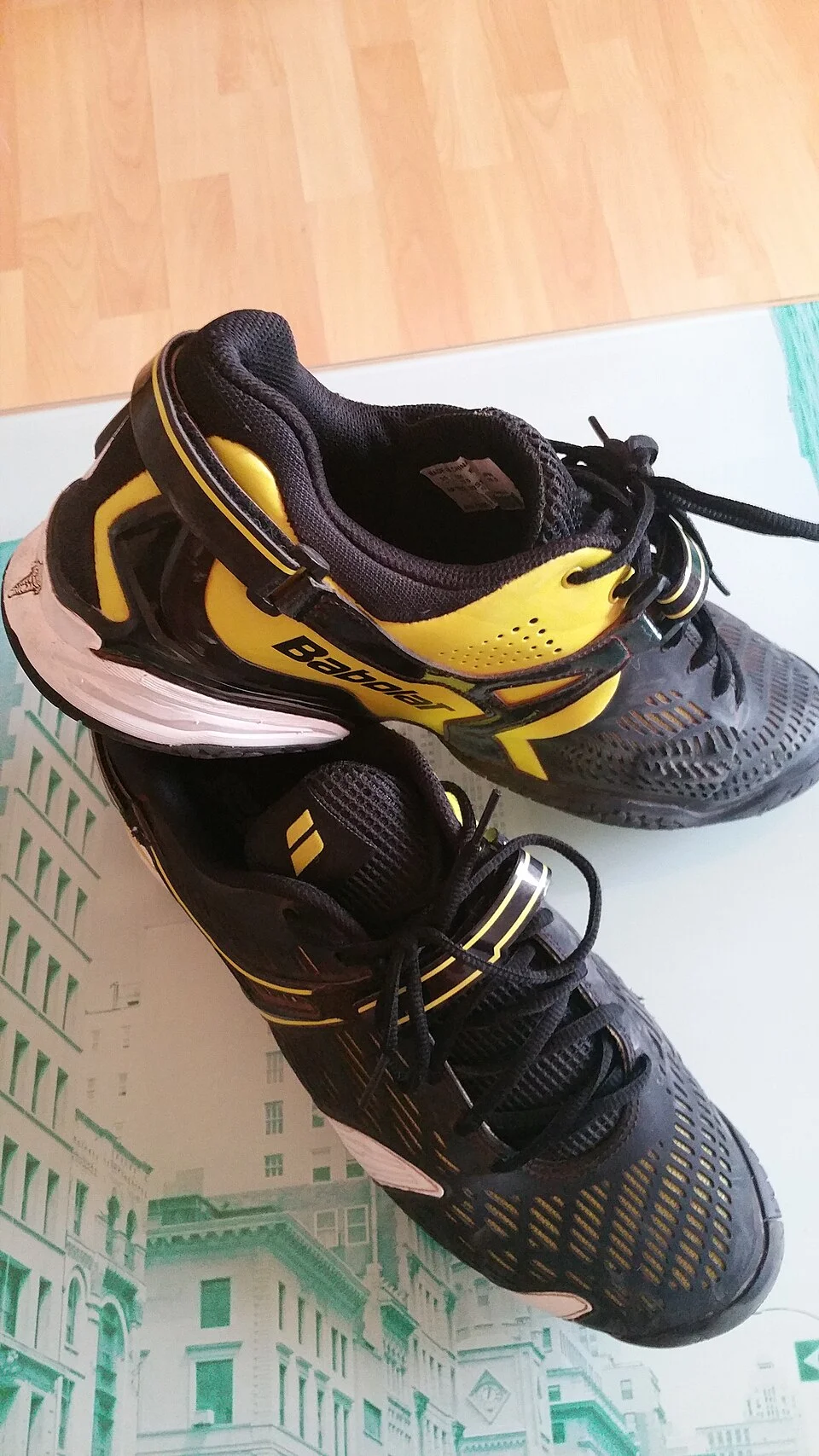
Two pairs survive the fit check. One feels immediately luxurious under the heel; the other feels firmer and less impressive during a slow walk. The tempting verdict is that the first pair has better cushioning and must therefore be easier on the body. For tennis, that verdict arrives before the most important movement has even started.
A wide forehand ends with braking, a change of direction and another push toward the court. A split step loads the front of the shoe. A heel that feels pleasant while walking says something useful about that experience, but it cannot describe every part of those movements. Nor does a softer feeling establish a lower injury risk. The shopping mistake is to ask a perfectly real sensation to answer questions it has not measured.
Sixteen shoes, but no players inside them
Crawford Lindsey’s March 2017 Tennis Warehouse University investigation tested 16 shoes from ten manufacturers. It is worth revisiting for its method, not treating as a ranking of current models. All samples were right-foot men’s size 9. The uppers and insoles were removed, and the soles were cut into heel and forefoot sections. Those sections were secured on a steel plate and struck by a gravity-driven 7.5 kg impactor.
The impactor fell from four heights: 50, 75, 100 and 125 mm, corresponding to reported impact energies of 3.7, 5.5, 7.4 and 9.2 joules. The apparatus recorded force, deformation and acceleration, among other quantities. It compared the mechanical response of shoe sections under defined conditions. It did not record actual match movement, preserve the complete shoe’s support system or follow players to see who developed an injury.
That distinction is not a reason to discard the experiment. Holding the impact conditions steady helps isolate differences that a player’s changing movement can obscure. It is a reason to read its answer accurately: this section of this shoe responded in this way to this impact. The next step—what the whole shoe does with your foot inside—is a separate question.
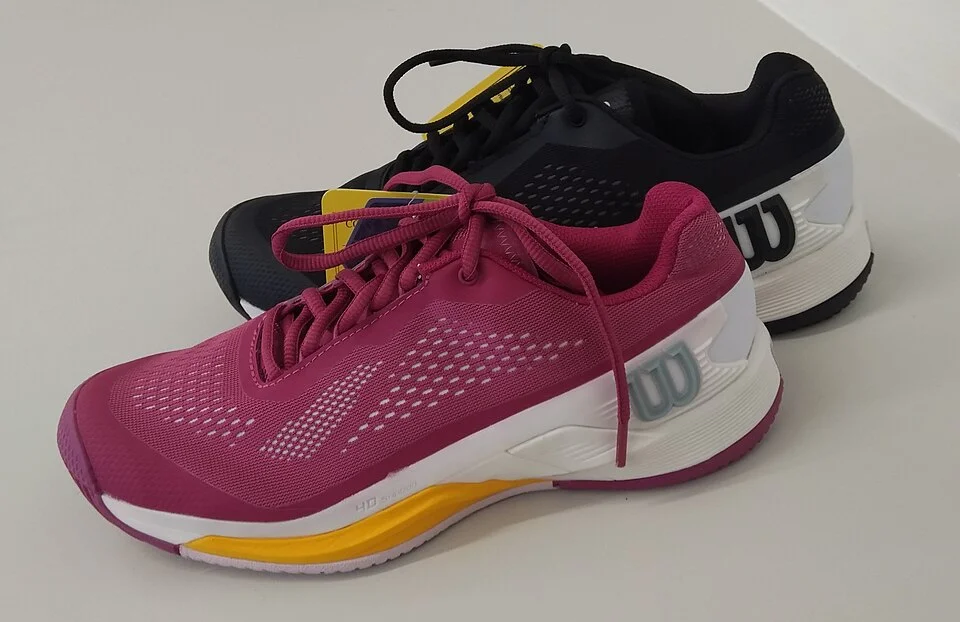
The heel and the forefoot do not make the same promise
In the reported tests, the thinner forefoot sections generally experienced greater peak force and deceleration than the heel sections. They compressed through a larger proportion of their available thickness and became relatively stiffer with further compression. At larger impacts, the report described the possibility of a forefoot section approaching the limit of its compression—often called bottoming out.
A cushion is not an unlimited reservoir of softness. It has a thickness, a construction and a response that changes as it deforms. The study found that increasing impact energy generally increased force, deceleration, deformation and stiffness. The time to peak force and the total contact duration decreased as force rose. A material can feel forgiving during a modest load and respond quite differently when asked to manage a sharper event.
This makes “well cushioned” an incomplete description unless the location and loading conditions are attached. A player who spends much of a session bouncing, recovering and changing direction over the forefoot has reason to investigate that region specifically. It does not follow that everyone needs the thickest forefoot, or that heel cushioning is unimportant. It follows that a heel-only impression should not quietly become a verdict on the whole shoe.
Less impact in the rig is not a certificate of stability
Across the tested sections, lower stiffness was associated with lower force, loading rate and deceleration, spreading the impact over more time. That is a meaningful cushioning advantage under the test conditions. The complication is that tennis also asks a shoe to manage movement sideways and around the foot. The report discusses how excessive softness can permit unwanted movement, depending on where and how the cushioning is built.
The everyday version of that tradeoff is easy to recognise without pretending to diagnose it. A player may like the landing sensation but dislike how the foot moves inside the shoe during a controlled direction change. Another may appreciate a firmer platform yet find the forefoot uncomfortable. These observations concern different features. Neither player has to declare the other wrong, and neither observation by itself identifies a defective shoe.
There is a further complication: people adapt. The report reviews research in which athletes changed movement in response to the shoe-surface interface. A mechanical impactor repeats its task; a player can change landing, knee bend or stride. It also discusses how the way forces are measured can help explain disagreements between laboratory cushioning tests and force-plate measurements of people. A single impact number cannot capture that whole interaction.
Give each candidate the same audition
A useful buying comparison separates three questions: does the shoe fit, how does cushioning feel in the areas you load, and does the complete shoe feel predictable during permitted tennis movements? The following is an editorial comparison method, not a protocol validated by the study. Use normal socks and any prescribed orthoses, follow the retailer’s trial rules, and stay within comfortable, familiar movements.
| Situation | Record separately | Do not infer |
|---|---|---|
| Standing and easy walking | Heel fit, toe space, pressure points and the initial underfoot feel | That a pleasant heel sensation guarantees comfortable forefoot loading |
| Gentle split steps or rises onto the forefoot, if permitted | Where the forefoot feels supported or compressed | The force or stiffness value a laboratory would measure |
| Controlled lateral movement, if permitted | Whether the foot stays located and the shoe feels predictable | An individual injury probability |
| A permitted court trial on the intended surface | Whether fit and comfort remain acceptable through familiar tennis movements | That a brief trial predicts long-term durability |
Keep the comparisons fair. Changing socks, trying one shoe after a long session and another while fresh, or comparing different sizes introduces new reasons for the sensation to change. A short note such as “heel comfortable, pressure under the forefoot, foot shifts during lateral stop” gives the next fitting more direction than “too soft”. It also leaves room to discover that the problem is fit rather than cushioning.
The strongest takeaway from the 16-shoe experiment is not a winning brand. It is that heel and forefoot responses vary, and the response depends on the load. The softness that earns a smile in the shop is one useful piece of information. For an experienced player, the more revealing purchase question is whether that comfort survives the movements that arrive just before the ball does.
Sources and further reading
TENNIS TENSION LAB
Check your racquet’s tension today.
Get a high-precision tension reading in under 10 seconds. Tension Lab tracks changes from your first reading and helps you see when to restring.
- High-precision tension measurement. Ready in under 10 seconds.
- Track every change in feel. See the full story over time.
- Time to restring? Never leave it to guesswork.
Keep reading
The tennis shoe with the most grip is not automatically your best shoe
A tennis traction experiment separates available grip from the grip a player uses. Why surface, loading and turning matter more than treating one friction number as a buying score.
7 min read
Both racquets say 305 g. Why does one keep arriving late?
Identical listed weight does not mean identical swingweight. Read mass, balance and rotational resistance together before choosing a new frame or matching a second racquet.
8 min read