Raducanu, Agassi and the problem with using your best week as your identity
A spectacular title can become the standard by which every ordinary day is judged. Agassi offered a different question: what can you do with the level you actually have today?
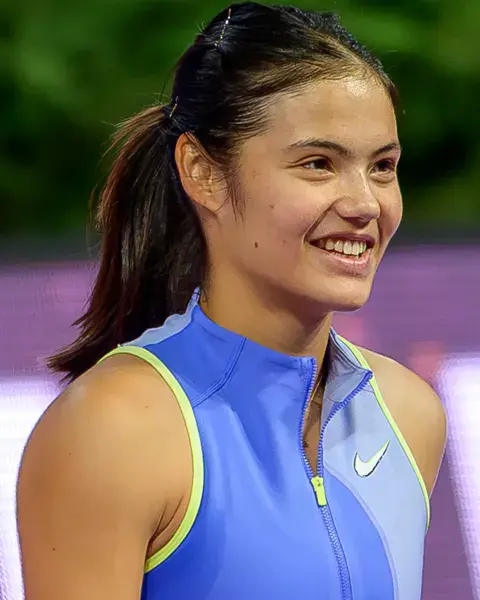
Emma Raducanu did not need Andre Agassi’s book to learn that tennis careers contain setbacks. By September 2026, five years had passed since her US Open title, and the contrast between that breakthrough and the interrupted seasons that followed had become a familiar frame around her career. What she found in Agassi’s autobiography was more personal: an account of early success, subsequent lows and the effort to find a way forward.
BBC Sport’s report of 23 September brought together two sets of public remarks. Raducanu had told Uniqlo that parts of Agassi’s 2009 autobiography were relatable, particularly his rebuilding through a training regimen of his own in the late 1990s. Agassi, speaking to BBC Breakfast, responded to the idea that his experiences could still help another player. The report was not an account of the pair training together or of Agassi taking over her coaching.
The most useful part of his advice was not a comeback formula. It was a change in the standard used to assess a day. He encouraged Raducanu to do the best she could with her current level, rather than attach her identity to results or insist on feeling at 100%. That is a different task from trying to reproduce the best fortnight of a career every time one steps onto court.
One extraordinary fortnight can become an unreasonable daily benchmark
Raducanu was 18 when she became the first qualifier in the Open era to win a Grand Slam singles title. A result that unusual naturally becomes the first line of a biography. It is much less useful as the minimum acceptable standard for every subsequent week. The title records what she achieved in one remarkable tournament; it does not make all later conditions identical to those under which she won it.
The September report put her at No. 98, after a career high of No. 10 in July 2022. Those are dated observations, not her ranking for every future reader. It also described a season disrupted by a foot injury during preseason, two and a half months away with a post-viral illness, and a lower-right-leg stress fracture during whose recovery she missed the US Open. These were concrete interruptions, not simply a run of disappointing scorelines.
The same season included a final at Queen’s Club in June, described by BBC as her biggest since the New York triumph. Leaving that week out would make the account too flat. A difficult period can contain a strong result without being over, just as a good result does not remove every obstacle. The familiar labels—back, finished, finally fixed—often ask a single tournament to settle questions it cannot settle.
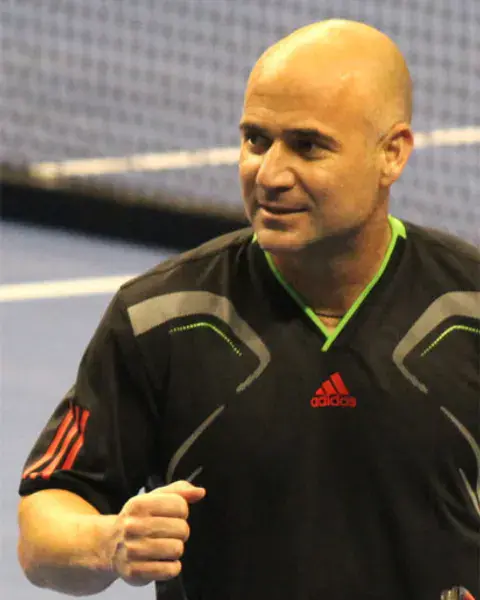
Agassi’s experience offers company, not a duplicate career path. He won his first major at Wimbledon in 1992, aged 22, and eventually collected eight major singles titles. Between his peak periods came four years without a major and a fall to No. 141. His later success gives his story emotional force. It does not make another player’s next chapter predictable, or turn every slump into the necessary opening act of a triumph.
The available level is not the same thing as the desired level
His instruction to be the best of whatever level is available is easy to mistake for lowering ambition. It can mean the opposite: replacing an impossible comparison with a demanding, immediate job. If today’s timing is imperfect, the task is still to choose well with that timing. If the opponent is taking time away, the task is to notice and respond, rather than spend the changeover arguing with the version of yourself who once handled everything.
That is an interpretation of the advice, not a report of Raducanu’s practice programme. The distinction matters because a reader does not need access to her private preparation to recognise the problem. Club players also carry an old peak around: the summer they won a league, the match in which the forehand never missed, the period when they played four times a week. That memory can inspire work. It can also make normal variation feel like evidence of personal decline.
Imagine an experienced league player whose opponents have learned to rush the backhand. They keep selecting the ambitious redirection that worked against a slower ball last season. Each miss is treated as another failure to be their “real” self. Yet the ball and the available preparation time have changed. A higher, deeper reply that restores the rally may be a better competitive decision today. Choosing it need not mean abandoning the long-term aim of improving the attacking shot.
That example concerns decisions in playable circumstances. Raducanu’s reported physical interruptions belong to a different part of the story; Agassi’s comments are not medical clearance or an instruction to play through an injury. Nor is “whatever level you have” a measurable percentage published for her current condition. It is a way to think about the work in front of a player, not a recovery protocol.
A result is information, but it need not become a verdict on the person
Agassi spoke about the pressure of being introduced by his father as a future world No. 1 and about playing out of fear. He said he reconnected with tennis after falling in the rankings and later enjoyed greater success. That was his account of his own experience. It does not establish that Raducanu shares the same family history, feelings or reasons for setbacks simply because she found the book relatable.
The practical distinction is between judging a performance and turning it into an identity. A return error can be examined: did the player prepare late, choose too small a target or fail to read the serve? “I am no longer a good player” offers no comparable next action. It also reaches far beyond what one missed return can show. Keeping the explanation close to the event does not excuse the mistake; it makes the review more usable.
Results still belong in that review. Winning and losing determine advancement, ranking and the point of competitive play. The alternative to identifying entirely with the scoreboard is not pretending the scoreboard is irrelevant. It is keeping another layer of observation beside it: whether the intended adjustment was made, whether a repeated problem was recognised earlier, and which choices remained useful when the preferred game was unavailable.
An ordinary club session can end with a short account in that spirit. Describe one situation that recurred, the response chosen and what needs work next. “On deep returns I rushed the first groundstroke; next time I want a clearer recovery option” gives a future practice somewhere to begin. “I should still be as good as I was three years ago” does not. This is an editorial suggestion, not a technique tested on Raducanu or a guarantee of more wins.
Agassi also contrasted the difficulty of ignoring public opinion now with his own ability to put down a newspaper. A modern player’s old result can follow them into every comment section. The pressure is not identical for a club player, but there is a recognisable habit in repeatedly checking whether the latest match confirms what others think. The sport becomes harder to enjoy when every outing is asked to defend a permanent reputation.
Raducanu’s interest in the book does not announce the end of her difficult period. It gives a more human way to read it. She recognised something in a champion’s account of uncertainty; he hoped that account could help someone feel less alone and find their own way. The useful inheritance is not Agassi’s eventual trophy count. It is permission to take today’s tennis seriously without demanding that today prove the whole story of a career.
Sources and further reading
TENNIS TENSION LAB
Check your racquet’s tension today.
Get a high-precision tension reading in under 10 seconds. Tension Lab tracks changes from your first reading and helps you see when to restring.
- High-precision tension measurement. Ready in under 10 seconds.
- Track every change in feel. See the full story over time.
- Time to restring? Never leave it to guesswork.
Keep reading
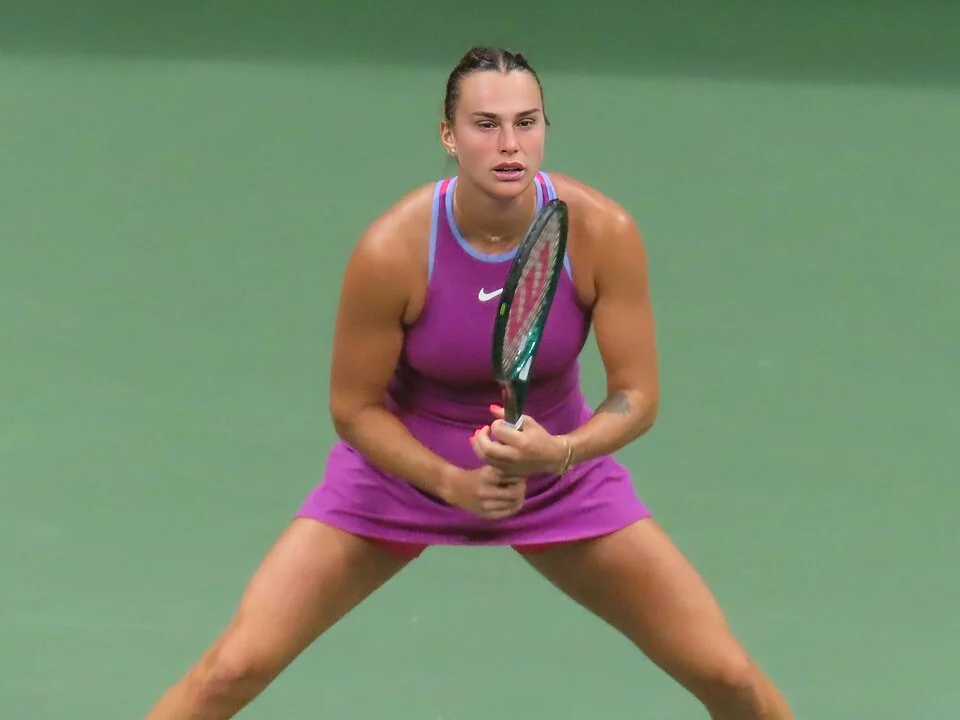
Sabalenka won 6–1, 6–3. The more revealing contest was with her own expectations
After her Beijing opener, Aryna Sabalenka described the cost of demanding more from herself. What experienced players can learn about keeping a high standard without carrying every mistake into the next point.
8 min read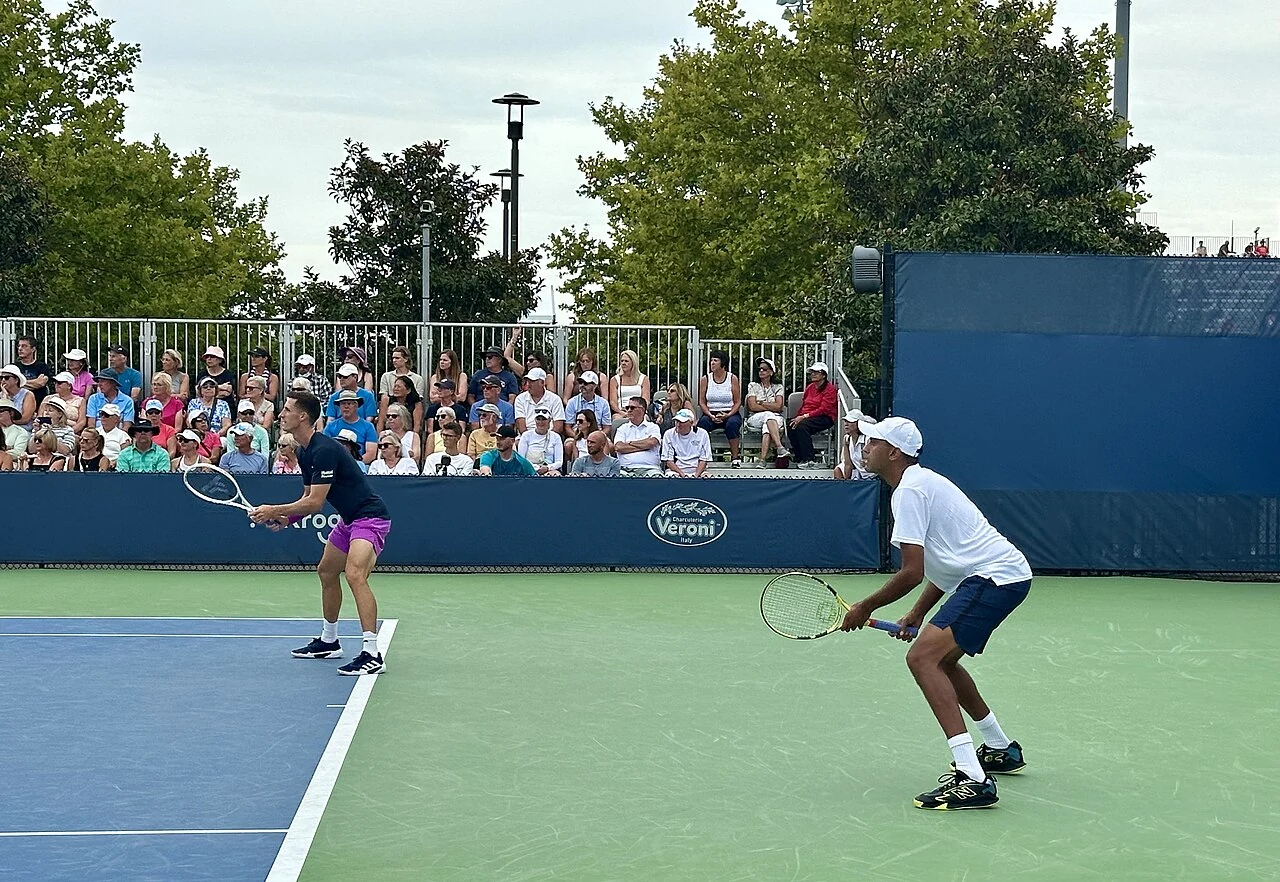
A US Open semi-final, then retirement: why Joe Salisbury chose to stop
Joe Salisbury retired at 34 after a final US Open semi-final with Rajeev Ram. His account separates the ability to compete from wanting another season of tour life.
8 min read