27% first serves, no break points: the Rybakina set a single number cannot explain
A poor first-serve percentage and an unbroken run of holds can coexist. Neither statistic tells you the route through the scoreboard.
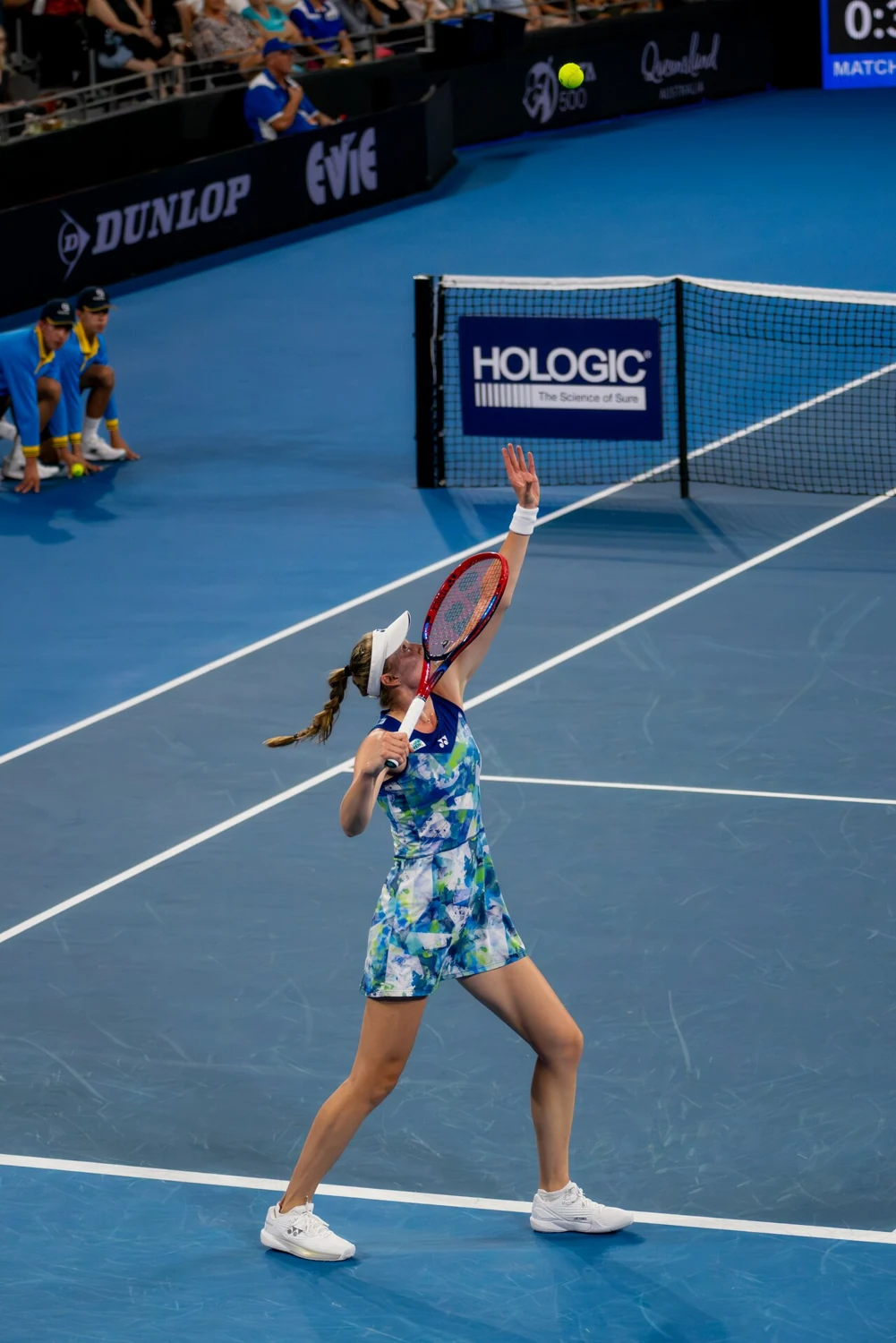
Read the first-serve figure first and the set sounds precarious: 27%. Read the break-point figure first and it sounds comfortable: none faced. Both describe Elena Rybakina’s opening set against Aryna Sabalenka in the 2026 US Open final, according to Phil Cartwright’s BBC Sport report of 13 September. She won the set 6–4 and eventually the match 6–4, 5–7, 6–2.
There is no contradiction to solve by deciding that one number must be wrong. The first statistic counts how often a delivery landed. The second identifies particular states of the score that never occurred. Between them sits a much fuller sequence: a second serve when required, a return, perhaps a rally, and points accumulating into games. Removing that sequence makes an ordinary tennis possibility look like a paradox.
The report supplies a third number: Rybakina won 22 of 30 points on serve in that opening set. That is approximately 73.3%, calculated from the published count. It tells us that she won a substantial majority of her service points even though most first serves missed. It does not reveal every first-serve and second-serve point result, the quality of each return or the order of those 30 points.
A break point is a score state, not a description of every difficult ball
In a standard advantage game, the receiver has a break point when winning the next point would win the game. A server can be uncomfortable at 15–30 or at deuce without facing a break point. Conversely, an ordinary-looking rally at 30–40 is being played at one. The label comes from the score, not from how dramatic the shot or the player’s expression appears.
“No break points faced” therefore provides valuable information, but a limited kind. Rybakina never reached a score from which Sabalenka could win that service game on the next point. It does not establish that every hold was quick, that there was no deuce or that Rybakina felt no pressure. Those additional claims need the game-by-game record or the player’s own account. They do not come free with the statistic.
The report’s 22-of-30 total means eight service points were lost in the set. Knowing that all eight occurred without a break point is an interesting constraint. It is still not a point log. We cannot distribute those losses among the games and then present the resulting sequence as something that happened in New York.
Same eight points, very different experience
A hypothetical pair of service games makes the distinction visible without guessing Rybakina’s actual scores. In both examples below, the server wins five points and loses three, then holds. Use W for a point won by the server and L for one lost. These are constructed examples under standard advantage scoring, not sequences from the final.
| Point sequence | Route through the game | Break points faced |
|---|---|---|
| L L L W W W W W | 0–40, then three saved break points, deuce, advantage and the hold. | 3 |
| W W L L W L W W | 30–0, 30–30, 40–30, deuce, advantage and the hold. | 0 |
Both games finish with 62.5% of points won by the server. One requires three consecutive break-point saves; the other never gives the receiver a game-winning point. A final tally of five points to three cannot distinguish them. Nor can it explain how the server won any particular rally. The example separates two questions that are often merged: how many points were won, and when the score made those points especially consequential.
That does not mean timing is a mysterious skill which this table has measured. These are two possible arrangements, not evidence that a particular mental routine causes the better arrangement. The lesson is narrower and more useful: a game total discards order. Once order is discarded, you cannot use that total alone to reconstruct the pressure the scoreboard created.
The first-serve fault is the start of another branch
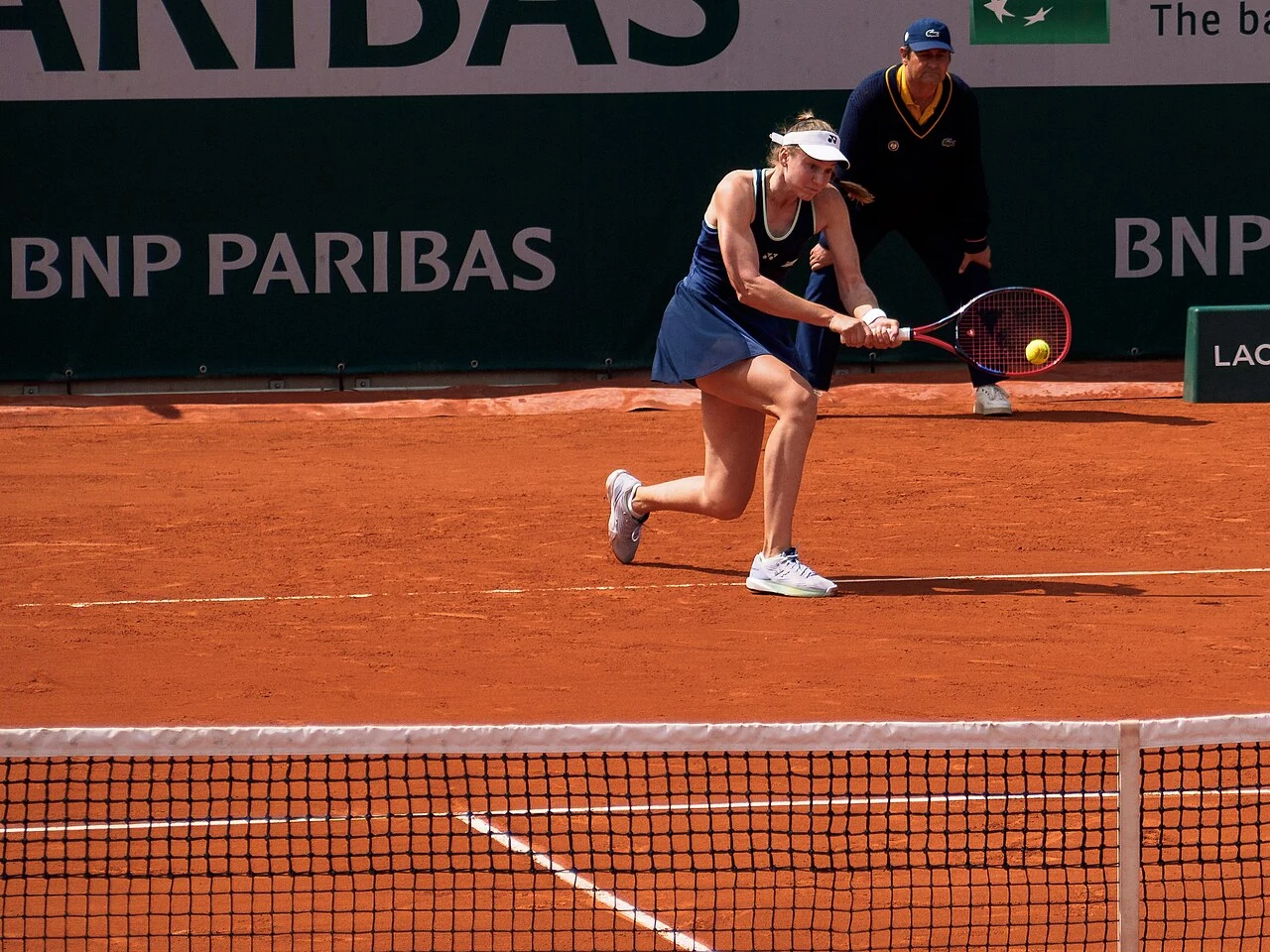
The 27% figure remains relevant. It means the second-serve branch of the point was needed frequently. But a first-serve fault is not yet a lost point. The second delivery and what follows it still matter. At the other extreme, a first serve landing in the box does not guarantee a useful return to attack, let alone a point won.
The BBC report does not isolate second-serve speed, spin or a complete second-serve winning percentage for that set. It would be tempting to fill the gap with an explanation about an exceptional kick serve or Sabalenka’s return errors. Without the supporting breakdown, those are hypotheses. The service-point result shows that Rybakina found enough ways to win the points; it does not identify a single mechanism responsible for them.
For a club player, the danger is copying the headline tradeoff. A low first-serve percentage is not a target to aim for because a champion once held successfully with it. Nor is making more first serves an adequate explanation of every service problem. A practice question needs to identify where points are actually being lost: the second delivery itself, the return it permits or the following exchange.
Record the score before the point, not just the result afterward
For one practice set, a player and coach can keep a compact point record: the score before each service point, whether the first serve landed, and who won the point. Add one observation only when it is clear, such as a double fault or an unreturned serve. This is an editorial exercise, not a training method attributed to Rybakina. It is useful because the starting score preserves information that a final percentage deletes.
At the review, separate a pattern from a memorable incident. Did first-serve misses actually cluster when behind in the game, or did one miss at 30–40 dominate the memory? Did a hold without break points still require repeated trips through deuce? A single set is a small sample, so use it to choose the next question or drill rather than announce a permanent trait about your nerves.
Keep the scoring format written down as well. A no-ad deciding point is not the same sequence as a standard advantage game, and a match tie-break does not contain service games to hold. Combining those formats without a label makes later comparisons confusing. The two hypothetical games above apply specifically to advantage scoring.
Even within this final, the opening-set figures should not be stretched across the whole match. The BBC reported that Rybakina made two double faults while serving for the title, then hit her 12th ace of the match on championship point at 40–30. That finish does not turn the earlier 27% into a plan, or make every double fault a sign of collapse. It is another reminder to keep the stage of the match attached to the number.
What survives from the opening set is a demanding but practical reading habit. First-serve percentage describes one delivery. Service points won describe outcomes. Break points faced describe the route through a scoring system. Rybakina’s set becomes less mysterious when all three are allowed to say exactly what they know—and no more. For your next match, preserve that route before deciding what the headline percentage says about your serve.
Sources and further reading
TENNIS TENSION LAB
Check your racquet’s tension today.
Get a high-precision tension reading in under 10 seconds. Tension Lab tracks changes from your first reading and helps you see when to restring.
- High-precision tension measurement. Ready in under 10 seconds.
- Track every change in feel. See the full story over time.
- Time to restring? Never leave it to guesswork.
Keep reading
No major title. A 72.5% deciding-set record. How should we remember Nishikori?
Kei Nishikori’s farewell brought an extraordinary deciding-set statistic back into view. It deserves attention—and a more careful reading than “he always won the big points”.
8 min read
Rybakina and Sabalenka won 92 points each. The useful serving clue is hidden inside that tie
Rybakina aimed 63% of her first serves at Sabalenka’s backhand corner in the 2026 Australian Open final. Why that figure needs the miss rate, the second serve and the whole point beside it.
8 min read