Rybakina lost her first match as No. 1. Charaeva did more than wait for it to happen
No. 118 against the new No. 1 sounds like a story about a favourite falling short. The way Charaeva kept answering deserves equal attention.
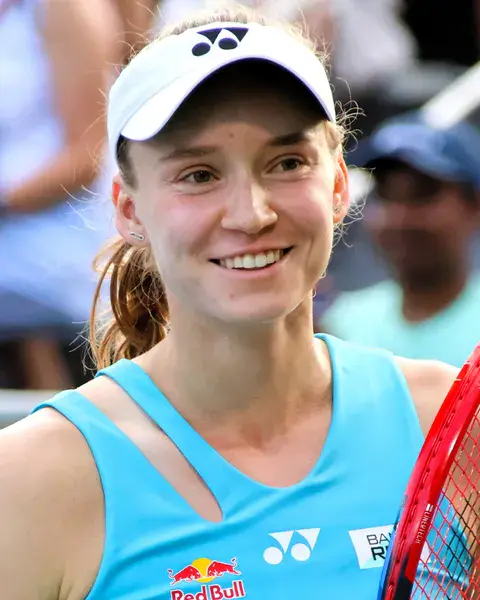
The most revealing game was not the one that gave Alina Charaeva her final break. It was the game immediately after it. Leading 4–2 in the deciding set against Elena Rybakina in Beijing, Charaeva held to love. After a match full of leads that disappeared almost as soon as they arrived, the world No. 118 finally made a break stick. She later served out a 3–6, 6–4, 6–3 victory in two hours and 11 minutes.
The result on 3 October 2026 supplied an irresistible headline: Rybakina had lost her first match as world No. 1. WTA reporting identified only one previous player with that distinction, Naomi Osaka, who lost to Kristina Mladenovic in Dubai in 2019. But a rare entry in a ranking footnote does not explain how a match changed hands. For that, the more interesting name is Charaeva’s.
She had to come back more than once
Charaeva began by breaking Rybakina in the opening game, which the WTA report attributed to four unforced errors. Rybakina immediately broke back. That start matters because it prevents a convenient retelling in which the underdog seized an early opportunity and simply rode it to the finish. Her first advantage lasted one game, and the first set eventually went to the favourite.
Rybakina broke for 4–2; Charaeva answered for 4–3. Rybakina then struck a backhand return winner to break again for 5–3 and held to love to finish the set in 44 minutes. The two players were repeatedly forcing the other to begin again. Charaeva’s ability to regain a service break was visible, but at this stage it was not enough to give her control of the scoreboard.
The second set repeated the problem. A forehand winner gave Rybakina the break for 2–1, and Charaeva broke straight back to 2–2 with a forehand winner of her own. Later, a backhand passing shot helped her secure her fourth break of the match and the set, 6–4. The comeback was made of several recoveries, not one sudden moment when the favourite supposedly stopped competing.
There is a useful limit to this account. The WTA report identifies those strokes and scores; it does not provide a complete rally log, a return-position study or every serve target. A claim that Charaeva discovered one technical weakness and attacked it all evening would require evidence the report does not contain. What the sequence does establish is narrower: losing an advantage did not prevent her from earning another.
A break is only the first half of an advantage
Rybakina saved a break point and held for 2–2 in the decider. Charaeva then broke for 4–2 when Rybakina sent a backhand wide. This time the next service game produced no reply on the scoreboard: a love hold took Charaeva to 5–2. That did not finish the match, but it changed the immediate task. Rybakina now had to hold to keep the contest alive, while Charaeva had put herself in position to serve for the match next.
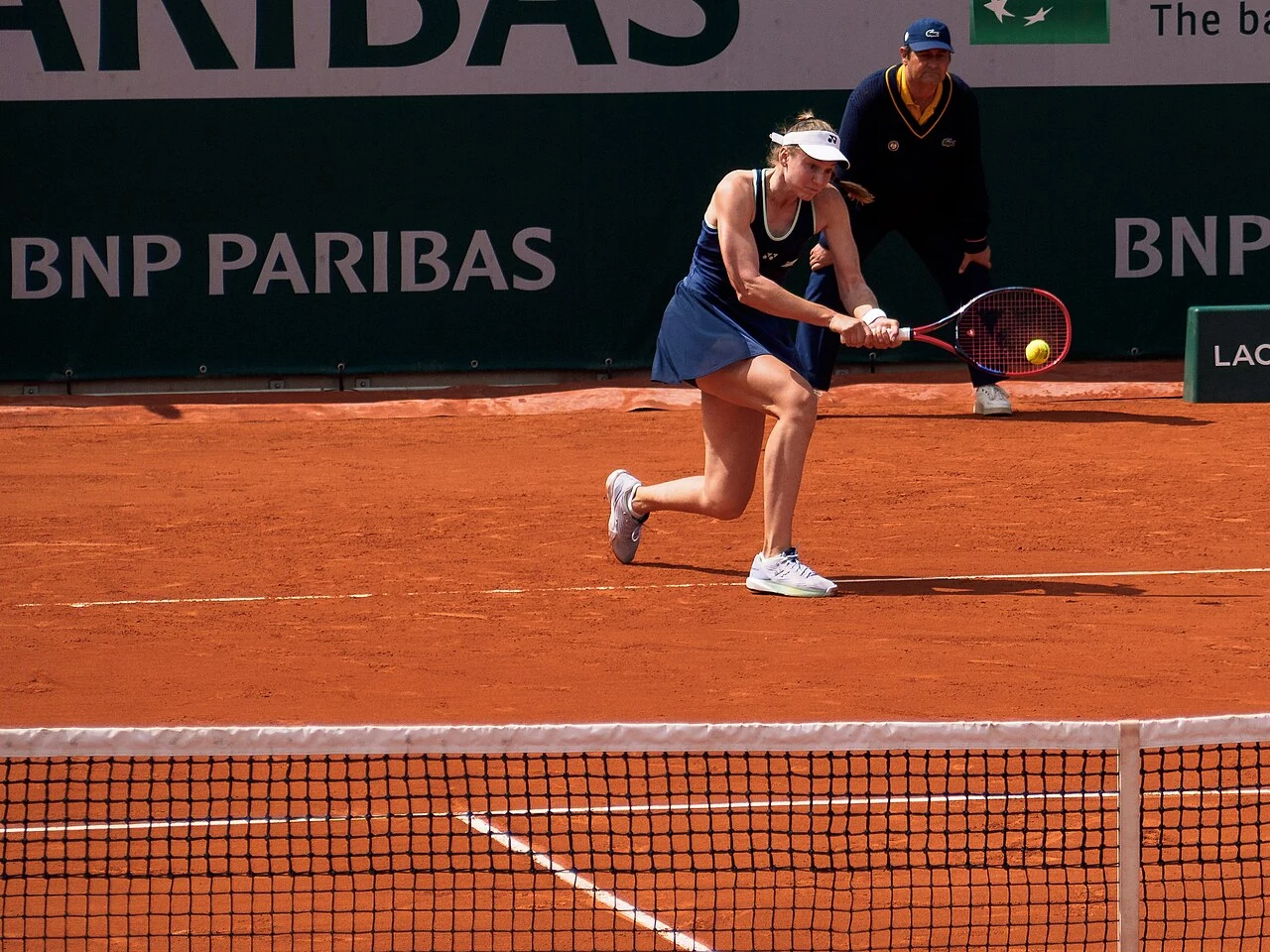
It is tempting to describe the hold as a new mental state: suddenly she believed, or suddenly the pressure disappeared. The score cannot establish either. Charaeva said afterward that she had tried to stay mentally strong and never stopped believing she could turn the match around. That is her account of the experience. The observable distinction is that she followed this break with four points won on serve rather than allowing an immediate break back.
For an experienced club player, the practical issue is familiar. Returning well enough to break and serving well enough to consolidate are separate tasks. The first does not carry an entitlement to the second. If a break leads to a hurried first service game, the useful review concerns the actual choices and execution in that game, not a sweeping diagnosis that you cannot handle a lead. One lost game is too little evidence for that label.
A simple practice variation can make the transition harder to ignore: begin a short set at 2–2, and have both players note the service game immediately after each break. Keep the usual scoring. Record whether the server held and one clear observation, such as a double fault or an unreturned serve, rather than writing a story about confidence after every point. This is an editorial practice suggestion, not Charaeva’s reported training routine. Its purpose is to keep the transition visible, including occasions when it goes well.
Rybakina’s explanation belongs in the story, with its limits
Rybakina said there had been a great deal happening after her US Open victory and that she had not had many opportunities to sleep and recover. She also said she felt her foot a little at the end of the Beijing match. She congratulated Charaeva on a very good performance and described a plan to rest for a week, hoping to restore her foot to full condition for the remaining tournaments of 2026.
Those comments provide context that the ranking does not. They are not a medical diagnosis or a controlled explanation of the loss. The report cannot tell us how much any one factor affected a particular service game, and a stated hope for the next tournaments is not confirmation that she will be ready. It would be equally careless to erase the comments or to make them the entire explanation.
The distinction also protects Charaeva’s achievement. An opponent’s difficult preparation does not win return games on your behalf, retrieve the second set or serve out the match. Charaeva still had to do those things against the player across the net. Rybakina’s account and Charaeva’s performance can both be true without one being used to cancel the other.
No. 118 was a starting label, not a ceiling
Charaeva was 24 and playing only her 17th tour-level main-draw match. Before Beijing, her highest-ranked win had come against No. 31 Wang Xinyu earlier in the season. The Rybakina result was her first victory over a top-10 opponent in her first such opportunity, and it took her to the third round of a WTA 1000 event for the first time. The scale of the jump is part of the story; it is not evidence that she arrived without a competitive history.
She had already won her first WTA 125 title in Midland in February and reached her first two tour-level quarter-finals in Hamburg and Sao Paulo. The ranking gap was enormous, but the season contained progress before this headline. According to the WTA, she became the ninth player outside the top 100 to beat a world No. 1 since the rankings began in 1975, and the lowest-ranked player to do so after losing the opening set.
That historical distinction describes the result, not a forecast. The report set up a first meeting with Sonay Kartal in the next round and said another win would help Charaeva’s pursuit of a top-100 debut. Neither the next victory nor that ranking milestone had been achieved in the account. One exceptional match earns attention; sustaining a higher level across opponents and weeks is another task.
For viewers and players alike, the trap is treating a ranking as a script. It is useful background, but it neither serves the next point nor tells the lower-ranked player when to stop asking questions. Beijing was striking because the new No. 1 lost. It was compelling because Charaeva survived the loss of several smaller advantages, kept returning and finally protected the one that mattered. The title in front of Rybakina’s name explains the size of the upset. The service game after 4–2 helps explain how Charaeva completed it.
Sources and further reading
TENNIS TENSION LAB
Check your racquet’s tension today.
Get a high-precision tension reading in under 10 seconds. Tension Lab tracks changes from your first reading and helps you see when to restring.
- High-precision tension measurement. Ready in under 10 seconds.
- Track every change in feel. See the full story over time.
- Time to restring? Never leave it to guesswork.
Keep reading
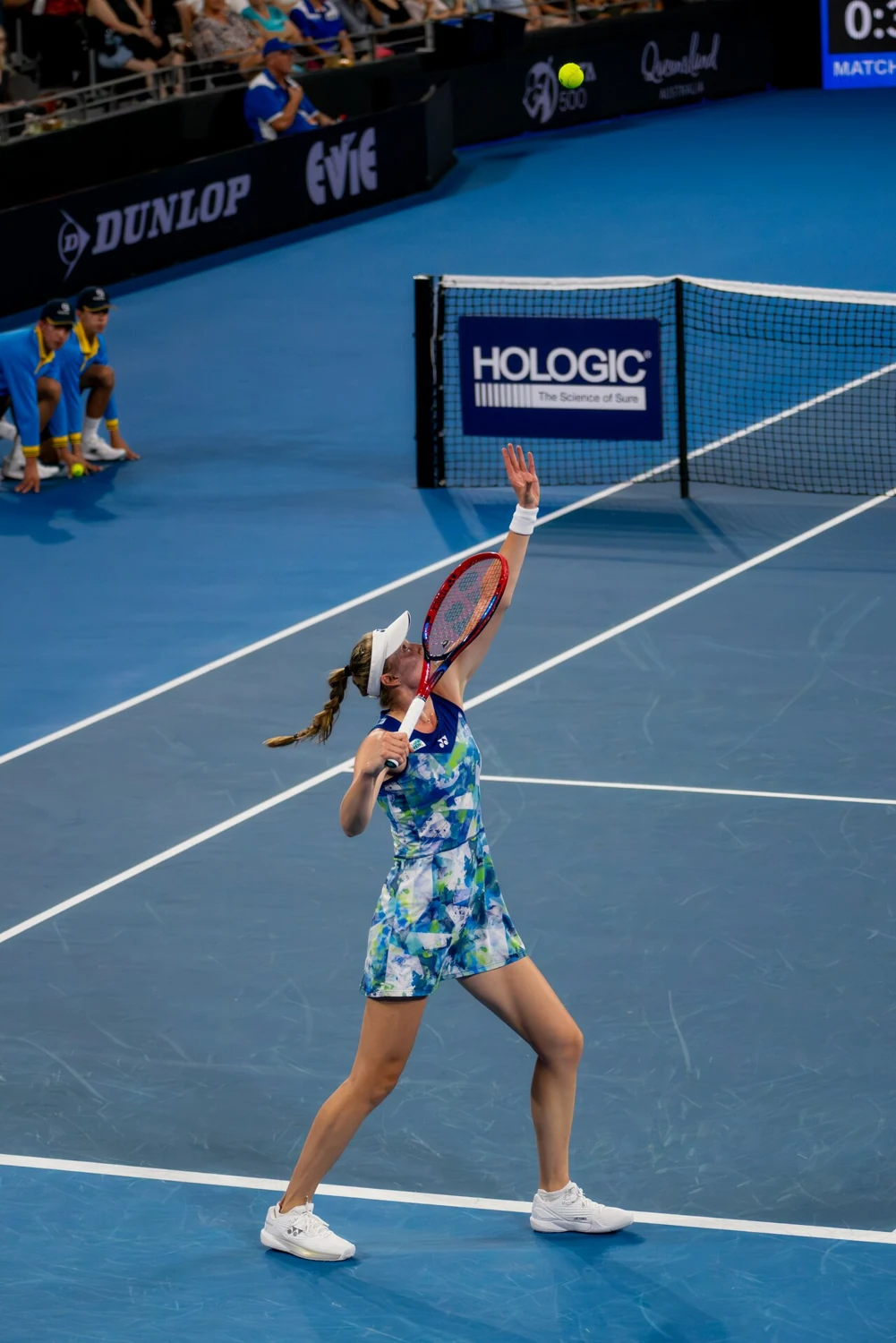
27% first serves, no break points: the Rybakina set a single number cannot explain
Rybakina won 22 of 30 service points in the opening set of the 2026 US Open final despite landing only 27% of first serves. The missing piece in a quick judgment is how points become a game.
8 min readRybakina and Sabalenka won 92 points each. The useful serving clue is hidden inside that tie
Rybakina aimed 63% of her first serves at Sabalenka’s backhand corner in the 2026 Australian Open final. Why that figure needs the miss rate, the second serve and the whole point beside it.
8 min read