Shelton improved his backhand. Why could Zverev still target it?
A weaker wing is not a broken stroke. The final raises a more useful question: can you reach that target without giving away the rally on the way?
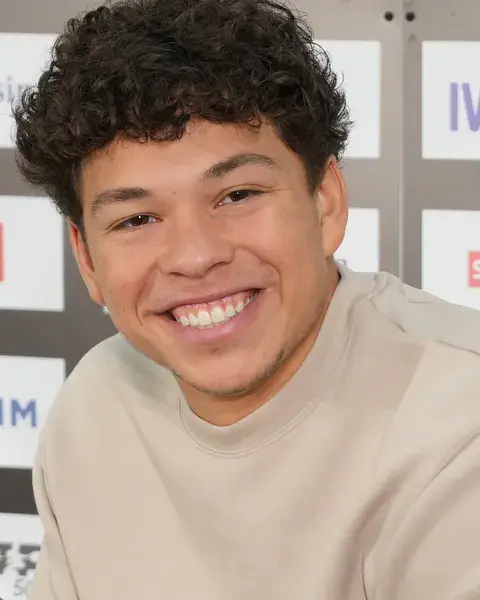
The tempting verdict on Ben Shelton’s first major final is that Alexander Zverev found his backhand and kept going there. BBC Sport’s report of 13 September 2026 does describe Zverev exploiting Shelton’s weaker backhand in baseline exchanges. The score, 6–3, 7–6(2), 5–7, 6–2, makes a simple explanation attractive. But the same report complicates it: Shelton’s improved backhand and defence had helped drive his successful summer, while failures to execute his dangerous forehand proved costly in the final.
Those are not competing accounts. A stroke can get substantially better and remain the more promising side for a particular opponent to play. And a player can survive pressure on that side, receive a chance on the preferred wing, then miss it. Describing the loss as a defective backhand removes both the improvement and the opportunities Shelton did create.
The distinction matters well below the professional tour. Players often leave a match declaring that someone “has no backhand”, only to watch the same opponent hit reliable backhands against the next person. What changed may not be the stroke. It may be the ball arriving, the position from which it was struck, or the cost of getting it there.
Better than before is not the same as better than the alternative
Shelton arrived in New York after winning the Canadian Open. BBC described his first-round Wimbledon defeat to qualifier Otto Virtanen as a painful turning point before the North American hard-court season. His route to the US Open final included Carlos Alcaraz, whom he beat in a five-set quarter-final. Alcaraz was returning after almost five months away, an important part of the context. Shelton’s run was evidence of progress, not proof that every part of his game had become equally secure.
Zverev presented a different examination. He had won all five previous meetings, according to the final report. That history does not explain any individual point, but it warns against treating the matchup as a neutral test of Shelton’s general improvement. The opponent also supplies depth, pace, court position and a response to the next ball. A backhand that now holds up against one style may still surrender initiative against another.
“Weaker” is a comparison within a player’s game, not an absolute technical grade. Against an explosive forehand, a dependable backhand can still be the more sensible destination. You may prefer a neutral reply from that side to an aggressive reply from the other. The target need not produce an immediate error to have value. It may simply leave fewer ways for the opponent to hurt you.
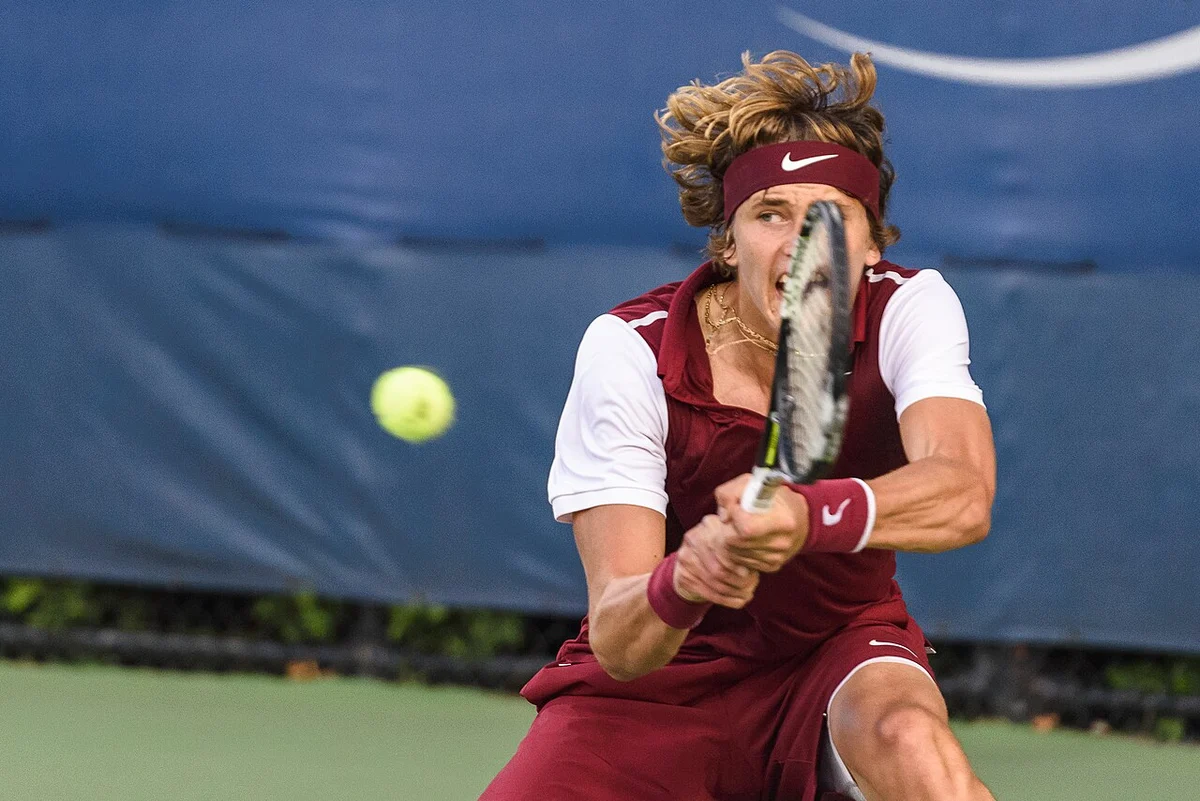
That does not mean the report establishes a single repeated point pattern. It gives no shot-by-shot distribution of Zverev’s targets, no measured change in Shelton’s contact height and no count of errors induced by a particular ball. We can discuss why targeting a relatively less dangerous wing makes tactical sense. We cannot present an imagined sequence as footage analysis of this final.
The target is only half of the decision
Consider a separate, hypothetical club match: a right-hander faces a left-hander and decides to play the backhand whenever possible. In a conventional baseline exchange, the right-hander’s crosscourt forehand travels toward the left-hander’s backhand side. The right-hander’s crosscourt backhand instead travels toward the left-hander’s forehand side. “Play crosscourt” and “play the backhand” are not interchangeable instructions.
This is basic court geometry, not a reconstruction of Zverev’s point selection. It exposes a missing question in many tactical plans: which shot must I play to reach the target from where I am now? If you are stretched on the backhand side, redirecting down the line merely to reach the opponent’s backhand asks something different from maintaining the crosscourt exchange. The attractive destination does not make the route free.
The incoming ball matters too. A short ball that lets you set up comfortably is not the same problem as a deep ball that pushes the contact behind you. Insisting on the chosen corner from both positions can turn a sensible plan into your own error source. Sometimes the next useful step is to restore depth or recover court position, then look for the target again. Patience is part of executing the plan, rather than evidence that you have abandoned it.
Nor is every ball to the backhand equivalent. A comfortable ball in the hitting zone may settle an opponent into rhythm; another height or a deeper bounce may change the reply. The effect is individual. A left-hander is not automatically uncomfortable with high backhands, and the cited report does not provide a height map for Shelton. Watch the actual response before promoting a familiar tennis maxim into a diagnosis.
A useful target earns its place in the rally through what it gives back. Does the reply stay deep? Does it open space? Can the opponent change direction without losing balance? If all you note is whether you hit the correct half of the court, you can keep following a plan long after the opponent has solved it.
The forehand still had to finish the work
The final itself resisted a one-stroke story. Shelton double-faulted on break point in the opening game and again on set point at the end of the first set. He nevertheless increased the pressure on Zverev’s serve in the third and extended the match. Then a poor service game to begin the fourth allowed Zverev to regain control. These were changes in the contest, not four sets of an unchanged technical verdict.
BBC also singled out Shelton’s inability to execute his damaging forehand at crucial moments. Afterward he acknowledged making too many errors on balls he had there to play. That does not tell us how many forehand opportunities had been created by surviving backhand pressure, or why each attempt failed. It does keep the stronger wing in the account. Getting through the less comfortable exchange and using the chance that follows are separate jobs.
For an experienced competitor, this suggests a more revealing review than adding up backhand misses. Look for the transition. If you defended two balls well and then hurried a playable forehand, the defensive work may have succeeded. If you never received a ball you could attack, the problem may sit earlier in the exchange. Both rallies can end with the same score, but the next practice should not necessarily be the same.
One way to explore this in practice is to start a few points in the diagonal you find difficult, then allow normal play. Ask a partner to note the first ball on which either player could reasonably take the initiative, and what happened next. The classification will be subjective; it is a discussion aid, not a new official statistic. The purpose is to notice whether the problem is escaping pressure, recognising the opening or executing the attack.
Give the other player permission to change direction and adapt. A drill that guarantees a short reply after three backhands can help rehearse a movement, but cannot tell you whether your match opponent will offer that ball. If the pattern depends on a cooperative response, keep that limitation visible. There is a difference between practising a possible sequence and proving that it will be available in competition.
Shelton’s summer improvement and Zverev’s successful targeting can both be true. The useful lesson is not to label every backhand a weakness, nor to stop attacking a shot because it has improved. Choose the target against the opponent in front of you, account for the shot required to reach it, and judge the reply. A good tactical plan concerns the entire exchange. Naming the corner is only its beginning.
Sources and further reading
TENNIS TENSION LAB
Check your racquet’s tension today.
Get a high-precision tension reading in under 10 seconds. Tension Lab tracks changes from your first reading and helps you see when to restring.
- High-precision tension measurement. Ready in under 10 seconds.
- Track every change in feel. See the full story over time.
- Time to restring? Never leave it to guesswork.
Keep reading
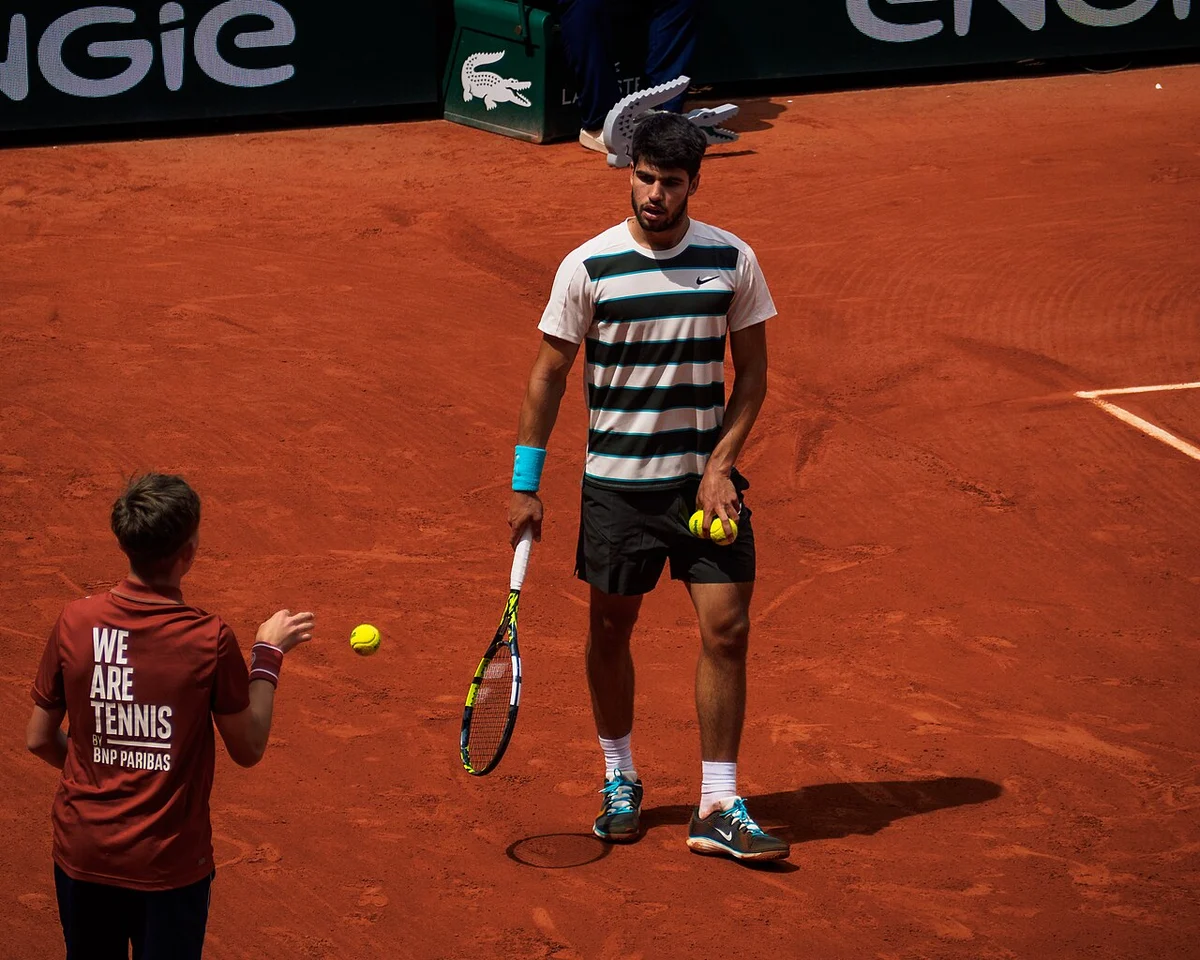
Alcaraz finished at 3:34am. Who should pay for tennis running late?
After a four-hour, 28-minute US Open quarter-final against Ben Shelton, Carlos Alcaraz questioned the schedule. Wimbledon shows both the value and the cost of setting a finishing boundary.
8 min readZverev won 39 of 42 first-serve points. That is not an ace statistic
Alexander Zverev’s early service dominance against Ben Shelton in the 2026 US Open final shows why first-serve percentage, aces and points won tell different stories.
8 min read