Sinner’s racquet looks familiar. Does that tell you what is inside the one you can buy?
A television close-up can identify a colour scheme. It cannot provide the complete specification of the racquet in a champion’s hand—or guarantee that a shop model is identical.
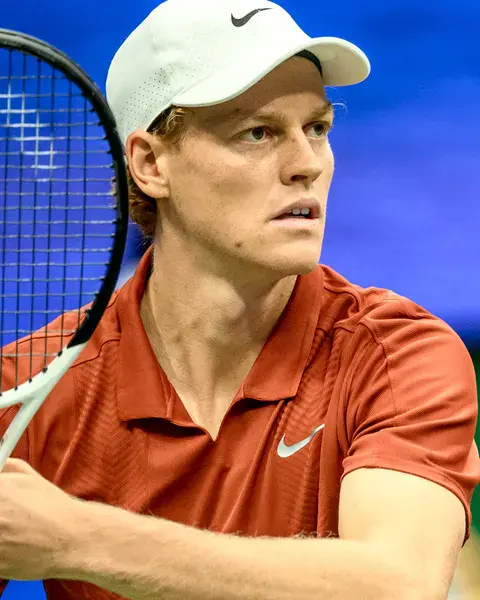
One of tennis equipment’s most persistent questions begins with something everyone can see: the paint. If a player’s sponsor introduces a new racquet, why does the racquet on television still look like the old one? With Jannik Sinner, that question has generated years of discussion. The tempting answer is to identify the colour scheme and treat the equipment mystery as solved. It is also the point where the evidence runs out sooner than many shopping recommendations admit.
A Talk Tennis thread asking why Sinner was still using a Speed 2022 paintjob began in March 2024. The forum listing showed 457 replies and 35K views when consulted on 4 October 2026, with activity into September. A newer “Sinner Speed” discussion, started in September 2026, showed 142 replies and 5K views. These are cumulative community counters, not Google search volumes. Together they show a durable question and a fresh burst of interest, rather than proof of any particular specification.
The latest argument illustrates the problem
In the newer discussion, posters disagree over the identity of a possible Sinner-associated retail frame. Some describe an older-style construction, others a current retail model with different cosmetics. They disagree over beam dimensions and shared string holes. A few claim inside knowledge; other participants repeatedly ask for a source. That is useful evidence of what buyers want to know. It is not a reliable product announcement.
The older paintjob thread follows a similar pattern. Participants offer confidence, familiarity, superstition and production batches as possible explanations for a player keeping a look. None becomes a verified account of Sinner’s decision merely because it is plausible. A player can be particular about equipment without a spectator knowing which feature matters. We therefore do not assign him a private motive or publish a guessed professional specification as fact.
Four different questions hide inside “Sinner’s racquet”
The first is cosmetic identity: what colour scheme appears on the visible frame? The second is commercial association: which product is presented with the player’s name or image? The third is the actual retail model being offered, with a model year and a specification sheet. The fourth is the individual playing racquet, including its construction, mass distribution and string job. Answering one does not automatically answer the other three.
That distinction is especially important when the word “same” appears in a buying conversation. The same colour does not document internal construction. The same model name does not record an individual finished weight. A player’s photograph next to a retail product does not function as a measurement certificate. Equally, an online claim that everything is secretly different needs evidence too. Uncertainty is not permission to replace marketing with a more entertaining rumour.
There is no need to solve an undisclosed tour setup before making a sensible purchase. Start with the product you can actually inspect. On 4 October 2026, Tennis Warehouse’s Speed MP 2026 page listed a 100-square-inch head, 27-inch length, 16-by-19 pattern and a 23-millimetre beam. Its stringing specification said there were no shared holes. Those details describe that listed retail model; they do not settle an argument about an unreleased signature version or a professional’s frame.
The same retailer listed a strung weight of 318 grams, swingweight of 329 and stiffness rating of 60. Keep the word “strung” attached to the weight, and keep the retailer attribution attached to the figures. They are not a promise that every individual racquet with an overgrip, dampener and chosen string will weigh exactly 318 grams. Nor should they be silently transferred to Sinner’s match equipment because his name appears on the page.
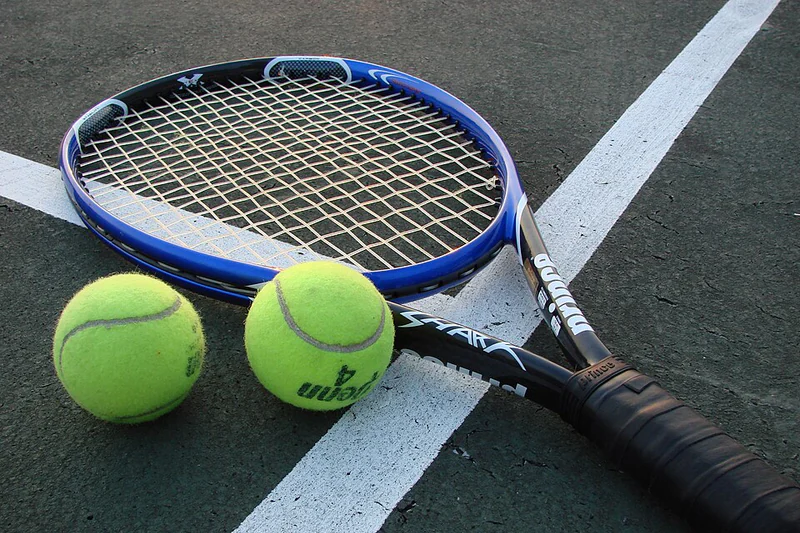
A photograph is useful—but only for the question it can answer
A clear photograph can help compare visible colour, markings or the arrangement of holes. It cannot show every internal layer, the complete added-weight configuration or the reference tension used during stringing. Even a careful visual identification leaves some of the most important playing variables unmeasured. Our Sinner photograph is an archive image, not a current equipment inspection.
The sensible response to a fresh “exactly his racquet” claim is to ask what “exactly” includes. Is there a published product page? Does it specify a cosmetic edition, or a different construction? Are the quoted measurements for a retail sample, a claimed tour sample or an unstrung catalogue specification? If the answers change during the discussion, keep those statements separate. Combining the most exciting detail from each poster creates a racquet that no source actually documented.
Turn the search into a better demo session
Once you know the retail model, decide what you want it to change in your own game. Perhaps your current racquet becomes hard to accelerate late in a match, or a return feels unstable against a faster server. Those are useful demo questions. “Will I hit like Sinner?” provides no comparable outcome and no stopping point for the search.
Record the model year and grip size of the demo, its string model and gauge, and how fresh the string job is. If the shop can provide measured mass, balance and swingweight for that racquet, keep those beside your notes. A stock specification and an actual demo measurement are different kinds of information. That distinction becomes valuable if you later buy a frame that feels different despite carrying the same name.
Give the demo your ordinary tennis: routine cross-court exchanges, returns, a defensive ball and the serve you can repeat under pressure. Include the later part of the session, not only the first energetic minutes. These are proposed comparison criteria, not a playtest we have performed. The purpose is to identify what the available retail racquet does for you, without awarding it points for a champion’s results.
The string record matters after the purchase
A paintjob discussion rarely includes a reproducible stringing order. Your own record should. Note the exact string, gauge, requested tension, date and any relevant process agreed with the stringer. If you use a tension-measurement app, establish a baseline using its preparation instructions and compare later readings under consistent conditions. An acoustic estimate does not identify the hidden construction of a tour frame, but it can help keep your own equipment history coherent.
Sinner’s racquet remains an interesting subject because a visible object carries so much of a player’s identity. Interest is a good reason to investigate, not a reason to skip the boundary between observation and inference. Buy the model you have identified, evaluate the example you actually hit with, and record the setup you can reproduce. A familiar paintjob can start the conversation; it should not finish the specification sheet.
Sources and further reading
TENNIS TENSION LAB
Check your racquet’s tension today.
Get a high-precision tension reading in under 10 seconds. Tension Lab tracks changes from your first reading and helps you see when to restring.
- High-precision tension measurement. Ready in under 10 seconds.
- Track every change in feel. See the full story over time.
- Time to restring? Never leave it to guesswork.
Keep reading
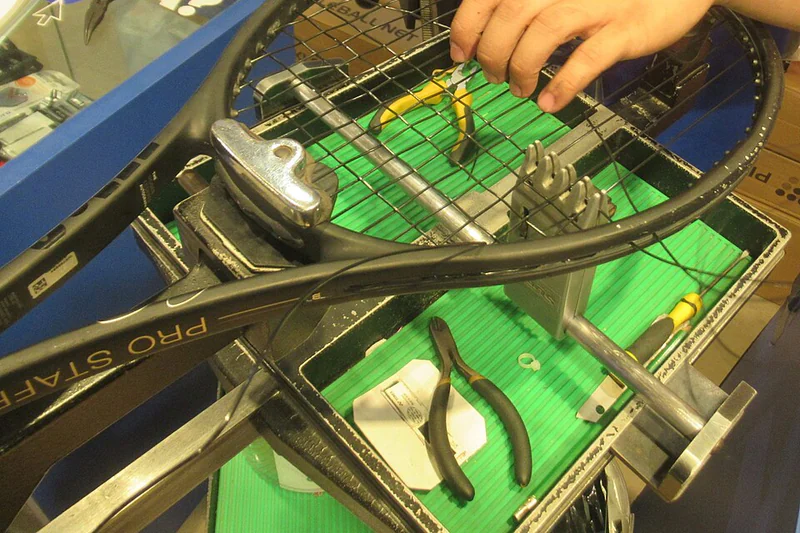
The first tension drop can mislead your next restring
A fair tension history separates the stringing-machine setting, the fresh stringbed reading and the first-session baseline. Here is how to compare strings without moving the starting line.
7 min readBoth racquets say 305 g. Why does one keep arriving late?
Identical listed weight does not mean identical swingweight. Read mass, balance and rotational resistance together before choosing a new frame or matching a second racquet.
8 min readWhere did Sinner vs Alcaraz go? The tour cannot wait for its biggest rivalry
Sinner and Alcaraz had met only once in 2026 by 24 September. Their interrupted seasons reveal why a rivalry needs availability, a draw and victories before it needs a final.
8 min read