Your grip feels sticky in the shop. Why does it slip in the second set?
The best first impression can be the wrong buying signal. What matters is whether the handle stays dependable after your hand and wrist are wet.
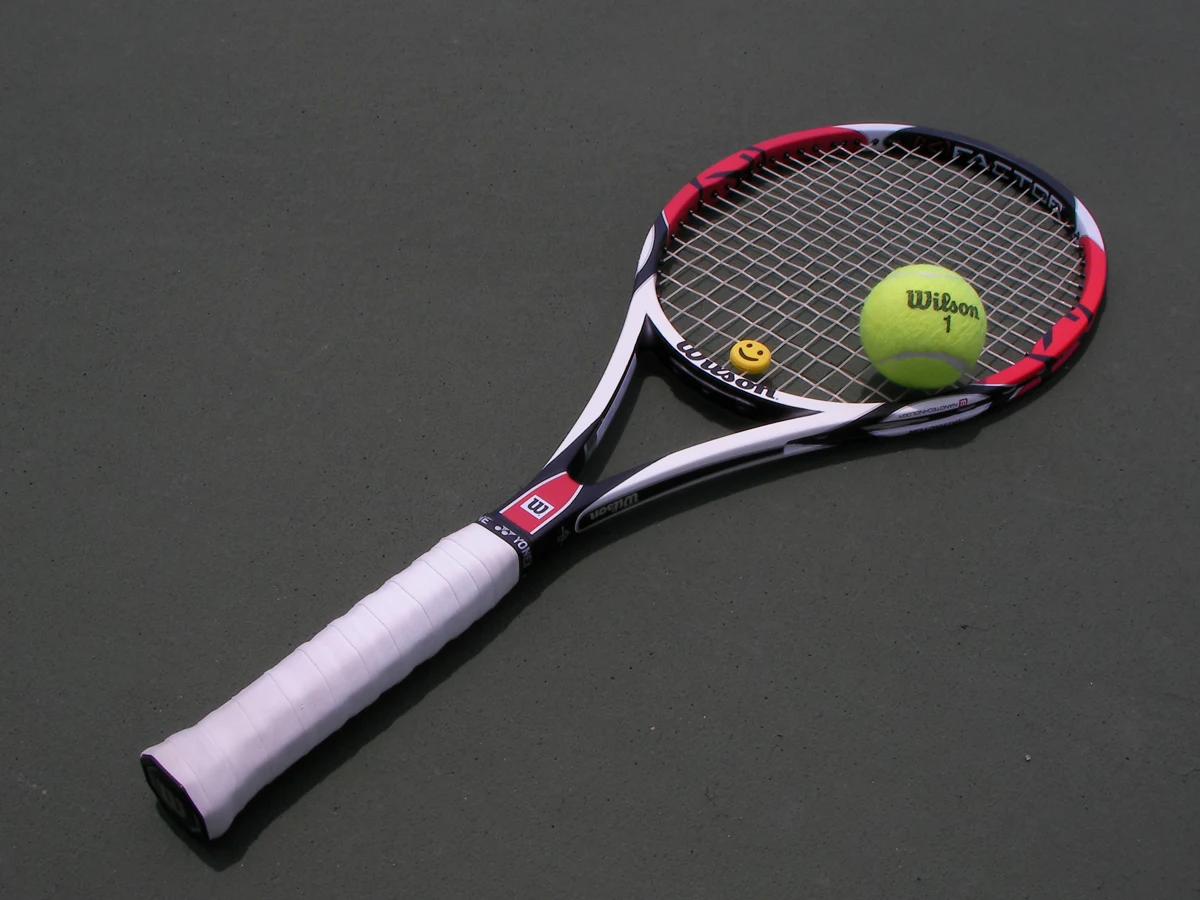
You pick up a freshly wrapped racquet and the handle almost sticks to your palm. It seems impossible that this could be the wrong overgrip for sweaty hands. Forty minutes later, on an important serve, you feel the racquet move. The original purchase decision was based on a dry touch; the failure arrived after a changing mixture of moisture, wear and pressure. They are different situations, and a sticky first impression cannot settle both.
The question keeps resurfacing among experienced players. On October 4, 2026, Talk Tennis showed 51 replies and 5K cumulative views for “Best solution for soaking sweaty hands revisited”; another discussion about sweaty hands, leather and overgrips showed 39 replies and 5K views. Those counters indicate recurring interest, not a controlled comparison or proof that the most frequently named brand is best. The useful common thread is the failure point: good initially, unreliable once the match gets going.
Tack and moisture handling answer different questions
Tack describes the sticky sensation at the contact surface. Absorbency describes a material’s handling of moisture. They are not opposite ends of a single quality scale, and products can combine them. Tourna’s own current range illustrates the distinction: its original Grip is presented as a dry-feel option that becomes tackier when wet, while Tourna Tac is described as medium tack with sweat absorption. Those are manufacturer descriptions, not findings from our own laboratory.
This distinction is more useful than declaring every tacky grip unsuitable for sweat. One player’s hand may remain only slightly damp; another may soak a wrap during a set. A product can be excellent for the first player and reach its useful limit for the second. Likewise, a dry-feel grip may seem uninspiring in a shop but work better after the conditions it was chosen for actually arrive. Judge the change over time, not just the surface at minute zero.
Find where the water is coming from
Before buying a large pack, observe the pattern during an ordinary practice. Is the palm becoming wet directly, or is moisture running down the arm onto the handle? Does the overgrip become slick everywhere, or only where the lower hand repeatedly presses? Does trouble start after towelling the face and returning that same wet hand to the racquet? These observations do not diagnose a medical condition. They identify which part of your routine deserves a change.
A clean, dry towel and a fresh wristband can be worth evaluating alongside the wrap. A saturated wristband is no longer doing the same job as a dry one, and a damp towel may simply move water around. Keep spare items where you can reach them during permitted breaks. The aim is a practical routine you will actually maintain, not a bag full of increasingly sticky products that never addresses how the handle gets wet.
The wrap itself can change the comparison
Two identical overgrips can feel different if one has heavy overlap and the other is pulled into a thin, narrow strip. Overlap changes the ridges and effective handle size. Excessive stretching may alter the feel you thought you were testing. Follow the maker’s fitting instructions, cover the part of the handle you use, and aim for a repeatable wrap before comparing products. A two-handed backhand also needs adequate coverage for the upper hand.

Do not keep adding layers to solve every slippery-handle problem. A thicker handle may feel secure initially but also change how easily you move between grips. Check whether the underlying replacement grip is loose or worn, and whether the finishing tape is holding the wrap properly. If the surface rotates around the handle, that is a fitting problem with a different remedy from a correctly fitted surface that becomes wet and slick.
Compare one match condition at a time
Buy small quantities of two plausible types rather than a season’s supply of the most popular one. Wrap the same racquet consistently, then compare on days that resemble the conditions giving you trouble. Record roughly when the handle first becomes unreliable and what was happening: serving, returning, changing to a continental grip or recovering from a wide ball. You are looking for a usable pattern, not trying to establish a universal friction coefficient.
Avoid judging a fresh sample against a second product already used for several sessions. Nor is a cool indoor hour a fair answer to a problem that appears only in humid outdoor competition. If conditions differ, keep that difference in your notes. A grip that lasts longer but needs constant squeezing may be less useful to you than one you replace sooner and can hold comfortably. Physical survival is not the only measure of value.
Replace for function, not colour alone
Discolouration can look dramatic without telling you exactly how much secure contact remains. Conversely, a clean-looking surface can already be unreliable. Look for the combination of tearing, worn areas, persistent slickness and a change in how you have to hold the racquet. Once you recognise your own failure pattern, replace before a match in which that problem would matter rather than waiting for the wrap to disintegrate visibly.
Cost comparisons should use your actual replacement rate. A cheaper wrap used much more frequently may cost more over a month; an expensive wrap is not a saving if you dislike it for most of that time. Keep a ready spare and practise changing it so the process is ordinary. Check the applicable match rules and use an allowed break rather than assuming equipment maintenance excuses a delay whenever you want it.
Forum suggestions may also include powders, sticky liquids or antiperspirants. Do not treat an anecdote as skin-care advice or apply an unfamiliar substance immediately before competition. Follow the product’s intended use and instructions, and stop if it irritates the skin. Persistent or unusually troublesome sweating can be discussed with a qualified clinician. You do not need a medical claim to make a sensible equipment choice.
The target is not the stickiest handle you can buy. It is a handle whose behaviour remains familiar through the conditions you actually play in, with a replacement routine you can afford. A dry-feel overgrip, a moderately tacky one or a different wrapping habit may provide that result. Let the second set make the buying decision, instead of asking your dry palm in the shop to predict the entire match.
Sources and further reading
TENNIS TENSION LAB
Check your racquet’s tension today.
Get a high-precision tension reading in under 10 seconds. Tension Lab tracks changes from your first reading and helps you see when to restring.
- High-precision tension measurement. Ready in under 10 seconds.
- Track every change in feel. See the full story over time.
- Time to restring? Never leave it to guesswork.
Keep reading
The tennis shoe with the most grip is not automatically your best shoe
A tennis traction experiment separates available grip from the grip a player uses. Why surface, loading and turning matter more than treating one friction number as a buying score.
7 min read
Both racquets say 305 g. Why does one keep arriving late?
Identical listed weight does not mean identical swingweight. Read mass, balance and rotational resistance together before choosing a new frame or matching a second racquet.
8 min read