Świątek’s 26–5 record in finals is extraordinary. It is not an 84% promise
She ended an 11-month title drought with another commanding final. Those two facts belong together—and explain why the last round cannot tell the whole story of a season.
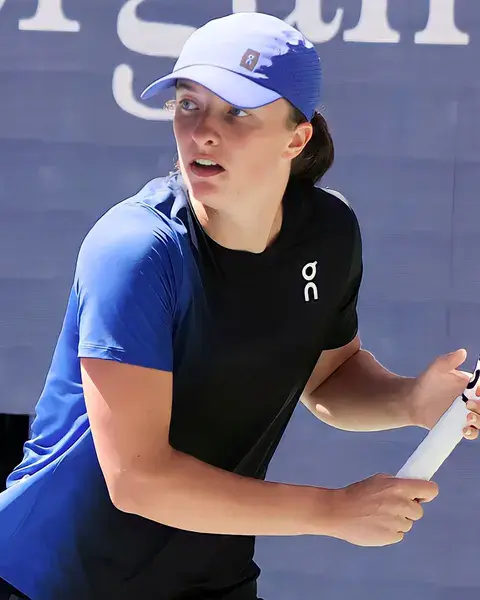
Iga Świątek needed 75 minutes to beat Elena Rybakina 6–2, 6–3 in the Toronto final. The WTA’s report of 14 August 2026 then supplied the number that makes the result look almost routine: 26 wins and five losses in tour-level finals. Divide 26 by 31 and the result is 83.9%, rounded to 84% in the WTA’s rankings report. Once Świątek had reached a final, she had usually left with the trophy.
The awkward companion fact is that Toronto ended an 11-month wait for a title. It was her first final of the 2026 season, as well as her first title. There is no contradiction. A brilliant record in finals can coexist with a long spell without a trophy, because the record only starts counting when the player reaches the last match.
The missing matches are not a minor detail
A finals record is a record of an already selected group of matches. Every entry required enough victories earlier in that tournament to arrive at the title match. An opening-round defeat, a quarter-final exit or a semi-final lost after a strong week adds neither a win nor a loss to 26–5. Those results still matter enormously to a season. They simply answer a different question.
Świątek’s own explanation after Toronto was revealing. She said she tried to approach finals like the preceding matches, continuing what she had done well. Reaching the final told her that her game was working and gave her confidence. That is not an account of switching on a special personality reserved for trophy day. It describes carrying a successful week into its last assignment.
It also explains why comparing her finals percentage directly with her all-round match percentage would be too quick a test of whether pressure makes her better. The opponents, surfaces, stages of form and routes into the match are not held constant. Even a difference between those percentages would need interpretation. The final-round label does not isolate the effect of nerves.
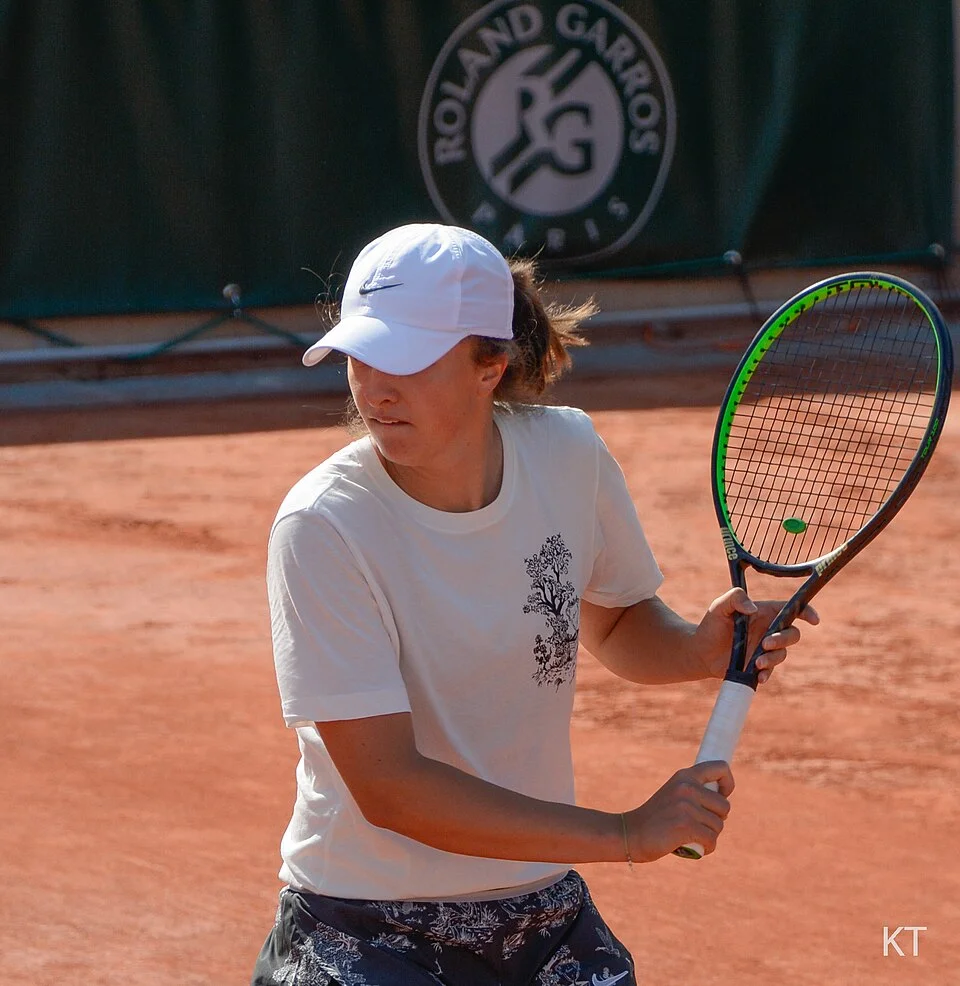
The 84% is therefore a description of the 31 finals in that August account, not a forecast for any particular future final. It does not mean that every opponent has a 16% chance, or that Świątek should win 84 of the next 100 finals regardless of who reaches the other side. Using a historical proportion as a ready-made prediction throws away precisely the matchup information tennis players spend a week gathering.
Toronto was a match before it became a statistic
The actual route into the final supplied useful context. Świątek had needed a comeback against Marta Kostyuk in the fourth round, beaten Diana Shnaider 6–1, 6–2 in the quarter-finals and defeated Elina Svitolina in three sets in the semi-finals. The Svitolina win reversed two three-set losses to the same opponent earlier that season. Her final was not evidence that she had cruised through an entire draw without a problem.
Rybakina had played three sets in four of her five wins on the way to the final, including recoveries after losing the first set against Naomi Osaka and Coco Gauff. Afterward, she described feeling physically worn out and regretted not having more to give in the last match. That is relevant context from the player. It does not let us calculate how many points fatigue cost her, or replace Świątek’s victory with an imagined match between equally rested versions of the two.
The WTA reported two Rybakina double faults in the opening game, an early break for Świątek and a 3–2 break in the second set. Świątek later held for 5–3 with a forehand winner and finished the match by breaking again, closing with a backhand winner. These are concrete pieces of the result. They give the final a shape that the word “clutch” cannot provide on its own.
The same report put their head-to-head at 7–6 to Świątek after Toronto. It was their second final against each other, and Świątek had won both in straight sets. That contrast is interesting, but two finals remain two matches. It cannot erase the close overall matchup or establish that Rybakina becomes a fundamentally different opponent whenever a trophy is at stake.
A perfect conversion rate can still produce fewer titles
To see what a finals percentage leaves out, consider two fictional club players over twelve comparable tournament entries. Player A makes four finals and wins all four. Player B makes eight finals and wins six. A has the perfect final-round record; B has reached the last day more often and won more tournaments. Neither calculation is wrong. They measure different parts of the job.
| Measure | Player A | Player B |
|---|---|---|
| Tournament entries | 12 | 12 |
| Finals reached | 4 | 8 |
| Titles won | 4 | 6 |
| Finals won / finals played | 4/4 = 100% | 6/8 = 75% |
| Titles won / tournament entries | 4/12 = 33.3% | 6/12 = 50% |
This does not prove B is better in every matchup, and the example deliberately says the entries are comparable. In real competition, draw size, playing level and event format can differ. The simple point is that a player should not have to make a finals percentage worse in order for reaching more finals to count as progress. Another runner-up finish can reduce conversion while still adding a strong tournament to the season.
The WTA rankings article listed Świątek’s 84% alongside the other players in the top five at that time: Coco Gauff at 69%, Aryna Sabalenka at 55%, Rybakina at 50% and Jessica Pegula at 46%. Those were differently sized career samples, not five athletes taking the same mental-strength exam. The comparison makes Świątek’s record stand out; it does not by itself rank their composure, preparation or difficulty of opposition.
For your own tennis, keep the two questions separate
An experienced competitor can use a more informative season review than “I always lose finals”. First ask how often you get there in the events you actually enter. Then ask what happens when you do. Keep the tournament, opponent and format beside the result. Reaching two finals after previously losing in the early rounds is a different season from reaching two after previously reaching eight, even if both sets of finals end 0–2.
For the final itself, choose evidence small enough to act on. Did the opponent expose a return pattern you had not faced earlier? Were your first volleys landing short? Did the available preparation time differ from earlier rounds? If video or a point record exists, use it. If not, mark the gap instead of filling it with a complete psychological story. One remembered double fault should not become the explanation for an entire season.
Equipment-sensitive players can apply the same discipline. If a final felt less controlled, record which racquet and string setup you used, the conditions and the shots that changed. A tension history may help compare sessions, but neither a loss nor an 84% statistic diagnoses the setup. Keep equipment observations alongside the match record rather than using a disappointing score to decide retrospectively that the racquet must have been wrong.
Świątek’s Toronto title was both a return after a long gap and another exceptional finish. Her 26–5 record deserves its reputation. The most useful reading preserves everything the number actually contains: repeated success in the final match after earning the right to play it. It leaves room for everything outside the fraction, too. Winning on the last day and getting yourself to the last day are different achievements. A serious account of a player needs both.
Sources and further reading
TENNIS TENSION LAB
Check your racquet’s tension today.
Get a high-precision tension reading in under 10 seconds. Tension Lab tracks changes from your first reading and helps you see when to restring.
- High-precision tension measurement. Ready in under 10 seconds.
- Track every change in feel. See the full story over time.
- Time to restring? Never leave it to guesswork.
Keep reading
Rybakina lost her first match as No. 1. Charaeva did more than wait for it to happen
Alina Charaeva beat new world No. 1 Elena Rybakina in Beijing on 3 October 2026. Repeated breaks back, a decisive hold and the limits of the ranking tell the fuller story.
8 min read
Why Iga Świątek welcomed the long rallies in Beijing
Świątek said the extended rallies in her Beijing opener helped her feel the court and ball. What experienced players can learn before blaming unfamiliar conditions on their strings.
7 min read