Are the tennis balls in your bag really the ones you see on tour?
The same tournament name cannot answer every question about a ball. Neither can one frustrating afternoon on court.
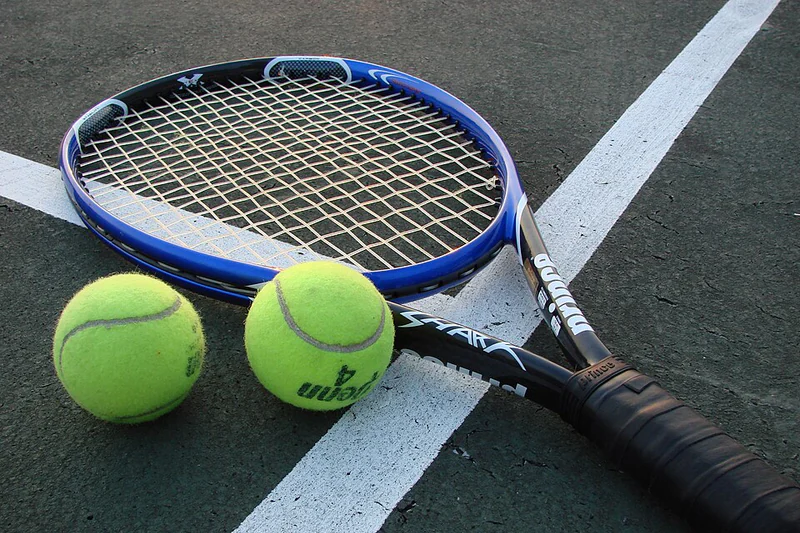
The question sounds simple: if a can carries the name of a major tournament, am I buying what the professionals hit? In tennis communities, it quickly becomes several arguments at once. Are retail and tournament specifications identical? Have balls become less durable? Does a heavier-feeling afternoon mean the ball changed, the strings changed, or the weather changed? A confident answer to one of those questions is often borrowed to settle all the others.
The interest is visible without pretending to have search-volume data. A Talk Tennis discussion about a reported Wilson response around the US Open displayed 34 replies and 1K cumulative views. Another thread asking whether retail balls had worsened showed 123 replies and 9K views; a broader ball discussion had 197 replies and 6K views. Those are observed community counters on 4 October 2026, not unique buyers, Google Trends scores or votes supporting a claim.
What the current argument does not establish
The Wilson-response thread contains a posted email image, quoted product wording and competing interpretations of what “same” should mean. Some participants focus on specifications; others discuss tolerances or speculate about manufacturing. That makes the thread useful evidence of a real consumer question. It does not turn every quotation into a directly verified company policy, nor does it supply a controlled laboratory comparison of current retail and tournament balls.
We could not independently read the relevant product description from the official product page during this research. Accordingly, this article does not certify that today’s retail balls are identical to the tour supply, or that they are different. It also does not treat a player’s complaint as a measurement of every can on sale. The distinction is practical: unanswered product questions deserve a precise question to the seller, not an invented answer.
Ask which exact model and duty designation are involved, what a claimed equivalence covers, and whether a statement concerns design targets or measurements from supplied batches. Sharing a name does not by itself publish all of that information. Conversely, a different feeling is not proof of a secret product. The strongest comparison identifies the samples, their condition and the test before announcing the conclusion.
A revealing study, with an important date on it
Rod Cross and Crawford Lindsey’s Tennis Ball Properties study, republished by Tennis Warehouse University, compared 26 ball types from eight brands in July 2007. That date matters. It is valuable for understanding how balls differ and age, but it cannot rank the products on sale in 2026 or settle the current US Open supply debate. We use its methods and observations, not its brand table as a modern buying chart.
The study’s sample was small: one can per ball type, with all three new balls tested and only one ball per can taken through the used-ball tests. The durability procedure involved 30 high-speed oblique impacts onto a hardcourt slab, with a ball machine and collection bounces. That is a described laboratory procedure, not a universal conversion into your number of sets or hours of play.
The authors also explained that a temperature problem meant their procedure was not a valid ITF pass-or-fail certification test. This qualification rules out a seductive headline claiming the study proves particular current balls are illegal. A historical comparison under disclosed conditions can still teach us a great deal; it simply cannot be asked to certify samples, products and conditions it never examined.
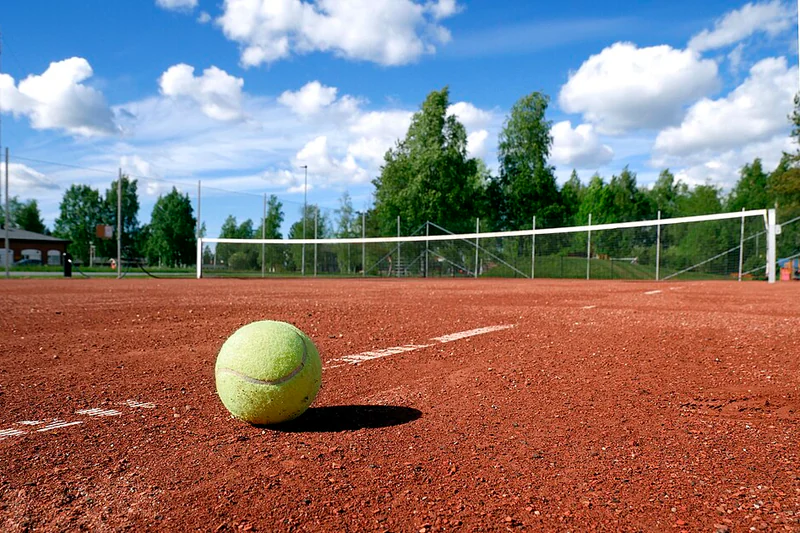
Why an old ball does not always bounce lower
One of the study’s more surprising observations was that many balls bounced higher after its wear procedure. The authors suggested that loss of covering could reduce energy loss in the bounce. This is not a rule saying every ball improves with age or keeps bouncing higher forever. It shows why judging remaining quality from bounce height alone can miss changes elsewhere in the ball.
Felt can wear, fluff and be removed; the ball’s mass and response can change with it. Meanwhile, pressurised balls left unused after opening lost stiffness over five months as pressure escaped. Those processes need not produce identical timelines. A ball can look worn yet remain lively, or retain a respectable appearance after its response has changed. Pressureless balls are a different construction and should not be folded into the same pressure-loss explanation.
The study also found variation among balls within a can in properties such as mass, diameter and bounce. That does not establish that every current can is defective or that all brands have equal consistency. It explains why a single unusually lively or flat ball is a poor foundation for a sweeping product verdict. Even “this can felt different” is a narrower and more defensible statement than “the manufacturer changed everything”.
Compression in a testing machine and a fast impact on a stringbed are different events. The historical paper itself distinguishes its slow compression from the dynamic situation. A squeeze test can help you notice a large change, but it cannot independently provide the complete racquet-impact response. Likewise, a satisfying thud is a sensation worth describing, not a substitute for measurements of all the ball’s properties.
Choose the conditions before choosing the culprit
For an ordinary player, the useful move is to keep the ball context stable while evaluating equipment. Record the exact ball model, duty designation, opening date, surface and approximate use. Do not quietly mix a fresh can with older balls in the same comparison. If one ball behaves conspicuously differently, set it aside and note it rather than letting it contaminate every judgement about the racquet.
Regular-duty and extra-duty labels concern intended use and covering choices; they are not a universal lower-versus-higher quality ladder. The historical study discusses how felt construction and surface abrasion interact. It does not reveal the precise current material recipe of every manufacturer. Start with the maker’s present recommendation for your surface, then judge durability under the conditions in which you actually play.
Weather deserves a place in the notes as well. A cool, damp session and a warm, dry session are not equivalent environments for evaluating bounce and flight. If your ball suddenly seems slower, resist changing the string model, tension and ball all at once. Keeping a familiar ball and changing one relevant condition at a time gives you a more useful explanation than an expensive pile of simultaneous adjustments.
This matters especially when tracking racquet string tension. A measurement of the stringbed does not tell you the pressure or felt condition of the ball. If the racquet reading is similar but the rally feels different, the ball and conditions remain candidates alongside technique and contact quality. The measurement is useful because it answers a particular question; it should not be forced to explain every change in a tennis session.
What would genuinely settle a retail-versus-tour claim?
A convincing comparison would identify current retail and tournament samples, examine enough cans and batches, document storage and age, and test the properties relevant to the claim under comparable conditions. If the claim is equivalent performance, it needs a defined meaning for equivalent. One photograph, one label or one email fragment cannot replace that chain. Nor does a loud forum argument make the missing measurements appear.
You can still make a sensible purchase before that ideal comparison exists. Choose a clearly identified ball suited to your court, track how consistently it serves your normal sessions and report specific problems with the can and conditions attached. The tournament name can start your search. Your decision becomes much stronger when it ends with the actual ball you used, rather than a conclusion borrowed from a tour controversy.
Sources and further reading
- Tennis Warehouse University — Rod Cross and Crawford Lindsey — Tennis Ball Properties: A Comparison of 26 Balls from 8 Brands (July 2007)
- Talk Tennis community — Wilson’s reply to inquiries relating to Fritz’s USO rant — community discussion, not a verified company statement
- Talk Tennis community — Have retail tennis balls gotten worse like the pro tournament ones?
- Talk Tennis community — Tennis Balls!
TENNIS TENSION LAB
Check your racquet’s tension today.
Get a high-precision tension reading in under 10 seconds. Tension Lab tracks changes from your first reading and helps you see when to restring.
- High-precision tension measurement. Ready in under 10 seconds.
- Track every change in feel. See the full story over time.
- Time to restring? Never leave it to guesswork.
Keep reading

Why old poly can feel harsher even as its tension falls
Lower tension does not tell the whole story of worn polyester. Separate stringbed deflection, inter-string friction and changing launch behaviour before deciding when to restring.
7 min read
The first tension drop can mislead your next restring
A fair tension history separates the stringing-machine setting, the fresh stringbed reading and the first-session baseline. Here is how to compare strings without moving the starting line.
7 min read
The tennis shoe with the most grip is not automatically your best shoe
A tennis traction experiment separates available grip from the grip a player uses. Why surface, loading and turning matter more than treating one friction number as a buying score.
7 min read