5–0 was not the finish: the Williams sisters and the lead a tiebreak can take away
They had already fought back from 1–4 in the final set. Then a five-point lead disappeared. The score tells a more useful story than a simple verdict about age or nerves.
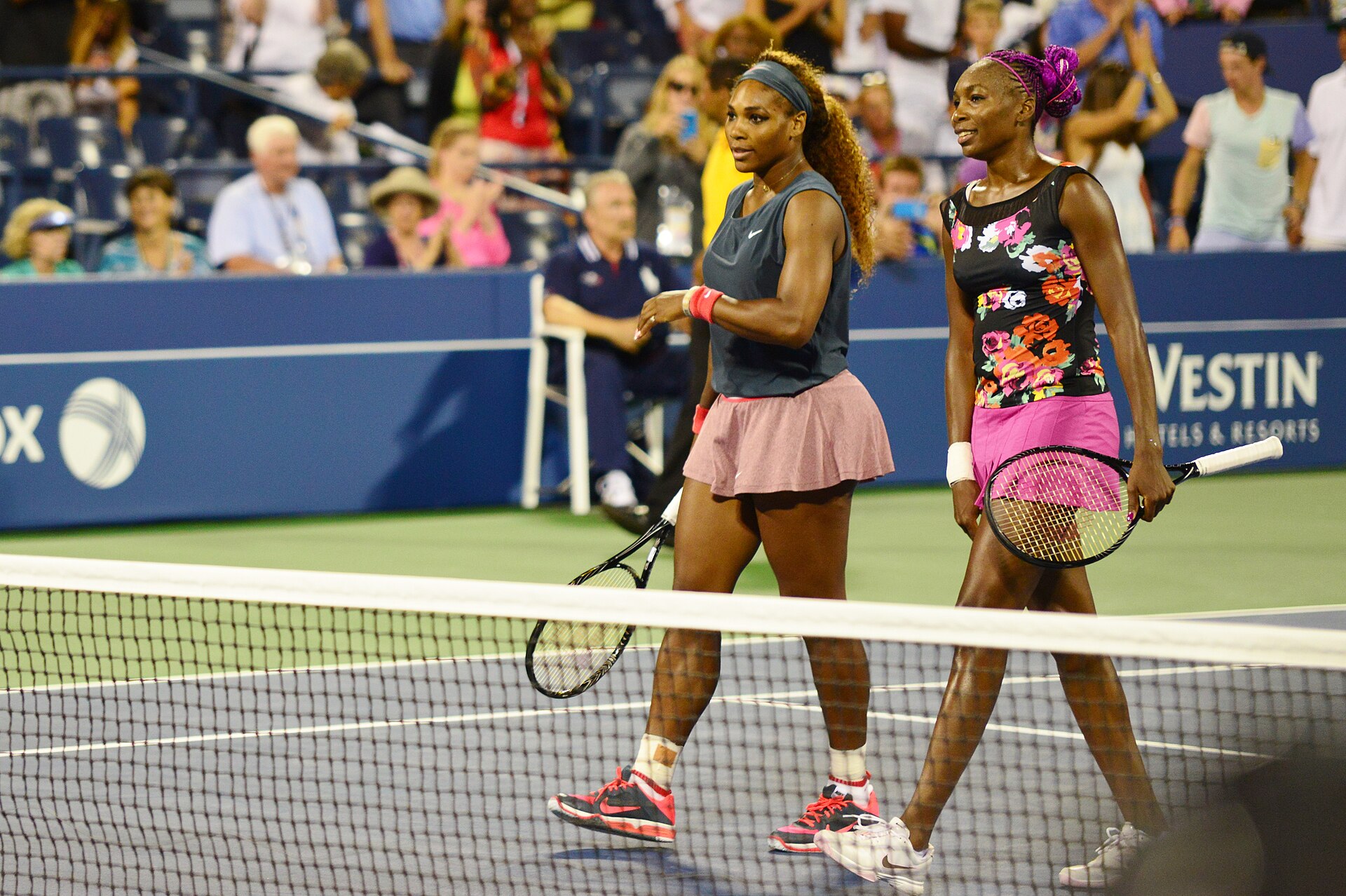
At 1–4 in the deciding set, Serena and Venus Williams were trying to keep their US Open return alive. Later, at 5–0 in the final tiebreak, it was easy to imagine the celebration. Both pictures belonged to the same match. Neither was the final score. Chan Hao-ching and Maya Joint eventually won 6–3, 6–7(6), 7–6, taking that last tiebreak 10–7.
BBC Sport’s report published on 5 September 2026 described a first-round doubles match with the attention normally reserved for a major singles occasion. Arthur Ashe Stadium was full, the sisters were back together at a Grand Slam for the first time since 2022, and the crowd had a clear preference. Serena was 44, Venus 46. Across their careers they had won 30 major singles titles between them and 14 major doubles titles together. None of that stopped the next point from belonging to four players.
That is what makes the ending worth revisiting. The result can be sold as a collapse, a brave last stand or proof that champions remain champions. Each label leaves something out. The sisters recovered from a difficult first set and a serious final-set deficit. Chan and Joint then recovered from a serious tiebreak deficit. The match contained two comebacks, not just one comeback that failed.
Five points ahead is not five games ahead
A 5–0 lead in a first-to-ten tiebreak leaves at least five more points to win. It is a commanding advantage, but it is not a match point, and the lead does not provide a service game in which to start again after a poor point. Every error changes the same running score. A double fault costs one point immediately; there is no new game at 0–0 to separate it from the next return.
The BBC reported a double fault from each sister during Chan and Joint’s recovery. Those were two lost points, but they are not a complete explanation of a 10–7 finish. From 5–0 down, the eventual winners took ten of the remaining twelve points. That is arithmetic from the reported scores, not a point-by-point account. It tells us the recovery went well beyond two donated points. Without the full sequence, it does not tell us exactly when each serve, return or volley changed the contest.
That distinction matters to club players who use “super tiebreak” for almost any ten-point decider. Arriving at 6–6 after twelve games and starting a replacement tiebreak immediately after splitting two sets are different routes to the same kind of short finish. They also have different rules about changing a doubles team’s internal serving and receiving order. Knowing that before play is considerably more useful than discovering it while arguing over who should serve.
The next server changes the meaning of the gap
In the standard tiebreak sequence, the first server plays one point. The next server plays two, and the two-point turns continue, with the doubles players maintaining their serving rotation for that set. A team looking at a five-point lead still needs to know who serves next. Two points on an opponent’s serve are not the same task as two points on your own, even though the scoreboard gives each point the same value.
For a simple illustration, call the teams A and B and their players A1, A2, B1 and B2. If A1 starts, the serving order is A1 for point one, B1 for points two and three, A2 for four and five, then B2 for six and seven. If team A won the opening five points, team B would have the next two serves. This is an example of the rule, not a reconstruction of the Williams match. It shows why “we are five ahead” is incomplete information for planning the next return.
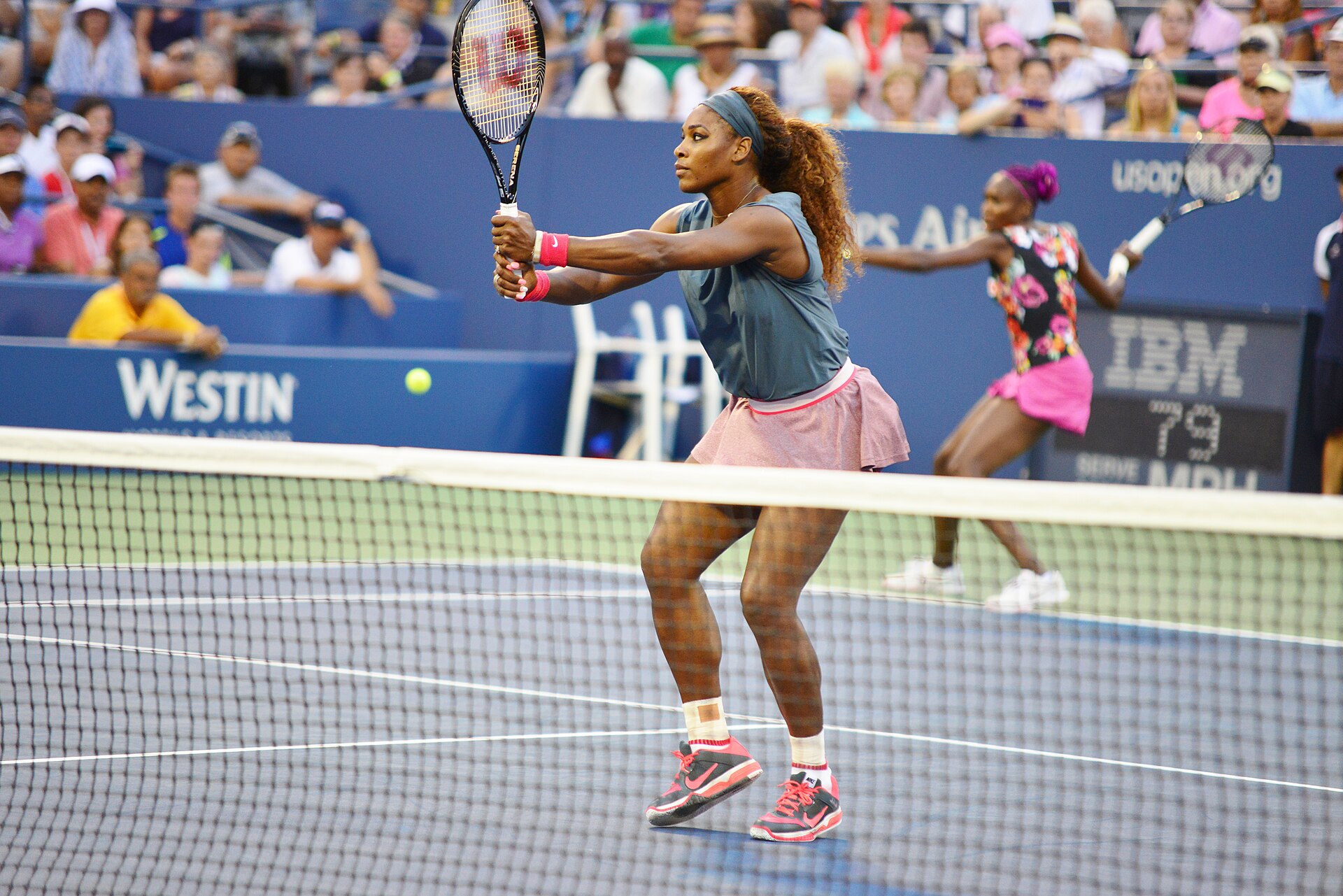
The useful conversation is short and specific: who receives this point, what serve has been difficult to handle, and what the partner at the net should expect from the return. A lead does not answer those questions. Nor does being behind require an immediate winner from a difficult ball. The point still begins with a serve and a return, not with the five-point deficit.
Chan and Joint had a crowd to play through
Chan and Joint were not anonymous guests at somebody else’s celebration. They were the 14th-seeded team trying to win a major match. Joint described the atmosphere as something they had never experienced before and spoke about the special feeling of facing such famous opponents. Her reaction helps explain the occasion without allowing us to calculate what the noise did to any particular stroke.
The crowd’s emotional direction could not award points. The sisters had to save four break points across the fifth and seventh games of the second set before taking that set in a tiebreak. Chan and Joint had to keep competing when the stadium had reason to believe the home favourites were heading toward another memorable win. Giving the winners credit is not a way of diminishing the Williams story; it is how the whole match comes back into view.
There is a familiar doubles mistake here: once the other pair has a famous name, a higher rating or more supporters, your own good play starts to feel like an interruption of the expected result. You apologise for a lucky return, rush through a successful spell or wait for the supposedly inevitable comeback. None of those habits is established as something Chan or Joint did. They are reasons a club pair might choose a more concrete task: play the next service turn with a plan both partners can describe.
Practise a lead while there is still something to lose
One useful practice finish is a ten-point tiebreak beginning at 5–0. Set the serving rotation and the next server before starting; do not let the score become an excuse to improvise the rules. Play to ten with a two-point margin. Then repeat with the other team protecting the lead. This is a suggested exercise, not a routine attributed to either professional pair.
For the leading team, watch whether the targets change after the first lost point. Do both players suddenly become passive, or does one begin forcing a finish that was not available? For the trailing pair, watch whether the returner still puts playable serves into useful areas or swings as though every point must erase the entire deficit. These are things a partner can observe. They are more actionable than declaring a team mentally strong or weak from the final number.
Afterward, discuss one service turn rather than the whole emotional journey. Which return was available? Was the net player expecting the same direction? Did the pair agree on who would take the middle ball? Do not assume a successful drill predicts the next tournament result. Its value is the chance to rehearse clear decisions with an uncomfortable score already on the board.
The future was still open in the BBC report. Serena had hinted at wanting to play singles again; Venus had resisted being required to define plans beyond the doubles. The sisters did not speak to the media after this match, according to the organisers. Calling it their final Grand Slam appearance would therefore go beyond what was known. A dramatic farewell from the stands is not the same thing as a retirement announcement.
What was settled was the result, and it deserves to remain a result between two teams. The Williams sisters made the occasion compelling by refusing to let 1–4 end the contest. Chan and Joint won it by refusing to let 0–5 end theirs. A lead can change the pressure, the noise and the expectations around a court. It cannot play the points still required to finish the match.
Sources and further reading
TENNIS TENSION LAB
Check your racquet’s tension today.
Get a high-precision tension reading in under 10 seconds. Tension Lab tracks changes from your first reading and helps you see when to restring.
- High-precision tension measurement. Ready in under 10 seconds.
- Track every change in feel. See the full story over time.
- Time to restring? Never leave it to guesswork.
Keep reading
You can reject the toss. Why do you keep serving from it?
Catching an abandoned service toss is different from swinging and missing. Know the rule, keep the match moving, and practise the decision before a double fault makes it expensive.
8 min read
Siniaková and Townsend: does your doubles partner need to play like you?
After their 2026 Roland-Garros title, Kateřina Siniaková praised how different her game was from Taylor Townsend’s. The useful lesson is about shared options, not simply pairing opposites.
7 min read