Blade V10 16×19 or 18×20? Choose the flight, not the label.
“More control” means little until you say what the ball should do. Start with the official specifications, then compare the rally, attack and defensive shots you actually need.
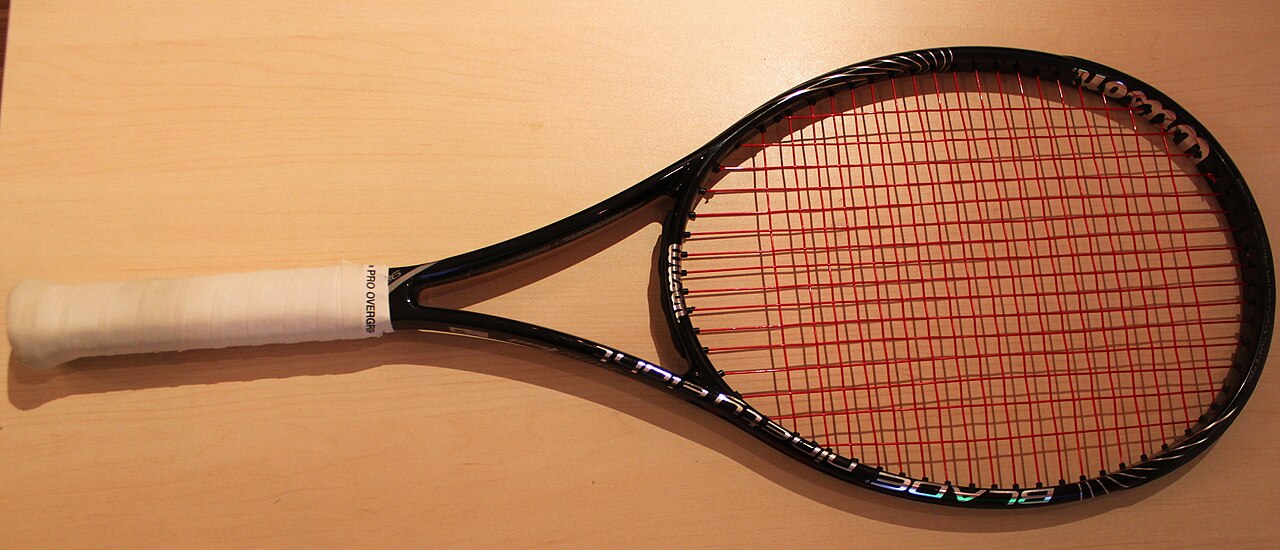
The player who wants “more control” can leave a Blade demo with either pattern. One likes a ball that clears the net comfortably and drops into a deep target. Another wants a lower, more direct flight on the attacking forehand. Both call the preferred result control, which is why choosing between the Blade 98 V10 16×19 and 18×20 by that word alone gets you nowhere. The useful question is which flight you can repeat while still making your normal swing.
Wilson’s Japanese listings make this an unusually tempting comparison on paper. Both show a 98-square-inch head, 305 g listed weight, 32.0 cm balance and 27-inch length. The pattern changes from 16 mains and 19 crosses to 18 mains and 20 crosses. That is a clear starting point for a comparison, but it is not evidence that two demo racquets will swing identically or that one pattern automatically suits a better player.
What is actually shared in the official specifications
| Listed specification | Blade 98 V10 16×19 | Blade 98 V10 18×20 |
|---|---|---|
| Head size | 98 sq in | 98 sq in |
| Weight | 305 g | 305 g |
| Balance | 32.0 cm | 32.0 cm |
| Length | 27 in | 27 in |
| Beam profile | 21.5–20.5 mm | 21.5–20.5 mm |
| String pattern | 16 mains × 19 crosses | 18 mains × 20 crosses |
The pages also describe Turbo Taper, an updated StableFeel construction, X-LOOP and FORTYFIVE. Those are Wilson’s design descriptions and performance claims. They do not provide an independent V10 head-to-head measurement of spin, launch angle or fatigue. Nor does a shared 305 g figure give you a shared swingweight: the location of mass matters, and the strings and accessories on a finished demo belong in the comparison.
There is a purchasing detail worth keeping separate from the playing discussion. The Japanese pages showed an undecided release-date field when consulted. A product specification page is not proof that every region has stock or that a worldwide launch has happened. Check local availability separately. The point here is to understand the two listed configurations, not to turn a regional page into a global release announcement.
Count the strings, then look at the spaces
The pattern label is a count, not a map of every gap. The spacing around the usual contact area matters because that is where the ball meets the strings. Two racquets with the same pattern count need not distribute their strings identically. In this Blade comparison, the common listed head size removes one obvious difference, but it still does not turn 16×19 and 18×20 into complete descriptions of the impact surface.
Crawford Lindsey’s TWU study “Spin and String Pattern,” published in 2010 and updated in 2011, helps explain why. It used a purpose-built string rig as well as racquets, changing string arrangements and looking at rebound spin and angle. One instructive rig arrangement had several cross strings overall but a large open space at the impact zone. Its behaviour showed why counting strings across the whole bed can miss the part of the pattern the ball actually encounters.
These were low-speed experiments, with rig impact speeds of roughly 2–5 m/s and low string tensions chosen to make movement observable. The work did not compare Blade V10 models. Its racquet comparisons also involved differences in material and tension, which the author explicitly acknowledged. Use it to understand a mechanism: spacing and string interaction can change the rebound. It cannot supply a promised RPM advantage for the 16×19 Blade or a measured accuracy advantage for the 18×20.
More net clearance is not the same thing as more spin
A ball can leave the strings on a higher trajectory without giving you the extra dip you expected. Rebound angle and spin are related parts of the ball’s flight, but they are not interchangeable observations. Watching only the height over the net encourages a familiar mistake: calling a higher launch “more spin” and then wondering why the next attacking ball lands long. Observe where the ball lands as well as how it leaves.
The TWU explanation connects lateral stretching of the mains and their timely return with spin-producing torque. An open space can help the ball engage a main string, but the string still has to move and return while the ball is in contact. Friction, impact location and the installed string are part of that process. The study did not establish a universal rule that the lowest tension always creates the most spin. It is a poor foundation for buying either Blade on a two-word promise such as “spin pattern.”
For a practical demo, start with the flight you use to build a point. If your normal rally ball needs a generous net margin, ask whether you can keep that margin and land deep without repeatedly changing the racquet face. If your attack depends on driving through a shorter ball, ask whether that same setup lets you use your normal acceleration. These are questions for the demo, not results claimed for either V10.
Do not make the first comparison a string-age comparison
A fresh 16×19 strung with one product against a heavily used 18×20 strung with another is a comparison of complete setups. It may reveal a preference, but it does not isolate the pattern. Before drawing a pattern verdict, write down the string model, diameter, requested tension and approximate use history in both racquets. Match the obvious variables where practical and note what you cannot match.
Using the same string and requested tension is a useful starting protocol, not a guarantee of identical stringbed stiffness. The patterns themselves are different. That distinction also explains why a later tuning session can be worthwhile: after an initial comparison, you may adjust each racquet to a sensible setup of its own. Keep the two conclusions separate. “I preferred this frame after tuning” is more informative than claiming the pattern won under identical conditions when it did not.
Give each frame the same three decisions
- Build the point: rally crosscourt to a deep target and note the comfortable net margin and the length of the ball, using your ordinary swing.
- Change the point: attack a shorter ball and see whether the flight stays manageable when you accelerate rather than steer.
- Survive the point: block a firm return or defend on the move and observe whether useful depth remains available with limited preparation.
These are suggested situations for comparing the demos, not a testing programme performed for this article. Include both forehand and backhand where possible. One spectacular forehand should not erase a return that keeps sitting short, just as one early long ball should not condemn a setup before you have understood its normal trajectory. What matters is the combination you can use across a point.
Keep the notes concrete. “The neutral ball cleared the net comfortably, but I kept closing the face on short-ball attacks” tells you more than “too powerful.” “The attacking ball was easy to direct, but my stretched backhand landed short unless I added effort” tells you more than “great control.” Neither note assigns a personality to a pattern; it describes the cost of getting the ball you want.
Then repeat the comparison later, when the frame is no longer a novelty and your legs are less fresh. This is not a clinical fatigue test, and it will not produce laboratory precision. It can still reveal whether the preferred trajectory remains accessible when preparation is imperfect. Also pay attention to the particular samples: a noticeably different swing feel deserves a check of completed weight and balance, and swingweight if available, before every difference is blamed on the strings.
There is no status upgrade in choosing 18×20, and no obligation for a topspin player to choose 16×19. The stronger choice is the one that lets you build, attack and defend with a repeatable flight, then gives you a string setup you can maintain. The official specifications narrow the shopping list. The ball you can keep producing decides which Blade belongs in your bag.
Sources and further reading
TENNIS TENSION LAB
Check your racquet’s tension today.
Get a high-precision tension reading in under 10 seconds. Tension Lab tracks changes from your first reading and helps you see when to restring.
- High-precision tension measurement. Ready in under 10 seconds.
- Track every change in feel. See the full story over time.
- Time to restring? Never leave it to guesswork.
Keep reading

EZONE 98 vs 100: you are changing more than two square inches
The eighth-generation Yonex EZONE 98 and 100 differ in listed balance and frame width as well as head size. Read the official dimensions before blaming every demo difference on 98 versus 100.
8 min read
Both racquets say 305 g. Why does one keep arriving late?
Identical listed weight does not mean identical swingweight. Read mass, balance and rotational resistance together before choosing a new frame or matching a second racquet.
8 min read
Should a spin string be rough or slippery? You are asking about two different surfaces
Ball-to-string grip and friction between mains and crosses do different jobs. How to read spin claims, hybrid tests and visible string movement without confusing them.
8 min read