Siniakova and Patten beat Sabalenka and Djokovic. The next match complicates the story.
An ace past Djokovic made the headline. Two matches on the same day reveal why individual fame, doubles expertise and a working partnership are different things.
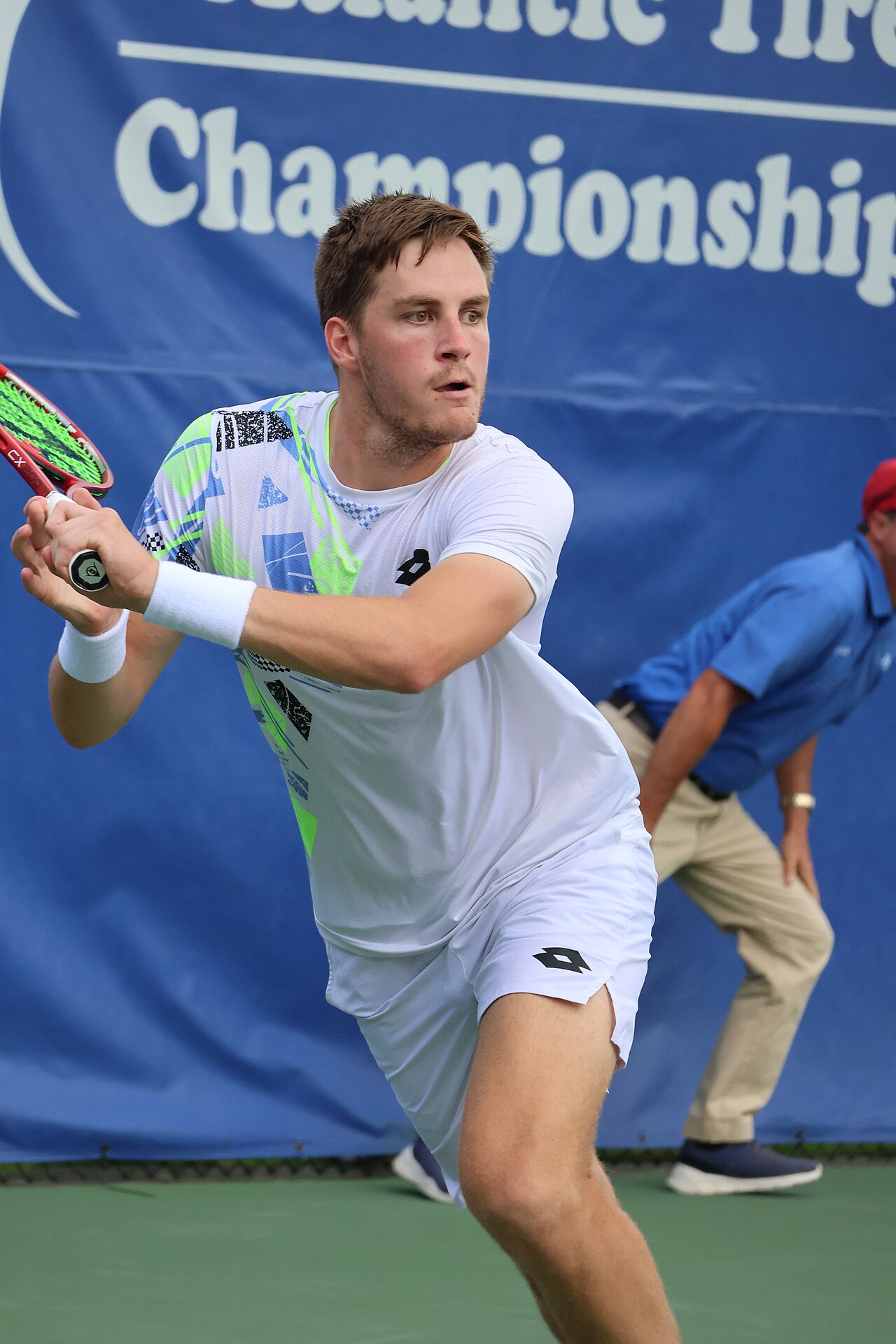
An ace past Novak Djokovic is a satisfying way to end an argument. On August 25, 2026, Katerina Siniakova did just that to close the first-round US Open mixed doubles match she played with Henry Patten. The doubles world No. 1s, as identified in the WTA’s report that day, had beaten top seeds Aryna Sabalenka and Djokovic 1–4, 4–2, [10–2]. They had come through qualifying. Their opponents had the first seed and two of the biggest names in tennis.
It was an irresistible result for anyone who thinks doubles expertise receives too little attention. It was also only half the story. Later that day, Siniakova and Patten lost to Elina Svitolina and Gael Monfils. If the first result proves that singles stars cannot handle doubles specialists, what does the second one prove? The useful answer starts by dropping that all-or-nothing argument and looking at what the two matches actually establish.
From a set and a break down to eight points in a row
The opening match was not a demonstration of specialist superiority from the first ball. Sabalenka and Djokovic won the first set 4–1 and led by a break in the second. Siniakova described the early exchanges as big serves and even bigger shots. That description matters: the eventual winners themselves recognised the force of what was coming at them. A famous singles partnership could impose real pressure, even on players with exceptional doubles credentials.
Siniakova and Patten won the last three games of the second set, then the final eight points of the match tiebreak. The entire match lasted 48 minutes. The closing ace supplied the perfect image, but the sustained finish was broader than that one serve. They recovered a losing position, completed the second set and kept taking points after the scoring switched to a deciding tiebreak. The report records the turnaround without giving a point-by-point tactical chart.
That leaves a tempting gap for the reader to fill. Perhaps a return target changed, perhaps the net player moved earlier, perhaps the serving pair chose different patterns. Those are sensible things to look for in footage. They are not conclusions that follow from the score. Nor does an ace on match point establish that Djokovic was generally a weak returner in the match. A spectacular last point can be memorable without becoming an explanation for everything before it.
Siniakova said they wanted to do it for doubles and called it a great turnaround. That gives the win an authentic sense of pride. There is no need to invent a feud between the disciplines or suggest Sabalenka and Djokovic treated the event casually. What we can say is that two players who arrived through qualifying beat the top seeds after falling behind. Their doubles ranking did not make them first seeds here; the article does not explain the full entry or seeding calculation, so the apparent contrast should not become a fabricated rule controversy.
Then Svitolina and Monfils interrupted the neat story
The quarterfinal was much tighter: Svitolina and Monfils won 5–4(6), 4–5(3), [10–8] in 1 hour and 34 minutes. Siniakova and Patten had gone from winning a deciding tiebreak 10–2 to losing one 8–10. Both results belong in any account of their day. Keeping only the first produces a story about doubles specialists exposing singles celebrities. Keeping only the second erases an impressive comeback over the top seeds.
The pair who beat them were hardly strangers to each other: Svitolina and Monfils are married, a fact noted in the report. But that does not turn marriage into a measurable performance advantage. They still had to win points against outstanding doubles players. Svitolina called the day unexpectedly good and spoke about the enjoyment of playing that opposition. A biographical connection makes the partnership interesting; it does not tell us how many points communication, familiarity or shot quality contributed.
The rest of the draw made the specialist-versus-star divide even less tidy. Serena Williams and Carlos Alcaraz beat Erin Routliffe and Lloyd Glasspool, then lost to Belinda Bencic and Flavio Cobolli. Mirra Andreeva and Andrey Rublev eliminated defending champions Sara Errani and Andrea Vavassori after facing match points. None of the top three seeded teams survived the opening round. Those are different pairings and different matches, not repeated trials of a single controlled comparison.
By the end of Tuesday, the women in the four semifinal teams were Andreeva, Bencic, Karolina Muchova and Svitolina, all among the WTA singles Top 12 in that report. That snapshot describes the semifinal field on August 25; it is neither today’s ranking list nor a claim about who eventually won the tournament. It shows why one upset was too narrow a foundation for declaring which discipline had “won” the event.
The most revealing comment came from another team
Muchova and Jakub Mensik offer a less theatrical way to discuss partnership. The WTA reported that this was Mensik’s first mixed doubles competition. Muchova said the first match involved getting used to each other and learning how to communicate, and that in the second they played more freely and aggressively. This is a player’s account of the same day, not a statistical estimate of what communication is worth. Still, it identifies something that a list of individual achievements misses: two capable players have to work out how to play together.
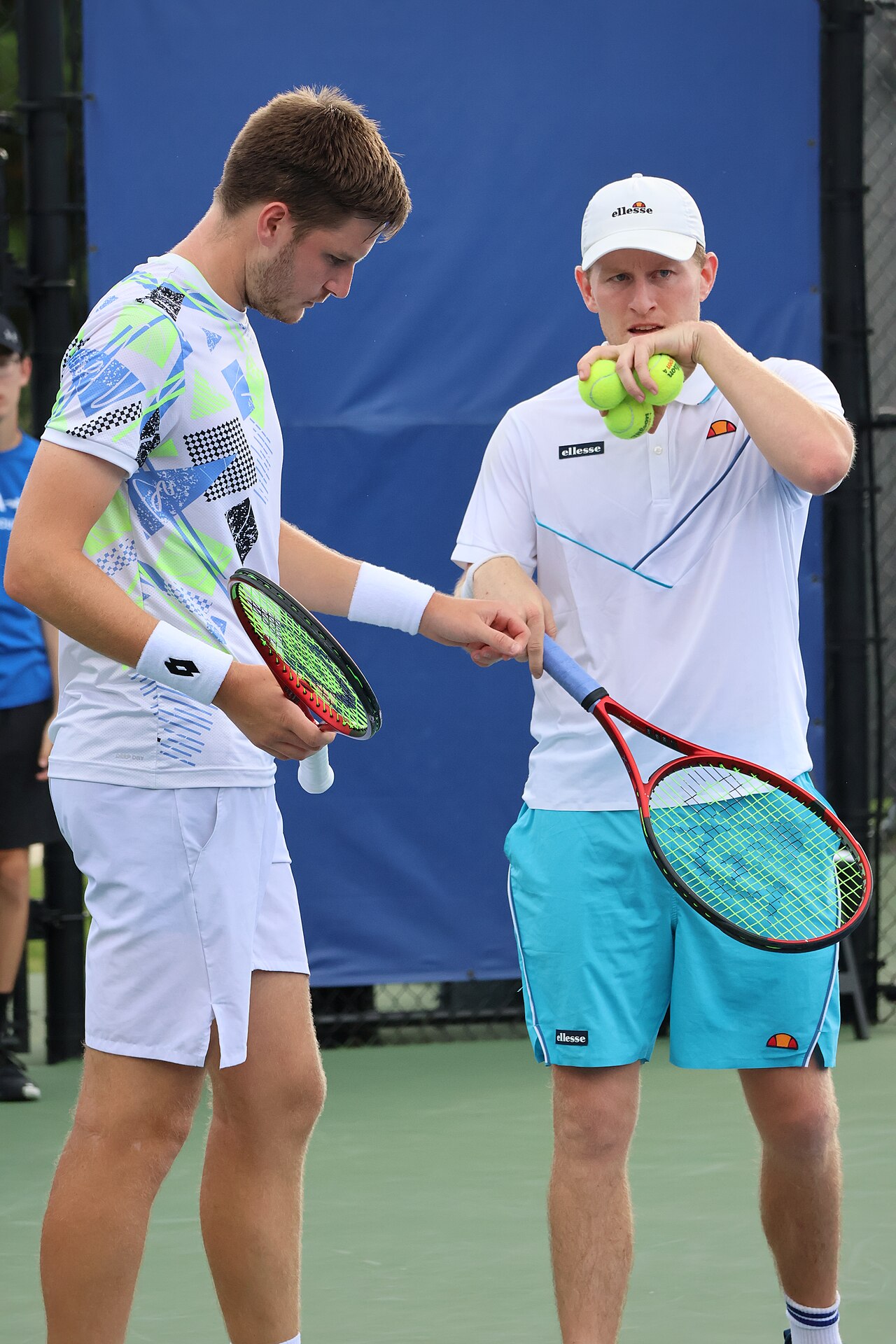
That is the part a regular doubles player can take onto a club court. “We are both good” leaves several decisions unresolved. Who takes a ball through the middle when one player is moving forward and the other is recovering? Does a planned net move mean the server must cover the vacated side, or is it a feint? What happens if the return is much shorter than expected? These are practical partnership questions, not a reconstruction of Siniakova and Patten’s signals.
Consider a pair that agrees to move at the net behind a serve aimed through the middle. If the serve goes wide instead, the return angle and the cover required can change. The partners need a shared response to that miss, not merely agreement about the ideal serve. Likewise, a returner who chooses a low crosscourt ball should know whether the partner plans to hold position or move. The quality of the first shot and the usefulness of the next position belong to the same point.
For a useful practice discussion, describe the confusion before judging the player. “We both went for the middle ball” is more actionable than “you were slow.” “I moved on the signal, but we had no plan for the missed serve” identifies an agreement to repair. These examples do not promise a professional result or prescribe one formation for every team. They make coordination concrete enough to revisit after the next set.
Respect the specialists without making them invincible
The scoreline itself also deserves care. The 1–4 and 4–2 sets in the opening round, and the bracketed 10–2 decider, were the format recorded for this event. They should not be read as conventional sets played to six games. Nor should those match tiebreaks be confused with the full third-set tiebreak in the Williams sisters’ women’s doubles match discussed elsewhere in this journal. The competition and the score format matter when comparing comebacks.
Forty-eight minutes to beat Sabalenka and Djokovic, then 94 minutes to lose to Svitolina and Monfils: it is easy to turn those durations into a fatigue theory. The report does not support that diagnosis. A longer match may simply contain more closely contested scoring. Without workload, recovery and point-level evidence, duration is context rather than a cause. It is equally unhelpful to label the quarterfinal defeat a failure of “chemistry” after praising the same pair’s coordination in the first round.
Siniakova’s closing ace remains a terrific headline. The fuller story is better: doubles specialists survived the power of two singles stars, then lost a narrow match to another singles partnership. Expertise mattered enough to deserve attention, but a ranking label did not decide every point. For players choosing a partner or repairing a team, that is a stronger lesson than either fan camp’s victory speech. Start with what each player can do; spend just as much thought on what happens between their shots.
Sources and further reading
TENNIS TENSION LAB
Check your racquet’s tension today.
Get a high-precision tension reading in under 10 seconds. Tension Lab tracks changes from your first reading and helps you see when to restring.
- High-precision tension measurement. Ready in under 10 seconds.
- Track every change in feel. See the full story over time.
- Time to restring? Never leave it to guesswork.
Keep reading
Shelton improved his backhand. Why could Zverev still target it?
Ben Shelton’s backhand helped him progress in the summer of 2026, yet Alexander Zverev found it a useful target in the US Open final. Improvement and vulnerability can coexist.
8 min read
Siniaková and Townsend: does your doubles partner need to play like you?
After their 2026 Roland-Garros title, Kateřina Siniaková praised how different her game was from Taylor Townsend’s. The useful lesson is about shared options, not simply pairing opposites.
7 min read
5–0 was not the finish: the Williams sisters and the lead a tiebreak can take away
Serena and Venus Williams led the deciding US Open tiebreak 5–0 before losing 10–7. Their 2026 doubles return shows why a big lead still leaves two teams with work to do.
8 min read