Why Kostyuk chose a 250 before winning Madrid: the pressure of being expected to win
A smaller tournament can ask a harder question. Kostyuk’s spring offers a more useful scheduling lesson than simply chasing the biggest event you can enter.
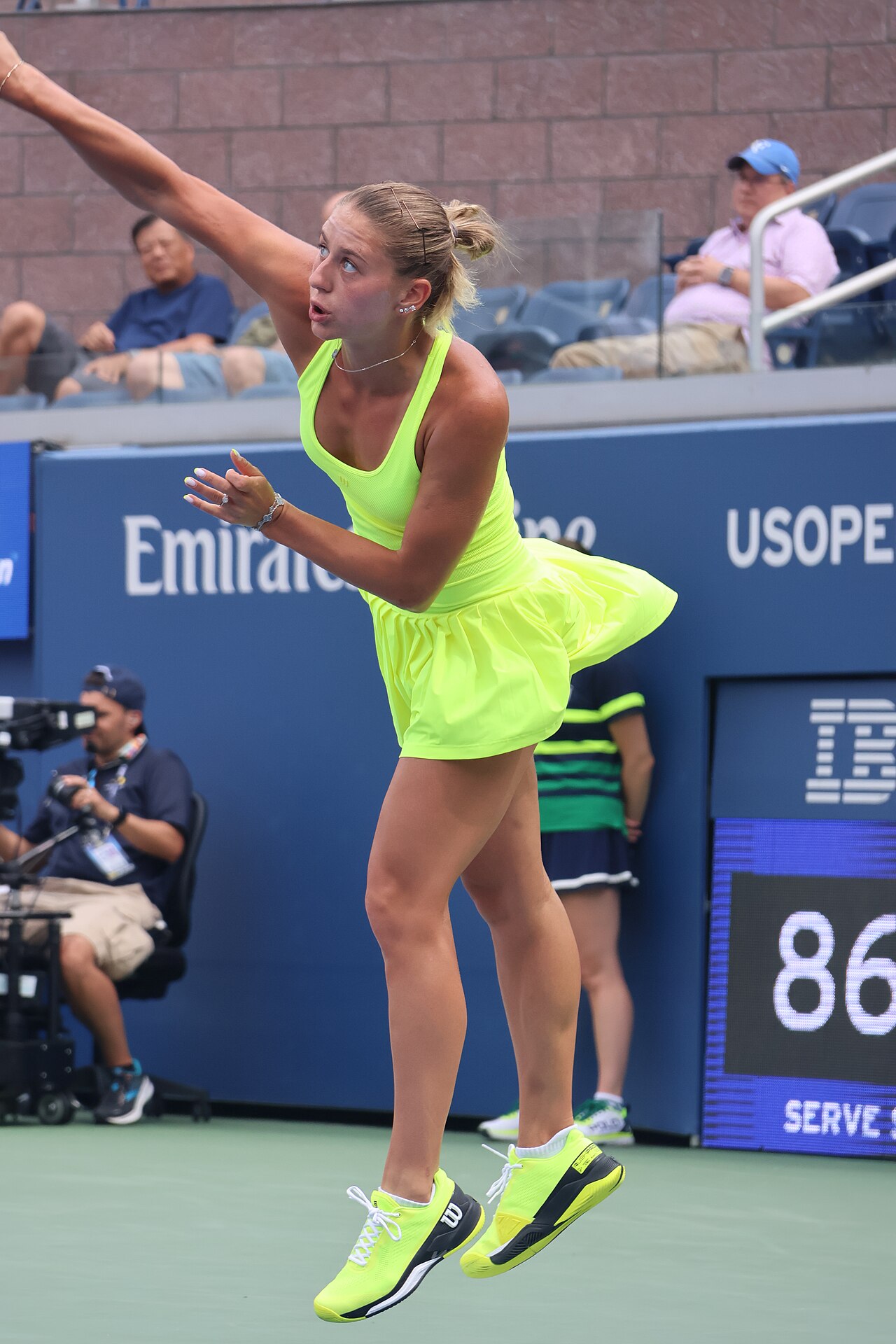
A player on the rise is supposed to seek bigger stages. Marta Kostyuk’s team chose a smaller one. Before the Madrid title that changed the scale of her spring, she went to the WTA 250 in Rouen instead of the WTA 500 in Stuttgart. The interesting part is not that a lower-category tournament came first. It is the problem her coach wanted that week to solve.
In a WTA feature published on May 11, 2026, Sandra Zaniewska explained that the team wanted more consecutive matches and a different kind of pressure. Kostyuk had won Rouen and Madrid in the preceding three weeks, moving from No. 28 to No. 15. The Madrid run included victories over Jessica Pegula and Mirra Andreeva. That is the reported spring snapshot, not a claim about her ranking today.
The bye that did not give her another match
Zaniewska traced the decision back to Indian Wells and Miami. At both tournaments, Kostyuk had a first-round bye and then met Elena Rybakina in the third round. The coach’s point was that those draws left very little competition before the exit: just one match before that third-round meeting at each event. A prestigious place in the draw had not become a long sequence of matches.
That wording deserves care. It does not mean she played only one match in total at either tournament. The third-round meeting was itself another match. The scheduling issue was the brief runway before facing an opponent of that level. Nor did the coach say they expected Kostyuk to lose. She explicitly rejected that assumption while explaining why Stuttgart’s strong field could recreate a similar situation.
A bye can be valuable in many ways, but it cannot also count as a competitive repetition. The team was choosing what kind of week Kostyuk needed at that point. If the objective was to sustain tournament tennis over several days, the status of the event was only one part of the calculation. The route through the draw mattered too.
Top seed is a job description, not a guarantee
There was a second reason for Rouen. Zaniewska said Kostyuk had spent most of the previous two years playing 500s and 1000s, often as the underdog. Arriving as the top seed brings another assignment: being expected to win. The team wanted her to gain experience of that position rather than meet every difficult day as the challenger with something to prove.
This changes the meaning of the supposedly easier option. A field can offer a better chance of staying in the tournament while placing a heavier expectation on each result. The pressure is not necessarily smaller; it is differently arranged. A player must still solve the opponent in front of her while handling the knowledge that an early exit may be judged more harshly.
It would be lazy to turn the choice into “avoid strong opponents and confidence follows.” Zaniewska described a specific need within an ongoing programme. Kostyuk then beat top-10 opponents in Madrid. The earlier decision was an attempt to build competitive continuity, not a declaration that challenging matches should disappear from her calendar.
One brilliant match was never the whole question
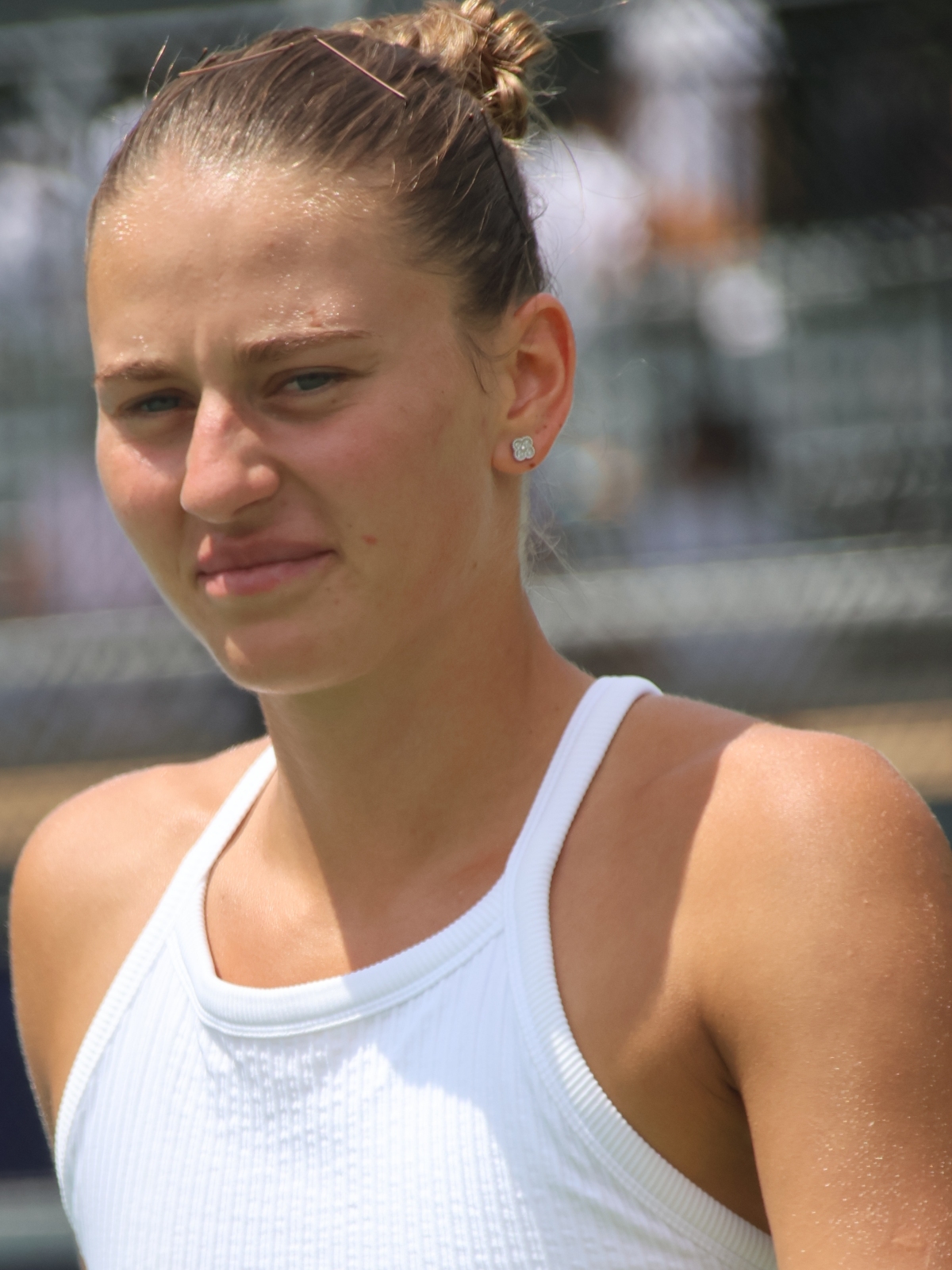
Asked about the biggest transformation, Zaniewska did not point to a newly discovered ability to hit a spectacular shot. She identified focus during matches and consistency from one match to the next over a longer stretch. In her account, the tennis had been available; the challenge was producing it across five matches, rather than only one or two.
That distinction will be familiar to experienced competitors. Your best set shows that a level is possible. It does not establish how often you can reach it, how well you reset the next morning or what remains when the opponent refuses the patterns you prefer. Those are different performance questions. The coach’s explanation places the tournament, rather than the highlight, at the centre of the improvement.
The WTA feature also pointed back to Kostyuk’s Brisbane final in January as an earlier sign of that consistency. Rouen was therefore not presented as the moment a weak player suddenly became strong. It sat inside a longer progression, with pieces improving at different times. Zaniewska described development as gradual work in which more of those pieces eventually function together.
Two titles do not prove which decision caused them
The tempting headline is that choosing a 250 won her a 1000. The chronology is real, but that causal claim is too neat. We cannot replay the same spring with Kostyuk in Stuttgart and compare the result. Her coach’s explanation gives us the reasoning behind the choice and her assessment of the development. It does not isolate Rouen as the sole cause of Madrid.
That limitation does not make the decision uninteresting. Quite the opposite: it lets us examine the plan without pretending the trophy was guaranteed. A thoughtful choice can fail to produce the desired run. A poorly reasoned choice can be rescued by an exceptional week. Evaluating only the final result hides the information available when the schedule was set.
Zaniewska had worked with Kostyuk for nearly three years by the time of the interview. She said winning had made their days more enjoyable, but she did not believe she was suddenly coaching differently. That is a useful corrective to the search for a secret introduced immediately before a breakthrough. The account emphasises continuity and adjustments within an established relationship.
What this changes about choosing your own tournaments
An experienced club or regional player cannot copy a professional calendar, but can borrow the question behind the decision: what experience am I trying to obtain from this event? If the answer is competing against a much stronger opponent, an early hard draw may serve the purpose. If the answer is learning to manage several successive rounds, the event format and likely opportunity to play deserve more attention.
The following is an editorial application, not a method reported by Kostyuk’s team: write down the target before entering. It might be staying composed as a favourite, recovering a useful game plan after a difficult first set, or carrying yesterday’s clear decisions into a second match. Then look at entry rules, playing level and format within the competitions you are eligible for. Choosing a suitable challenge does not mean entering below your allowed category.
Review the week against that target as well as the score. Did you get the intended competitive experience? Could you repeat the things that worked? Did the expectation of winning change your decisions? Those observations are more actionable than deciding that every loss against a stronger player was productive, or every victory against a lower-ranked player was meaningless.
The same logic also argues against packing the calendar with events simply to collect more matches. Consecutive competition has costs in time, travel and recovery. The reported choice was a purposeful substitution of one tournament for another. It was not a general instruction to keep adding starts until confidence arrives.
Leave room for success before rewriting the whole plan
After the two titles, Zaniewska said the emotions of those winning weeks deserved space. The team would return to work once they had settled, and deal with bigger expectations if they appeared. She did not announce that every successful routine had to be intensified immediately. That part of the interview matters because a breakthrough can tempt a player to abandon the patience that preceded it.
Rouen’s value in this story is not a smaller trophy placed beside a bigger one. It is a clear answer to a development question: more continuity, plus practice being the expected winner. Madrid made that decision easy to notice. The lesson survives without claiming that one entry choice manufactured the title—know what the next week is supposed to teach before judging it by the number printed beside the tournament name.
Sources and further reading
TENNIS TENSION LAB
Check your racquet’s tension today.
Get a high-precision tension reading in under 10 seconds. Tension Lab tracks changes from your first reading and helps you see when to restring.
- High-precision tension measurement. Ready in under 10 seconds.
- Track every change in feel. See the full story over time.
- Time to restring? Never leave it to guesswork.
Keep reading
Why Pegula welcomed the 2027 WTA changes: four required 500s, more choices
The WTA plans to cut required 500 appearances for top-50 players from six to four in 2027. Pegula’s response highlights why fewer obligations do not simply mean fewer matches.
8 min read
Raducanu, Agassi and the problem with using your best week as your identity
Emma Raducanu found parts of Andre Agassi’s autobiography relatable. His public advice in September 2026 concerned how to judge today’s player—not a promise to repeat yesterday’s breakthrough.
8 min read
Sabalenka won 6–1, 6–3. The more revealing contest was with her own expectations
After her Beijing opener, Aryna Sabalenka described the cost of demanding more from herself. What experienced players can learn about keeping a high standard without carrying every mistake into the next point.
8 min read