Two forehands, no weak side? The question Lucas Herrera Sanchez brings back to tennis
Two forehands have already reached a Wimbledon final. The difficult question is what they gain once time pressure, the weaker hand and recovery position enter the calculation.
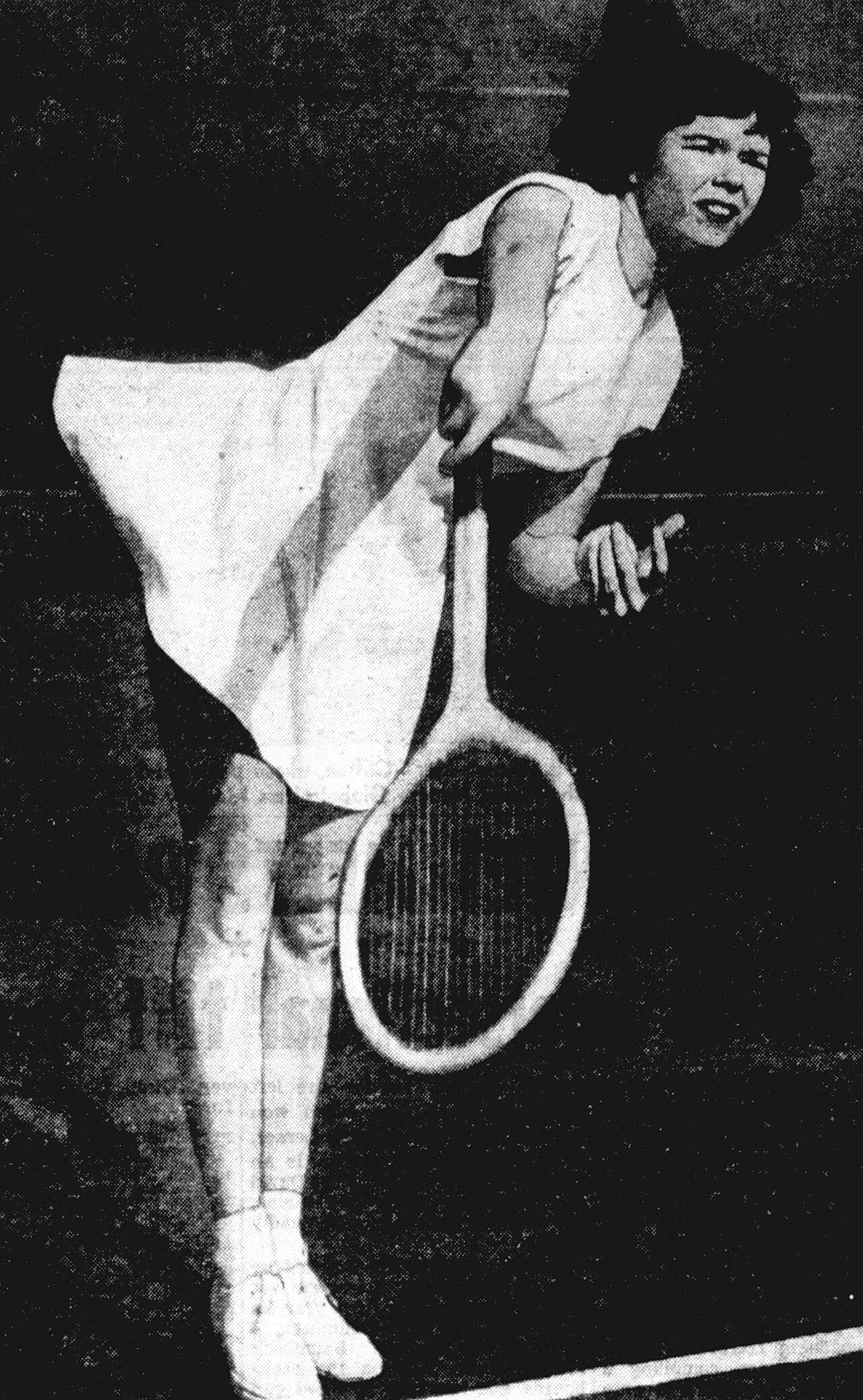
Your opponent keeps going to the backhand. You can keep defending it, run around it, or imagine a more radical solution: take the racquet in the other hand and hit another forehand. The last option sounds like a social-media trick until a player actually builds a game around it. Lucas Herrera Sanchez, described as 13 years old in Jeff Sackmann’s January 7, 2026 Tennis Abstract article, was the example that prompted a serious question: how much could two forehands really be worth?
There are two different ideas hiding inside that question. One is a technique: changing hands to hit forehands on both sides. The other is an advantage: having no groundstroke side that is substantially less effective than the other. The technique is visually unusual. The advantage is something almost every competitive player would welcome. They do not automatically come together. A player can own two forehands and still have a side the opponent prefers to attack.
This idea reached a Wimbledon final before it reached your feed
Sackmann points to Beverly Baker Fleitz, whose two-forehand game took her to the 1955 Wimbledon final, and Cheong-Eui Kim, who reached the men’s Top 300. These examples answer one question: the style has existed at a serious competitive level. They do not answer how often it has been taught, how many players abandoned it or whether it offers the best development route for a particular child. A visible success is evidence of possibility, not a success rate.
Fleitz’s historical example also stops us describing the idea as a new invention. The modern fascination comes from seeing a young player use an unfamiliar solution against contemporary opposition. The January article discusses Herrera Sanchez and circulating videos; it does not provide a measured comparison of his left- and right-handed shots or a forecast of his professional career. We can examine the question he raises without turning a junior player into proof that the backhand is obsolete.
The four-point estimate starts with an imaginary upgrade
Sackmann approached the problem using charted 2025 matches for 37 men, each with at least ten matches in the sample. His forehand and backhand potency metrics include winners, forced errors, unforced errors and shots that set up those outcomes. They are not simply winner counts. The calculation asks what would happen if a player’s backhand side became as effective as his forehand side, while leaving the practical difficulty of achieving that improvement outside the initial substitution.
| Quantity | Reported value | How to read it |
|---|---|---|
| Typical forehand potency per match | 6.7 | A value in the author’s potency metric, not 6.7 winners |
| Typical backhand potency per match | 0.6 | The corresponding value on the backhand side |
| Implied improvement if both sides matched the forehand | About four points per match | The author’s conversion of the potency gap into points; switching costs are not measured |
Across the roughly 140-point match used in the article’s explanation, four points amount to about 2.9% of all points played. That is why the idea is exciting. It is not a three-percentage-point increase in the chance of winning the match, and it is not a promise to gain four points every time you play. Point-winning share and match-winning probability are different quantities. A useful model can show that a weakness is expensive without identifying a technique that will reliably remove it.
There is an immediate complication even before grip changes enter the discussion. In that sample, Alejandro Davidovich Fokina, Daniil Medvedev and Alexander Zverev were more effective on the backhand side by the author’s metrics. “Make the other side as good as the forehand” is not an upgrade for everyone. The comparison describes those players’ charted 2025 performances; it does not settle a lifetime ranking of the greatest backhands. It does challenge the casual assumption that a backhand is necessarily the stroke worth replacing.
A shot has to be ready when the ball arrives
Imagine the second forehand is excellent when the player has time to prepare. A hard serve to that side asks a different question. Can the player recognise the direction, transfer the racquet and prepare the face early enough? Sackmann explicitly raises the cost of changing grips, particularly on return. He does not measure it. The important point for a player is that the shot’s value has to include the situations in which there is too little time to execute the preferred version.
The same distinction appears in ordinary club tennis without anyone changing hands. A full-swing return may be impressive in a drill and unreliable against a faster first serve. A shorter block can be less spectacular but leave the returner in the rally. Comparing only the best contact from each option would miss the decision. For two forehands, a fair evaluation would need the hurried contacts, balls into the body and returns that never become clean swings, as well as the attractive rally footage.
There is also the question of the second hand itself. Equal-looking technique does not establish equal shot quality. Depth, direction and error frequency may differ under pressure, and the opponent only needs to find the weaker pattern. This is one reason Sackmann treats his initial gain as too optimistic rather than a forecast. A second forehand can reduce a weakness without eliminating it; it can also trade one kind of weakness for another. We do not have the measurements here to price that trade for Herrera Sanchez.
The quieter benefit could be where you stand after hitting
A more effective second side might save movement before it adds winners. Running around a backhand to hit a forehand often changes where the player contacts the ball and where the next recovery begins. If the other side can handle that ball well, there may be less reason to give up position for a preferred stroke. Sackmann discusses this as a possible additional benefit, not a quantified bonus that can simply be added to the four-point estimate.
For an experienced player with a conventional backhand, this is the most useful part of the argument. You do not need to change hands to ask whether the runaround was worth it. Suppose you move well outside your backhand corner, hit a forehand with more pace, then leave the next ball open into the opposite court. The first shot may look stronger while the point becomes harder to control. Sometimes the forehand does enough damage to justify the move. Sometimes a solid backhand would have preserved more useful options.
A practical review is to follow the runaround beyond contact. Note where the ball landed, where you were when the opponent struck again and which next ball you could reach comfortably. Then compare it with occasions when you stayed on the backhand side. This is a viewing or practice suggestion, not a trial reported in the source. Its value is in making “my forehand is better” answer a more precise question: better for this ball, from this position, with this recovery?
Do not confuse a development experiment with a shortcut
A player learning from childhood and an adult rebuilding an established game face different decisions. The Tennis Abstract piece leaves the coaching question open because the missing evidence matters: how many players tried the approach, what they gave up to practise it and how their complete games developed. A few exceptional examples cannot supply those answers. Neither can a highlight compilation tell you whether allocating more practice to the existing backhand would have produced a better result.
There is another limit to any stroke-only calculation. Serving, returning, movement, anticipation and point selection still have to work. A better second groundstroke does not award points before the serve lands, and it cannot rescue every poor position. Thinking of two forehands as a way to build an excellent second side is more useful than treating them as a separate category of unbeatable tennis. The rest of the player still has to compete.
Herrera Sanchez makes the question worth asking because he makes an alternative visible. Fleitz reminds us that the alternative has a history. The numbers show why a large forehand–backhand gap can matter; the unmeasured costs explain why copying the visible technique is not the same as collecting the theoretical gain. For your next match, the immediate question can stay pleasantly simple: is your weaker side really costing points through shot quality, or are you also paying for all the movement you use to avoid it?
Sources and further reading
TENNIS TENSION LAB
Check your racquet’s tension today.
Get a high-precision tension reading in under 10 seconds. Tension Lab tracks changes from your first reading and helps you see when to restring.
- High-precision tension measurement. Ready in under 10 seconds.
- Track every change in feel. See the full story over time.
- Time to restring? Never leave it to guesswork.
Keep reading
Medvedev hit fewer forehands. The space he did not abandon may be the interesting part
A 45% forehand share in Daniil Medvedev’s charted matches raises a useful question: how much court position are you spending to avoid your backhand?
8 min read
Diane Parry’s one-handed backhand is only part of the attraction
Thomas Hogstedt pointed to Parry’s touch as well as her one-hander. His coaching perspective offers a sharper way to evaluate variety than deciding whether an unusual stroke looks modern enough.
8 min read
Shelton improved his backhand. Why could Zverev still target it?
Ben Shelton’s backhand helped him progress in the summer of 2026, yet Alexander Zverev found it a useful target in the US Open final. Improvement and vulnerability can coexist.
8 min read