Ostapenko’s 300,000-view videos: the tennis story beyond the score in Beijing
Her assistant suggested it. She resisted, then tried it. Now Ostapenko is enjoying a new route to fans—while the match results remain a separate conversation.
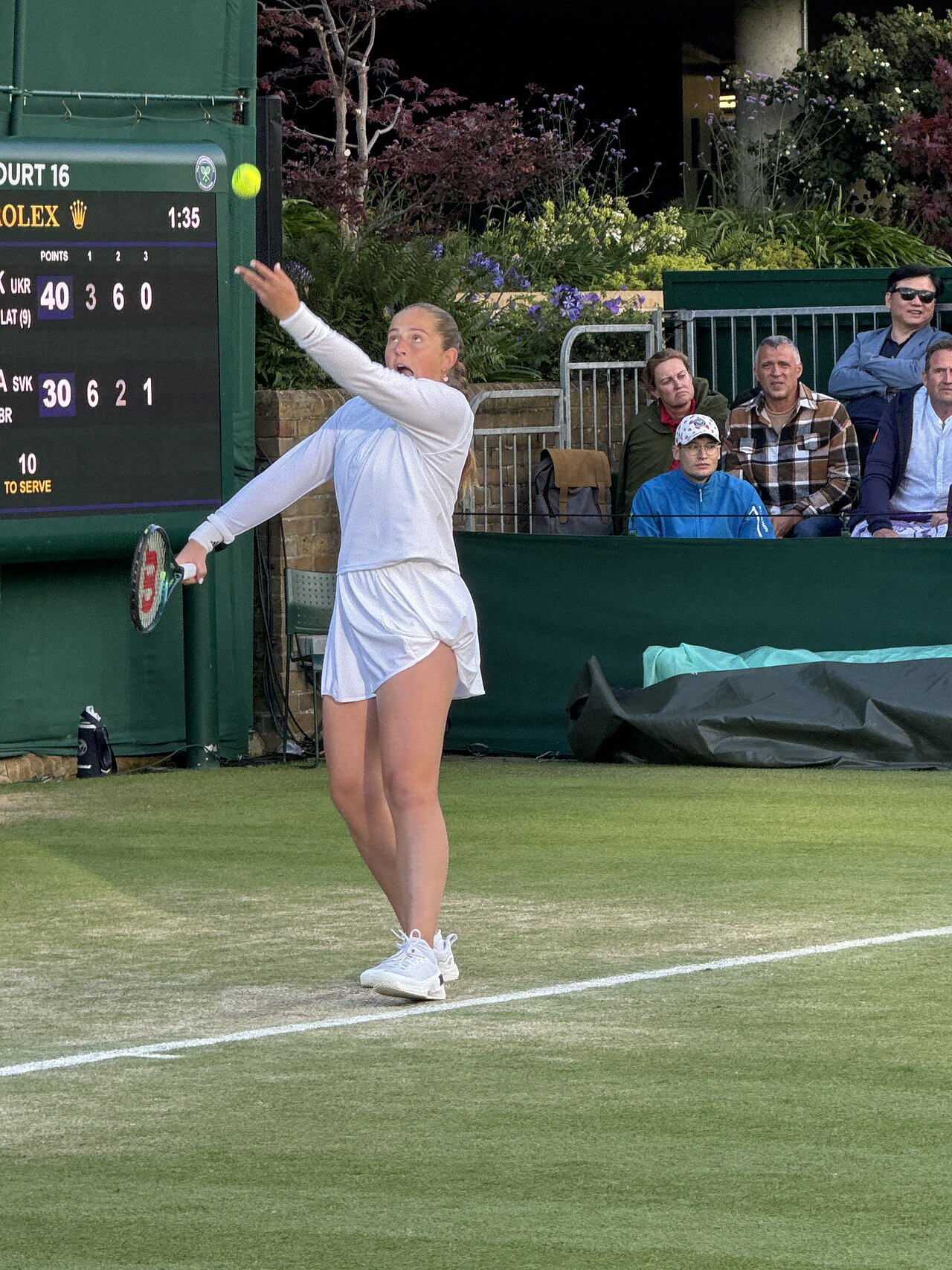
Jelena Ostapenko’s latest interesting number was not a serve percentage. Speaking in Beijing, she said some of her TikTok videos had passed 300,000 views. Travel clips, glimpses of daily life and a trip to Niagara Falls had become another way for fans to follow a player they usually see in the compressed drama of a tennis match.
WTA reporter Cole Bambini’s October 3, 2026 account placed that new enthusiasm alongside an actual result: Ostapenko had beaten Paula Badosa 7–6(5), 7–5 to reach the China Open third round. The report described her as world No. 32 and identified the victory as her fourth over Badosa. Her next scheduled opponent was Elise Mertens. Those are the match and ranking details as reported that day; the view count is Ostapenko’s own statement, not an independently audited total.
The person who persuaded her was already on the team
The push to become more active online came from her personal assistant, whom Ostapenko credited with knowing about marketing. The player initially resisted. Then she decided to try it, liked the response—especially on TikTok—and wanted to post more. That small sequence is more revealing than announcing a sudden reinvention of her career. It began with an ordinary suggestion and a reluctant experiment.
The WTA piece also noted an existing merchandise line and a separate baking account on Instagram. So this was not the first sign of interests beyond match results. What had changed was the volume of short videos giving fans a view of movement between events and ordinary moments around the tour. It broadened what she chose to show rather than replacing the tennis that made people interested.
There is a good reason that a travel clip can appeal even when it contains no forehand analysis. A match broadcast shows a player under scoring pressure, often at the precise moment something has gone wrong. A short video can show her choosing what to share, where to look and when to laugh. Neither is the entire person. Together, they can offer a less narrow picture than highlights and arguments alone.
That last point is interpretation, not a claim that these videos reveal everything happening behind the scenes. An athlete’s own feed is selected and edited, just as a television programme selects its moments. A pleasant clip does not prove that a week was easy. An absence of training clips does not prove that practice was missing. The useful addition is another perspective, not unrestricted access.
A “second home” is about the people in the seats
Ostapenko described China as feeling like a second home. She spoke warmly about the atmosphere, the support and the personalised gifts she received from fans. The WTA account set that enthusiasm against a summer that had not delivered the singles results she wanted. The contrast gave the Beijing win some context without requiring a story that social media had fixed her tennis.
These are two different forms of contact. A supporter in the stadium contributes to the environment of a match; a follower watching a travel video meets the player away from the score. One cannot be converted directly into the other, and neither can be measured simply by the number of views. But both help explain why the public relationship between a player and a place may feel larger than a ranking position.
The Badosa score supplies a useful anchor. Ostapenko’s comments followed a tight straight-sets win, not a declaration that results no longer mattered. It is possible to enjoy making videos and still care intensely about getting through the next round. The report offers evidence that both were present. It does not offer evidence that one caused the other.
In the same city, Sakkari was changing her relationship with another number
Bambini’s Beijing report also spoke to Maria Sakkari after her 6–2, 6–2 win over Storm Hunter. At the start of the year she had been ranked No. 51; the report listed her at No. 33 and seeded No. 25 in Beijing. Those are different labels: a world ranking and a tournament seed need not be the same number.
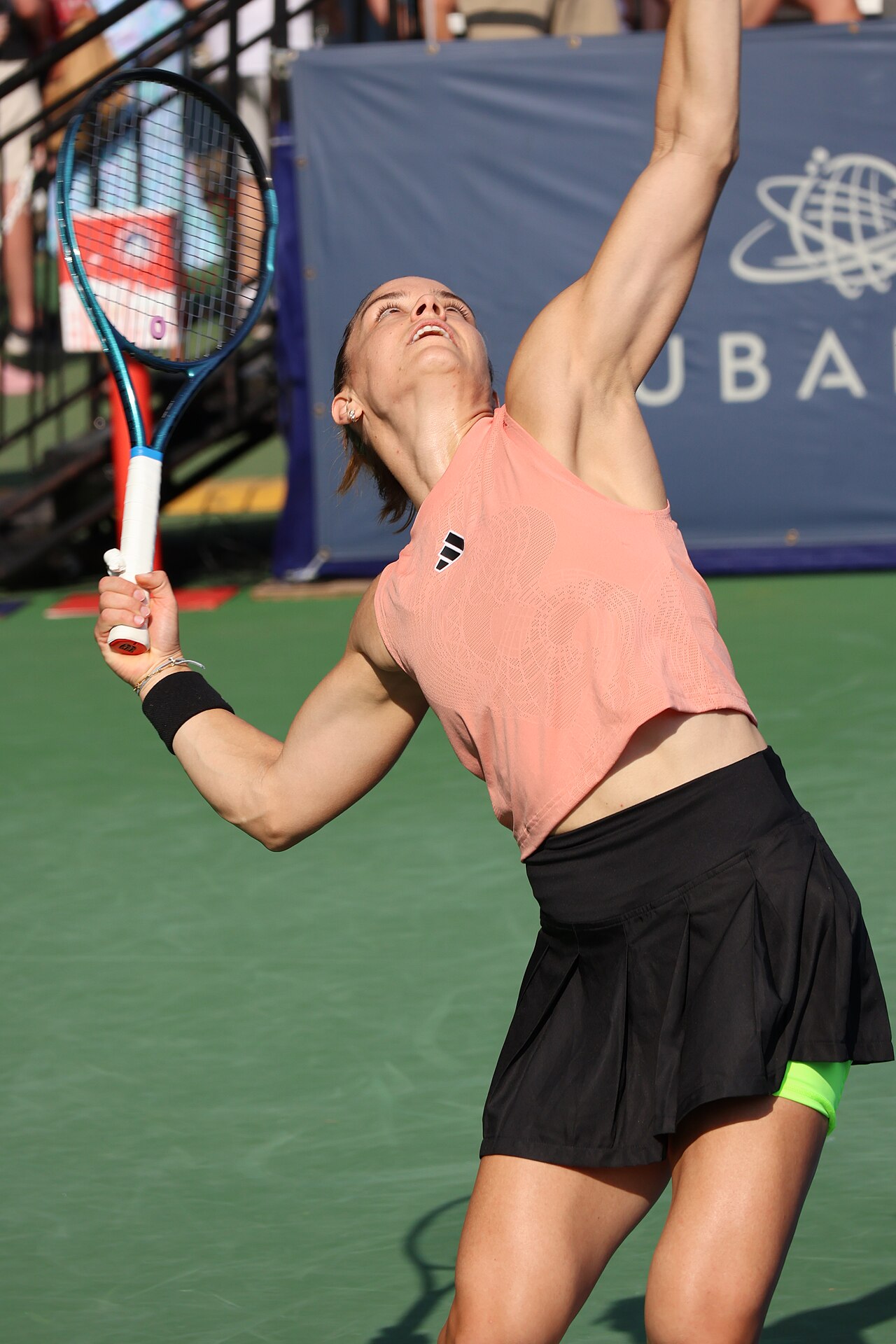
Sakkari said her early-season fixation on returning to the top had eased. She still understood why ranking mattered for entry, seeding and the opponents a player might meet early. Her point was that the number no longer occupied her life on tour in the same way. The distinction is more precise than saying she had stopped caring about ranking.
It is particularly interesting beside her January comments in Perth. In the WTA’s January 1 United Cup report, Sakkari discussed a difficult previous season, a healthier offseason and five weeks of productive practice. She believed she could climb back towards her former level. The October account describes a change in the way she carried that ambition, not proof that the ambition had vanished.
Sakkari also viewed the Asian swing as an opportunity to handle the demands of travel and a long season well. She acknowledged that players were tired and saw value in pushing for good matches and a strong finish. Those were her observations about that stretch of the calendar. They should not be inflated into a medical assessment of the field or a prediction of who would win the next round.
Views, rankings and match scores answer different questions
Putting the two stories together creates an easy temptation: Ostapenko is embracing attention while Sakkari is escaping it. That is too tidy. Video views measure engagement with a piece of content; ranking helps organise access and status in the sport; a match score resolves a contest. The players were talking about different numbers doing different jobs.
For tennis fans, keeping those jobs separate makes the discussion better. It lets us enjoy an athlete’s baking or travel posts without treating them as a practice audit. It also lets us take ranking seriously without assuming every decision or emotion must be explained by it. An entertaining feed is not proof of distraction, just as a quieter one is not proof of greater commitment.
The reported 300,000-view clips are interesting because Ostapenko was visibly pleased to find another way to reach people. They do not establish income, a new full-time occupation or an audience larger than another player’s. None of those measurements was supplied in the interview. The modest, supported story is already good: a champion who resisted the idea tried something new and found fans wanted to see more.
Beijing gave that story a fitting setting. There was a hard-earned win, a crowd she valued and an assistant’s suggestion that had become enjoyable. You can watch the next forehand with all of that in mind without pretending a travel video explains its success. Sometimes the off-court detail makes following the player more interesting simply because tennis players do more than play tennis.
Sources and further reading
TENNIS TENSION LAB
Check your racquet’s tension today.
Get a high-precision tension reading in under 10 seconds. Tension Lab tracks changes from your first reading and helps you see when to restring.
- High-precision tension measurement. Ready in under 10 seconds.
- Track every change in feel. See the full story over time.
- Time to restring? Never leave it to guesswork.
Keep reading
Why Kostyuk chose a 250 before winning Madrid: the pressure of being expected to win
Marta Kostyuk chose Rouen over Stuttgart before her Madrid title. Coach Sandra Zaniewska explains the need for consecutive matches and experience as the favourite.
9 min read
Raducanu, Agassi and the problem with using your best week as your identity
Emma Raducanu found parts of Andre Agassi’s autobiography relatable. His public advice in September 2026 concerned how to judge today’s player—not a promise to repeat yesterday’s breakthrough.
8 min read
Sabalenka won 6–1, 6–3. The more revealing contest was with her own expectations
After her Beijing opener, Aryna Sabalenka described the cost of demanding more from herself. What experienced players can learn about keeping a high standard without carrying every mistake into the next point.
8 min read