Never break strings? Polyester can still be your most expensive choice
A string that survives for months can be a poor bargain if you enjoy only its first few sessions. Start with the cost of the tennis you actually want to play.
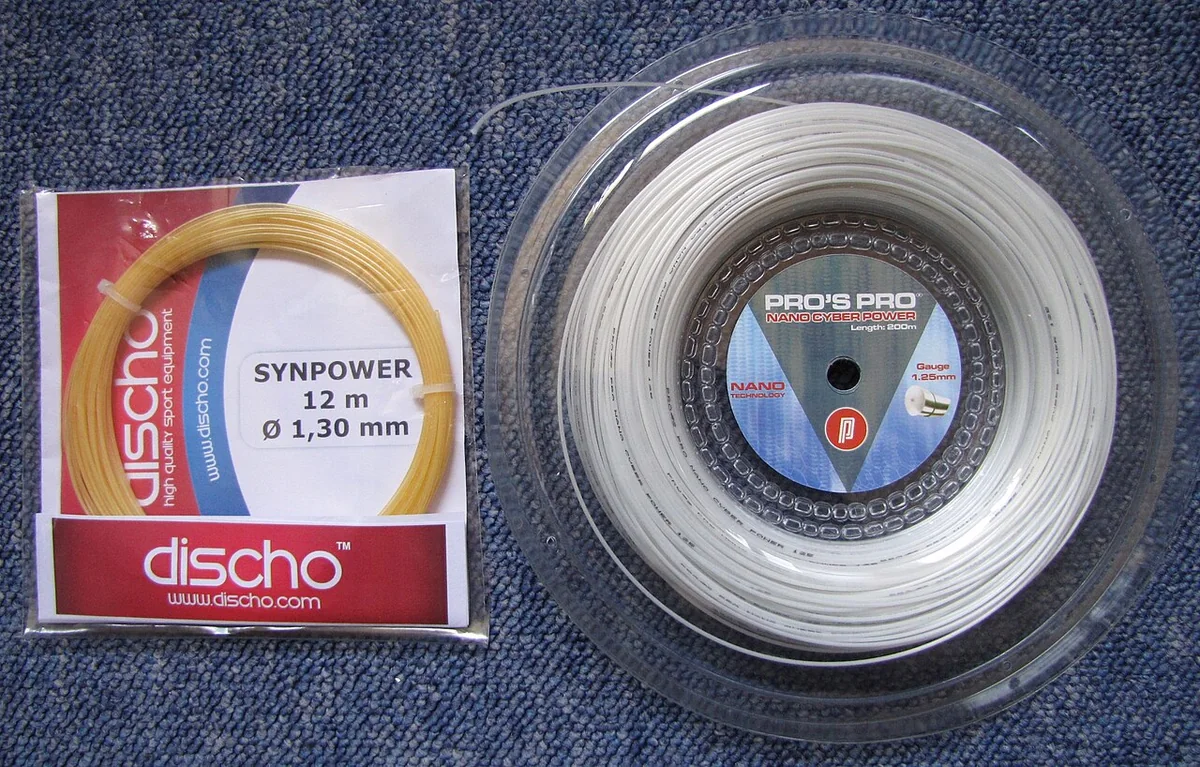
A fresh polyester setup can make a committed swing feel wonderfully manageable. Then the weeks pass. The strings remain intact, the player gets accustomed to a slightly different response, and replacement becomes something to consider only when a string finally snaps. For someone who rarely breaks strings, the feature that made polyester attractive—physical durability—can quietly become a reason to keep an unwanted setup for too long.
This is not a minor concern confined to beginners. The Talk Tennis discussion “Accepting that you cannot use poly strings” displayed 3K replies and 171K views when checked on October 4, 2026, with activity continuing into October. Those are cumulative forum counters, not a count of players who should abandon polyester. They show a durable disagreement: does choosing a softer material mean giving something up, or finally buying equipment that suits the way you play?
An intact string has not passed a performance inspection
Break resistance describes one kind of longevity. Useful playing life describes another. Crawford Lindsey’s Tennis Warehouse University work on strings going dead examines changes in tension, stiffness and friction under repeated impacts. It does not provide a universal number of court hours for every polyester. It does explain why waiting for breakage cannot guarantee that the stringbed still behaves as it did when you liked it.
For the non-breaker, this changes the buying question. Instead of asking how long a set lasts before it snaps, ask how long you can use it while still liking your normal rally depth, compact returns and second serve. A string that feels excellent briefly may remain worth buying. But the maintenance plan has to match that decision. Months without breakage are not months of unchanged performance, and an online rating cannot supply your replacement date.
Polyester should solve a problem you actually have
An experienced player can rationally choose polyester without ever breaking it. The response on a full swing, the way the ball leaves the bed, or a preferred combination of launch and spin may justify frequent replacement. That is different from choosing it because the professional whose racquet you bought uses a similar colour. Professionals have access to fresh jobs and support that a weekly club player may not want to fund.
Nor does “I hit hard” settle the question. Consider the shots that occupy most of your match: a stretched return, a defensive ball, a volley from below net height. If you must force those shots to get useful depth, the impressive forehand from a perfect feed is only part of the evaluation. Conversely, if a softer setup consistently sends your ordinary rally ball beyond its target despite a fair adjustment period, that observation deserves attention too.
Three routes, without a prestige ladder
A conventional nylon synthetic gut is a sensible baseline when price, straightforward response and replacement convenience matter. A multifilament offers another construction to explore, often aimed at comfort and easy depth. These are broad families, not guarantees: gauge, construction, reference tension and the particular product still matter. TWU’s stiffness work is useful precisely because material names alone do not describe the complete impact response.
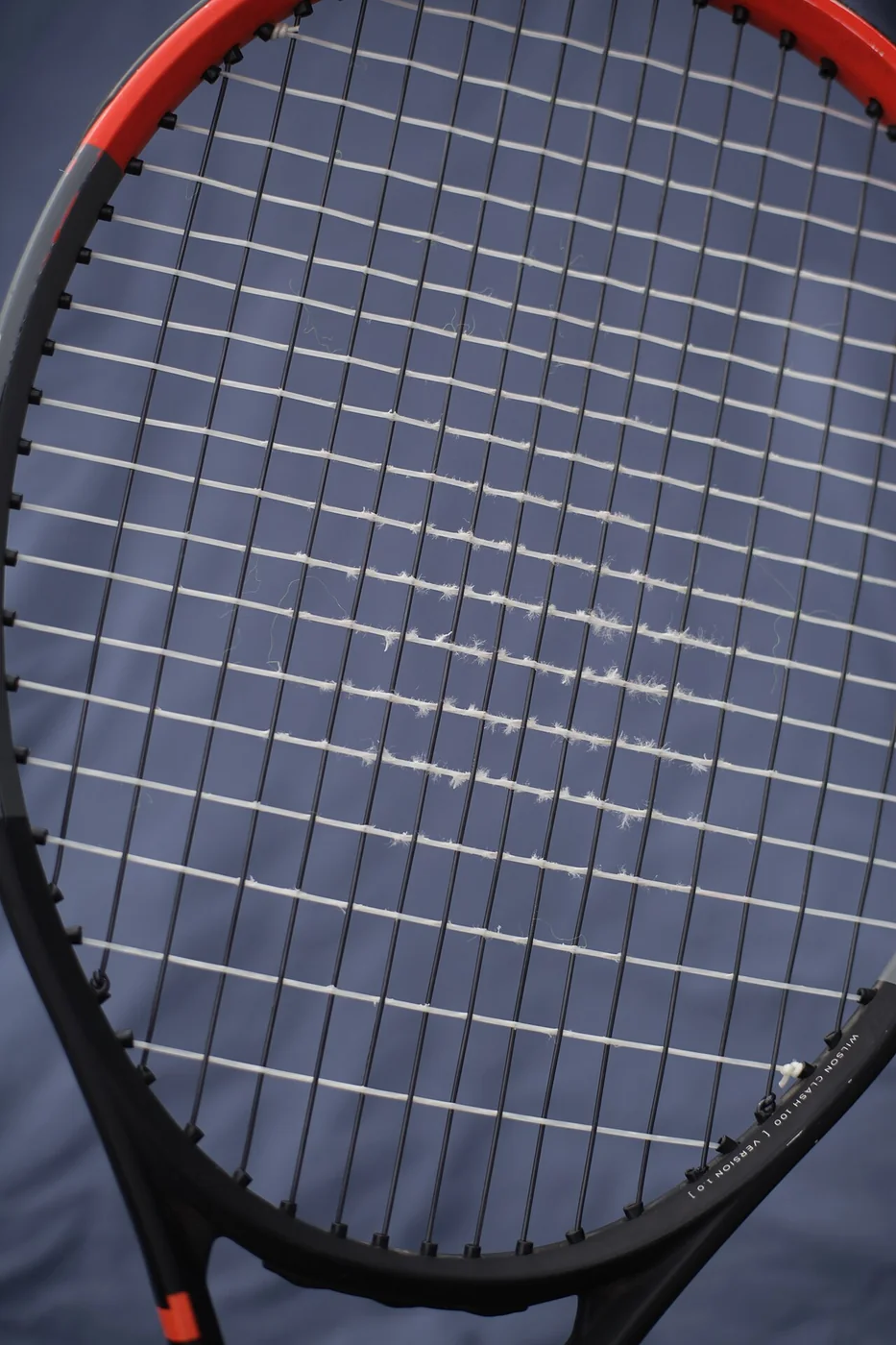
Natural gut is another option, but its purchase price, care requirements and your local restringing costs belong in the same conversation. A hybrid can combine materials, yet it adds decisions about which string goes in the mains, which in the crosses, and how the pair ages. It is not automatically half the maintenance or a promise that a sensitive arm will tolerate it. If your real goal is simplicity, start with a full bed whose behaviour you can understand before adding another variable.
There is no need to describe leaving polyester as a demotion. Match results do not award bonus points for choosing a demanding string. Equally, a non-breaker who likes polyester and knowingly replaces it before breakage has not made a mistake. The distinction is whether the material earns its place through your tennis and maintenance habits, rather than through a belief that every serious player must graduate to it.
Calculate the cost of acceptable hours
Use your local installed price, including labour, and divide by the hours you are happy to play with that job. As a purely illustrative example, a job costing 30 that gives six acceptable hours costs 5 per hour. A job costing 40 that gives sixteen acceptable hours costs 2.5 per hour. These are invented arithmetic inputs, not product durability claims. Substituting your own records is what makes the comparison useful.
Also count the inconvenience: extra trips, a backup racquet, and whether the stringer can reproduce the setup you need before league night. Buying a reel lowers the price per set only if you actually use it. Committing to a large reel before you know whether you enjoy the later sessions is an expensive way to mistake a discount for a saving. Try enough individual jobs to understand the pattern first.
Make the comparison fair enough to inform a purchase
Keep the frame and playing routine familiar. Tell the stringer that you are comparing materials, not demanding identical machine numbers at all costs. The same reference tension does not imply the same stringbed stiffness across materials. Record the product, gauge and installed price; then note what happens in routine rallies, returns and serves. Give yourself more than the first five minutes to understand a different launch response, without forcing yourself to continue through pain.
Track elapsed days separately from hitting hours. If you measure tension, preserve an early completed-racquet reading and subsequent readings with the same device and inputs. A curve can reveal change; it cannot decide whether your touch at net or your defensive depth is acceptable. Link each measurement to a brief court note. If discomfort develops or persists, stop and seek appropriate professional assessment rather than treating a string purchase as a diagnosis or cure.
Your next purchase can then be specific: “I want a setup I enjoy throughout my usual replacement interval.” You may return to polyester with a shorter schedule, keep a multifilament, or discover that an inexpensive synthetic gut suits you extremely well. The useful result is not winning the forum argument about who deserves poly. It is spending your string budget on hours of tennis you actually like.
Sources and further reading
TENNIS TENSION LAB
Check your racquet’s tension today.
Get a high-precision tension reading in under 10 seconds. Tension Lab tracks changes from your first reading and helps you see when to restring.
- High-precision tension measurement. Ready in under 10 seconds.
- Track every change in feel. See the full story over time.
- Time to restring? Never leave it to guesswork.
Keep reading

Why old poly can feel harsher even as its tension falls
Lower tension does not tell the whole story of worn polyester. Separate stringbed deflection, inter-string friction and changing launch behaviour before deciding when to restring.
7 min read
Same gut, same poly—why reversing mains and crosses makes a different hybrid
Gut mains and poly crosses are not the same setup as the reverse. Historical friction measurements explain why order matters, and what to record before comparing hybrids.
9 min readHyper-G Soft or lower-tension Hyper-G? Make the comparison before buying the reel.
Changing to Hyper-G Soft and lowering your usual Hyper-G tension are different experiments. A practical comparison of gauge, fresh string jobs, return depth and response over time.
8 min read