Nadal–Djokovic 2013 or Alcaraz–Sinner 2025: what makes a Roland-Garros match greater?
One ended 9–7 in the fifth. The other survived three championship points and lasted 5 hours 29 minutes. The more interesting debate starts after the stopwatch stops.
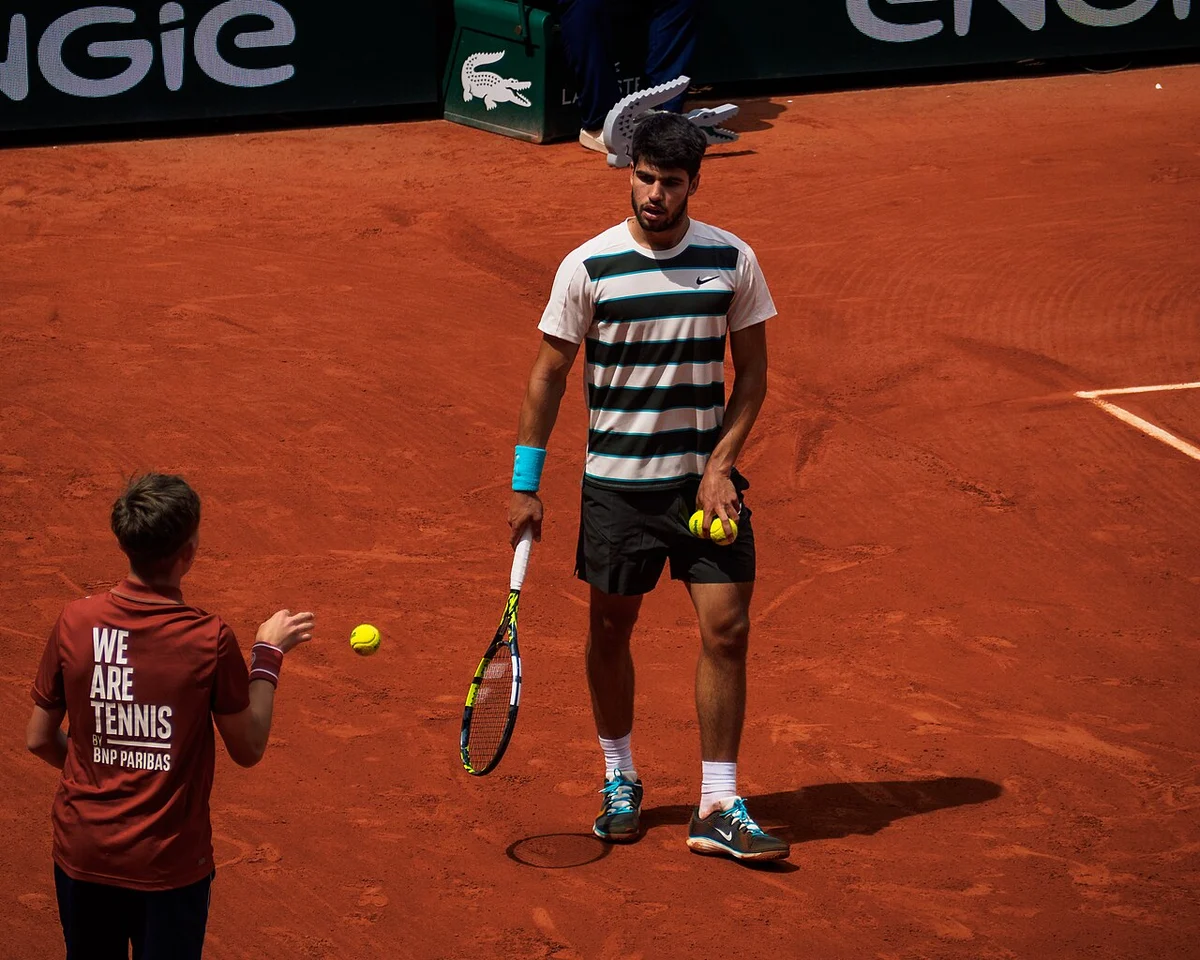
The argument is familiar before anyone presses play: the older classic was better, or the new generation has finally produced something beyond it. Put Nadal–Djokovic at Roland-Garros in 2013 beside Alcaraz–Sinner in 2025 and the conversation quickly becomes a referendum on two eras. Yet “greater match” can mean several different things. Unless the criteria are clear, fans may be defending entirely different contests.
The comparison is not an invented debate. A Talk Tennis thread explicitly favouring the 2013 match began on 30 September 2026. Its listing showed 145 replies and 1K views when consulted on 4 October. Those are cumulative forum counters, not search volumes. The discussion soon moves between peak level, career records, match drama and personal preference. That movement is precisely why no single statistic can settle the original question.
Begin with what actually happened
The 2013 match was a semi-final. Nadal beat Djokovic 6–4, 3–6, 6–1, 6–7, 9–7 in 4 hours 37 minutes, as Kevin Mitchell reported from Roland-Garros for The Guardian on 7 June. Victory put Nadal into the final against David Ferrer. It was an extraordinary contest, but calling it the final would erase a real distinction between the two matches under discussion.
The 2025 match was the final. Roland-Garros’ official retrospective records Alcaraz beating Sinner 4–6, 6–7(4), 6–4, 7–6(3), 7–6(2) in 5 hours 29 minutes. Alcaraz saved three championship points on serve at 3–5 in the fourth set. The official account also describes Sinner recovering from an early break in the decider, breaking back after Alcaraz served for the title, before the contest ended in a super tie-break.
The second match lasted 52 minutes longer. That calculation is straightforward; its interpretation is not. Duration establishes how long the contest lasted, not how consistently every point was played at an exceptional level. It also does not make the shorter match less demanding. Time is one dimension of the experience, not an automatic conversion rate from minutes to greatness.
The fifth sets created different kinds of suspense
In 2013 the final set continued to 9–7. Mitchell’s report describes Djokovic leading 4–3 at deuce when he lost a point after touching the net following a smash, and Nadal then drawing level at 4–4. That moment is memorable because it interrupted a position of opportunity. Reducing the whole match to that incident, however, would remove the many changes of control that made the opportunity matter.
In 2025 the drama included a title that appeared close enough to touch three separate times in the fourth set, followed by another reversal when Alcaraz could not close on serve in the fifth. The final super tie-break then concentrated the ending into a short, decisive sequence. Those are different narrative structures: an extended deciding set on one side, repeated escapes followed by a tie-break finish on the other.
A viewer who values the accumulating uncertainty of an extended fifth set may prefer 2013. Another who values the scale of the recovery from championship points may choose 2025. Neither preference needs a claim that the other match was poor. They are weighting different features of two contests that supply unusually strong material for the comparison.
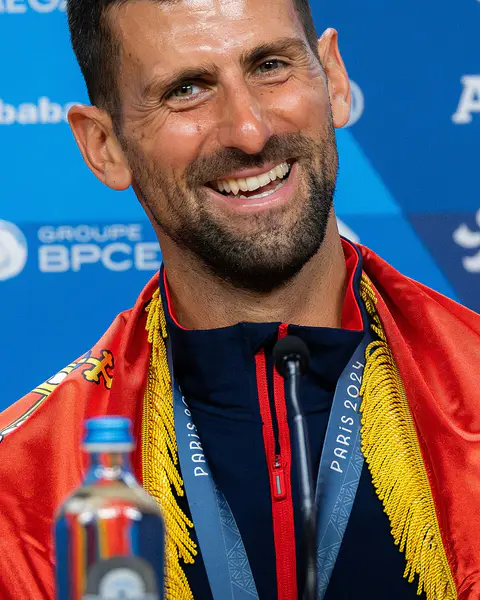
A great finish is not the same as five sets at peak level
Highlights select the moments that justify remembering a match. They are much less useful for judging how evenly quality was sustained over the whole afternoon. A sequence of impossible-looking retrievals can tell you those rallies were remarkable. It cannot establish that there were no uneven passages between them.
The contemporary 2013 report did not describe flawless tennis. It recorded shifts in control and Djokovic’s physical drop in the third set, alongside Nadal’s own lapses and the extraordinary final-set struggle. The official 2025 retrospective emphasises Sinner’s early lead, Alcaraz’s recovery and the escalating finish. Read in their proper roles, these accounts explain the matches’ shape. They are not a common point-by-point grading system from which we can compute an objective winner.
This is where many cross-era debates change the question without acknowledging it. “Which match had the highest sustained level?” is not identical to “Which match produced the most unforgettable ending?” “Which was harder for me to stop watching?” is different again. A fan can give different answers to those questions without contradicting themselves.
Career greatness cannot substitute for match evidence
A player’s wider record gives a match context. It helps explain what the opponent represented and why the occasion mattered. But selecting a stretch of career wins, excluding a particular rival and using the result to grade every point of one match is a much bigger inference. The forum debate contains examples of people arguing over precisely which years counted as a player’s peak. Changing that definition can change the argument before the match itself is considered.
Likewise, an imaginary match between the four players at chosen ages cannot be verified by either scoreline. It may be enjoyable tennis conversation, but it is a hypothetical. The 2013 result establishes what Nadal and Djokovic did against each other that day. The 2025 result establishes what Alcaraz and Sinner did against each other twelve years later. Neither is a controlled experiment holding conditions and opponents constant across eras.
The title stakes also deserve precision. The 2025 winner lifted the trophy at the end of the contest. In 2013, the reward was reaching the final. That difference can legitimately affect a viewer’s sense of drama. It does not disqualify a semi-final from being their favourite match or automatically award the final a higher level of tennis.
Rewatch with one question at a time
For a more satisfying comparison, choose what you want to observe before selecting a highlight reel. To study changes in control, watch complete stretches around the verified turning points rather than only the winning shots. To compare suspense, consider what each player and spectator could know at that moment—not just what the final result makes inevitable in hindsight.
For players, an especially useful question is how a point can remain playable after a match has apparently tilted away. Do not turn one famous escape into an instruction to copy a champion’s shot under every pressure situation. Notice instead the difference between the score, the options still available and the result that has not yet happened. The reports establish repeated reversals; your own training needs a decision you can actually reproduce.
You can prefer 2013 for the prolonged deciding-set struggle, or 2025 for its championship-point escape and extraordinary recovery. What makes the discussion worth having is the reason attached to the preference. Say whether you mean sustained quality, dramatic reversal, stakes or the memory of watching it live. The stopwatch supplies two facts. The argument becomes interesting when it stops pretending those facts alone can choose the greater match.
Sources and further reading
TENNIS TENSION LAB
Check your racquet’s tension today.
Get a high-precision tension reading in under 10 seconds. Tension Lab tracks changes from your first reading and helps you see when to restring.
- High-precision tension measurement. Ready in under 10 seconds.
- Track every change in feel. See the full story over time.
- Time to restring? Never leave it to guesswork.
Keep reading
Match point down, Alcaraz played a drop shot. Was that really the risky choice?
Carlos Alcaraz used drop shots to escape Taylor Fritz and finish their 2026 Laver Cup match. What that decision reveals about playing safe under pressure.
8 min readDjokovic plays less. Why is the last part of a tournament still so hard?
A lighter calendar and a deep Grand Slam run answer different questions. Djokovic’s comments on an emptying tank offer a better way to think about tournament readiness than counting entries.
8 min read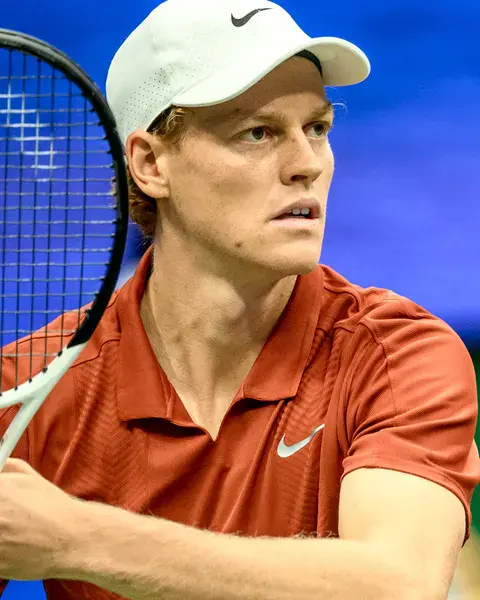
Where did Sinner vs Alcaraz go? The tour cannot wait for its biggest rivalry
Sinner and Alcaraz had met only once in 2026 by 24 September. Their interrupted seasons reveal why a rivalry needs availability, a draw and victories before it needs a final.
8 min read