1.20 or 1.25 mm? What those 0.05 millimetres cannot promise.
A small diameter change can be worth trying. Treating it as a guarantee of comfort, spin and value is where the shopping advice falls apart.
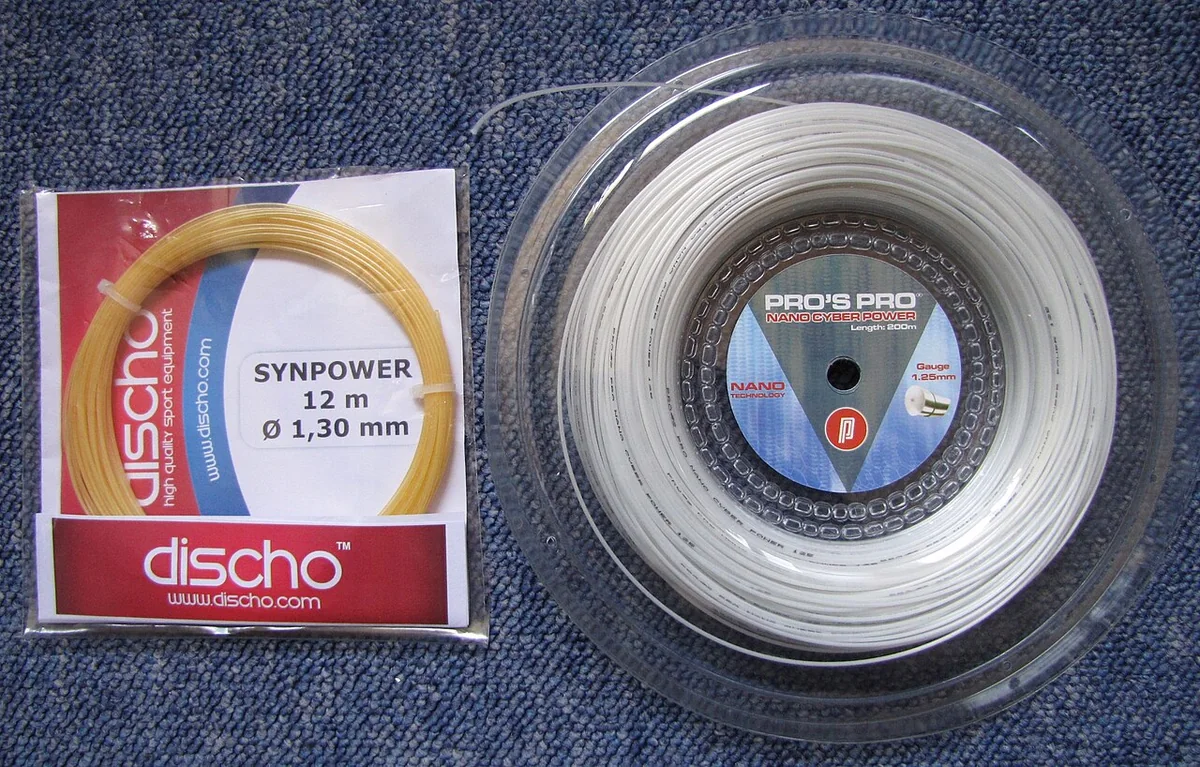
A 0.05 mm change looks too small to deserve a long conversation. Then the next restring feels different, the ball starts leaving the racquet on an unfamiliar flight, or the replacement bill arrives sooner. The temptation is to give the diameter all the credit or blame. Before deciding that 1.20 mm is softer, spinnier or better than 1.25 mm, ask what else changed—and what you mean by better.
There is a perfectly sensible reason to try a different gauge: a familiar string almost does what you want, and you would like to explore another version without abandoning the product. The problem starts when the small number becomes a universal buying rule. A diameter identifies one feature of a string. It does not disclose the formulation, construction, surface behaviour or the response of the finished stringbed.
The number you can calculate—and the ones you cannot
Moving from 1.25 to 1.20 mm reduces the nominal diameter by 4%. For an ideal circular cross-section, the area changes with the square of the diameter: 1.20² ÷ 1.25² = 0.9216. That is about 7.8% less cross-sectional area. It is useful geometry, not a measured 7.8% improvement in comfort or spin. A shaped string is not the ideal circular object in that calculation, and a nominal package diameter is not a complete mechanical specification.
This distinction matters because strings resist a tennis impact in a way that cannot be judged by gently bending a loose piece between your fingers. Tennis Warehouse University distinguishes dynamic stiffness during a rapid impact from static stiffness during slow stretching. Its general explanation describes testing one string at 52 lb; that is not the same measurement as the complete stringbed in your racquet. A thinner sample from another product family has not earned a softer-on-impact label merely by being thinner.
The useful distinction is between a within-product question and an across-product question. Comparing 1.20 and 1.25 mm versions of the same named string is a focused purchase decision. Comparing a 1.20 mm co-polyester with a 1.25 mm string of another construction changes much more than diameter. Even in the first comparison, the two gauges should not be described as mechanically identical except for size without supporting product data.
Read the millimetres before you order the reel
Solinco’s official Mach-10 listing gives a concrete example: 16 is listed as 1.30 mm, 16L as 1.25 mm, 17 as 1.20 mm and 18 as 1.15 mm. Those are the options shown for that product, not a measured performance ladder. The same page describes its CloudFORM formulation and makes claims about power, comfort and tension maintenance. It does not provide a head-to-head table proving that the thinnest option is best in all three categories.
Write the exact product and millimetre diameter on the work order. Keep that information when buying a reel, asking another shop to restring, or reading somebody else’s review. “I tried a thinner Solinco” leaves too much unanswered. “Mach-10, 1.20 mm, in this frame at this requested tension” is a setup another person can actually identify. The product is an example here, not a recommendation based on a playtest we performed.
Why “thinner bites more” is an incomplete explanation
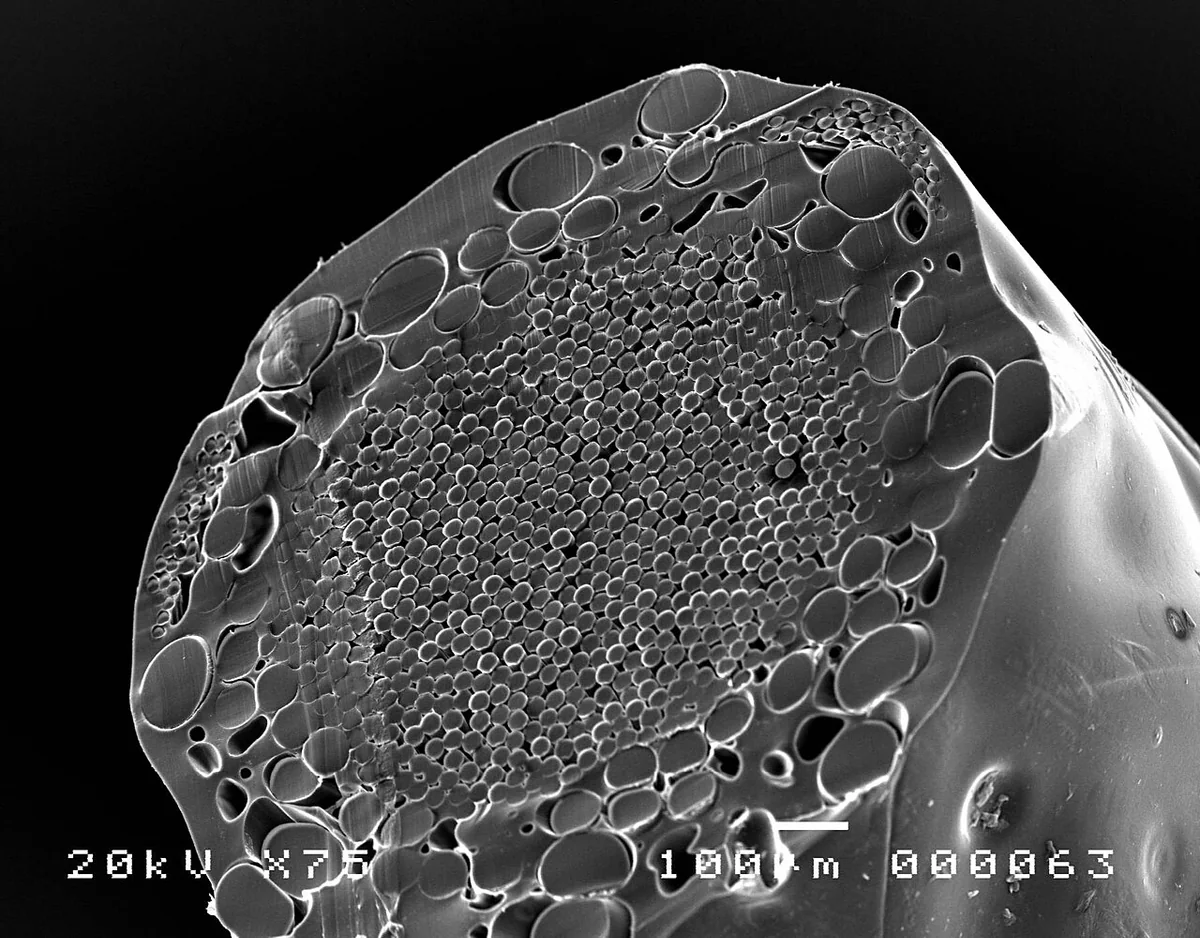
The story is attractive: a thinner string digs into the felt, therefore it must produce more spin. But a tennis impact is not a still photograph of a string touching a ball. The ball and strings move, the forces change direction, and the strings interact with one another. A label that gives you the diameter does not give you the coefficient of friction at either contact, or the timing of the movement.
In a 2016 experiment, Rod Cross and Crawford Lindsey increased the roughness of one smooth polyester only on the surfaces contacting the ball, leaving its interaction with the cross strings unaltered. They used a small, low-tension rig, both with and without crosses. The results showed that changing ball-to-string friction could change torque and spin, with the outcome depending on the impact conditions. This was a surface-roughness experiment, not a gauge comparison and not a test of Mach-10.
Its relevance to gauge shopping is the question it forces you to ask: which property has actually been measured? A report that one string is thinner cannot stand in for a friction measurement or an observed spin difference. Equally, a ball flying higher is not by itself a spin measurement. You need to see the resulting trajectory and landing area, and even then a court impression should not be dressed up as an RPM figure.
The expensive gauge is the one you stop trusting early
Breakage is easy to record. The string is intact at the start of a point and broken by the end. A gradual loss of confidence in the response is harder to date, but ignoring it can make your cost comparison misleading. Count the hours you actually want to play with the setup, alongside the eventual breaking time if it reaches that point. There is no need to keep playing an unsatisfactory bed just to finish a durability experiment.
Consider a purely hypothetical pair of string jobs, each costing $20 including labour. If one provides eight hours of play you are happy with, that is $2.50 per useful hour. If another provides five, it is $4.00. These are invented arithmetic examples, not market prices or measured lifetimes for either gauge. The second setup may still be worth the extra cost to you. At least the decision now reflects the sessions you value rather than the time until a string finally snaps.
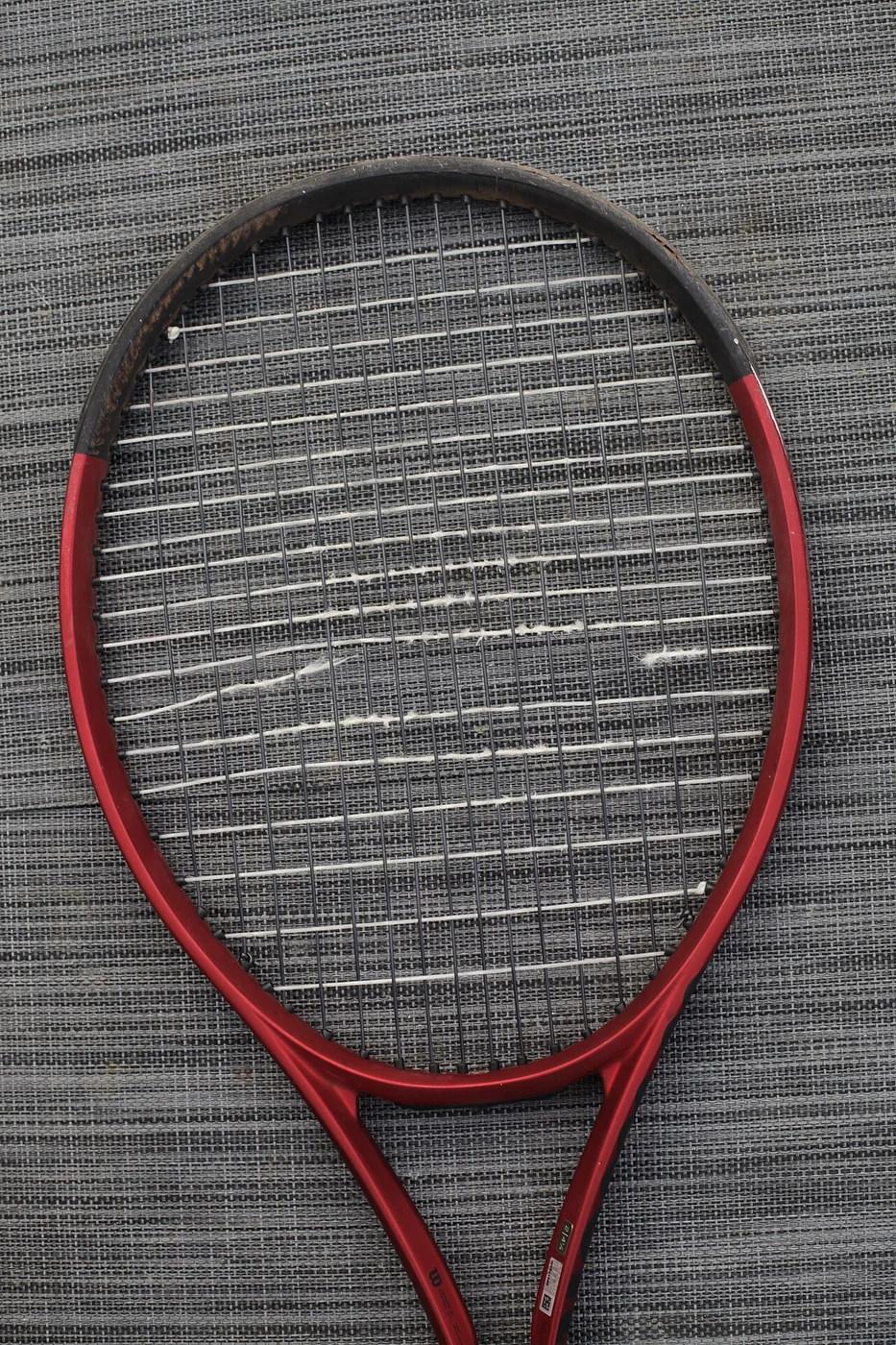
Do not turn that example into a fixed rule that every thin gauge lasts fewer hours, or that a bed which stays intact remains equally playable. TWU’s stiffness discussion notes that tension changes with time and impacts, and that strings can differ in their rates of tension loss. A diameter alone cannot tell you the whole trajectory. The relevant record belongs to the actual product, installation and use, not to a number printed without context.
What should make you keep the thinner version?
A useful reason is specific: you can produce the ball you wanted with a normal swing, and the response remains worth its cost through the sessions you need. A weak reason is that the first ten minutes felt livelier and the package said 1.20. “Livelier” needs an outcome attached to it. Did your defensive backhand reach a useful depth, or did your attacking forehand become harder to keep inside the baseline? Those are different purchases disguised by the same adjective.
If the new gauge feels better, preserve the details that made the experience possible. Note the frame, string model, diameter, requested main and cross tensions, stringer and time in use. If you also changed tension, acknowledge that the successful result belongs to the combination. You can keep a combination you like without pretending you have isolated the effect of gauge. That honesty makes the next restring easier to reproduce.
If the new gauge disappoints, the response does not have to be an immediate jump to an even thinner option. Ask whether the complaint concerns trajectory, impact feel or the way the setup changes over time. Those questions can point toward a different tension, product or construction. A diameter change is one available adjustment, not the whole menu, and the sources here do not establish a conversion that makes one gauge equivalent to another at a particular tension.
The best gauge is rarely the smallest number you can buy. It is the version that gives you a useful ball for an acceptable stretch of your playing schedule, at a replacement cost you accept. Millimetres help you order it correctly. They cannot make that decision on their own.
Sources and further reading
TENNIS TENSION LAB
Check your racquet’s tension today.
Get a high-precision tension reading in under 10 seconds. Tension Lab tracks changes from your first reading and helps you see when to restring.
- High-precision tension measurement. Ready in under 10 seconds.
- Track every change in feel. See the full story over time.
- Time to restring? Never leave it to guesswork.
Keep reading

Why old poly can feel harsher even as its tension falls
Lower tension does not tell the whole story of worn polyester. Separate stringbed deflection, inter-string friction and changing launch behaviour before deciding when to restring.
7 min read
Hyper-G Soft or lower-tension Hyper-G? Make the comparison before buying the reel.
Changing to Hyper-G Soft and lowering your usual Hyper-G tension are different experiments. A practical comparison of gauge, fresh string jobs, return depth and response over time.
8 min readShould a spin string be rough or slippery? You are asking about two different surfaces
Ball-to-string grip and friction between mains and crosses do different jobs. How to read spin claims, hybrid tests and visible string movement without confusing them.
8 min read