Osaka, Gauff and Wimbledon’s lifetime invitation: what the Last 8 Club actually offers
You do not have to win Wimbledon to earn a lasting welcome. The qualifying round depends on the event—and the benefits do not start the moment the match ends.
Winning Wimbledon is not the only way to leave with a lasting invitation. The tournament has a club whose entry threshold sits below a singles title but whose benefits extend far beyond the fortnight: the Last 8 Club. Its name makes the singles requirement easy to remember. Its doubles rules, starting date and actual privileges are where the story becomes more interesting.
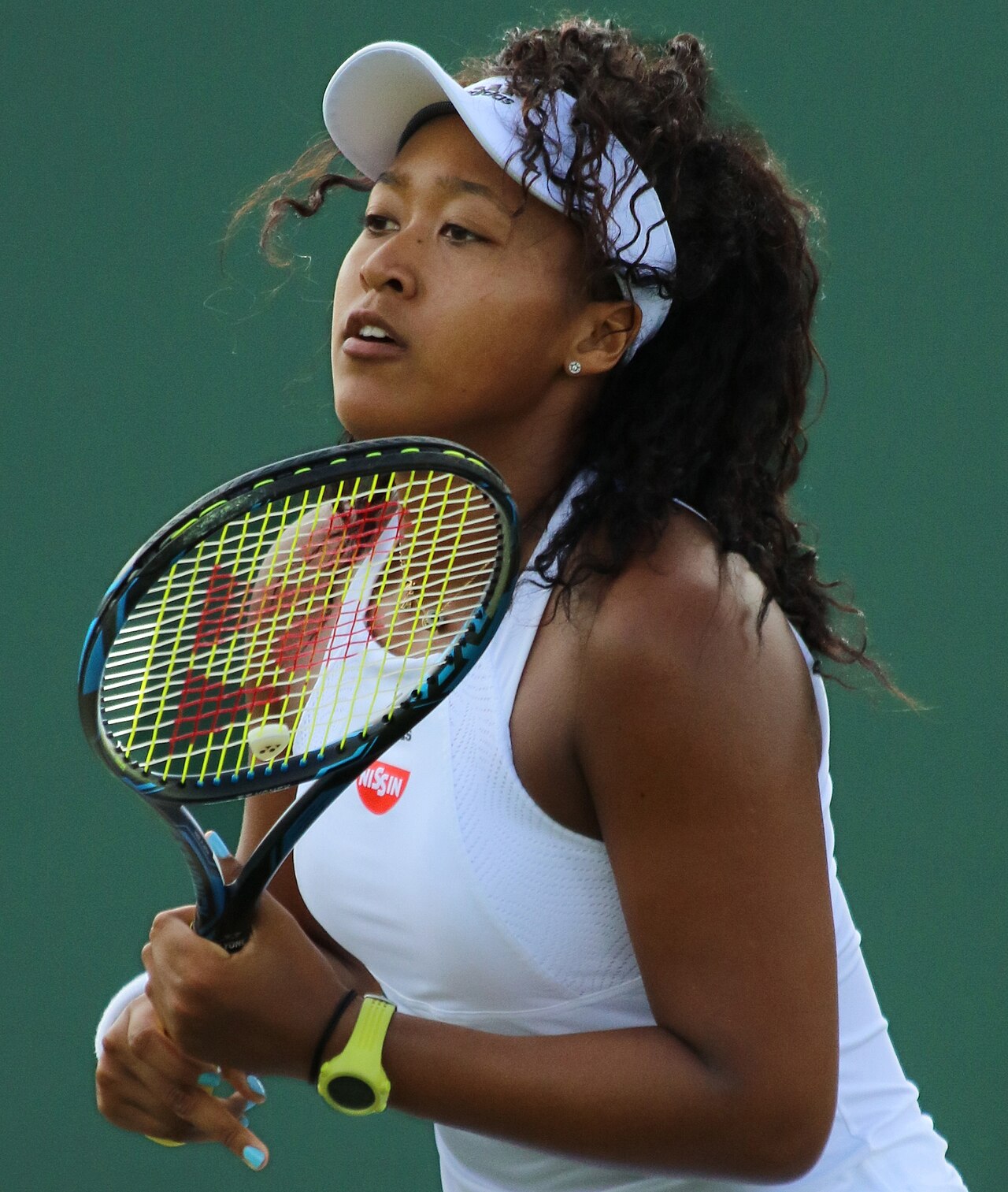
Naomi Osaka and Coco Gauff make a particularly good way into the subject. According to BBC Sport’s explainer updated on July 7, 2026, both earned their first qualifying Wimbledon singles results that year and were set to enter the club from the 2027 Championships. Their Grand Slam success elsewhere had not already done the job. This is a Wimbledon achievement club, not an automatic benefit of being a famous champion.
What result gets a player in?
In men’s and women’s singles, reaching the Wimbledon quarter-finals or better is the qualifying result described by the BBC. You do not have to win the quarter-final. Getting into the last eight is enough. That is a different threshold from reaching the last sixteen, and a very different one from lifting the trophy.
The name becomes less literal when doubles enters the picture. Men’s and women’s doubles players qualify by reaching the semi-finals, while mixed doubles players must reach the final. Applying the singles quarter-final rule to every draw would give the wrong answer. The event matters as well as the round.
| Wimbledon event | Qualifying achievement | The common mistake |
|---|---|---|
| Men’s or women’s singles | Reach the quarter-finals or better | Thinking a quarter-final win is required |
| Men’s or women’s doubles | Reach the semi-finals or better | Assuming a doubles quarter-final uses the singles threshold |
| Mixed doubles | Reach the final | Treating a mixed semi-final as sufficient |
The distinction explains why a player’s overall reputation tells you so little about first eligibility. Osaka was already a four-time Grand Slam champion in the BBC account, yet the relevant new fact was her Wimbledon last-eight appearance. Gauff, also described as a multiple major champion, reached the Wimbledon singles semi-finals for the first time. Different career résumés can arrive at the same Wimbledon-specific qualification.
Why the invitation starts the following year
The BBC report identifies 2026 qualifiers as entering from the 2027 Championships onward. That is worth keeping separate from the moment a player wins the match that earns eligibility. “Has qualified” and “can use the club at this year’s tournament” are not necessarily the same statement.
Arthur Fery was another named new qualifier in the report. The British wildcard’s run had already reached the men’s singles last eight when the explainer was updated. The contrast with Osaka and Gauff is part of the appeal: a home wildcard’s breakthrough and an established champion’s new Wimbledon milestone can lead to the same future welcome. No career-wide major-title tally is substituted for the qualifying round.
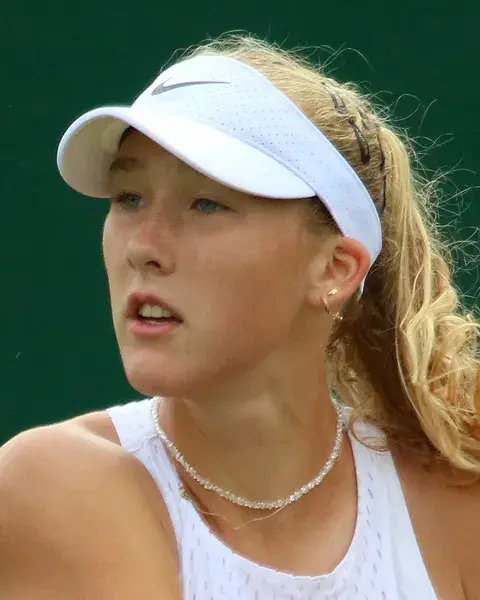
The report also supplied the previous year’s comparison. Ben Shelton and Mirra Andreeva had first qualified in 2025 and were among the prominent players first enjoying the benefits in 2026. Keep those years attached to the names. A short social post that combines all five players as one new intake loses the distinction the original account makes.
The reward is a way back into the tournament
The tradition began in 1986. As described by the BBC, members can return to the Wimbledon grounds for life, with complimentary tickets, access to a dedicated hospitality suite, tickets for Centre Court and No. 1 Court, and an annual Last 8 Supper Party. This gives the achievement a different afterlife from ranking points or prize money. It creates a continuing relationship with the event.
The report lists practical details too: food and drink in the club areas, daily happy-hour refreshments between 6pm and 7pm, and discounted hotel options with transport between those hotels and Wimbledon arranged by the All England Club. A member may bring one guest. The listed extras include two tickets to a London show and an invitation to a Seniors’ Lawn Tennis Club of Great Britain cocktail party.
Those details make attractive headlines, but they should be described at their actual scale. Discounted hotels are not a promise that every hotel stay is free. A guest allowance of one does not mean unlimited invitations for friends. Tickets and access should not be inflated into a claim that a member can demand any seat at any match. This is the benefit outline reported in July 2026, not a booking contract reproducing every operational condition.
The BBC notes that active players often make little use of the facilities until retirement, because they are usually occupied with the tournament itself. That is an appealing reversal. The invitation may be earned during a player’s most demanding professional fortnight, while becoming most useful much later, when returning no longer means preparing for the next opponent.
What the club does not tell you about the next draw
The Last 8 Club described here concerns hospitality and access as a former successful competitor. It should not be confused with a place in a future playing draw. A lifelong welcome to the grounds is not, by itself, a lifelong wildcard, a seed or a protected ranking. Those are different questions from the club benefits in the report.
Nor does membership make all qualifying performances equivalent. A quarter-finalist and a champion have achieved different sporting results even if both meet the club threshold. The interesting point is that Wimbledon can preserve that distinction in its record books while giving both a lasting place in its wider community.
For fans, that changes how a quarter-final milestone can be read. It is not only a line on a career page or the stage before an even bigger match. At Wimbledon, it can also be the result that changes how a player returns for decades. A defeat in the next round does not erase the fact that the qualifying stage was reached.
So the next time a broadcast mentions a player joining the Last 8 Club, ask two precise questions: which event supplied the result, and in which year do the benefits begin? For the Osaka, Gauff and Fery examples in the BBC’s July 2026 account, the answer to the second is 2027. That small date makes the story accurate; the promise of remaining connected to Wimbledon is what makes it memorable.
Sources and further reading
TENNIS TENSION LAB
Check your racquet’s tension today.
Get a high-precision tension reading in under 10 seconds. Tension Lab tracks changes from your first reading and helps you see when to restring.
- High-precision tension measurement. Ready in under 10 seconds.
- Track every change in feel. See the full story over time.
- Time to restring? Never leave it to guesswork.
Keep reading
Gauff ended a ten-month drought. Pegula’s service games explain the week better.
Coco Gauff beat Jessica Pegula 6–2, 6–4 for the 2026 Cincinnati title. Beyond the ten-month trophy gap, the return points and Pegula’s own reaction reveal why the final felt so difficult.
8 min read
Shelton improved his backhand. Why could Zverev still target it?
Ben Shelton’s backhand helped him progress in the summer of 2026, yet Alexander Zverev found it a useful target in the US Open final. Improvement and vulnerability can coexist.
8 min read
5–0 was not the finish: the Williams sisters and the lead a tiebreak can take away
Serena and Venus Williams led the deciding US Open tiebreak 5–0 before losing 10–7. Their 2026 doubles return shows why a big lead still leaves two teams with work to do.
8 min read