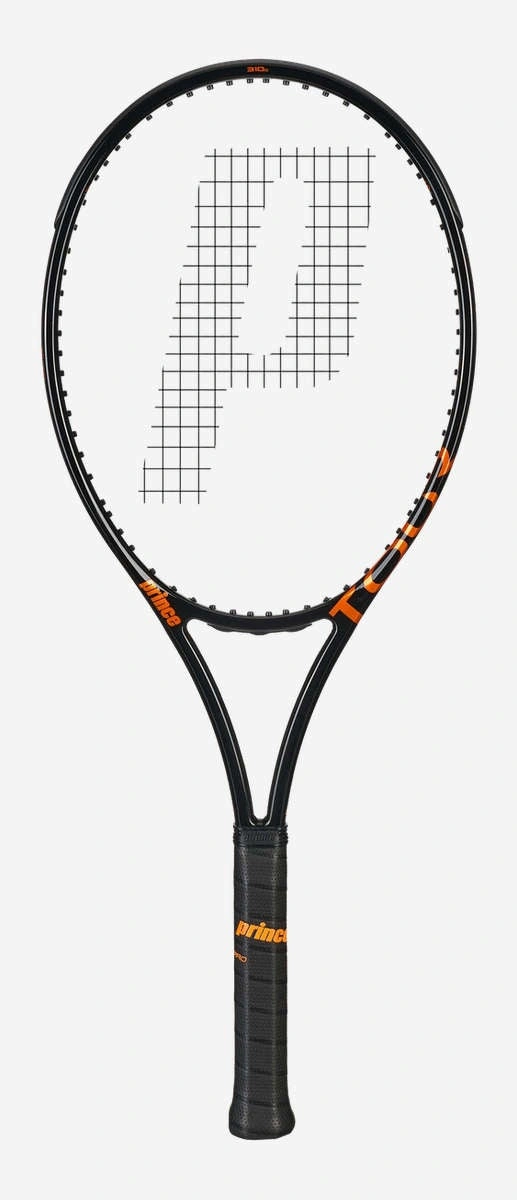
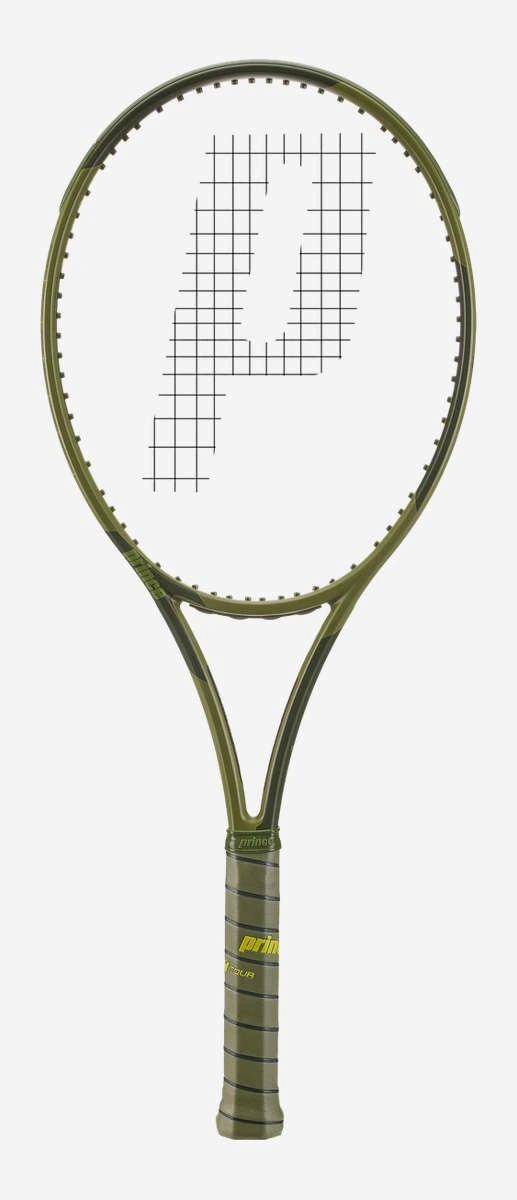
Prince Tour 100 vs Phantom 100X: same 16x18, different depth
The heads, patterns and review swingweights are close. Separating relaxed-rally feel from depth under pressure reveals which kind of help you need.

Start with the Prince Tour 100 310 if depth on defensive balls and compact returns is your priority. Start with the Phantom 100X 305 if you can create depth with your own swing and want a softer response on clean contact, with room for touch. Both have 100-square-inch heads and 16x18 patterns. The useful distinction is what help you need when you strike cleanly and when you are under pressure, rather than a simple label for spin or flat hitters.
Expecting effortless power from the Phantom, or rejecting the Tour as slow because its unstrung weight is 310 grams, settles the question too early. Separate the feel of a comfortable rally from the depth left in a pressured shot. Knowing where a pleasing response occurs helps establish whether it belongs in your regular game, including the points you usually lose.
Identify the two frames before comparing their numbers
The comparison is between the Tour 100 310g 2026 and Phantom 100X 305g 2024. The 18x20 Tour 100P, lighter Tour 100 290, Phantom 100X 18x20 and O3 Phantom are separate options. A sales listing that says only Tour or Phantom leaves the comparison incomplete. Even the number 100 does not identify the string pattern; check the full model before comparing an offer or booking a demo.
| Specification | Tour 100 310 2026 | Phantom 100X 305 2024 |
|---|---|---|
| Head and pattern | 100 sq in;16x18 | 100 sq in;16x18 |
| Unstrung weight | 310 g | 305 g |
| Unstrung balance | 31.0 cm | 31.5 cm |
| Beam | 22–23–20 mm | 22–18 mm taper |
| Product reference | 7T59E691 | 7T55X491 |
The manufacturer lists a five-gram difference, with the heavier Tour balanced closer to the handle. Total weight therefore cannot settle how quickly either frame will prepare for your shot. Holding it still, moving it through a serve and presenting the face to a fast ball are different tasks. The identical 16x18 label counts strings installed in two different frames; it does not make those tasks identical.
Tennis Warehouse’s review swingweights are 321 for the Tour and 320 for the Phantom. These are strung reference figures, and the Tour review also mentions a different value for an individual tester’s sample. Use them to frame a comparison of the actual racquets, complete with strings and grip, rather than ranking the models by a single swingweight point.
The Phantom’s clean-contact feel and off-center depth are separate questions
In the 2024 Phantom review, Tiffani liked its comfortable response on clean contact but noticed power dropping away off-center. Brittany enjoyed rallying yet found put-away power harder to produce. That suggests a useful demo sequence: follow comfortable crosscourt exchanges with a stretched defensive ball and an attack on a shorter ball.
The Phantom’s potential buyer is not simply someone who hits hard. It is someone who can prepare and swing enough to create depth, then use the response for changes of trajectory and touch. If low slices and short placements already belong to your tactics, those shots give you a reason to compare it. If reaching the baseline requires extra effort every time, assess whether the preferred feel costs too much.
Judge impact sensation separately from where the ball lands. A racquet can feel pleasant while leaving defensive balls short, or provide excellent control on clean contact while demanding a swing you cannot maintain late in a set. Include the heights and speeds you regularly face. Recreating one attractive shot against an endless supply of easy feeds can hide the condition that will matter in a match.
The Tour’s balance of qualities still needs a blocked-return check
In the 2026 Tour review, Michelle liked sending returns deep and preparing the next attack. Troy appreciated the fast, stable response but wanted more swingweight when blocking the ball back. Even when depth makes the Tour the first candidate, a return with almost no swing deserves its own comparison.
A drive return adds racquet speed through a prepared swing. A blocked return puts more emphasis on holding the face and contact point while receiving the incoming pace. These are different tasks even for one player using one frame. Identify which return repeatedly falls short: that makes the request for help more specific than simply asking for a more powerful racquet.
Testing the Tour only in relaxed rallies can also blur its distinction from the Phantom. Alternate faster incoming balls with balls that leave ample preparation time. The depth gained in the first condition must remain controllable in the second. If defense improves but attacks on slower balls repeatedly sail long, the decision needs both sides of that tradeoff.
| Recurring situation | First candidate | Reason to compare | When another choice fits |
|---|---|---|---|
| Depth disappears under pressure | Tour 100 310 | Prioritize the response with limited preparation | Phantom if full-swing feel and touch matter more |
| You create depth and use touch | Phantom 100X 305 | Compare clean contact and variation | Tour if mishits and put-aways stay short |
| You block fast serves | Test both separately | Blocking differs from a drive return | Keep the current frame if its block remains deeper |
| Your 18x20 trajectory works well | Include your current 100P | Establish a reason to change patterns | Try both when you actually need more trajectory margin |
Flexibility acts differently across the hitting surface
TWU’s explanation of racquet power distinguishes frame bending from the whole racquet rotating sideways. Bending matters more near the tip than near the center; lateral misses also involve resistance to rotation. Matching head size and string count therefore does not require two frames to respond alike when contact moves away from the center.
There is no need to aim deliberately at the frame during a demo. Running balls, balls close to the body and hurried returns naturally create a range of contact locations. Observe the height of the outgoing ball as well as whether it reaches the intended target. If a candidate makes its largest useful difference on compromised contact, that can be a stronger buying reason than its best clean strike.
Beam dimensions distinguish these models, but they are not a calculator for your ball speed. Liking the Phantom’s thin throat and flexible response still leaves the separate requirement of producing useful depth. The Tour’s thicker middle section does not take over every shot either. The construction supplies questions for the demo; the resulting shots narrow the answer.

Match the strings first, then address one recurring problem
When arranging demos, request a familiar string and gauge in reasonably comparable condition where possible. A fresh multifilament in one and an old polyester in the other makes the first impression a comparison of more than frames. If the loan setup cannot change, assess that complete setup on its own terms, then make the purchase decision with the string you intend to use.
Starting the Phantom at a lower tension for depth and the Tour at a higher tension for control builds the expected verdict into the setups. Begin with comparable conditions, then identify one recurring problem. Does the ball fall short even on centered contact, only against pace, or go long only on a slower attack? Discuss the next stringing job within the exact product’s official instructions, rather than copying a reviewer’s tension as a personal prescription.
Progress from cooperative rallies to defense, short-ball attacks, returns and service games. This is a proposed comparison sequence, not a scored laboratory protocol. Does the racquet that helped your rally depth leave time for the first ball after your serve? Can the one that improved touch also finish the point? Repeated failures that become less frequent matter more than the best shot from each stage.
After alternating the two, return to your current racquet later in the session. This helps establish whether the new candidate still solves the original problem once its unfamiliar feel has faded. If adapting required you to slow every rally or reduce every attacking target, include that cost in the decision. Adaptation can be worthwhile, but the benefit you wanted should remain identifiable.
Added mass is an option when you still have swing capacity
If the Phantom’s clean-contact response suits you but stronger balls expose a need for more support, customization can be the next option. If serves and high backhands are already late, reconsider the base model before adding weight. Spending the remaining margin in your movement on stability may make it harder to arrive at the contact point you wanted to improve.
Added mass creates a different setup. Decide position and amount together, starting with a small reversible change so the original remains a useful reference. Adding handle weight merely because the Tour feels heavy, or matching total weight to turn a Phantom into a Tour, does not answer this comparison. Frames with different construction and distribution remain different after one specification is matched.
For the next demo, pair the ball you most often leave short with an attack you trust. Does the Tour rescue the first while preserving control of the second? Does the Phantom deliver the feel you enjoy while retaining defensive and finishing depth? Keep a candidate when it handles both tasks. If neither improves on your current racquet, retaining the existing setup is a complete buying decision.
Sources and further reading
- Prince Sports Europe — Prince Tour 100 310
- Prince Sports Europe — Prince Phantom 100X 305 16x18
- Tennis Warehouse — Prince Tour 100 310g 2026 Racquet Review
- Tennis Warehouse Europe — Prince Phantom 100X 305g Racquet Review
- Tennisnerd — Prince Phantom Review 2024
- Tennis Warehouse University — Racquet Specs and Power
Keep reading
TENNIS TENSION LAB
Check your racquet’s tension today.
Get a high-precision tension reading in under 10 seconds. Tension Lab tracks changes from your first reading and helps you see when to restring.
- High-precision tension measurement. Ready in under 10 seconds.
- Track every change in feel. See the full story over time.
- Time to restring? Never leave it to guesswork.