ATP Finals 2026: three matchups beyond the ace count
Shelton hit seven aces in five sets against Alcaraz in New York. Zverev won 85% of first-serve points against Shelton in the final. The space between those numbers is where the next exchange matters.

At the ATP Finals, follow the powerful serve through the ball that comes back. Ben Shelton hit seven aces across five sets when he beat Carlos Alcaraz in the 2026 US Open quarterfinals. Alexander Zverev then won 68 of 80 first-serve points against Shelton in the final. Serve speed alone leaves much of the difference between those matches unexplained.
In Turin, November 15–22, those problems must be solved within a shorter contest. Every singles match is best of three sets, including the final. A solution found after losing two sets at a major would arrive too late here. The useful question is who makes the return uncomfortable early, and who earns the first attack when the serve comes back.
Start with three players who have qualified
The ATP’s October 19 update lists Zverev, Alcaraz and Shelton as qualified. Jannik Sinner, who had qualified earlier, has ended his season through injury. Medvedev, Jodar and others remain in the race. The related feature follows Sinner’s absence and the qualification consequences; the focus here is on potential meetings among the three qualified players still heading towards Turin.
These are pre-draw viewing prospects. Their occurrence and dates depend on the groups and subsequent results. The top two seeds enter separate groups, so Zverev and Alcaraz would have to wait for the knockout phase if they occupy those positions. A desirable pairing becomes a scheduled match only once the draw and progression allow it.
| Potential meeting | 2026 comparison | Main question | Condition |
|---|---|---|---|
| Alcaraz–Shelton | US Open quarterfinal | Who attacks after the return? | Group draw or knockout progression |
| Zverev–Shelton | US Open final | How often does Shelton see a second serve? | Group draw or knockout progression |
| Zverev–Alcaraz | Australian Open semifinal | Who prevents the rally from developing? | Knockout only if seeded first and second |
Alcaraz–Shelton: a returned serve still has a job
Shelton lost the opening tiebreak in New York, then won 6-7(5), 6-1, 6-3, 1-6, 7-6(7), taking the deciding tiebreak 10-7. The official report describes a nine-game winning stretch and the roles of his returns and angled groundstrokes. The finishing ace supplied the memorable final image; seven aces supplied only part of the match.
A rematch invites attention to Shelton’s position when Alcaraz gets the return in. Can he step forward comfortably and create an angle, or must he restart the rally against a deep or awkward ball? Reducing the ace count and removing the server’s first attack are different accomplishments. That distinction explains why the server may remain comfortable even when more returns land.
Apply the same question to Alcaraz’s service games. Shelton also changed the match through his return. Following only the bigger server misses half the exchange. Comparing where each player strikes the first rally ball offers a more precise viewing task than assigning them the broad labels of power and variety.

Zverev–Shelton: count the opportunities as well as the success
Zverev won the US Open final 6-3, 7-6(2), 5-7, 6-2. Early in the opening set, Shelton won six of seven points against Zverev’s second serve, yet collected his first point against the first serve only in the match’s eighth game. A productive target and an almost inaccessible one existed side by side.
The important denominator is how often the returner gets that target. A successful second-serve return pattern has fewer chances to matter when the server keeps landing first deliveries. If first serves begin to miss, the same return pattern can suddenly become central. Read the opportunity count before deciding how well the returner has solved the serve.
Across the final, Zverev’s first-serve points won stood at 68/80, or 85%. This measures the outcome of points after a first serve lands. First-serve percentage measures how often that delivery lands at all. In another meeting, putting both together would show whether Shelton is gaining more access to the second serve and whether Zverev remains as effective behind the first.
Zverev–Alcaraz: denying the rally its beginning
Alcaraz won their Australian Open semifinal 6-4, 7-6(5), 6-7(3), 6-7(4), 7-5 in five hours and 27 minutes. After developing leg cramps in the third set, he used drop shots and early attacks to shorten points. Zverev later said first-shot winners had kept him out of rallies and that he should have been more aggressive.
A repeat meeting makes the moment before a long exchange especially interesting. Who attacks early enough to prevent that exchange, and how does the opponent absorb the attempt? Grouping every short point under serving overlooks the first rally shot. Watching successful and unsuccessful attacks together reveals both the reward and the cost of choosing quickly.
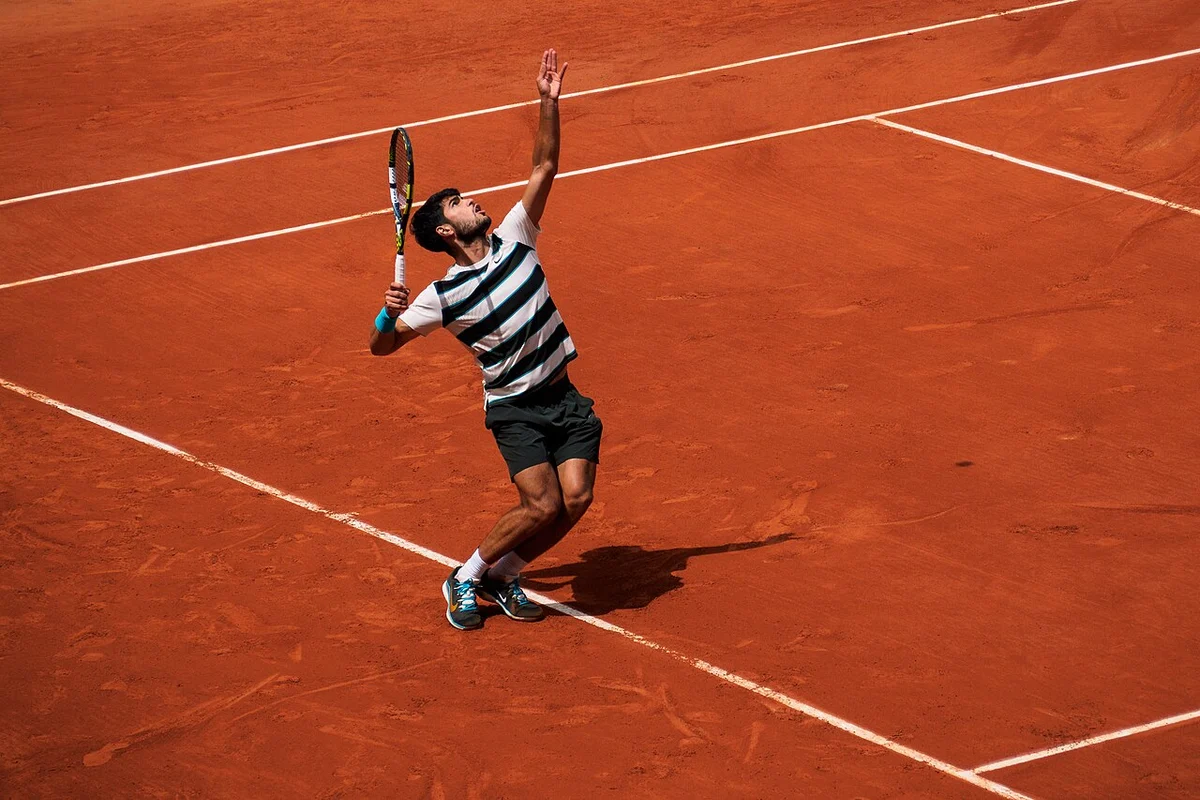
Zverev’s greatest regret concerned the second set, where a 5-2 lead escaped him, rather than the final set. That reflection gives the best-of-three format a practical edge: closing an early lead matters before there is time for another recovery. The Australian Open’s official highlights introduce the earlier contest and its contrasting ways of seeking shorter points.
KST sessions begin with doubles
Turin uses Central European Time, UTC+1, during the tournament, eight hours behind Korea. The published group-stage day session at 11:30 a.m. becomes 7:30 p.m. KST that day; the 6 p.m. night session becomes 2 a.m. the next day. Each lists one doubles match followed by one singles match. Singles start times await the daily order of play.
| Stage | Turin, CET | Korea, KST | Singles follows |
|---|---|---|---|
| Group days, Nov 15–20 | 11:30 | 19:30, same day | Doubles |
| Group nights, Nov 15–20 | 18:00 | 02:00, following day | Doubles |
| Semifinal day, Nov 21 | 12:00 | 20:00, Nov 21 | Doubles |
| Semifinal night, Nov 21 | 18:00 | 02:00, Nov 22 | Doubles |
| Finals, Nov 22 | 15:00 | 23:00, Nov 22 | Doubles final |
For a viewer in Korea, day sessions fit the evening after work, with singles later than the listed start. The final session opens at 11 p.m. on Sunday in Korea, so singles viewing can extend into Monday morning. Use the session schedule to choose an available day, then the singles order of play to make the specific time commitment.
A group win retains its own value
Two groups of four send their top two players to the semifinals. Each group win earns 200 points, followed by 400 for a semifinal win and 500 for winning the final: 1,500 for an unbeaten champion. An opening defeat still leaves another opponent and more points to pursue. Qualification is the starting condition; the wins and title remain to be earned.
Once the draw is made, match a real pairing to a workable KST session. Then follow one returned serve: does Shelton receive a comfortable attacking ball, does Zverev expose his second delivery, or does Alcaraz finish his choice before a long rally develops? Carrying that question into both players’ service games makes changes in control visible from the first set.
Sources and further reading
- FITP — Nitto ATP Finals 2026: official ticket session schedule
- ATP / Nitto ATP Finals — Medvedev steps up in the Live Race: 19 October 2026
- ATP / Nitto ATP Finals — Nitto ATP Finals: rules and format
- Rolex Paris Masters — 2026 Paris Masters entry list: updated 13 October
- ATP / Nitto ATP Finals — Alcaraz qualifies for the 2026 Nitto ATP Finals
- USTA / US Open — Shelton ends Alcaraz’s US Open title defence in a five-set quarterfinal
- USTA / US Open — Zverev defeats Shelton to win the 2026 US Open
- Tennis Australia — Alcaraz survives Zverev in the 2026 Australian Open semifinal
- Tennis Australia — Zverev reflects on his Australian Open semifinal defeat
- ATP / Nitto ATP Finals — Nitto ATP Finals: ranking points
Keep reading

TENNIS TENSION LAB
Check your racquet’s tension today.
Get a high-precision tension reading in under 10 seconds. Tension Lab tracks changes from your first reading and helps you see when to restring.
- High-precision tension measurement. Ready in under 10 seconds.
- Track every change in feel. See the full story over time.
- Time to restring? Never leave it to guesswork.