No.3, No.23, No.98: Beijing moved three careers in different ways
A two-place rise can be a historic first. A 31-place rise can be a return. The finishing position needs the season around it.
Beijing produced three very different milestones in the WTA rankings published on October 12, 2026. Mirra Andreeva moved from No.5 to No.3, Zheng Qinwen from No.54 to No.23, and Alina Charaeva from No.118 to No.98. One entered the top three for the first time, one returned to the top 30 after a difficult comeback, and one reached the top 100. The size of the numerical jump tells only part of each story.
The finishing rounds also differed. Zheng won the title, Andreeva reached the final and Charaeva reached the last 16. Those results belong beside the ranking positions because they describe the work completed in Beijing. A ranking position locates a player within a wider, rolling record. Reading the two together explains why a two-place rise can represent a rarer milestone than a much larger jump lower down the list.
Andreeva: two places into a new part of the rankings
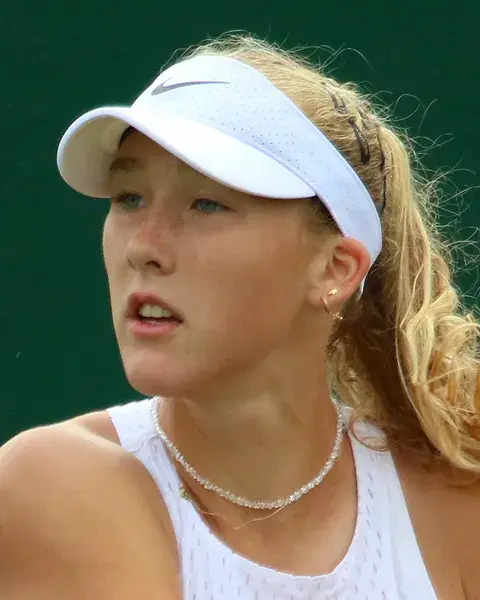
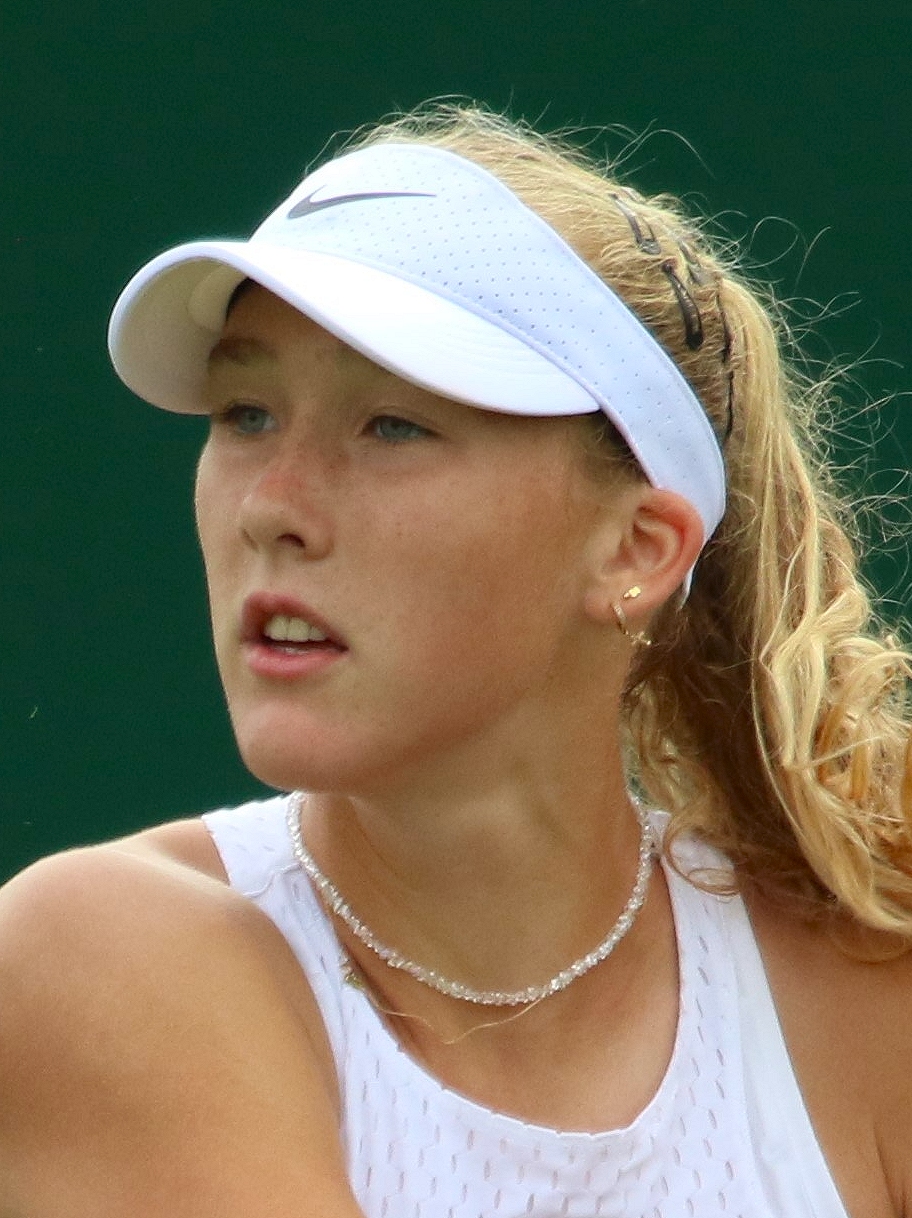
At 19 years and 166 days, Andreeva became the youngest player to enter the top three since Maria Sharapova did so at 17 in February 2005, according to WTA’s October 12 report. The two other teenage top-three entrants in the intervening period were Caroline Wozniacki, aged 19 years and 205 days in February 2010, and Coco Gauff, aged 19 years and 182 days in September 2023. The achievement concerns the date of entry and age at that moment.
Beijing was Andreeva’s fifth final of 2026, tying the tour lead recorded in the same report with Elena Rybakina, Aryna Sabalenka and Jessica Pegula. Her season had already included a first Grand Slam title. That repeated ability to reach finals supplies the season context for the move from fifth to third. The Beijing defeat sits inside an accumulation of deep runs rather than erasing the work that preceded it.
In the final, Zheng won 7–5, 6–4 after saving three set points in the opening set. Andreeva’s own assessment focused on missed returns while trying to attack and difficulty finding the right margin and rhythm. Those comments identify a technical question for the next meeting. A career-high ranking can coexist with a clear match problem: how to keep an aggressive return in play often enough to begin the rally on useful terms.
Zheng: the largest jump was also a return
Zheng rose 31 places to No.23, but her previous career high was No.4. Her ranking had fallen to No.160 in June 2026 during a comeback following elbow surgery in July 2025. Her return to regular competition began in February, and she compiled an 11–13 record through Toronto. That history changes the meaning of the Beijing result: it adds a first WTA 1000 title to a player rebuilding a position she had previously surpassed.
After Toronto, Zheng chose an intensive Florida training block before the US Open. From that point through Beijing she went 14–2, including eight wins in nine three-set matches. The training decision came between the reported 11–13 opening stretch and the subsequent run through the US Open and Beijing.

The Beijing trophy required seven wins. Zheng’s first four matches went to three sets; the final three ended in straight sets. She conceded 78 games across the run, the most recorded for a Tier I or WTA 1000 champion since 1990 in WTA’s account. The total captures a demanding route, while the title captures its completion. Her sixth tour trophy was also her first since Tokyo in late 2024.
Charaeva: a first encounter with the top 30 became a top-100 week
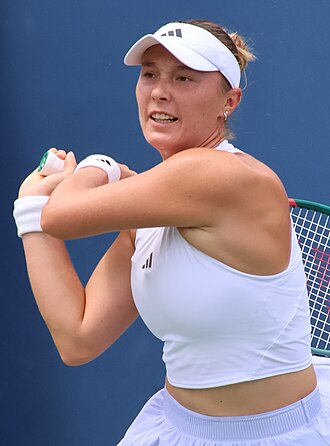
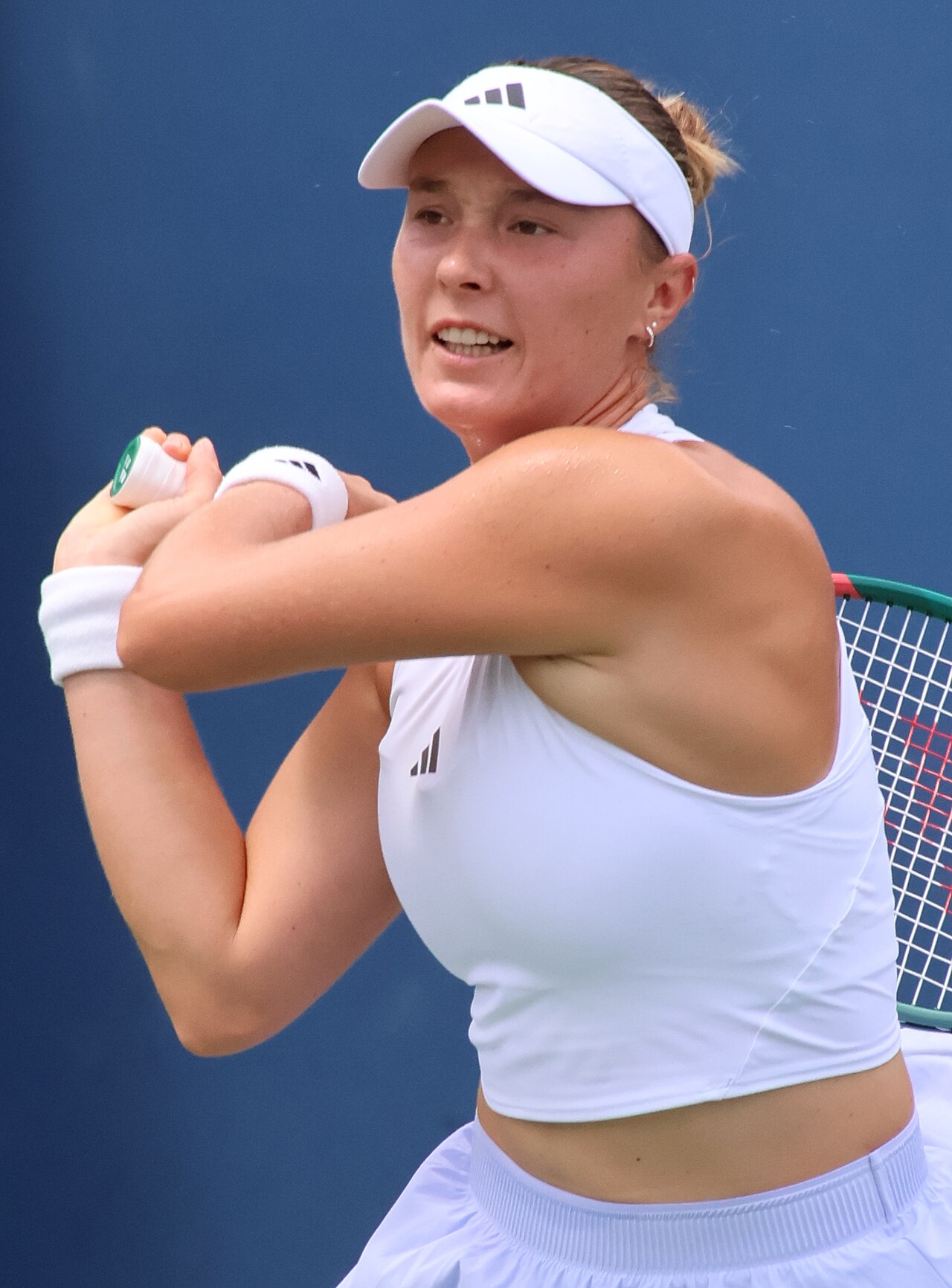
Charaeva had not faced a top-30 opponent before meeting new world No.1 Rybakina in Beijing’s second round. She won from a set and a break down and continued to the last 16. The October 12 rankings moved her 20 places to No.98. WTA identified her as the second Armenian player to reach the top 100, following Elina Avanesyan. Here the milestone marks entry into a ranking band she had never occupied.
There were earlier steps within the same season: first WTA quarterfinals in Hamburg and São Paulo, plus a first WTA 125 title in Midland. Her 2020 Roland-Garros junior final belongs farther back in the timeline. Keeping those levels visible shows the path from junior success to repeated professional results and then a major opponent upset. Beijing extended an already developing year rather than supplying its only evidence.
| Player | Before → after | Beijing result and milestone |
|---|---|---|
| Mirra Andreeva | 5 → 3 | Final; first top-three ranking |
| Zheng Qinwen | 54 → 23 | Champion; return to top 30 |
| Alina Charaeva | 118 → 98 | Last 16; first top-100 ranking |
| Nikola Bartunkova | 34 → 29 | Semifinal; first top-30 ranking |
| Elise Mertens | 19 → 14 | Semifinal; highest position since May 2021 |
Two other movements show how different careers can share a finishing round. Bartunkova reached her first WTA 1000 semifinal after beating Sabalenka and Muchova, then entered the top 30 at No.29. Mertens reached the same round after top-10 wins over Gauff and Swiatek, rising to No.14. Mertens had remained inside the top 50 since July 2017; Bartunkova had ended 2025 at No.130. Their semifinal labels sit on very different foundations.
The ranking position and the points award answer different questions
WTA’s published explanation uses a rolling 52-week ranking system, with points linked to tournament level and round reached. Its main-draw points table for a combined WTA 1000 lists 1,000 for the champion, 650 for the finalist, 390 for a semifinalist and 120 for a last-16 finish. Those are round awards. To reconstruct a player’s net total change, the record also needs the results entering and leaving her counted ranking breakdown.
The weekly movement report does not provide the complete expiring and replacement points ledger for these players, so the comparison here follows verified positions and results rather than calculating net gains. The distinction matters when comparing Zheng’s 31-place rise with Charaeva’s 20: different parts of the rankings contain different point gaps between players. Counting positions alone cannot turn the two runs into a common performance scale.
For a useful follow-up, save the ranking date, starting position, finishing position and tournament result together. Add whether the new position is a first entry, a return or an improvement on a long-established level. At the next publication, compare the new row with this one and check the counted results if you want to explain the points movement. That keeps a memorable week attached to a career rather than treating every upward arrow as the same kind of breakthrough.
Sources and further reading
Keep reading
Alina Charaeva beat the world No. 1. The revealing part came after she lost the lead.
Charaeva’s Beijing win over Rybakina began with a lead she could not keep. Follow the comeback, her earlier milestones and three sequences worth watching.
8 min read
Can a Wild Card Be Seeded? The Ranking Dates Behind WC
A player can enter on a wild card and still be seeded. Learn why Grand Slam entry and seeding use different ranking dates, with a practical draw-reading guide.
8 min readTENNIS TENSION LAB
Check your racquet’s tension today.
Get a high-precision tension reading in under 10 seconds. Tension Lab tracks changes from your first reading and helps you see when to restring.
- High-precision tension measurement. Ready in under 10 seconds.
- Track every change in feel. See the full story over time.
- Time to restring? Never leave it to guesswork.