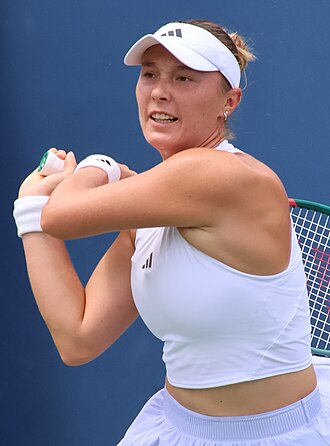
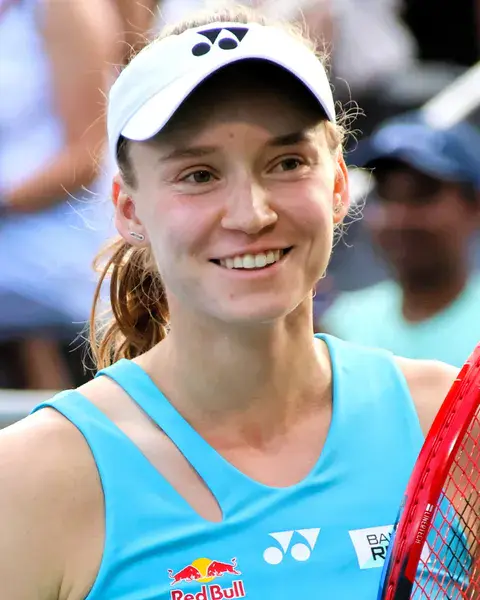
Alina Charaeva beat the world No. 1. The revealing part came after she lost the lead.
A first win over a world No. 1 attracts attention. The games between falling behind and closing the match explain why this one deserves a second look.
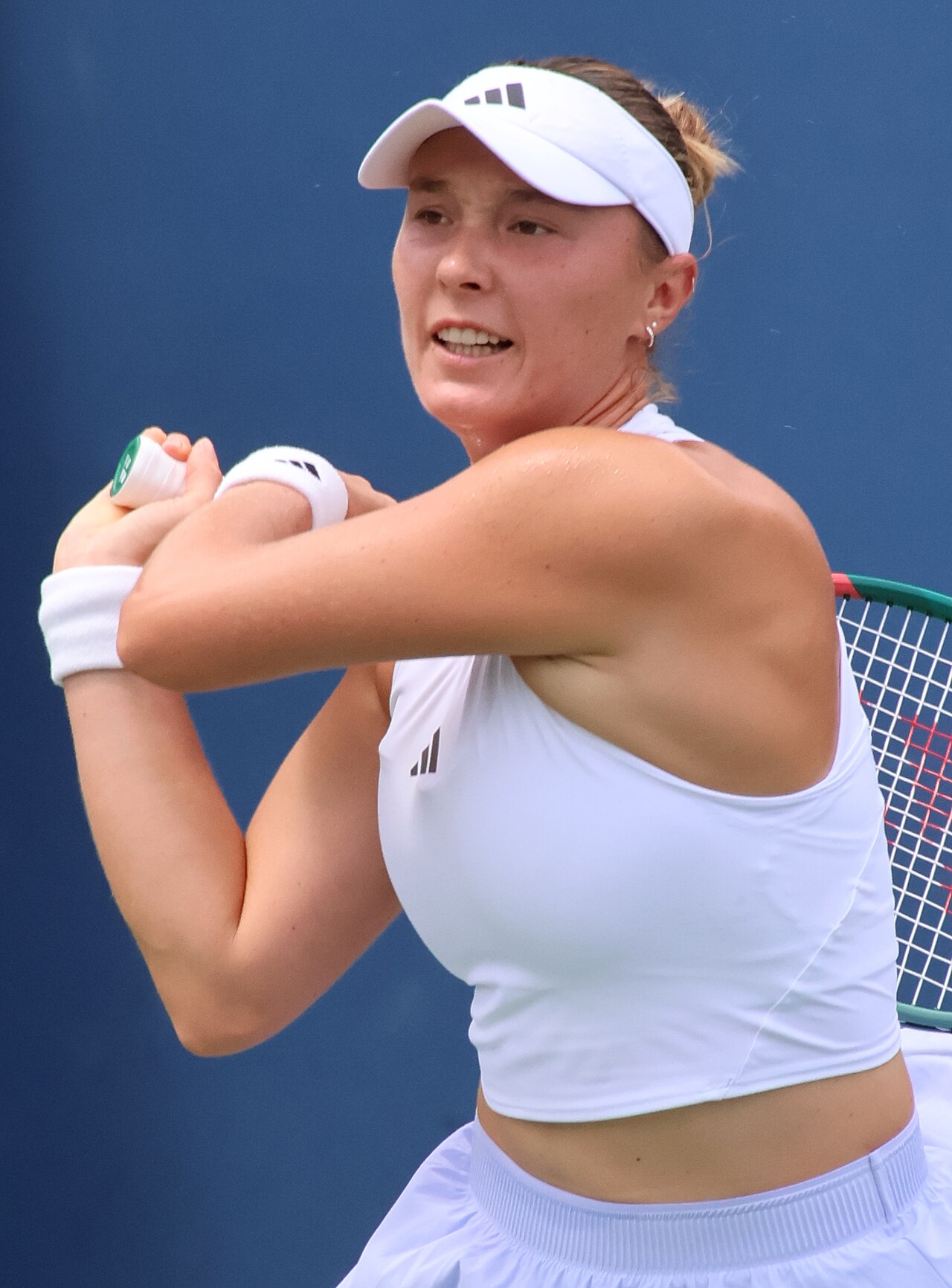
Alina Charaeva broke Elena Rybakina in the opening game in Beijing, then immediately lost the advantage. The promising start became a lost first set and another break behind in the second. That makes her 3–6, 6–4, 6–3 victory on 3 October 2026 more interesting than a story about an outsider starting fast and riding the excitement home.
It was Charaeva’s first encounter with a Top 10 opponent, and the opponent was the world No. 1. Yet the useful way into this match is not to start with the distance between their rankings. Start with the interruptions: the lead that vanished, the deficit that grew, the new lead that finally survived. Each demanded a different response.
The player existed before the upset
Six years earlier, Charaeva had reached the Roland-Garros girls’ final. On 10 October 2020 she led Elsa Jacquemot by a set and 4–2, but lost 6–4, 4–6, 2–6. Serving for 5–3 in the second set, she missed three game points. The WTA report described effective power from both sides and a forehand capable of finishing rallies; producing dangerous tennis and finishing the contest were already separate questions.
That older match makes a useful comparison of situations. When a player gets ahead, what happens between earning the opportunity and securing the game? A lead can disappear without the original attacking idea being wrong. The next ball may demand more margin, a recovery step, or a return to a reliable serve location. Reviewing the transition is more informative than attaching a permanent personality label to a teenage defeat.
2026 had several milestones before Beijing
On 22 February, Charaeva beat Guo Hanyu 6–4, 7–6(4) in the Midland final to win her first WTA 125 title. Tour-level quarterfinals in Hamburg and São Paulo followed during the season. These results matter in different ways: a full title run at one level, then consecutive wins in main-tour fields. Keeping the categories visible gives a clearer picture than putting every trophy and round into the same column.
In an interview published by WTA on 6 October, she described a long period of work rather than one sudden leap. She pointed to greater continuity and fewer injury interruptions, and to learning her level by competing against stronger opponents even when she lost. The China Open’s profile added another piece of continuity: she moved to Spain at 13 and had worked with Carlos Martinez-Comet for eight years. Beijing made that work visible to a larger audience.
At a set and a break down, the next return game mattered
The Beijing match did not follow a smooth upward curve. Rybakina took the first set and led 2–1 with a break in the second. Charaeva immediately recovered that break with a forehand winner. Later, a backhand passing shot completed the break that took the set 6–4. These are distinct solutions: one stopped the deficit growing; the other converted a late opportunity into a new set.
When watching the return game after a lost serve, follow the opening exchange before the final winner. Is the first return deep enough to keep the receiver involved? Does the next ball offer a balanced contact, or does it require another neutral shot? Changing direction can be decisive, but the important question is whether the preceding ball made that change available. This gives the comeback a visible mechanism to investigate.
A break becomes valuable when the next service game holds
In the deciding set, Charaeva broke for 4–2 and then held to love. She later served out the match. The clean hold deserves attention beside the break: she had already experienced an opening advantage that disappeared immediately. This time the lead survived the change from returning to serving, and the scoreboard moved from a single-break opening to 5–2.
A break and a consolidation hold ask different things. As receiver, you may have earned room by disrupting someone else’s patterns. As server, you must supply the first ball and organize the following shot yourself. Replay the first two points of the consolidation game and look for serve location, return depth and court position. Those details help explain how an opportunity turns into separation.
Charaeva’s account of her nerves is useful here. She told WTA she remained nervous despite trying to enjoy the occasion. Her achievement was managing that feeling while competing, not making it disappear beforehand. For an amateur facing a stronger opponent, that changes the target: choose an action you can repeat while nervous, such as deciding the serve direction before beginning the motion, rather than waiting to feel perfectly calm.
The match after the headline was another test
Charaeva followed the Rybakina win by beating Sonay Kartal 6–4, 6–1 on 5 October, reaching the last 16 of a WTA 1000 event for the first time. The opponent, expectations and rhythm had changed. That second win gave the week more substance: she returned to court and completed another match after the result that had already attracted the attention.
Her run ended against Zheng Qinwen, 1–6, 6–2, 4–6. The tournament’s report records Charaeva recovering from 2–5 to 4–5 in the decider before Zheng broke to finish. Include that ending when assessing the week. It shows another attempt to repair a deficit, but also the remaining task of protecting the following service game. A breakthrough can contain both a completed comeback and an unfinished one.
Three short sequences tell you more than a winners reel
First, watch the point after losing an advantage. Note the starting court position and the height available over the net. A player can reset by using a safer trajectory without becoming passive. The question is whether the next ball restores room to play, not whether it looks as spectacular as the winner that originally created the lead.
Second, watch a passing shot together with the opponent’s approach. The position of the attacker, depth of the approach and receiver’s balance shape the available lanes. A clean pass is the ending of that geometry. Pausing before contact makes it easier to see why a crosscourt angle, a ball through the middle or a shot down the line was available.
Third, watch the service game after a break rather than jumping straight to the handshake. Record whether the server begins ahead, has to recover from 0–30, or relies on a difficult second serve. Winning the break does not remove the work of the next service game. Charaeva’s 4–2-to-5–2 sequence gives you a precise place to begin that review.
A practical way to use the story in your own match
In your next practice set, keep the normal scoring and take three brief notes afterward: your first return game after losing serve, your first service game after breaking, and a point in which the opponent came forward. Record the ball you received and the decision you made before judging the result. A good choice hit long and a poor choice rescued by an opponent’s mistake suggest different work for the next session.
The point is to notice repeatable situations. Charaeva’s Beijing week connects earlier experience, sustained competition and decisions made under fresh pressure. The upset supplies the headline. The reply after losing the lead, the hold after earning it back and the ability to compete again tell you much more about the player behind the name.
Sources and further reading
- WTA / Noah Poser — Charaeva upsets new World No. 1 Rybakina in Beijing second round
- WTA / Cole Bambini — On verge of first WTA 1000 quarterfinal, get to know Alina Charaeva
- China Open / Dominic Achille — Meet Alina Charaeva: The breakout player turning heads in Beijing
- China Open / Dominic Achille — Zheng Qinwen eyes birthday festivities after booking quarterfinal spot
- WTA — Guo vs. Charaeva: Dow Tennis Classic 2026 final
- WTA / Alex Macpherson — Jacquemot claims Paris jackpot over Charaeva for junior crown
- WTA / Alex Macpherson — Rankings Watch: Zheng returns to Top 30, Andreeva makes Top 3 debut
Keep reading
Laura Samson: from W15 wins to a WTA semifinal in one week
Before Prague 2024, Laura Samson had never won above ITF W15 level. Three victories, seven match points and a semifinal retirement tell the full story.
8 min read
Renata Zarazúa: five lost set points, then an upset of Keys
Five first-set chances disappeared. A set and 0–3 down, Renata Zarazúa still beat Madison Keys at the 2025 US Open. Follow the three turns that decided it.
7 min read
Marta Kostyuk in Stuttgart: five saved, eight needed, then a different test
Kostyuk saved five match points against Zheng, needed eight against Gauff and rebuilt a lost lead against Vondroušová. Three pressure patterns from Stuttgart 2024.
7 min readTENNIS TENSION LAB
Check your racquet’s tension today.
Get a high-precision tension reading in under 10 seconds. Tension Lab tracks changes from your first reading and helps you see when to restring.
- High-precision tension measurement. Ready in under 10 seconds.
- Track every change in feel. See the full story over time.
- Time to restring? Never leave it to guesswork.