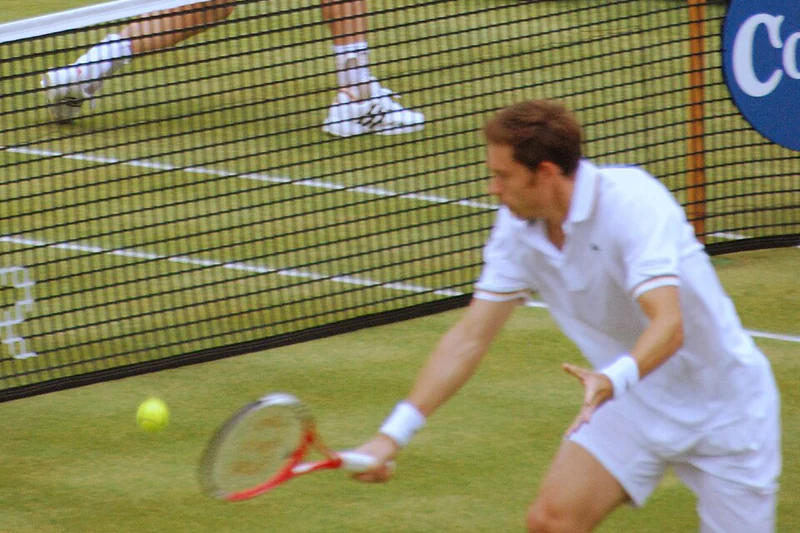
Muchova at the net: follow the shot that gets her there
After wrist surgery, Muchova returned to New York with options. Her matches against Osaka, Potapova, Paolini and Pegula show how an approach begins—and how an opponent can change its terms.

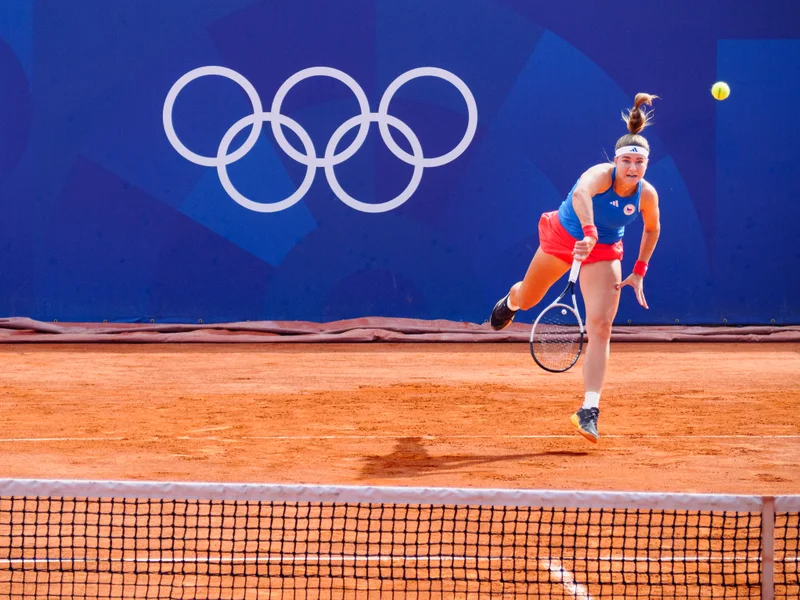
The serve travelled at 97 mph, about 156 km/h. Karolina Muchova followed it forward, stretched for a backhand volley and dropped the ball into the open court. That was the scene described in the WTA’s report on her 2024 US Open match against Anastasia Potapova. Between delivery and volley, she had moved the contest to a different part of the court.
In February that year, Muchova had undergone surgery on her right wrist. She returned during the grass season in June. In New York, being able to play again was itself a substantial achievement: she told the US Open that it was her biggest win of the year. The player rebuilding a schedule and the spectators hoping for dazzling shots had different starting points.
Variety is an easy word to attach to Muchova. A list of slices, drop shots and volleys says less about how a point develops. A net point can begin with a serve, an attacking return or a move forward during a rally. Look at the ball that opens the route and the repertoire becomes a set of choices.
New York in 2024 supplied both productive and awkward examples. Muchova followed a return forward to score against Naomi Osaka, then lost points with hurried net visits later in the same match. Against Jasmine Paolini she settled an uneven start on serve as well as at net. Jessica Pegula answered with a dipping return and longer rallies. Potapova’s match adds the serve-and-volley route to that picture.
Osaka: the same direction, different arrivals
Muchova beat Osaka 6–3, 7–6(5) on August 29. Reporting for Tennis.com, Steve Tignor described the start of a first-set break game: Muchova followed a backhand return to net and put away a volley. She changed her position for the next shot while responding to the serve. Osaka had a different target to deal with from a returner staying behind the baseline.
In that game, a disguised drop shot and another effective return also troubled Osaka. These were separate points, with different demands on the server. Moving in, making the opponent come forward and applying pressure through the return were options Muchova could place alongside one another, rather than a fixed sequence to repeat on every point.
At 4–4 in the second set, the forward movement was less rewarding. Tignor reported that Muchova rushed to net and missed two straightforward volleys. Osaka broke, then reached 40–0 while serving at 5–4. Muchova was still moving towards the same end of the court, but the execution at the destination had changed. Leaving out this passage would make the win look far smoother than it was.
Osaka lost those set points through two forehand errors and a double fault. At 5–5 the set was open again; the tiebreak also swung after Osaka led 4–2. Muchova added points with her serve and a crosscourt forehand pass on the way to victory. The frequent net-rusher could also score from the back, while the opponent’s errors mattered to the outcome.
For a rewatch, it is useful to group the approaches. Did each begin behind serve or return? At what height did the first reply arrive? Could Muchova finish with the first volley, or was another shot required? The official US Open extended highlights offer an entry into the match. Selected highlights and whole-match totals answer different questions.
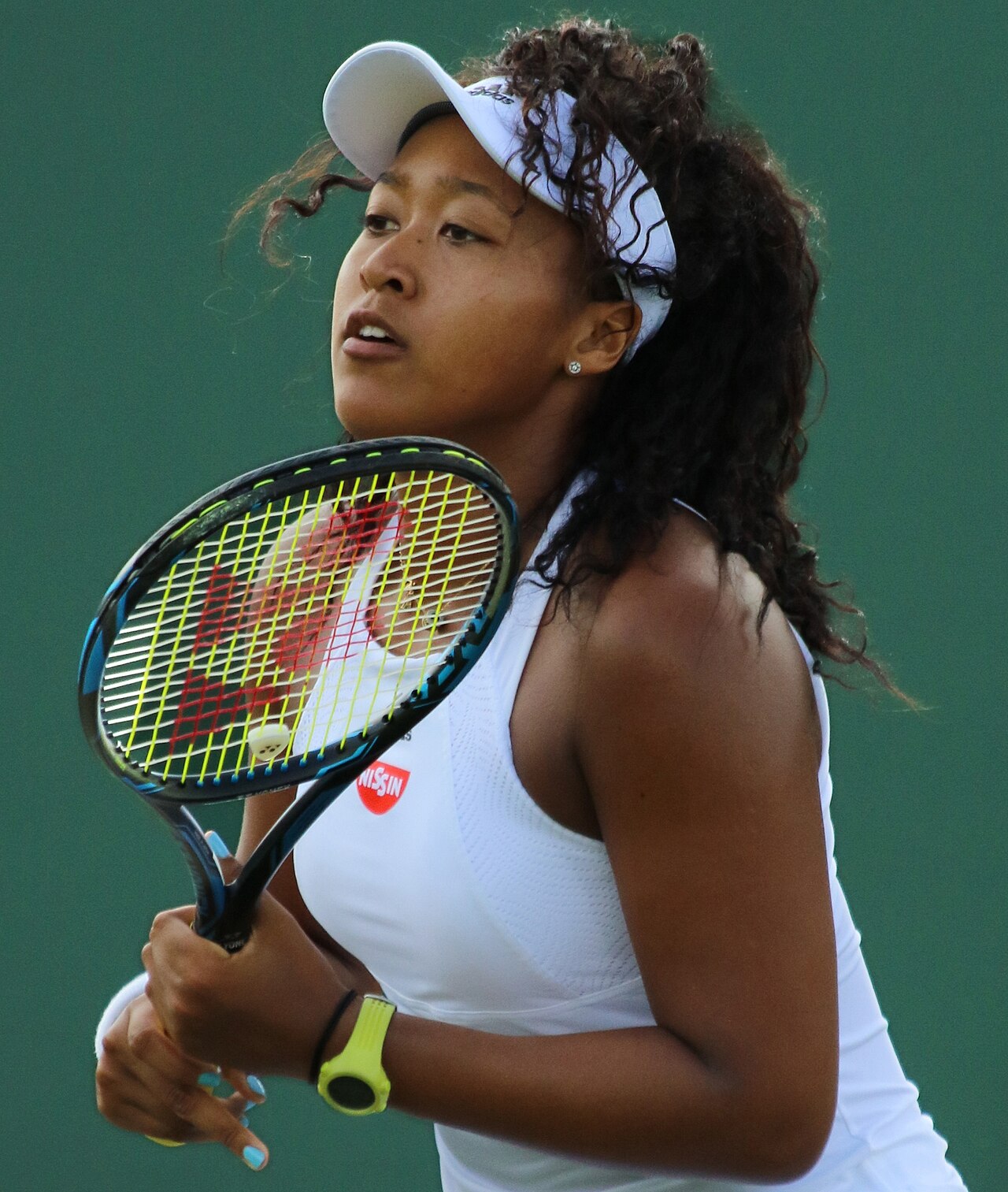
Service games supported the serve-and-volley
Two days later, Muchova beat Potapova 6–4, 6–2, hit eight aces and was not broken. The WTA’s description of the 97 mph serve and backhand volley belongs to a match in which she could score directly with serve as well as follow it in. The service delivery was also a decision about where to continue the point.
The same report noted frequent backhand slices against Potapova. Muchova finished with 24 winners and 11 unforced errors; Potapova had 16 and 29. Those figures do not assign every opponent error to the slice. They do show a varied attacking performance accompanied by a low error count of her own. The selection of shots and the accuracy with which points ended both deserve attention.
After three rounds, Muchova had won 49 of 65 net points. The separate serve-and-volley count was 19 points won in 23 attempts. Approaches made directly behind serve therefore did not account for the whole net record. Returns and moves made during a rally are other routes worth identifying while watching.
| Cut-off | Category | Won/attempts | Scope |
|---|---|---|---|
| After R3 | All net points | 49/65 | First three matches |
| After R3 | Serve-and-volley | 19/23 | Following serve |
| Paolini, R16 | All net points | 11/14 | That match only |
| After R16 | All net points | 60/79 | First four matches |
| After QF | Serve-and-volley | 29/36 | First five matches |
The rows cover different periods and different categories. The 49/65 total runs through round three; 60/79 includes Paolini. The serve-and-volley figures of 19/23 and 29/36 stop after the third round and quarterfinals respectively. Treating them as a ranking of competing success rates would mix matches and point types. The count becomes useful when its scope is retained.
Muchova’s own account gives those numbers a human setting. She told the WTA she did not want to compare herself with the previous year: after surgery, she had been unsure whether she would play again. She was grateful to be competing without pain. Before choosing a finishing shot, she had regained time on court to serve, move and play successive matches.
Paolini: the improvement extended beyond the net
The September 2 match began unevenly. Muchova said she was nervous, and conditions were windy. The WTA reported stumbles in her movement and hesitation about committing forward. She fell behind 1–3. A strong net record from the previous rounds did not remove the task of finding her timing that day.
Slices, drop shots and a reflex volley helped her break back for 3–3. The report also described a delicate drop volley later in a close-range exchange. Her range was being used within particular games: to recover the score and require different movements from Paolini. The timing of the choice made the skills meaningful.
At the same time, service points stopped leaking away. From 1–3 down, Muchova lost only five more points on serve, and just two in the entire second set. Follow the spectacular net exchanges alone and this foundation is easy to miss. Holding serve so firmly limited Paolini’s chances to keep pace while Muchova attacked in return games.
She won 11 of 14 net points in the match. Added to 49/65, that produced 60/79 for the tournament to that stage. The tentative opening and the subsequent improvement sit inside the same match figure. Alongside the 6–3, 6–3 result, the useful question is when the errors occurred and when the service games became secure.
Later, Muchova explained that winning points with aggressive down-the-line shots and net play gave her a good feeling, helping her trust her shots. Her description began with actions that had worked. When following that experience, the first few games spent searching for timing belong beside the passages in which everything flowed.

Pegula lowered the reply and asked for another ball
A 6–1, 6–4 quarterfinal win over Beatriz Haddad Maia made it five consecutive matches without dropping a set. In that match, Muchova won 29 of 37 first-serve points and conceded one break. Roland-Garros’s official semifinal preview recorded 29 of 36 serve-and-volley points won through the quarterfinals. Coming forward was a recurring choice in her run.
On September 5, she took the opening set against Pegula 6–1 and led 2–0 in the second. Afterwards, Pegula described the difficulty of finding rhythm against her. The next two games changed the exchange. Pegula saved a break point to hold for 2–1, then earned her first break with a dipping return that the advancing Muchova could not handle.
That reply directs attention beyond the decision to approach. A lower first ball asks the player moving in to make a lower contact, changing the sort of finish available. Pegula found a way to influence a route that had served Muchova well earlier in the tournament. The approaching player’s choice and the opponent’s response jointly shaped what came next.
Pegula also extended the rallies. According to the WTA, she saved a break point with a nine-shot exchange to hold for 3–2, then broke again in a ten-minute game. Muchova recovered to 4–4 before losing the set. There were new rallies and renewed resistance after the initial turn; reducing the match to one missed volley would lose that sequence.
Muchova eventually lost 6–1, 4–6, 2–6. Break opportunities remained in the deciding set, but she could not convert the recovery. Set the previous five matches’ net numbers beside the semifinal and the next viewing question becomes more precise. How often she comes forward matters, as does her handling of a lower first reply and the rally that may follow it.

| Date and opponent | Score | What to follow |
|---|---|---|
| 29 Aug — Osaka | 6–3, 7–6(5) | Return approaches versus hurried net visits |
| 31 Aug — Potapova | 6–4, 6–2 | The ball available after following serve |
| 2 Sep — Paolini | 6–3, 6–3 | Serve and movement settling after 1–3 |
| 4 Sep — Haddad Maia | 6–1, 6–4 | First-serve points protecting service games |
| 5 Sep — Pegula | 6–1, 4–6, 2–6 | Lower returns and longer rallies |
After the quarterfinal, Muchova recalled that February had not been an unbroken stretch of optimism. There had been difficult days when she could not move her arm or do much. She told the WTA that she tried to regroup and focus on the next available step towards recovery, supported by her doctors and team. Before the choices in New York came the work of getting back on court.
In her next match, move your attention back one ball from the final volley. Where did the serve or return leave the opponent? How high was the reply? Was there time to prepare the next contact? Include the points on which Muchova stayed back and used another slice. Her range becomes visible in finding occasions to use familiar skills.
In New York she had first expressed gratitude at being able to play again. Then came the choices within play: serving and moving in, following a return, taking pace off a ball that arrived near the net. The interest in watching her extends beyond one spectacular finish. The distance at which she wants to meet the next shot, and what an opponent sends back, keep changing.
Sources and further reading
- WTA — Healthy and in command, Muchova’s talent takes center stage at US Open
- Tennis.com — Karolina Muchova defeats Naomi Osaka at US Open after two sets of plot twists
- WTA — After injury, Muchova returns to US Open quarterfinals
- WTA — US Open semifinal preview: Can Pegula, Navarro set up an all-American final?
- Roland-Garros — US Open 2024: Women’s semi-finals
- WTA — Pegula’s breakthrough continues, edges Muchova to reach US Open final
- US Open — Teeming with talent and injury-free, Karolina Muchova looks to soar at 2024 US Open
- WTA — Muchova holds off Haddad Maia to reach second straight US Open semifinal
Keep reading
TENNIS TENSION LAB
Check your racquet’s tension today.
Get a high-precision tension reading in under 10 seconds. Tension Lab tracks changes from your first reading and helps you see when to restring.
- High-precision tension measurement. Ready in under 10 seconds.
- Track every change in feel. See the full story over time.
- Time to restring? Never leave it to guesswork.