Ripcord or Ripstick 100: one extra cross, different ports and a more connected feel?
Two 100-square-inch Prince frames share a listed strung mass, but differ in string layout, ports and balance. The useful review evidence goes beyond a power label.

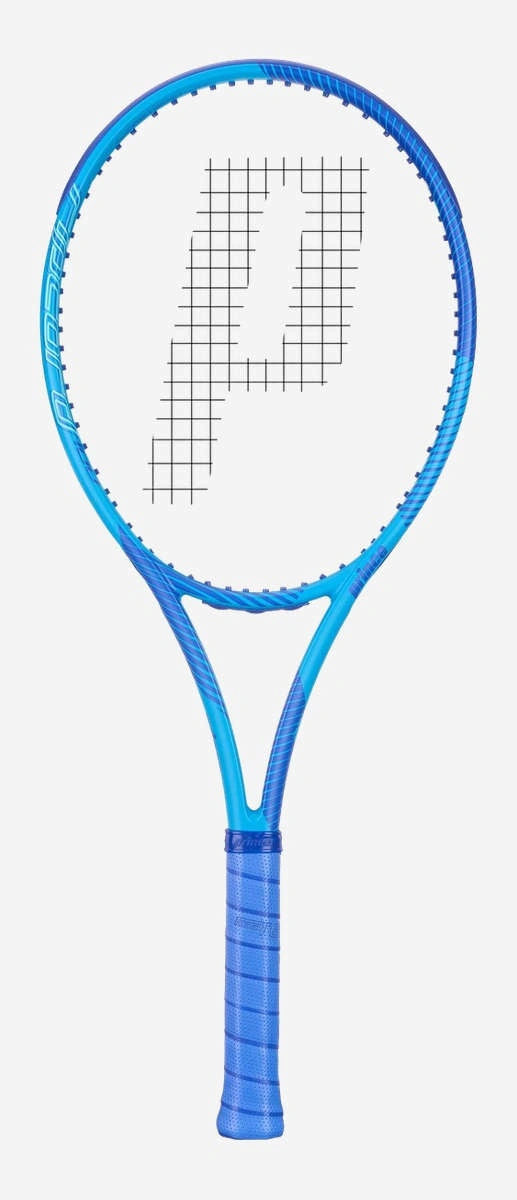
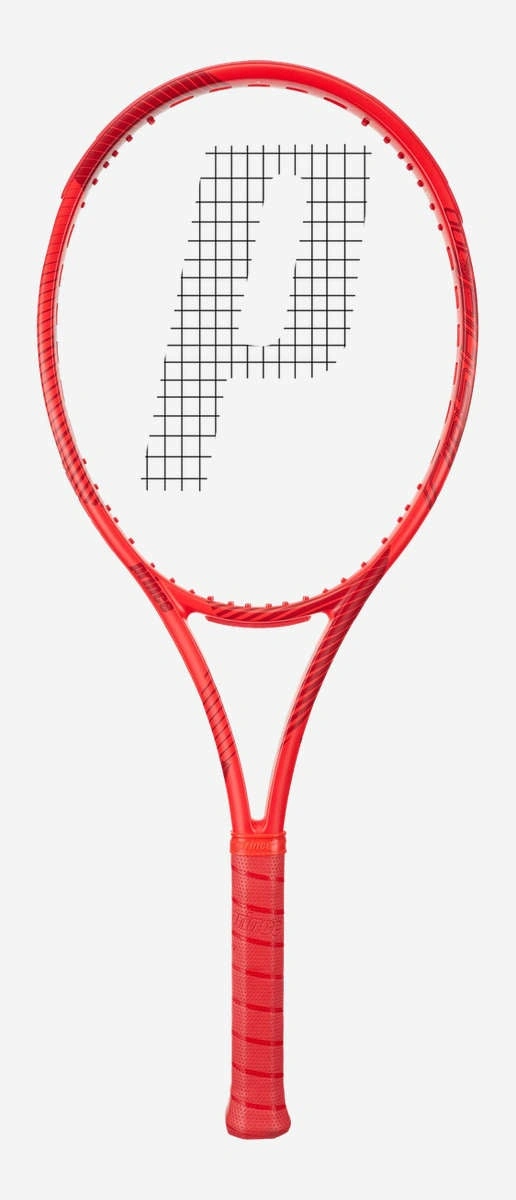
The 2025 Prince Ripcord 100 300g has sixteen mains and nineteen crosses. Its Ripstick 100 300g counterpart has sixteen mains and eighteen crosses, plus the large O-Ports around the hitting area. That is the first concrete distinction between two similarly named power-and-spin frames. The Ripcord uses conventional grommets, giving a buyer a different string support arrangement as well as one additional cross.
The product pages checked on October 18, 2026 list both at 100 square inches, 27 inches and 318 g strung. Their listed balances differ: 32.38 cm for Ripcord and 33.02 cm for Ripstick. Subtracting those page values gives 6.4 mm, with the Ripstick balance farther from the butt. Equal published weight therefore accompanies a different published balance, even before considering the ports.
Keep the two product tables separate
| Published specification | Ripcord 100 300g | Ripstick 100 300g |
|---|---|---|
| Head and length | 100 in²; 27 in | 100 in²; 27 in |
| Strung mass | 318 g | 318 g |
| Listed strung balance | 32.38 cm | 33.02 cm |
| Pattern | 16×19 | 16×18 |
| Beam | 27–25–22 mm | 27–25.5–22 mm |
| Listed swingweight | 322 | 326 |
| Listed stiffness | RA 68 | RA 67 |
The 300g label in the model name and the retailer’s 318 g strung entry describe different stages of the equipment. Preserve those labels when copying specifications into a purchase note. For an actual pair at a shop, ask for measurements in the same installed configuration, with strings and accessories identified. The table is a starting reference for the models, while the individual measurement describes the racquet that will go into the bag.
There is a source trap in the Ripcord review. Its prose repeatedly identifies a 16×19 frame with conventional grommets, but the bottom technical table gives 16×18, a 27–25.5–22 mm beam and swingweight 326, matching the Ripstick product listing. Here the Ripcord figures come from its dedicated product page, corroborated by Prince Taiwan; the review supplies attributed playing observations. Keeping these roles separate resolves the conflict without borrowing the wrong specifications.
The listed swingweights differ by four units and the stiffness values by one RA point. Those figures belong to the published product descriptions, not a matched-pair experiment performed for this article. The playtest also changes the whole frame, so its comments cannot isolate the effect of a single cross or the grommets. Use the table to identify what changes, then use the comments to choose the shots worth examining.
What the reviewers actually noticed
In Tennis Warehouse Europe’s July 2025 Ripcord review, Jason and Brittany described greater control relative to the Ripstick. Brittany found the power, spin and maneuverability broadly similar, while preferring the more connected response of the conventional-grommet frame. That is a narrower and more useful statement than declaring the Ripcord universally less powerful. Her preference concerned the way the response translated into confidence and shot placement.
Tiffani also preferred the conventional-grommet feel and reported easier access to serve power with Ripcord. This is particularly useful when the Ripstick’s power positioning attracts a buyer: a product’s range description and a reviewer’s ability to generate a particular shot answer different questions. In her comparison, the more familiar response helped on serve. Record that as Tiffani’s experience, with serving as the relevant task.
Oak supplied a useful counterweight to the positive control comments. He wanted more pocketing at the net and more directional precision on returns. He described reliable depth, yet also more misses wide on those returns. Depth and sideways accuracy are separate outcomes. A racquet that sends the ball deep enough can still require an adjustment in timing or direction, especially when the incoming ball leaves little preparation time.
These observations suggest three distinct questions: does the stringbed response feel clearer, does the serve come more easily, and do returns stay inside the chosen corridor? A single overall “control” score would blur them. If your present difficulty is wide returns, Oak’s comment is more relevant than someone else’s praise for baseline depth. If your difficulty is serve acceleration, Tiffani’s comparison points to a different part of the session.
Turn the comparison into a useful purchase session
Start by identifying the exact 2025 300g versions. Ripcord is also listed by Prince Taiwan with other weight options, and older Ripstick models appear in retail listings. Put the complete name, year and weight option on the booking or order. Ask the shop to describe the string model, diameter and installation for each demo so a strong preference can be discussed with the setup in view.
- For returns, choose a crosscourt corridor and count wide misses separately from balls beyond the baseline. This follows the difference between direction and depth in Oak’s observations.
- For serves, keep the target and intended effort similar while noting which response lets you reproduce placement. Tiffani’s easier power was a serving observation, so examine that stroke directly.
- For volleys, include both a firm redirection and a short touch shot. Record the feel of the contact and the landing spot separately, especially if pocketing is the feature you want.
- After the session, write one specific preferred response and one adjustment required for each frame. A note tied to a shot is easier to use than a general rating.
The accompanying Tennis Warehouse Ripstick video provides a closer look at the 2025 model and the retailer’s review presentation. Use it to see the product being discussed alongside the written comparison. Its publisher also sells racquets; the reviewer perspective is part of the source identity. The specifications above remain tied to the checked product pages rather than to an impression of how quickly a frame moves on video.
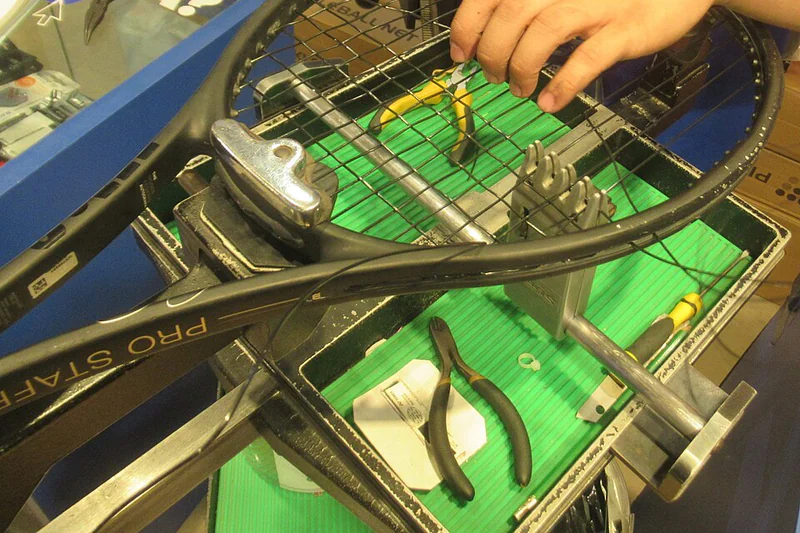
For maintenance, give the stringer the full model and pattern. Ripstick’s O-Ports and the Ripcord’s conventional grommets are visibly different routing environments, so order replacement parts for the exact frame. Preserve the factory pattern and follow the applicable manufacturer instructions. A shared Prince name, 100-square-inch head and 300g label are too broad to identify the correct protective parts.
The Ripcord case is strongest for someone specifically interested in the conventional-grommet response and the 16×19 layout described by its reviewers. The Ripstick retains the O-Port and 16×18 combination, with a more headward listed balance at the same published strung mass. Choosing between them becomes clearer when the decision names a stroke and a preferred response: return direction, serve delivery or touch at net, supported by the exact model specifications.
Sources and further reading
- Tennis Warehouse Europe — Prince Ripcord 300g Racket - Tennis Warehouse Europe
- Prince Taiwan — TXTZ Ripcord 100 2025 Demo — Prince Taiwan product specifications
- Tennis Warehouse Europe — Prince Ripcord 100 300g Racquet Review
- Tennis Warehouse Europe — Prince Ripstick 100 (300g) Racket - Tennis Warehouse Europe
Keep reading
Both racquets say 305 g. Why does one keep arriving late?
Identical listed weight does not mean identical swingweight. Read mass, balance and rotational resistance together before choosing a new frame or matching a second racquet.
8 min read
Blade 98S V10: eighteen mains, only sixteen crosses
Wilson’s 18×16 Blade 98S differs from the 18×20 Blade in cross count, frame mass and balance. Here is what those differences change when choosing a stringbed.
7 min readTENNIS TENSION LAB
Check your racquet’s tension today.
Get a high-precision tension reading in under 10 seconds. Tension Lab tracks changes from your first reading and helps you see when to restring.
- High-precision tension measurement. Ready in under 10 seconds.
- Track every change in feel. See the full story over time.
- Time to restring? Never leave it to guesswork.