A 200 m reel is not 16.7 string jobs: buy the cuts you can actually use
A lower price per metre helps only when the remaining string becomes usable jobs. Count the pieces before comparing the prices.
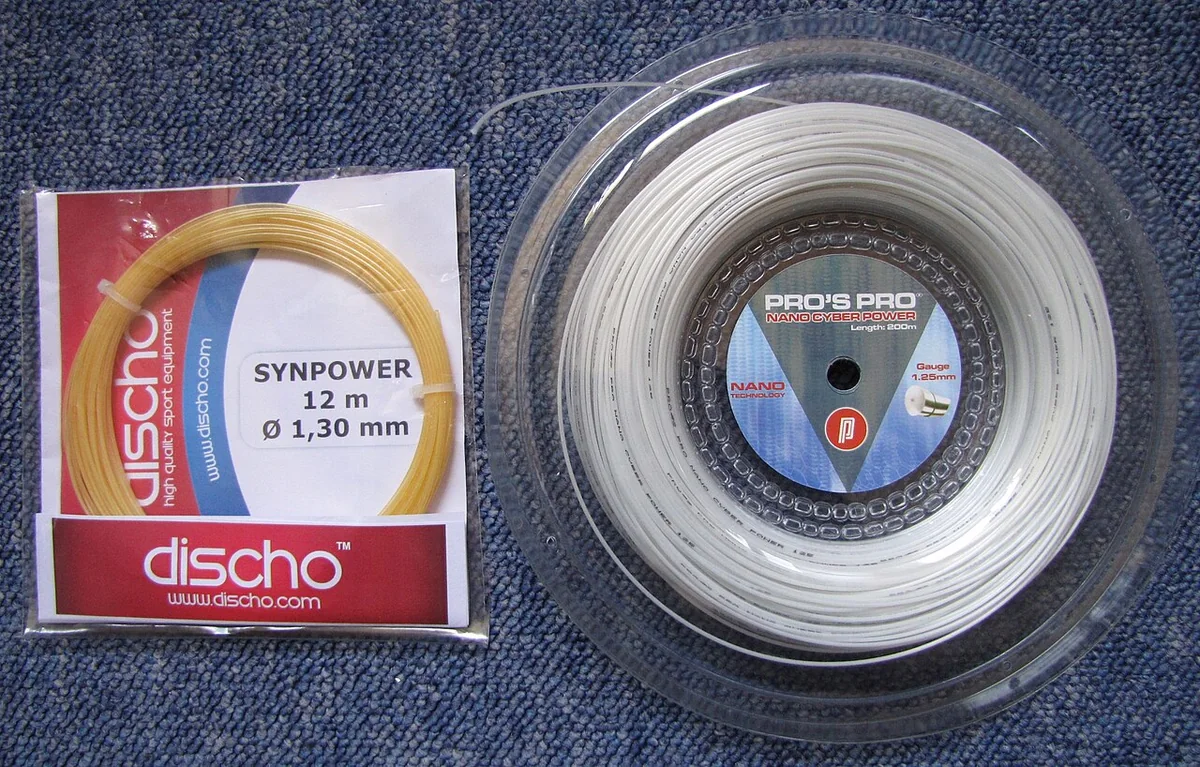
A 200 m reel cut into 12 m allocations provides sixteen complete allocations and leaves 8 m. The calculator’s 16.67 is useful arithmetic, but only sixteen full 12 m cuts are available. That distinction can change a string purchase. Before comparing a set with a reel, decide how much material the stringer allocates to each job and what useful purpose any remaining length will have.
The current packages also differ in how the material arrives. Grapplesnake lists a Tour M8 set at 12 m and a reel at 200 m. Solinco lists Mach-10 in a 12.2 m set and a 200 m reel. Toroline describes one O-TORO package as two half sets, each 6.7 m, for one racquet. The last package contains 13.4 m in total, already divided into two pieces.
Length and piece count belong in the same shopping note
| Product | Published quantity | What to record |
|---|---|---|
| Tour M8 set | 12 m | One set allocation |
| Tour M8 reel | 200 m | Cuts taken from a reel |
| Mach-10 set /reel | 12.2 m /200 m | Chosen package size |
| O-TORO package | 2 × 6.7 m | Two pre-cut half sets;13.4 m total |
Two half sets of the same product can be used for mains and crosses while retaining the same string model throughout the racquet. A hybrid describes a choice of different strings for those roles. Package piece count and string selection are therefore separate decisions. If you want to use a particular two-piece installation, give the stringer the exact frame and package information before deciding that the available pieces fit the plan.
The necessary allocation includes the work needed to complete the installation, including the lengths the stringer needs for the chosen machine and finishing method. Ask for the frame’s approved pattern and the actual cutting plan. Head area alone is an incomplete shopping shortcut: two racquets can share a nominal head size while using different string counts and hole layouts. A documented plan turns a package length into a usable quantity.
For a reel, keep a simple cutting record: date, frame, gauge, length removed and remaining length. For pre-cut packages, record the length of each separate piece. This avoids treating all leftover material as one continuous string. A remaining piece may be useful for a later cross-string job if the required length fits; write that intended use beside its measured length instead of counting it as a completed full installation.
Three cutting examples produce three different unit costs
Grapplesnake USA displayed Tour M8 at US$15.95 per 12 m set and US$214.95 per 200 m reel when checked on October 18, 2026. The following table uses those product prices only. Its 11 m, 12 m and 13 m allocations are calculation scenarios to replace with your stringer’s requirements; they are not recommended cutting lengths for a particular frame. Tax, delivery and stringing labour belong in a separate cost line.
| Allocation per job | Complete allocations | Remaining length | Reel price per complete allocation |
|---|---|---|---|
| 11 m | 18 | 2 m | US$11.94 |
| 12 m | 16 | 8 m | US$13.43 |
| 13 m | 15 | 5 m | US$14.33 |
The calculation divides 200 by the chosen allocation, takes the whole-number result and divides the reel price by that number. The remaining length is the reel length minus the complete cuts. In the 12 m example, sixteen individually purchased Tour M8 sets cost US$255.20, compared with US$214.95 for the reel. The product-price difference is US$40.25, with 8 m still recorded separately on the reel side.
That example also gives a purchase threshold. Thirteen sets cost US$207.35, less than the reel. Fourteen sets cost US$223.30, more than the reel. If the same 12 m allocation fits every planned job, fourteen completed uses is the first whole-job count at which the displayed reel price is lower than buying that many sets. The sixteen-job capacity and the fourteen-use price threshold answer different budgeting questions.
Spread the US$40.25 product saving across the sixteen jobs in the 12 m example and it is about US$2.52 per job. Ask the shop whether its labour charge changes when you supply your own string. Put that quoted difference beside the material saving, then include delivery in the same currency. This turns the catalogue comparison into a budget for the actual service you intend to buy.

A reel commits you to a particular product and gauge
Tour M8 is offered in 1.25 and 1.30 mm. Mach-10’s manufacturer lists four gauges: 1.15, 1.20, 1.25 and 1.30 mm. A reel purchase selects one of those products and diameters for repeated use. If you are still alternating gauges or changing the partner string in a hybrid, the number of future jobs using that exact reel may be smaller than your total restring count.
Use your last few installation records to estimate the jobs you actually expect to repeat. Count full beds and use as the cross string in a fresh hybrid separately, because they consume different amounts. If two players will share a reel, confirm that both intend to keep the same model and gauge, then record each withdrawal. The reel’s remaining stock should be understandable without relying on whoever last used it to remember the cut.
The O-TORO package offers another planning example. Its two 6.7 m pieces can be considered separately when planning a hybrid, provided each role’s required length fits. The unused half should retain its product and gauge label. That is a different inventory situation from buying a continuous 200 m reel, even though both can supply string to more than one future combination.
Keep material cost separate from useful playing time
For a shared purchase, write down how many jobs each person expects to use before adding the totals. Keep a separate column for confirmed setups and setups still being tried. The fourteen-use example becomes a useful commitment check only when those uses belong to the same product and gauge; otherwise several small piles of unused stock can replace the apparent saving.
The tables above price material allocations. A player who changes setups because placement or feel deteriorates may have a different restring rhythm from one who consistently breaks strings. Record playing time and the reason for replacement next to the material cost. Those notes let you compare the total routine you are buying, including labour and how often the racquet goes back to the stringer.
Start with a set when the exact product and gauge are still under review. Move to a reel when the expected repeated jobs justify the upfront purchase and the cutting plan makes the usable quantity clear. The useful question is how many installations you expect to complete with this particular string, rather than how impressive the advertised metre count looks.
Sources and further reading
Keep reading

TENNIS TENSION LAB
Check your racquet’s tension today.
Get a high-precision tension reading in under 10 seconds. Tension Lab tracks changes from your first reading and helps you see when to restring.
- High-precision tension measurement. Ready in under 10 seconds.
- Track every change in feel. See the full story over time.
- Time to restring? Never leave it to guesswork.