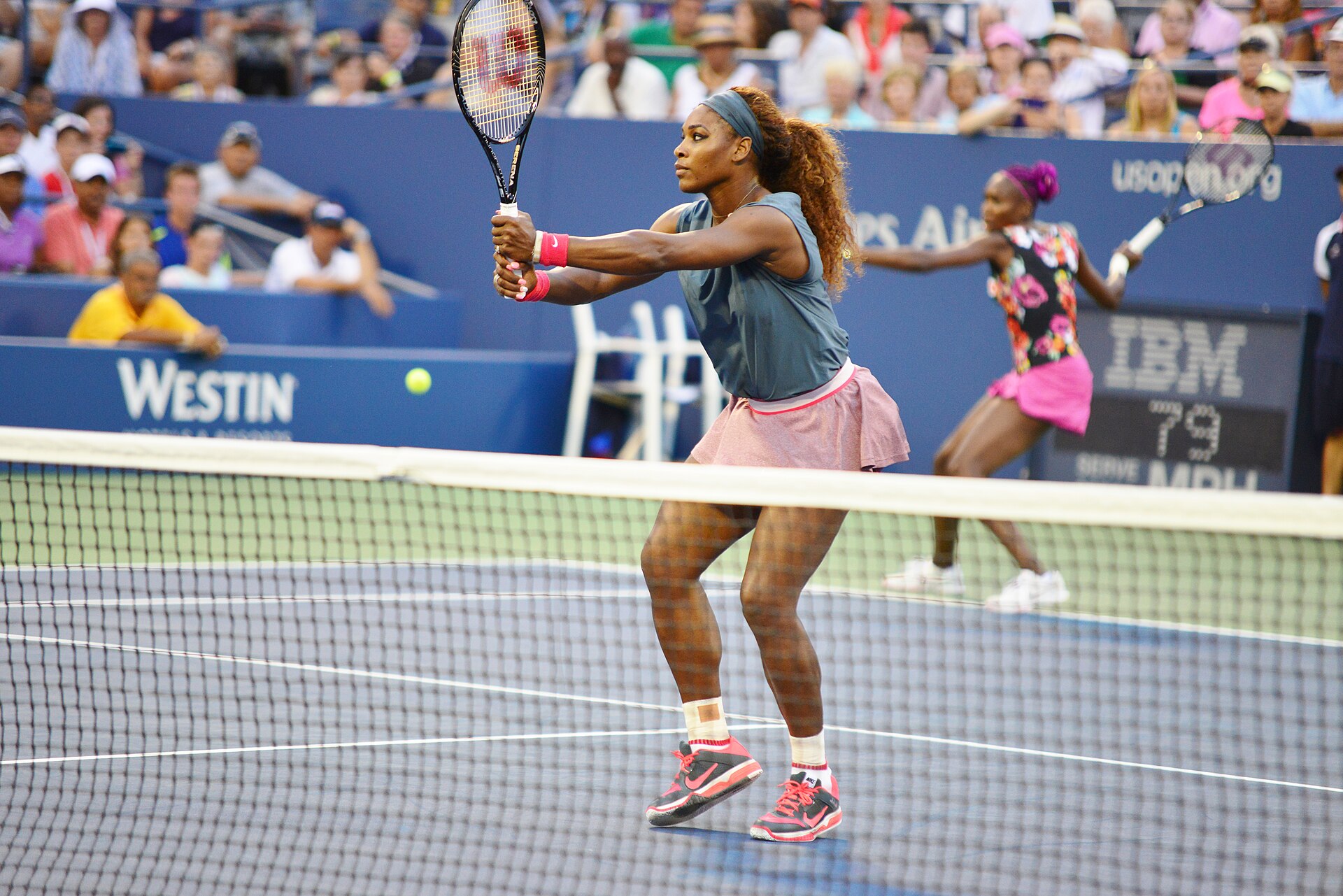
Buszard and colleagues’ 2020 experiment asked 25 children to alternate between scaled tennis equipment and full-sized equipment. A smaller racket and low-compression ball produced greater forehand accuracy and less variation in swing time. The researchers also observed coordinated changes in upper-arm and forearm movement that helped regulate the distance from shoulder to racket.
The participants averaged 7.6 years of age and attended a junior tennis programme. Children with more than two years of experience or any competitive tennis experience were excluded. In an indoor laboratory, they hit 20 shots per condition toward a target ten metres away. A central 0.5 by 0.5 m square earned ten points, with progressively lower scores farther out. The task emphasized accuracy over speed.
The scaled condition paired a 21-inch racket with a red low-compression ball; the full-sized condition paired a 27-inch racket with a standard yellow ball. Condition order was counterbalanced, and children received three familiarisation shots before each condition. A coach supplied underarm feeds, repeating any feed that landed outside the designated area. The target and feeding procedure provided a common basis for the equipment comparison.
A 22-camera system tracked reflective markers to measure arm angles and racket position. In the scaled condition, variation in the forearm and upper arm was negatively correlated, at r = −0.67. Adjustments in one segment accompanied adjustments in the other, supporting control of the overall hitting distance. With full-sized equipment, children more often restricted the upper arm and released it shortly before impact.
The coaching implication is to observe the target outcome and timing before demanding an identical joint position on every swing. When elbow position varies slightly while shots still reach the same area, consider whether the adjustment helps the player meet the ball. Hand and wrist data were excluded because of marker-tracking problems, so the study offers limited grounds for prescribing a particular wrist action.
A practical exercise proposed here starts with a ball and racket the child already handles comfortably. Record target hits, net errors and long errors across ten shots. Then move the target slightly while keeping the equipment fixed, observing whether the child can send the ball there while maintaining balance. If equipment changes, repeat the same task to give the comparison a consistent reference.
Useful coaching observations include whether preparation becomes rushed, whether the player reaches contact comfortably and whether recovery leaves them ready for the next ball. Assessing the shot and the recovery together allows room for adaptive movement solutions. The study’s combination of better accuracy and steadier swing timing provides a reason to value that adaptability during a simple hitting task.