How do you join LTA Free Park Tennis without your own racket?
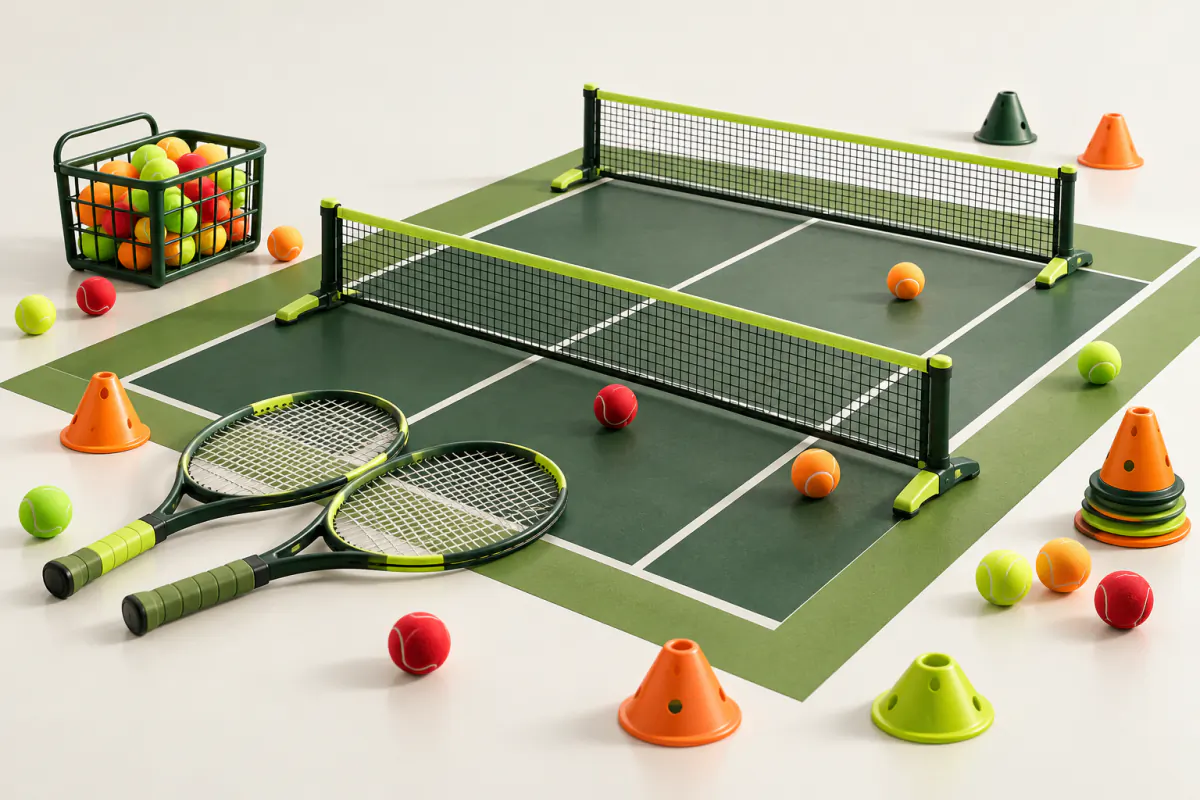
Free one-hour weekend group sessions include racquets and balls. Book with an LTA Advantage account; under-13s attend with an adult.
Choose countable outcomes: target hits, successful returns or balanced recoveries. Compare repeated tasks and the next session before changing distance or pace.
Discuss this →
Free one-hour weekend group sessions include racquets and balls. Book with an LTA Advantage account; under-13s attend with an adult.
A 2023 study followed 60 children through eight weeks of coaching and a two-week retention interval, measuring down-the-line and crosscourt accuracy.
An eight-child equipment comparison and a 14-beginner coaching study measured different outcomes. Use rally success and later repeatability to plan progression.
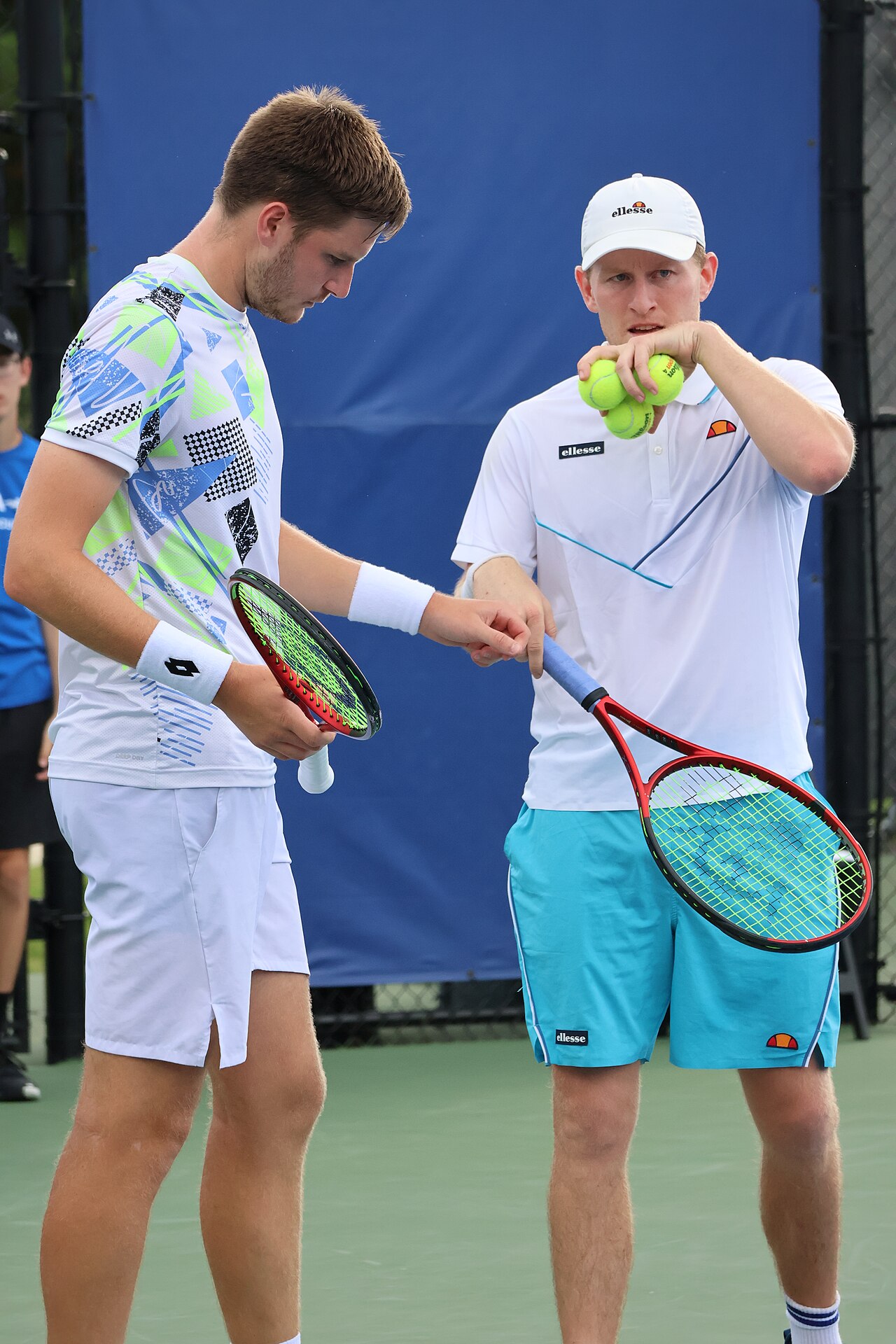
Agree the first ball, target area and rotation so four players with different serving skills can practise together, then progress from feeds to actual serves.
LTA’s Belts and +/- five formats give otherwise familiar practice points a different objective.
Use the return and the opponent’s next contact to decide whether to advance, hold or retreat.
Use four corners and a centre marker for movement, stopping and recovery; progress from a known sequence to colour cues and then a rally with a ball.
Use USTA’s progression from toss to abbreviated motion and full action, then add a target and spin. Compare contact and placement as speed develops.
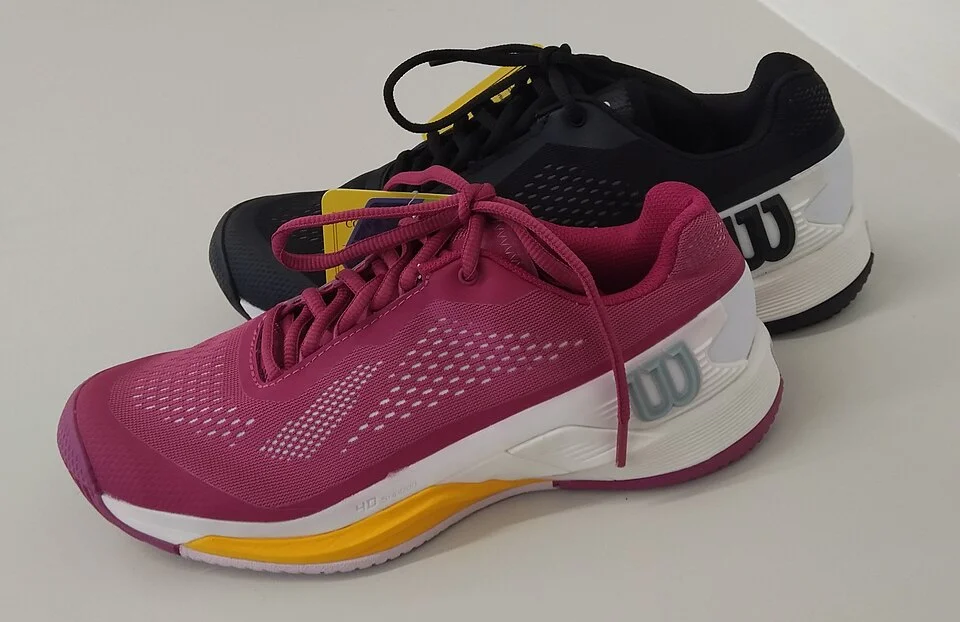
Inspect cushioning, stretched uppers and lateral hold as well as outsole holes. Connect forefoot, toe and medial-upper wear with movement on court.
WTA’s October 9 interview follows the decisions after Toronto qualifying defeat: skipping Cincinnati, training in Florida and then beating Svitolina in Beijing.
A trial in 35 junior boys measured planned movement, reactive agility and sprinting. Its results show why the exact task matters.
USTA’s one-against-two game uses different court areas to keep all three players involved.
A 2020 forehand experiment found better accuracy and more consistent swing timing with scaled equipment, alongside coordinated variation between arm segments.

Ben Shelton’s backhand helped him progress in the summer of 2026, yet Alexander Zverev found it a useful target in the US Open final. Improvement and vulnerability can coexist.
6 min read
Catching an abandoned service toss is different from swinging and missing. Know the rule, keep the match moving, and practise the decision before a double fault makes it expensive.
7 min read
Pongbot, Acemate and Tero discussions reveal the questions a specification sheet misses: usable drills, app dependence, transport, repair and the real return conditions.
8 min readWhy experienced players lose to defensive retrievers—and how to change the geometry of the point without gambling on winners or rushing the net.
7 min read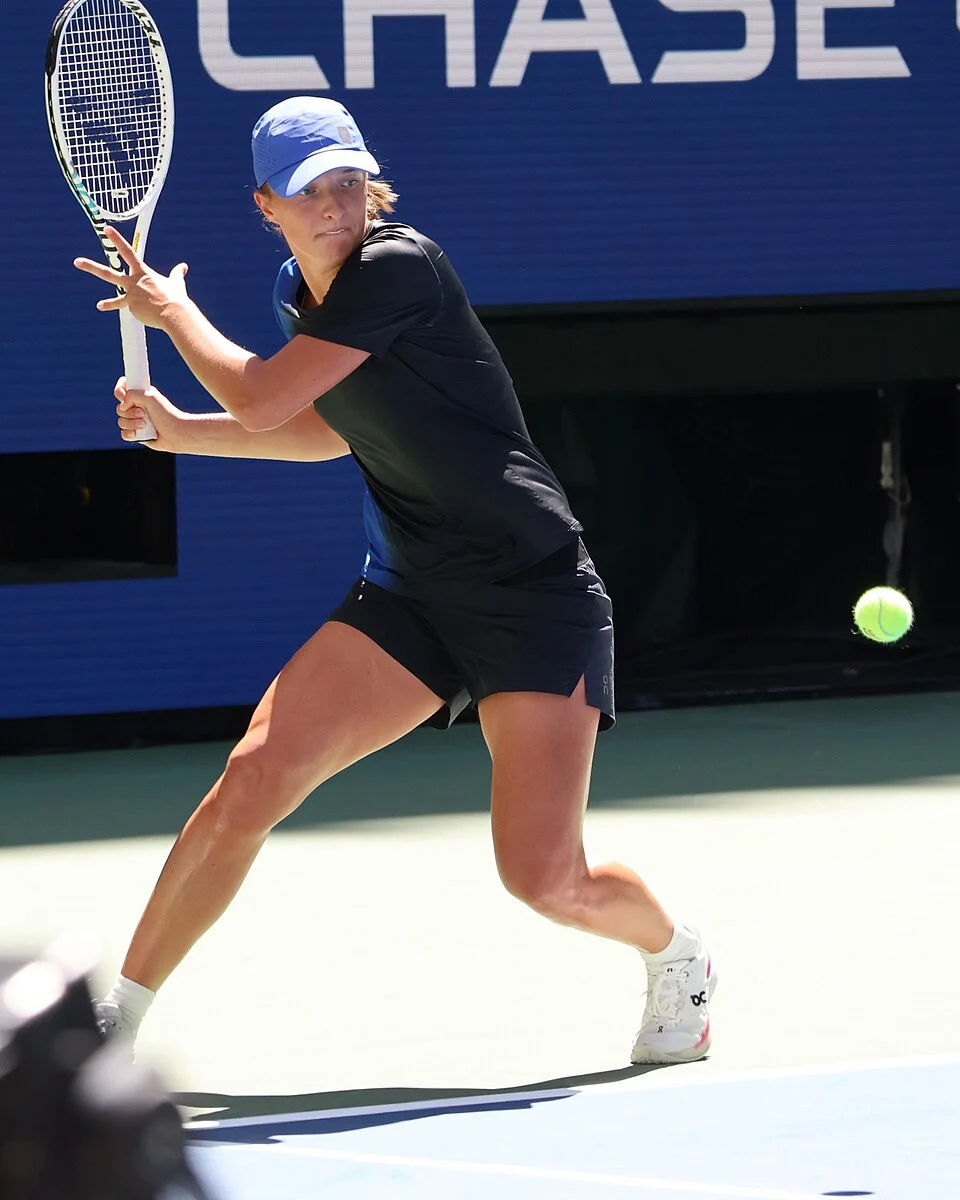
Świątek said the extended rallies in her Beijing opener helped her feel the court and ball. What experienced players can learn before blaming unfamiliar conditions on their strings.
7 min read
Thomas Hogstedt’s account of early practice reveals a practical advantage: control of a scarce court. What experienced players can take from the Sharapova story without copying a champion’s daily timetable.
8 min read