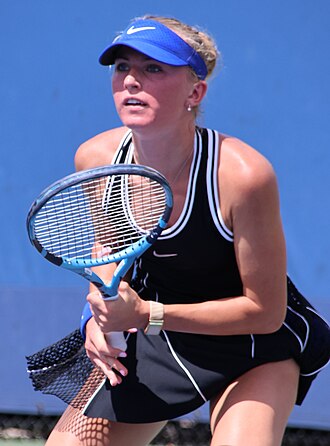
Laura Samson: from W15 wins to a WTA semifinal in one week
Her first WTA main draw changed the scale of the opposition. The useful story is how a different task arrived with every round.

Before Prague in July 2024, Laura Samson had not won a match above ITF W15 level. By Wednesday, the 16-year-old wild card was a WTA semifinalist. The jump is striking, but “unknown teenager appears from nowhere” is a poor description of it. She arrived with junior achievements and professional wins already behind her. What changed was the level at which she could now put those skills to work.
This was her first WTA main draw and her eleventh professional tournament. Follow the four matches rather than stopping at the breakthrough headline: an emphatic opening win, a comeback against a seed, a different problem against a left-hander, and a semifinal that ended in retirement. Together they show how quickly the questions can change when a young player enters a new level.
Three kinds of record, three different meanings
Samson had won the 2023 Wimbledon girls’ doubles title with Alena Kovačková. In June 2024 she reached the Roland-Garros girls’ singles final, where Tereza Valentová won 6–3, 7–6(0). ITF’s report before that final describes Samson coming through three consecutive three-set matches. Junior tennis had already given her experience of long, competitive contests, even though her senior record was still short.
Those achievements belong in separate columns. A junior doubles title recognises success with a partner in an age-group competition; a junior singles final records an individual run. Her three W15 titles in 2024 were professional singles results. Neither label should be inflated into a WTA title, and none should be erased by calling Prague her first experience of meaningful competition.
| Round | Result | Next challenge |
|---|---|---|
| First round | Beat Tara Wurth 6–0, 6–2 | Face the second seed |
| Second round | Beat Kateřina Siniaková 1–6, 7–5, 6–3 | Adapt to a different style |
| Quarterfinal | Beat Oksana Selekhmeteva 2–6, 6–3, 7–5 | Prepare for another round |
| Semifinal | Retired against Magdalena Fręch at 6–3, 0–6, 2–4 | The tournament ended here |
The first win opened a door; it did not answer every question
Samson’s 6–0, 6–2 opening victory over Tara Wurth made her the first player born in 2008 or later to win a WTA main-draw match. WTA’s first-round account recorded three W15 titles earlier that season. The surprise therefore lay in the rapid transfer to a larger stage, rather than in the discovery that she could win tennis matches at all.
For anyone moving into a stronger league, that distinction is useful. A clean first score can confirm that familiar strokes remain available, while leaving unanswered how they respond to heavier returns or unfamiliar trajectories. After an easy win, retain the patterns that worked and leave room to observe the next opponent. The draw has supplied another test, not a certificate that every future match will resemble the opener.
Siniaková made the next ball harder
The second-round opponent was second seed Kateřina Siniaková, Samson’s first opponent ranked inside the Top 200. Samson lost the opening set 1–6. WTA’s account identifies a developing option near the net, where she won 12 of 19 points across the match. She eventually recovered to win 1–6, 7–5, 6–3.
The turnaround included another setback. Serving for the second set at 5–4, Samson was broken without winning a point, then broke again and completed the set at her next attempt. In the third she came back from 1–3 by winning five games in succession. Her useful net play and those score changes make the match worth examining beyond its upset label.
When watching the approaches, follow the entry ball as closely as the volley. Was the opponent stretched before Samson moved in? Did the first volley finish the point or require another recovery? A net-points total describes an outcome; the sequence shows whether coming forward created a manageable exchange. These are viewing questions, not a claim that every successful approach had the same construction.
A bigger name beaten, a different problem waiting
Selekhmeteva’s changes of spin and pace posed a different quarterfinal problem. Samson lost the first set again, then won 2–6, 6–3, 7–5. WTA recorded stretches of five consecutive service breaks in both the second and third sets. The match was unstable on both sides of the net; a break of serve did not establish a lasting order.
This is a valuable correction to the idea that beating the higher-profile opponent makes the next round easier. Pace, bounce height and direction can create different timing demands. A useful comparison asks whether contact is late because the incoming ball is faster, because its bounce is less familiar, or because preparation begins at the wrong cue. Those possibilities lead to different adjustments, even when the resulting error lands in the same place.
Samson converted her seventh match point. Her first two chances came while serving at 5–4; Selekhmeteva answered them with a drop shot and a forehand winner. Samson later regained the lead and had to save a break point before finishing. The seven refers to chances she held, not seven opponent match points saved. The distinction keeps the score’s meaning intact.
The semifinal belongs in the account
On 25 July, Samson won the first set against Magdalena Fręch but retired with the score at 6–3, 0–6, 2–4 from her perspective. The official tournament report records Fręch advancing. Samson’s week ended in the last four, not with a final appearance or a trophy. The retirement is part of the result; the match report alone is not a basis for reconstructing a medical diagnosis or deciding which earlier effort caused it.
A development review can therefore retain both the progress and the incomplete ending. She had successfully solved three opponents at a level where she had never previously won. She also did not complete the tournament’s next match. Keeping both facts visible is more informative than making the whole week either an inevitable rise or a disappointment.
What “youngest since” actually compares
WTA described Samson as the youngest tour semifinalist since Coco Gauff’s 2019 Linz run, and the youngest to reach that stage in her first WTA main draw since Donna Vekić in Tashkent in 2012. These are dated comparisons of age and tournament stage. They make the achievement distinctive without assigning her the career that followed for either of those players.
For a young prospect, a better next question concerns repeatability across different match-ups. Which returns survive an opponent’s stronger first serve? Which attacking opportunity remains available against a slower ball? Can a useful approach still be built when the opponent gives less room? A week of results identifies reasons to keep watching; the next opponents provide the evidence for how those answers develop.
Turn the step up into a small observation task
In a practice set, choose one pattern you normally trust, such as a deep return followed by a cross-court ball. Ask a partner to alternate the pace or height of the first ball while keeping ordinary scoring. Record where the pattern stops being comfortable: preparation, contact, the next recovery or the decision to attack. This is our practice suggestion, not Samson’s reported training programme.
At the next session, work on that transition before adding another spectacular shot. If the return survives but recovery is late, keep the return and change the movement after it. If the short ball arrives lower, reconsider the approach instead of forcing the usual finish. Samson’s Prague debut is interesting for this reason: established skills met new questions, and her answers changed from round to round.
Sources and further reading
- WTA / Alex Macpherson — Prague milestones: Breakthrough wins for Samson, Shibahara and Von Deichmann
- WTA — Sixteen-year-old Samson stuns Siniakova to make Prague quarters
- WTA — Samson becomes youngest WTA semifinalist since Gauff in 2019
- Livesport Prague Open — Linette stuns Noskova, Samson retires
- WTA — Livesport Prague Open 2024 singles draw
- ITF / Courtney Walsh — Samson v Valentova: Roland Garros set for first all-Czech junior final
- Roland-Garros / FFT — Roland-Garros 2024 : le récap’ des champions !
Keep reading
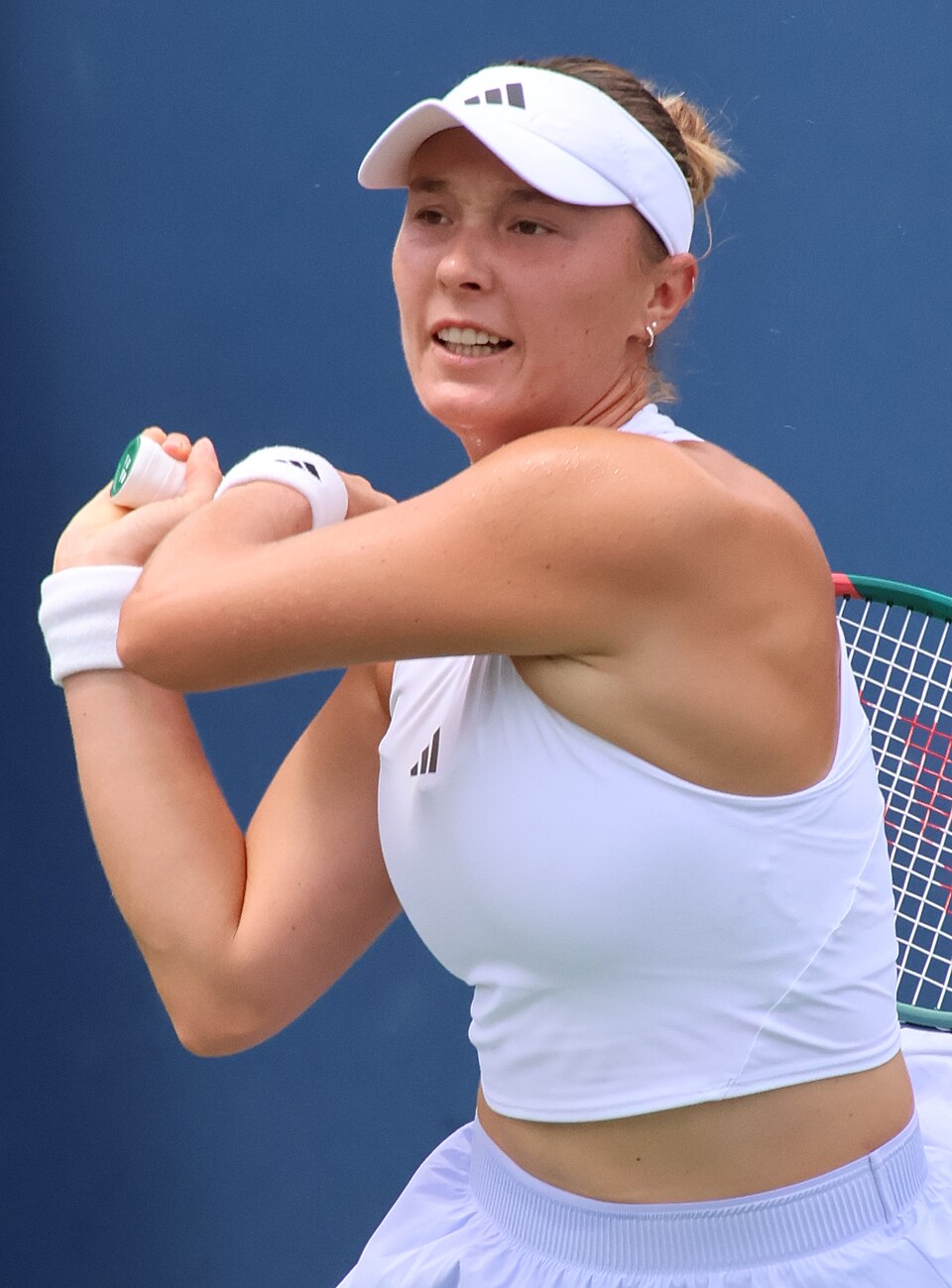
Alina Charaeva beat the world No. 1. The revealing part came after she lost the lead.
Charaeva’s Beijing win over Rybakina began with a lead she could not keep. Follow the comeback, her earlier milestones and three sequences worth watching.
8 min read
Marta Kostyuk in Stuttgart: five saved, eight needed, then a different test
Kostyuk saved five match points against Zheng, needed eight against Gauff and rebuilt a lost lead against Vondroušová. Three pressure patterns from Stuttgart 2024.
7 min read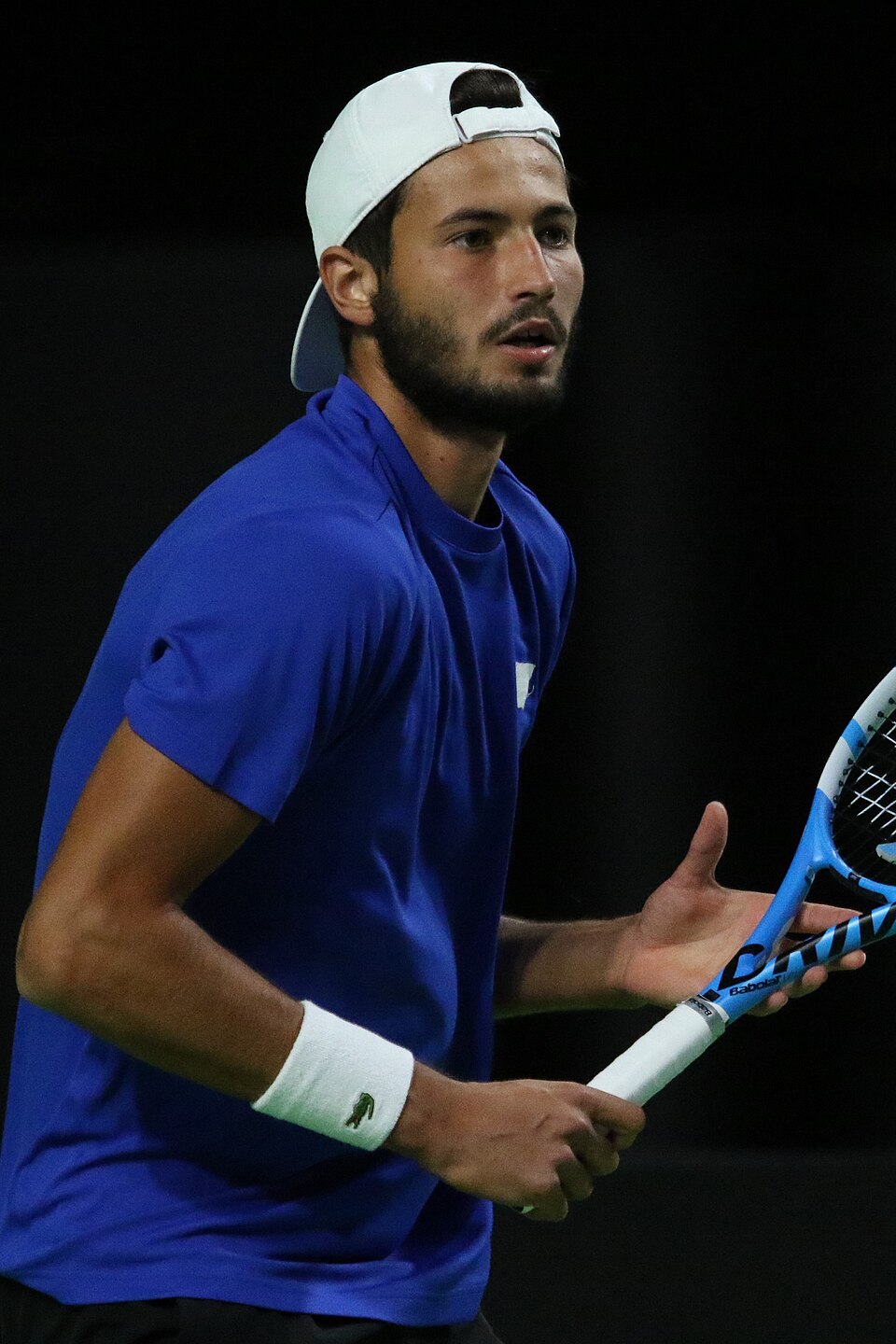
Titouan Droguet: 21 aces opened the door. A lob kept the next one open.
Droguet’s first ATP semi-final in Montpellier combined powerful serving, hard-won tie-breaks and a revealing response from Auger-Aliassime.
8 min readTENNIS TENSION LAB
Check your racquet’s tension today.
Get a high-precision tension reading in under 10 seconds. Tension Lab tracks changes from your first reading and helps you see when to restring.
- High-precision tension measurement. Ready in under 10 seconds.
- Track every change in feel. See the full story over time.
- Time to restring? Never leave it to guesswork.