Marta Kostyuk in Stuttgart: five saved, eight needed, then a different test
The numbers describe different jobs: stay alive, create another finishing chance and keep a vanished lead from swallowing the next set.
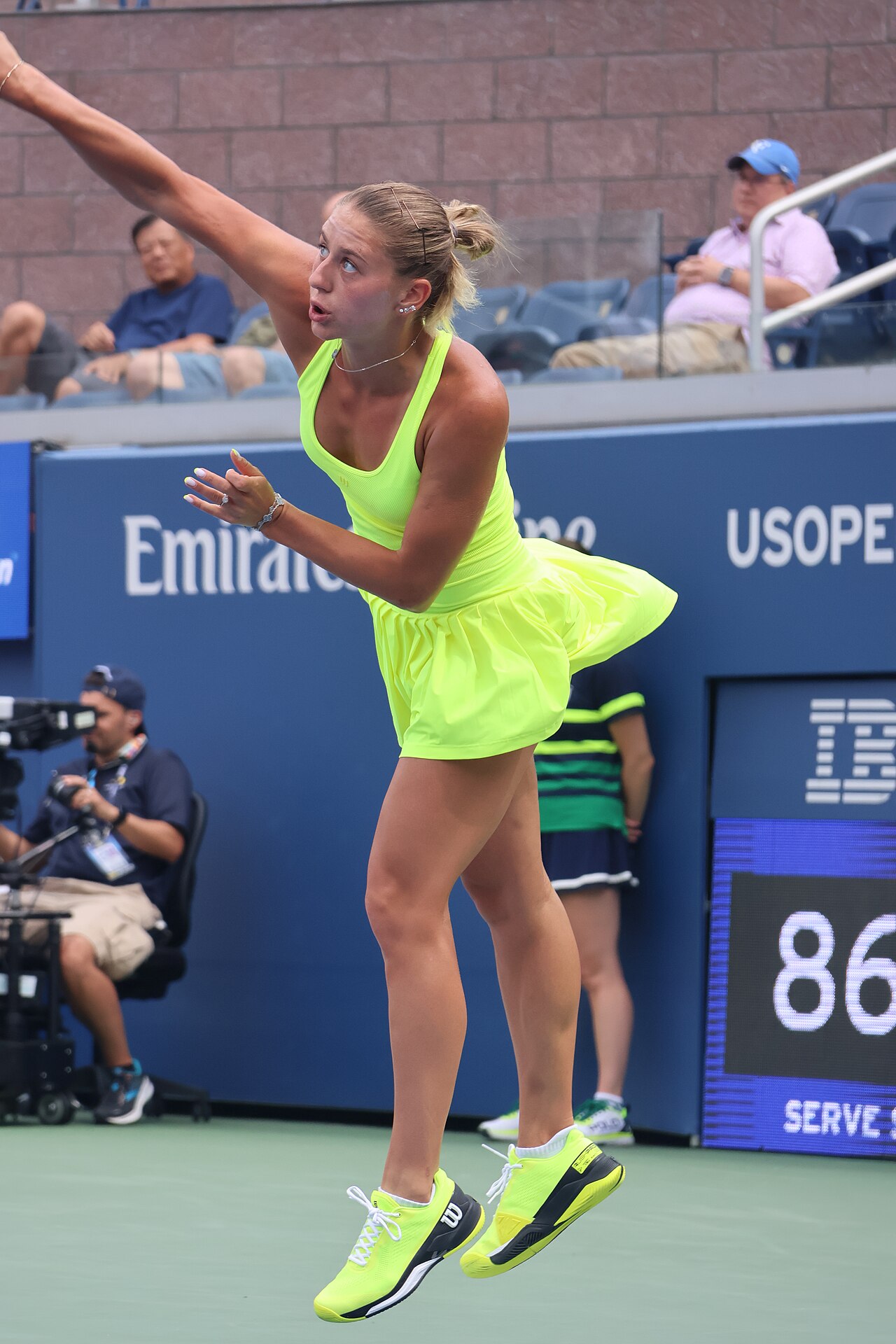
Five match points saved on Thursday. Eight match points needed on Friday. A 5–1 lead that disappeared on Saturday. Marta Kostyuk’s run to the 2024 Stuttgart final offers three very different ways for a score to become uncomfortable. Calling all of them a comeback loses the distinction that makes the week worth studying: defending an opponent’s chance, rebuilding your own chance and reorganising after an advantage has gone.
The three wins came on consecutive days against Zheng Qinwen, Coco Gauff and Markéta Vondroušová. The published WTA and TENNIS.com accounts provide the match sequences below. Our practical reading concentrates on the next decision each situation leaves available, rather than assigning a personality label to a player from a tense scoreboard.
| Match | Result for Kostyuk | Situation to distinguish |
|---|---|---|
| Zheng, 18 April 2024 | 6–2, 4–6, 7–5 | Saved five match points |
| Gauff, 19 April 2024 | 3–6, 6–4, 7–6(6) | Won on her eighth match point |
| Vondroušová, 20 April 2024 | 7–6(2), 6–2 | Rebuilt after a 5–1 lead disappeared |
Against Zheng: another point is the immediate prize
On 18 April, Kostyuk beat Zheng 6–2, 4–6, 7–5 after saving five match points. Here, the danger belonged to the opponent’s side of the score. A successful point first kept the match alive; it did not finish the job. That is different from holding match point yourself, when winning the next exchange would end the contest.
For a player trying to use this distinction, the immediate target can stay small and concrete. On return, begin with a location from which the ball can be played and a target that starts the rally. If a genuine attacking ball arrives, it remains an attacking ball even on match point down. The score changes the consequence of missing, but it does not make every defensive-looking choice sound or every positive choice reckless.
The useful question is what keeps a playable next exchange available. A rushed attempt to erase the whole match with one winner and a tentative ball that gives the opponent an easy finish can lead to the same dead end by opposite routes. Define the ball you can handle before defining the ending you want.
Against Gauff: the chance had to be made again
Friday’s quarterfinal reversed the task. Kostyuk won 3–6, 6–4, 7–6(6), but the finish required eight match points. TENNIS.com describes Gauff saving three in the tenth game of the deciding set, then serving for the match at 6–5. Kostyuk broke back. In the tiebreak she led 6–2, lost the next four points and eventually won 8–6.
Keep the arithmetic clear. The five against Zheng were points Kostyuk saved. The eight against Gauff were chances Kostyuk needed to convert one. Combining them as though they measured the same skill produces an impressive number and a poor explanation. Against Gauff, an opportunity to end the match repeatedly became an obligation to keep playing it.
This is where the next-point routine has a specific purpose. A missed match point can tempt a player to reproduce the previous winner or make up for the previous miss. Neither response begins with the current ball. Before the next point, identify who serves, where the returner stands and which exchange is most likely. Rebuild the opportunity from those conditions rather than trying to collect a point that has already gone.

The tiebreak did not restart the whole match
Moving from 6–2 to 6–6 in a tiebreak is a large change in the score, but it leaves a very small immediate task: play the next point. The preceding four chances no longer contribute points that can be redeemed. They can provide information—perhaps about a target, a return position or an opponent’s successful reply—but they do not create a debt the next swing must repay.
A useful replay question is therefore what stayed available after the lead disappeared. Look for the rally pattern that still gives time and balance, and the moment a short ball actually permits a change of direction. The published accounts describe long rallies at the finish. The outcome was not simply a sudden winner replacing everything that had happened before; the exchange still had to be constructed.
Against Vondroušová: preserve the next set, not the old lead
Saturday’s semifinal had another shape. Kostyuk’s 5–1 opening-set lead was pulled back to a tiebreak. She won that breaker 7–2 and the second set 6–2. The WTA report adds an especially useful detail: she did not lose serve in the second set. After three consecutive three-set matches earlier in the tournament, this win stayed within two.
The contrast is revealing. A lead disappearing does not require the rest of the match to reproduce the previous day’s drama. Once the first set had been secured, the task changed again: begin the next set and build games, rather than continue an argument with the vanished 5–1. For club players, that transition is often worth practising separately. Winning a difficult set can leave attention stuck on how close it came to being lost.
Between sets, choose one observation to retain and one decision for the opening game. For example, retain that the opponent reached a certain short ball comfortably; adjust the target that produced it. Avoid replacing every pattern just because one stretch of the score became uncomfortable. The old lead is gone, but useful information from the points remains.
One exercise with three starting scores
Try a short practice block with a partner using tiebreak scoring. Play rounds starting at 3–6, 6–3 and 6–6, always requiring a two-point margin to finish. Agree the serving sequence before each round, then repeat the three situations with the first server reversed. These six rounds let both players experience survival, closing and a reset at an even score without needing a full match first.
Before each round, choose a serve or return target and a clear condition for attacking, such as a short ball you can meet in balance. Afterward, record one decision, not a judgement about confidence: changed direction while stretched, kept a usable return deep, or recovered late after an approach. Compare the decisions made with a lead and those made after it vanished. Keep the adjustment specific enough to try in the next round.
The final is part of the week too
Kostyuk finished Stuttgart as runner-up: Elena Rybakina won Sunday’s final 6–2, 6–2. The three preceding wins were not a hidden promise that the trophy would follow. They remain instructive because each presented a different problem and a different response. A complete account can recognise a remarkable route to the final while still recording the final result plainly.
The useful takeaway is to name the situation accurately. Saving a match point, converting one and beginning again after losing a lead are related experiences, but they are not interchangeable. When the score becomes loud, a precise description can give the next decision somewhere to start.
Sources and further reading
- WTA — Kostyuk edges Gauff in Stuttgart to make third consecutive semifinal
- WTA — Rybakina ends Swiatek’s winning streak in Stuttgart; faces Kostyuk in final
- TENNIS.com — Marta Kostyuk earns best win by ranking against Coco Gauff in Stuttgart quarterfinals
- TENNIS.com — Marta Kostyuk takes out Marketa Vondrousova in Stuttgart for third Top 10 win in three days
- TENNIS.com — Elena Rybakina cruises past Marta Kostyuk to win third title of 2024 in Stuttgart
Keep reading

Renata Zarazúa: five lost set points, then an upset of Keys
Five first-set chances disappeared. A set and 0–3 down, Renata Zarazúa still beat Madison Keys at the 2025 US Open. Follow the three turns that decided it.
7 min read
Alina Charaeva beat the world No. 1. The revealing part came after she lost the lead.
Charaeva’s Beijing win over Rybakina began with a lead she could not keep. Follow the comeback, her earlier milestones and three sequences worth watching.
8 min read
Laura Samson: from W15 wins to a WTA semifinal in one week
Before Prague 2024, Laura Samson had never won above ITF W15 level. Three victories, seven match points and a semifinal retirement tell the full story.
8 min readTENNIS TENSION LAB
Check your racquet’s tension today.
Get a high-precision tension reading in under 10 seconds. Tension Lab tracks changes from your first reading and helps you see when to restring.
- High-precision tension measurement. Ready in under 10 seconds.
- Track every change in feel. See the full story over time.
- Time to restring? Never leave it to guesswork.