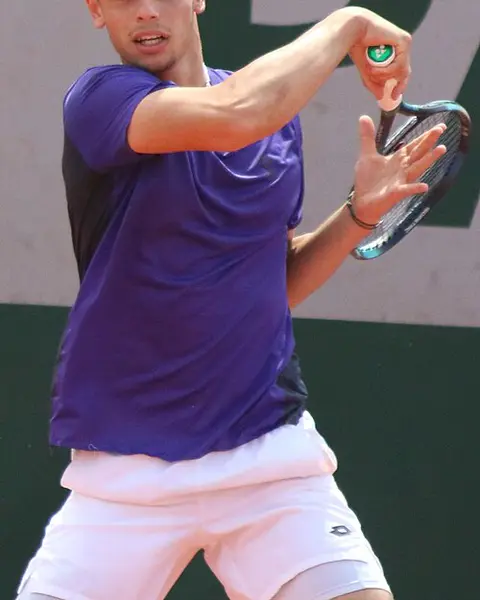
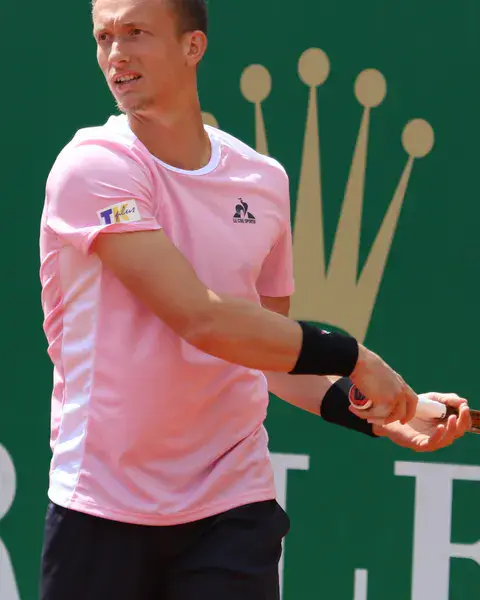
Arthur Gea’s 2026 breakthrough: from Australian Open upset to first ATP title
A major upset makes a name familiar. Winning again, against a different problem, tells you more about how a player is developing.

Arthur Gea’s first Grand Slam main-draw match ended with a straight-sets victory over 17th seed Jiří Lehečka at the 2026 Australian Open. The sets were tight: 7–5, 7–6(1), 7–5. Before facing the Czech, Gea had already won a Challenger title and three qualifying matches that season. His arrival on the larger stage came with a substantial run of competition behind it.
Months later, Gea beat Denis Shapovalov 6–3, 6–4 in the Los Cabos final to claim his first ATP Tour title. Between Melbourne and that trophy lay a five-set defeat by Stan Wawrinka and a series of demanding matches in Mexico. Following those stages reveals how the task changed: first earn a place, then close out a major match, then get through five opponents in a title run.
The first win that the headline leaves out
Gea opened 2026 by winning his first ATP Challenger title in Noumea. ATP’s January interview also records four ITF World Tennis Tour titles in 2025. The sequence spans three levels of professional tennis: ITF events, the Challenger circuit and, later, an ATP Tour title. Melbourne followed a season of building results and a successful move up to Challenger level. It was the next step in that work.
By the time he beat Lehečka, Gea had won nine consecutive matches across levels. The sequence connected a completed title run in Noumea with qualifying and the first round in Melbourne. He had already moved from finishing one tournament to starting another, where three wins were needed for a main-draw place. The major debut added a seeded opponent and a best-of-five-set format to that run.
In his Australian Open interview, Gea described hard courts as his most comfortable surface. He built his account of his game around a strong serve and forehand, defence, moving opponents from side to side and occasional trips to the net. Those details give a viewer specific things to follow: where the serve leaves the returner, whether the forehand opens the court, and which ball prompts him to move forward.
A qualifier has already completed a tournament’s worth of decisions
Australian Open reporting confirmed that Gea went through qualifying without dropping a set, beating three higher-ranked opponents. The successful route included Adolfo Daniel Vallejo and second qualifying seed Roman Andrés Burruchaga. Then came a 7–5, 7–6(1), 7–5 victory over 17th seed Lehečka in his major main-draw debut.
The three close sets deserve attention. Winning in straight sets does not mean the match contained no resistance; each set still demanded that Gea separate himself late. A headline about a qualifier shocking a seed tells you how unexpected the result looked before play. The score tells you something else: Gea repeatedly completed a competitive set rather than relying on one brief burst to build a comfortable lead.
A qualifier’s route is not automatically an advantage. The AO feature included players who valued time on the courts and experience of the conditions, while Wu Yibing also explained why he would prefer direct entry and the week it saves. Both can be true. Matches prepare a player for competition, but entering qualifying means having to win before receiving the opportunity others already possess.

The famous opponent was a new assignment
The win over Lehečka set up a meeting with Stan Wawrinka. Gea spoke about watching the Swiss win Roland-Garros in 2015, but also made clear that he wanted to win their match. Admiration and competitive intent were not opposites. A player can recognise an opponent’s career without treating his own place on the court as a souvenir.
That meeting ended in defeat on 22 January. Gea led by two sets to one before Wawrinka won 4–6, 6–3, 3–6, 7–5, 7–6, taking the final-set tiebreak 10–3 after four hours and 33 minutes. The result belongs in the same development story as the upset: earning a major main-draw win and finishing a five-set contest are different demands. The breakthrough had given Gea another problem to work on, not removed every problem ahead.
There was still a distance between an eye-catching result and winning a tour tournament. ATP’s Los Cabos final report states that Gea arrived there with only three tour-level victories. The figure describes the tour-level record entering that event, not his total wins across the sport. Put beside the Challenger and ITF results, it shows exactly why “newcomer” can mean different things depending on which level you are counting.
Los Cabos was not five copies of the same win
To take the title, Gea defeated Soonwoo Kwon, Michael Zheng, Francisco Cerúndolo, Coleman Wong and Shapovalov. His first three matches required three sets. In the second round, Zheng led by a set and had two break points at 4–4 in the second. The championship week could have ended there. Finishing with a straight-sets final does not make its earlier stages retrospectively comfortable.
Against Shapovalov, Gea saved four break points at 2–2 in the first set and eventually won six of the seven break points he faced during the match. When Shapovalov recovered to 3–3 in the second, Gea broke again immediately. These are different problems: surviving pressure while level, finishing a set, then responding when an advantage disappears. A complete tournament asks for all of them.
The two score changes offer useful starting points for a rewatch. At 2–2, follow how the service game continues after each break point; at 3–3 in the second set, move straight to the return game after the lost lead. Notice the first ball of each point and where the next shot can be played. This keeps attention on the work that remained immediately after a difficult moment.
Preparation was an answer he could name
In the first-time-winner interview, Gea said his team had arrived early in Los Cabos to adapt to the conditions. He also pointed to better fitness, a better understanding of the game and continuity in his work, naming Noumea as an important step. His explanation connects preparation for a particular tournament with work accumulated over months. The early arrival was one decision his team could arrange before the draw began.
A practical application is to separate preparation into things you can actually arrange. Before an unfamiliar competition, learn the schedule, court conditions and warm-up access. In practice, rehearse both the pattern you prefer and a point that begins after the opponent has neutralised it. Afterward, judge whether those preparations helped you make decisions, rather than measuring the entire exercise only by the final round you reached.
For your own progression record, use four columns: competition level, route into the event, a situation you handled well, and a situation to revisit. After the next tournament, choose one entry from the last column for practice. For example, if a lead disappeared but your return still held up, start the exercise with a return game at level scores. A short record can turn the next training session toward a specific task.
Noumea supplied a first Challenger title. Melbourne added qualifying wins, a victory over Lehečka and the long defeat by Wawrinka. Los Cabos required five more opponents, including three successive three-set matches, before Gea lifted his first tour trophy. When a qualifier catches your attention, follow the rounds before and after the headline result. In Gea’s case, that is where a single upset becomes a much more interesting season.
Sources and further reading
- ATP Tour — Arthur Gea embraces Wawrinka test on Australian Open debut
- Australian Open / Gill Tan — A message from the Australian Open 2026 qualifiers: beware
- ATP Tour / Vishakha Khandelwal — Gea upsets Shapovalov to capture first ATP Tour title in Los Cabos
- ATP Tour — Gea on breakthrough week, Nadal, fashion and more: First-Time Winner Spotlight
- Rolex Shanghai Masters / ATP Staff — Gea upsets Shelton in Shanghai R3: I am more confident on the court
- Australian Open / Gill Tan — Marathon Stan snaps 48-year drought at AO 2026
Keep reading
Titouan Droguet: 21 aces opened the door. A lob kept the next one open.
Droguet’s first ATP semi-final in Montpellier combined powerful serving, hard-won tie-breaks and a revealing response from Auger-Aliassime.
8 min read
Nuno Borges: from college tennis to his first ATP title
Nuno Borges’s 2024 Båstad title followed college tennis and a Melbourne breakthrough. Read the development choices behind the result, without the shortcut myth.
7 min read
Lehecka held serve for five matches. Sinner broke him in his second service game.
Lehecka’s 2026 Miami run ended against Sinner, but the useful story lies in 11 break points, a missed 0–40 chance and the difference between holding and controlling.
8 min readTENNIS TENSION LAB
Check your racquet’s tension today.
Get a high-precision tension reading in under 10 seconds. Tension Lab tracks changes from your first reading and helps you see when to restring.
- High-precision tension measurement. Ready in under 10 seconds.
- Track every change in feel. See the full story over time.
- Time to restring? Never leave it to guesswork.