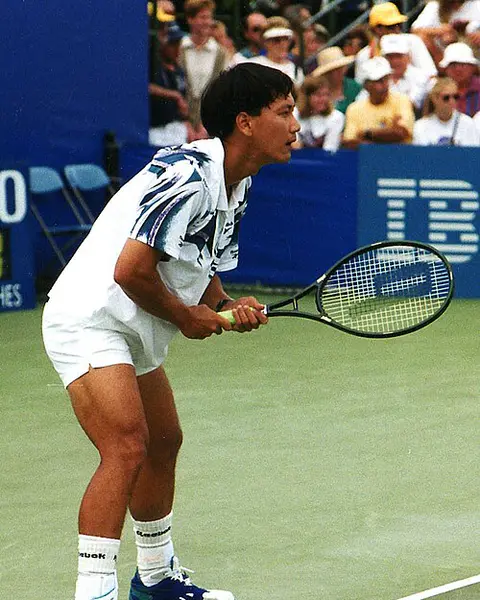
Michael Chang’s underarm serve: the shot after it mattered too
At 4–3, 15–30 in the fifth set, Chang changed the question Lendl had to answer. The useful lesson starts when the return comes back.

The famous image is easy to remember: a teenager drops the ball, serves from below and unsettles a champion. That memory can make the point seem simpler than it was. Michael Chang did not win it with an untouched serve. Ivan Lendl reached the ball. A return came back, and Chang still needed a passing shot. If you want something useful from the episode for your own tennis, keep watching after the surprise.
The useful pattern begins after the short serve has landed. If the return stays low, be ready to play another controlled ball; if it floats, look for the open court. Practise the serve, return and next shot as one sequence, giving the receiver room to choose a real reply. The historical point below provides a way to study that sequence: notice where Lendl makes contact, how Chang prepares and which part of the finish depends on chance.
Put the famous serve back into the match
The official Roland-Garros archive places the underarm serve at 4–3, 15–30 in the fifth set of the 1989 fourth-round meeting. Chang had already recovered from two sets down. The archive describes a comeback involving pressure on Lendl’s backhand, trips to the net and, later, higher looping balls. The serve arrived inside a changing contest; it was not the sole explanation for the comeback.
For a club player, that distinction prevents a tempting mistake: searching for one unusual stroke to rescue an entire failing game plan. Before introducing a surprise, identify what is failing in the ordinary exchange. Are your neutral balls landing short? Are you defending so far behind the baseline that you cannot recover? Is the opponent comfortable because every rally begins from the same location? Different problems call for different experiments.
The return was the opportunity
In the tournament’s account, Lendl moved forward but sent back a short forehand. Chang followed with a forehand pass down the line, helped by contact with the net tape. That final detail matters: the point was successful, but success does not prove that every part of the pattern was repeatable. A coaching discussion should separate the opportunity created from the fortunate finish.
Our tactical reading is that a short serve asks the receiver to solve a new movement problem. Instead of waiting for a familiar contact in a familiar area, the receiver must judge distance, arrive under control and choose a reply. This does not make the reply automatically weak. A balanced receiver can attack. The server’s job is to recognise the actual return rather than celebrate an imagined winner before the rally is over.
Surprise has a second-ball cost
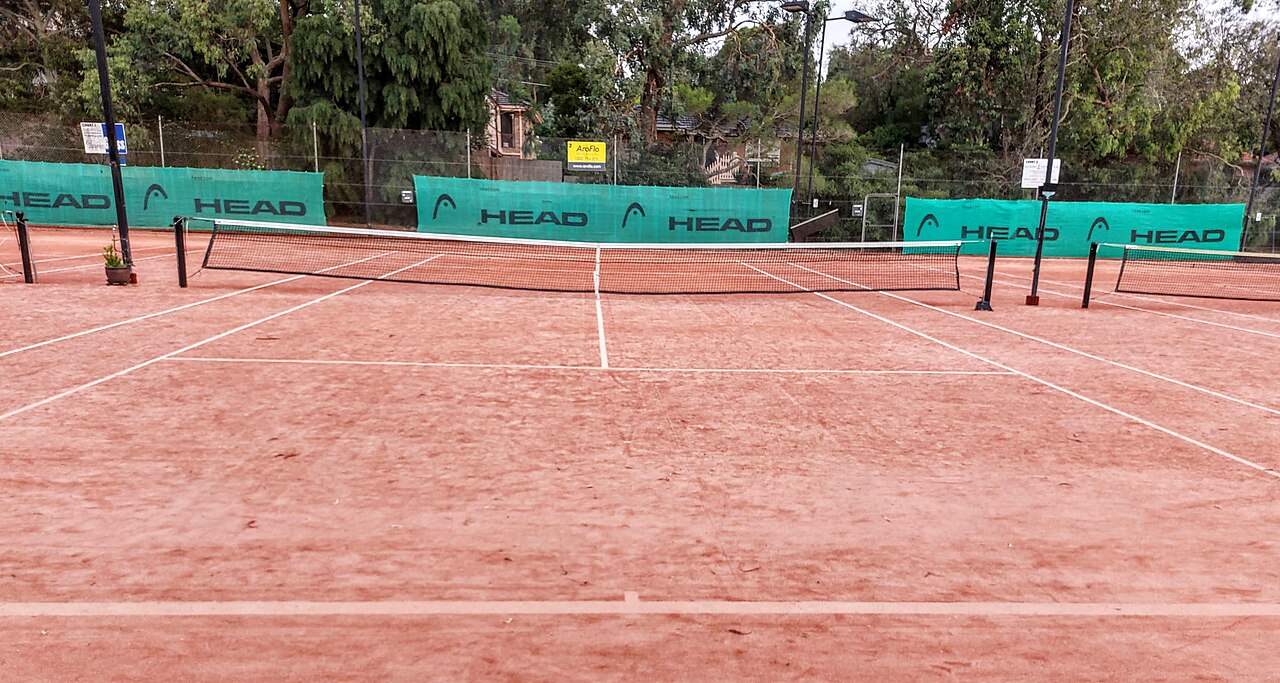
A serve aimed short can also hand the opponent a position inside the court. If it sits up or is read early, the receiver may choose a firm approach, a sharp angle or a short reply of their own. The server who remains admiring the delivery has traded surprise for poor coverage. The relevant question is not simply whether the ball bounces twice. It is whether the next exchange is easier to manage than the one you normally face.
That is why the useful practice unit contains at least three contacts: serve, return and the server’s next shot. Start from an ordinary serving position, complete the delivery and recover into a position from which you can respond. Do not prescribe a fixed follow-up before seeing the return. A floating reply and a low attacking reply need different decisions. The aim is to learn what the variation produces, not to force the same highlight every time.
A change of rhythm is not a licence to rush
The current ITF service rules allow a player to release the ball in any direction and hit it before it touches the ground; they also require the receiver to be ready. Underarm contact itself is therefore not the issue. A surprise delivery still belongs inside the normal service, foot-fault and readiness requirements. These are the 2026 rules for present-day play, not a claim that this article reproduces every regulation applied in 1989.
Keep that distinction clear in recreational competition. Call the score and follow the established serving routine. If you are uncertain about readiness, resolve that before serving rather than attempting to turn confusion into a tactic. Opponents can dislike an unusual shot without it being illegal, but the legality of a stroke does not justify ignoring the rest of the procedure.
Rehearse the response, not just the reveal
Begin a practice game with a receiver who knows that a short serve is possible. That removes the easiest source of success and makes you examine placement. If the variation only works when your partner is not paying attention, you have learned little about using it against a prepared opponent. Alternate it with normal serves, and allow the receiver to change position between points.
After each short delivery, record a simple observation: did the receiver arrive balanced, stretched or still moving through contact? Then note whether your next ball was available from a stable position. Those two observations are more useful than counting surprise points alone. A net-cord winner after a poor delivery and a narrowly missed pass after a well-created chance should not receive identical explanations just because one went on the scoreboard.
What Lendl’s final double fault does not tell us
Chang eventually won 4–6, 4–6, 6–3, 6–3, 6–3. The archive describes an unusually forward receiving position near the end and a double fault on match point. It is reasonable to discuss how an unexpected position can change the server’s decision. It is not possible to assign a percentage of that double fault to intimidation, fatigue or technique from the outcome alone.
Use the same restraint when reviewing your matches. You can observe that an opponent changed their target after you moved forward. You cannot reliably diagnose their thoughts from one miss. Useful analysis stays with visible choices: return position, target, bounce, contact and recovery. It gives you something you can adjust in the next game instead of a story about the other player’s character.
Keep the whole rally in the memory
Chang went on to win the 1989 title, and the International Tennis Hall of Fame records his age at that triumph as 17 years and 109 days. The underarm serve remains an extraordinary part of that story. Yet its value as a tennis lesson grows when we stop treating it as a magic trick. The receiver got there, the return mattered, the passing shot mattered and chance mattered too.
For your next session, bring one question rather than an imitation: when you change where the opponent makes contact, are you ready for the reply? A variation that survives that question is becoming a usable pattern. One that depends entirely on shock is still only a surprise.
Sources and further reading
Keep reading
Can a Wild Card Be Seeded? The Ranking Dates Behind WC
A player can enter on a wild card and still be seeded. Learn why Grand Slam entry and seeding use different ranking dates, with a practical draw-reading guide.
8 min read
Marta Kostyuk in Stuttgart: five saved, eight needed, then a different test
Kostyuk saved five match points against Zheng, needed eight against Gauff and rebuilt a lost lead against Vondroušová. Three pressure patterns from Stuttgart 2024.
7 min read
Tsitsipas’s first Dubai ATP 500: twelve finals and seven break points saved
A 6-3, 6-3 title on March 1, 2025: read the ATP 500 final record, Dubai history and a return game reversed from 40-0 together.
6 min readTENNIS TENSION LAB
Check your racquet’s tension today.
Get a high-precision tension reading in under 10 seconds. Tension Lab tracks changes from your first reading and helps you see when to restring.
- High-precision tension measurement. Ready in under 10 seconds.
- Track every change in feel. See the full story over time.
- Time to restring? Never leave it to guesswork.